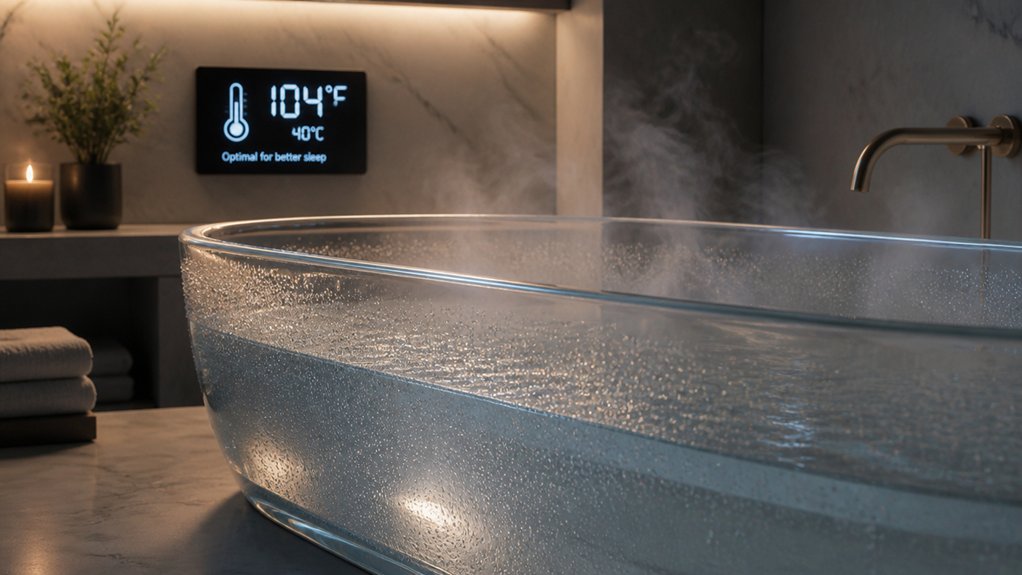
For better sleep, aim for a warm water temperature of 38-40°C (97-104°F) about 60-90 minutes before bed. This range causes vasodilation, increasing blood flow to your hands and feet, which helps lower your core body temperature and signals your body it’s time to sleep. Avoid exceeding 40°C to prevent overheating, and steer clear of cold showers, as they can disrupt heat loss. Keep in mind, timing and temperature adjustments are key to optimizing your sleep—discover more simple tips to sleep soundly.
Why Body Temperature Is Key for Better Sleep
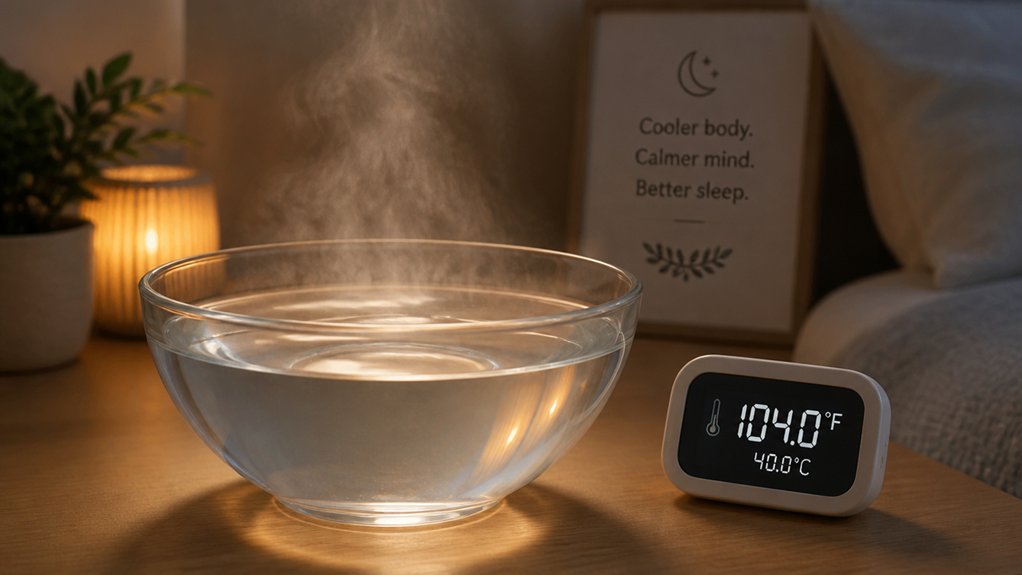
Have you ever wondered why your body temperature matters so much for sleep? Your core body temperature plays a vital role in sleep onset.
Lowering your core body temperature signals bedtime and promotes restful, uninterrupted sleep.
In the late afternoon to evening, a 1-2°F drop signals your brain that it’s time to sleep. This cooling process is part of your circadian rhythm, preparing your body for rest. Evening vasodilation in your hands and feet helps redistribute heat, lowering your core temperature and making it easier to fall asleep faster.
When your body stays cooler, you enjoy longer periods of restorative deep and REM sleep. But if your core temperature stays elevated at bedtime, your sleep can become fragmented, and your sleep quality drops. Incorporating high-powered chillers to cool your plunge pool water can support this natural cooling, enhancing your sleep cycle.
Optimizing your body’s cooling process is key to faster sleep onset and better, more restful sleep.
How Warm Water Raises Your Skin Temperature to Promote Sleep
When you take a warm shower, it causes your blood vessels to expand—a process called vasodilation—that boosts blood flow to your hands and feet. This increases your skin temperature in these areas, signaling your brain to lower your core temperature. As a result, you can fall asleep faster, especially as warming your skin mimics your body’s natural signals for sleep readiness. Using a heat pad or warm compress can enhance this effect by providing sustained and targeted warmth to promote relaxation before bed.
Warm Water Vasodilation Effect
Soaking in warm water before bed triggers vasodilation, which increases blood flow to your skin—especially in your hands and feet. This boost in circulation helps lower your core body temperature, signaling your brain that it’s time to sleep. The warmth causes skin temperature to rise by about 0.4°C, improving sleep quality and reducing the time it takes to fall asleep. The ideal water temperature for this vasodilation effect ranges from 38°C to 40°C, providing comfort without overheating. Incorporating a far-infrared heating pad can further enhance this effect by penetrating deep into tissues and promoting better circulation.
Skin Temperature Regulation
Warm water raises your skin temperature by inducing vasodilation at heat-loss sites like your hands and feet, promoting heat redistribution from your core to the body’s surface.
This increase in skin temperature helps signal your brain that it’s time to prepare for sleep. As your skin warms, your body naturally initiates a temperature drop, vital for sleep onset.
Here are key points to understand:
- Raising skin temperature by about 0.4°C accelerates the overall process, especially for those with impaired thermoregulation.
- Maintaining skin surface temperatures between 33-35°C optimizes comfort and promotes thermoregulatory signals.
- The heat transfer from your skin facilitates the essential core temperature decline, signaling your body that it’s time to sleep.
- Using accurate infrared thermometers to monitor skin temperature can enhance the effectiveness of warm water baths for sleep regulation.
This skin temperature regulation improves your chances of falling asleep faster.
Sleep Onset Acceleration
Raising your skin temperature through warm water exposure stimulates vasodilation at heat-loss sites like your hands and feet, which helps lower your core temperature and triggers sleep onset. A fragrance-free, gentle body wash can help maintain the skin’s barrier integrity during this process, ensuring your skin remains comfortable and protected. Warm water baths increase peripheral blood flow, redistributing heat from your core to the skin surface. This process mimics the body’s natural evening temperature drop associated with melatonin release, signaling your brain to initiate sleep. Even a slight skin temperature increase of about 0.4°C can markedly reduce sleep latency, especially in older adults who’ve diminished vasodilation. Taking a warm bath or shower roughly 1 to 2 hours before bed enhances thermoregulatory signals, fostering the core temperature decline essential for falling asleep faster. This cooling mechanism ultimately shortens your time to sleep onset and improves sleep quality.
What Is the Perfect Water Temperature for a Sleep-Boosting Bath or Shower?
The perfect water temperature for a sleep-boosting bath or shower is warm, around 37-40°C (98.6-104°F), to help lower your core body temperature. Taking a bath about 60-90 minutes before bed can speed up sleep onset by promoting heat redistribution. To maximize benefits, keep the temperature consistent and avoid cold showers right before bedtime. Incorporating breathing exercises before sleep can further enhance relaxation and improve sleep quality.
Optimal Bath Temperature Range
Finding the right water temperature for a sleep-enhancing bath can make a significant difference in how quickly you fall asleep. The ideal bath temperature ranges from 36-40°C (97-104°F), offering the perfect balance to promote vasodilation and support core body temperature drop.
When you take a warm shower or bath about 60-90 minutes before bedtime, it boosts peripheral blood flow and accelerates heat loss.
To optimize your sleep, keep in mind:
- Maintain bath temperature within 36-40°C for comfort and effectiveness.
- Prioritize a warm shower if a full bath isn’t feasible.
- Avoid cold showers, which can increase core temperature and delay sleep onset.
Adjusting your bath or shower temperature to this range helps align with your circadian rhythm for better sleep quality.
Effects On Body Core
A warm bath or shower around 40-42°C (104-108°F) effectively promotes vasodilation in your hands and feet, which helps transfer heat away from your core. This process aligns with your body’s temperature needs, supporting natural thermoregulation as it encourages your core temperature to drop. When your skin blood flow increases, heat redistributes to your periphery, mimicking the evening core temperature decline vital for sleep onset. Taking this warm shower or bath 1-2 hours before bed allows your body’s temperature regulation system to work properly, signaling that it’s time to sleep. Additionally, using an energy-efficient chiller can help maintain precise water temperatures, enhancing your relaxation routine. Avoid cold showers just before bed, as they can constrict blood vessels and hinder heat loss, disrupting the essential core temperature drop necessary for restful sleep.
Temperature Adjustments Tips
For a sleep-enhancing bath or shower, setting the water temperature to approximately 37-40°C (98.6-104°F) strikes the right balance to promote vasodilation and help lower your core body temperature.
To optimize the effect, consider these temperature adjustment tips:
- Warm showers or baths about 60-90 minutes before bed raise skin temperature and trigger heat loss mechanisms, shortening sleep latency.
- Avoid cold showers, as they constrict blood vessels and increase core body temperature, disrupting thermoregulation.
- Gradually cool your bath afterward to align with your circadian rhythm, encouraging deeper, restorative sleep.
- Using a chest freezer, specifically configured for precise temperature control, can help maintain the ideal water temperature for a relaxing and sleep-boosting experience.
Keep the water warm but not too hot, and always tailor the temperature to your comfort for effective sleep benefits.
Benefits of a Hot Bath Before Bed for Sleep Quality
Taking a hot bath before bed can greatly improve sleep quality by triggering natural body processes that signal sleep readiness. Soaking in warm water about 1-2 hours before sleep causes vasodilation in your hands and feet, helping your body shed heat and lowering your core temperature. This rapid drop mimics your body’s circadian rhythm, promoting deep, restorative sleep. Warm baths can also raise skin temperature by approximately 0.4°C, speeding up your ability to fall asleep. Additionally, evening baths support melatonin production and regulate temperature, reducing nighttime wakefulness. Here’s a quick look:
| Benefit | Effect | Targeted Outcome |
|---|---|---|
| Vasodilation | Enhances heat redistribution | Faster sleep onset |
| Core Temperature Drop | Mimics natural patterns | Improved sleep quality |
| Increased Skin Temp | Accelerates sleep initiation | Quicker to fall asleep |
| Melatonin Support | Stabilizes circadian rhythm | Better sleep throughout the night |
How to Find the Right Water Temperature for Your Needs
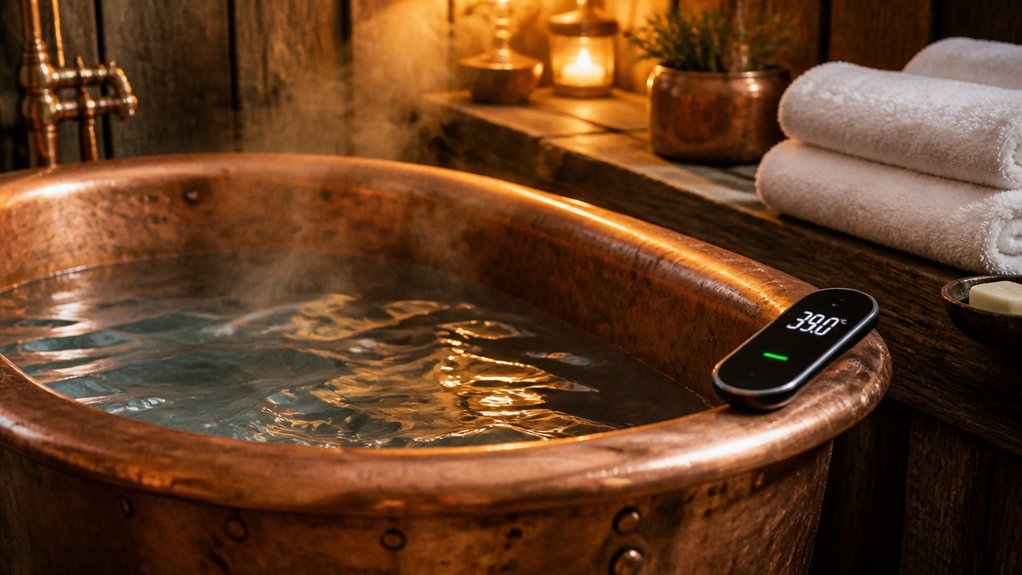
Wondering how to find the best water temperature for your sleep? Start by setting the water close to your typical room temperature, around 18-19°C, to support your body’s natural core temperature drop essential for sleep initiation.
Then, adjust gradually within the Pod’s 20-level range (+10 to -10), creating a U-shaped schedule: cool during deep sleep stages and slightly warmer during REM phases for proper thermoregulation.
To fine-tune, monitor your sleep over up to a week, noting changes in sleep latency and nighttime awakenings.
How Often Should You Take a Warm Bath Before Bed?
Regular warm baths can greatly improve your sleep quality by helping regulate your body’s temperature. Taking a warm bath about 3 to 4 times a week in the evening supports a stable circadian rhythm, especially as you age.
Ideally, aim to do this 1 to 2 hours before bed, allowing your core temperature to lower naturally and promote quicker sleep onset. Avoid taking a warm (or cold) shower immediately before sleep, as the initial rise in temperature might delay your rest.
Consistent timing in your routine strengthens the thermoregulatory signals your body recognizes for sleep readiness. Incorporating these baths regularly helps establish a sleep-friendly pattern, making it easier to fall asleep and enjoy more restorative rest.
Tips for Avoiding Overheating or Feeling Too Cold During Your Routine
To prevent overheating or feeling too cold during your routine, start by setting your water temperature close to neutral, avoiding extremes beyond +10 or -10 levels. This guarantees thermal comfort without shock or chill.
Incorporate warm showers before bed to promote vasodilation and support your body’s natural cooling process. Remember, cold water exposure near bedtime can temporarily reduce skin blood flow, hindering heat loss and disrupting your sleep.
To maintain consistent comfort:
- Gradually adjust water temperature during your routine to track your comfort level.
- Keep water slightly warmer in the evening to align with your circadian body temperature rhythm.
- Monitor how your body responds, and modify water temperature as needed to prevent sudden thermal shifts.
Staying mindful of these tips helps support smoother sleep initiation without risking overheating or feeling too cold.
Best Practices for Creating a Cool and Comfortable Sleep Environment After Your Bath
After taking a warm shower, creating an ideal sleep environment involves managing your bedroom temperature and bedding choices to support your body’s natural cooling process. Keep your sleep temperature between 16-19°C (61-66°F) to facilitate the continued core temperature drop necessary for restful sleep.
Use natural fiber bedding that wicks moisture and maintains skin surface temperature around 33-35°C, helping you stay comfortable without overheating. Allow enough time after your shower before bed—around 60-90 minutes—so your skin temperature can normalize.
Avoid heavy covers or direct heat sources, and stay in a cool room free of drafts. These steps help sustain the thermoregulatory benefits of your shower before bed, promoting quicker sleep onset and better quality sleep.
Common Mistakes to Avoid When Using Warm Water to Improve Sleep
Using warm water can be a helpful part of your sleep routine, but it’s important to avoid common pitfalls that can counteract its benefits.
First, don’t use water that’s too hot, as temperatures above 40°C raise your core temperature and delay sleep. Second, avoid taking cold showers right before bed, because rapid cooling hampers your body’s heat loss, making sleep harder to achieve. Third, don’t soak in warm water for over 30 minutes; extended exposure can disrupt your circadian temperature cycle.
Additionally, timing matters—use warm water 60-90 minutes before sleep to allow your core temperature to drop naturally. Remember, maintaining proper air temperature (16-19°C) is equally vital to prevent warming your body excessively and impairing sleep quality.
Additional Tips to Enhance Sleep With Temperature and Environment Adjustments
Adjusting your bedroom environment can greatly improve your sleep quality by supporting your body’s natural temperature regulation. Keep your room between 16-19°C (61-66°F) to allow your core temperature to drop, which is essential for falling asleep and staying asleep.
Use natural fiber bedding like cotton or wool that wick moisture and help regulate skin temperature around 33-35°C for comfort.
Taking a warm shower before bed promotes vasodilation, helping your body loses heat quickly, which signals sleepiness. If you prefer a cold shower, it can cool your skin faster, encouraging your body to use stored heat for warming afterward, which also aids in sleep.
Utilizing fans or cross-ventilation can support heat dissipation without causing discomfort, ensuring a restful night.
Frequently Asked Questions
What Is the 3-3-3 Rule for Sleep?
The 3-3-3 rule guides you to adjust water temperature in three phases: cooler for deep sleep, warmer for REM, and neutral at bedtime, aligning with your body’s natural temperature cycle to improve sleep quality and reduce awakenings.
What Temperature Water Helps You Sleep?
You should take a warm shower or bath around 37-40°C (98.6-104°F) about 60-90 minutes before sleep. This helps lower your core temperature, relax your body, and promote faster sleep onset and better sleep quality.
What Temperature Is Healthiest to Sleep In?
You should aim for a bedroom temperature between 16-19°C (61-66°F) to sleep best. Keep skin comfortable around 33-35°C, and avoid temperatures above 21°C for deeper, more restorative sleep. Coolness promotes better sleep quality.
Is 65 Degrees Too Cold for Sleep?
No, 65°F isn’t too cold for sleep; it falls within the ideal range for most people. It helps your body shed heat naturally, promoting better sleep quality without causing discomfort. Adjust bedding if you feel chilly.