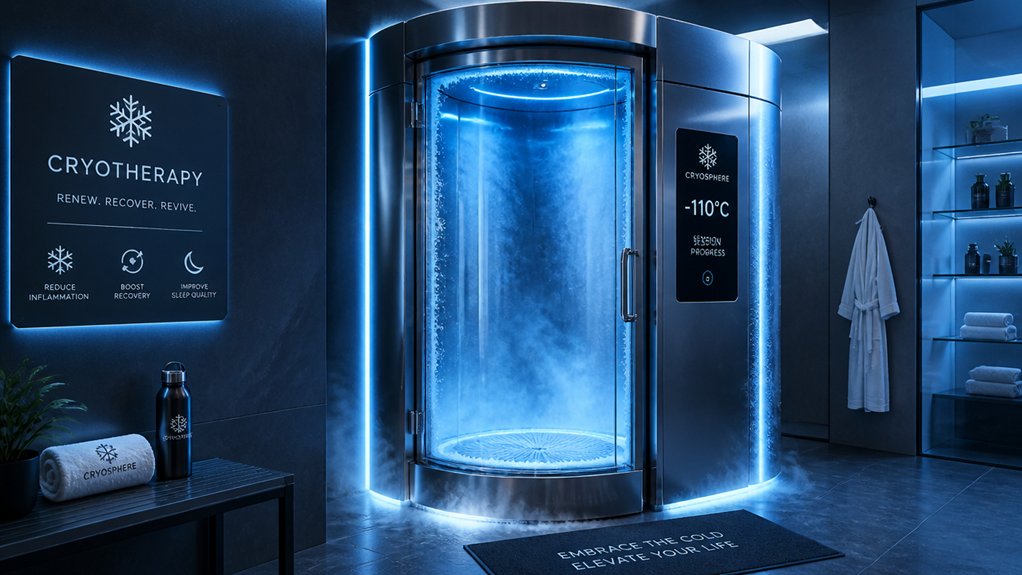
Cryotherapy-style exposure improves your sleep by activating the parasympathetic nervous system, promoting relaxation and lowering stress hormones like cortisol. It reduces inflammation and muscle soreness, helping you fall asleep faster and stay asleep longer. The cold triggers endorphin release, boosting mood and easing anxiety. It also enhances circulation and supports long-term sleep patterns by increasing deep sleep stages. If you keep exploring, you’ll discover even more ways this cold therapy can improve your rest.
How Cryotherapy Enhances Sleep Quality and Restfulness
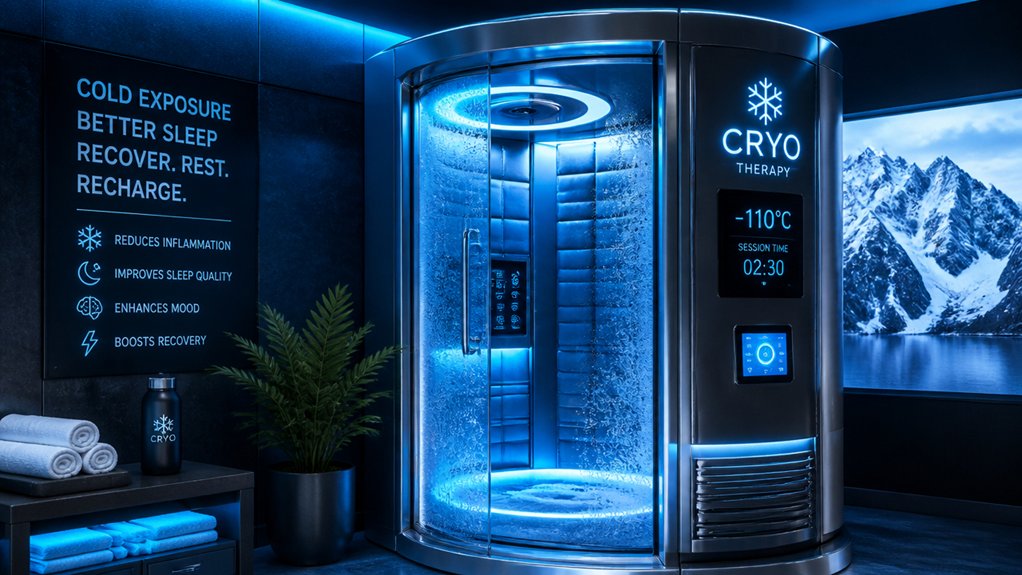
Cryotherapy can substantially improve sleep quality by directly influencing key physiological processes that promote restfulness. Exposure to extreme cold stimulates the nervous system, activating the parasympathetic branch through vagus nerve stimulation. This promotes relaxation, making it easier to fall asleep and stay asleep.
Cryotherapy also helps reduce inflammation and muscle aches via a hypothermic response, alleviating physical discomfort that often interrupts rest. Additionally, the release of endorphins during cold exposure produces feelings of euphoria and calmness, which enhance subjective sleep quality.
Repeated sessions lower anxiety and mood disturbances, supporting mental calmness critical for restorative sleep. Overall, cryotherapy’s ability to target these physiological pathways helps create ideal conditions for deeper, more restful sleep cycles. Sensor accuracy in cold environments ensures that physiological responses are properly monitored, further supporting the benefits for sleep quality.
The Impact of Inflammation Reduction on Deep Sleep
Reducing inflammation plays a crucial role in enhancing deep sleep, especially the slow wave sleep (SWS) phase essential for physical and mental restoration. Whole Body Cryotherapy cools the body rapidly, decreasing systemic inflammation that can cause muscle aches and pain, which often disturb sleep.
By calming inflammatory processes, cryotherapy creates a physiological environment that supports longer, more restorative deep sleep. The anti-inflammatory effects also trigger analgesic responses, easing discomfort and helping you fall asleep faster and stay asleep longer.
Additionally, lowering inflammation promotes nervous system regulation, boosting parasympathetic activity and improving sleep architecture. Studies show cryotherapy can increase SWS duration, highlighting how inflammation reduction directly enhances sleep quality and overall restorative rest. The use of select blood oxygen monitors during recovery can further optimize oxygen levels, supporting improved healing and deeper sleep cycles.
How Cryotherapy Stimulates Relaxation and Activates the Vagus Nerve
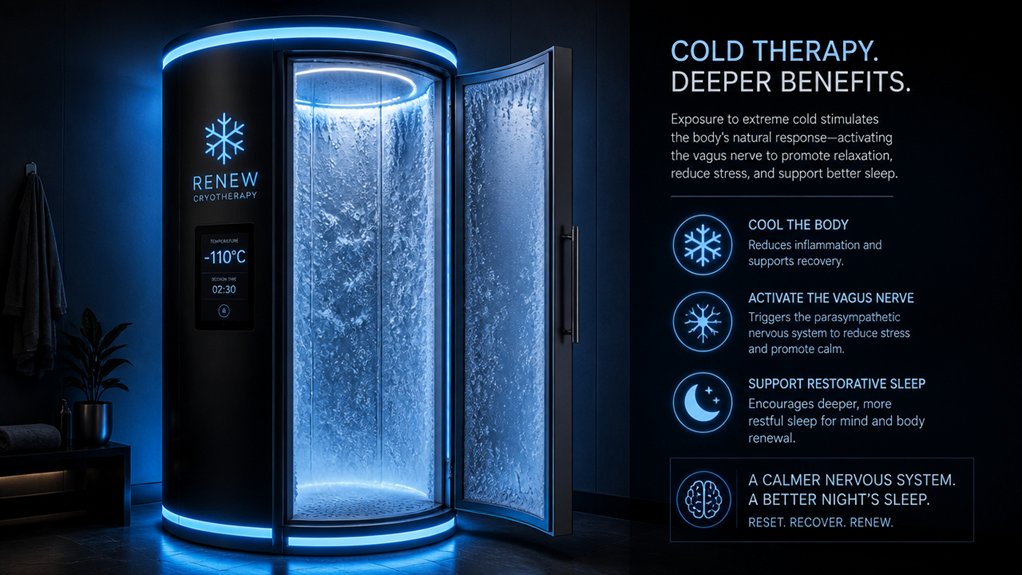
When you undergo cryotherapy, the intense cold exposure can directly stimulate the vagus nerve, a vital part of your parasympathetic nervous system responsible for relaxation. This activation triggers the release of acetylcholine, improving communication between your nervous system and body systems to induce calmness. Stimulating the vagus nerve through cryotherapy reduces inflammation and slows heart rate, promoting a restful state. This relaxation response helps you shift more easily into deep sleep stages like slow wave sleep. The following table summarizes this process:
| Effect of Cryotherapy | Result |
|---|---|
| Stimulates vagus nerve | Promotes relaxation |
| Enhances parasympathetic activity | Improves sleep quality |
| Reduces inflammation | Calms the body |
| Supports nervous system regulation | Enhances overall sleep health |
This process supports overall nervous system regulation, reducing anxiety and helping you sleep better.
Boosting Endorphins and Circulation for Better Sleep
Experiencing cold exposure triggers the release of endorphins, your body’s natural painkillers and mood enhancers, which foster a sense of euphoria and relaxation. Cryotherapy stimulates endorphin production, helping you feel more relaxed and ready for restful sleep. The cold exposure also stimulates skin healing and reduces inflammation, contributing to more comfortable and uninterrupted rest. The intense cold also causes your peripheral blood vessels to constrict and then dilate, boosting circulation and delivering nutrient-rich blood to tissues. This improved blood flow reduces muscle aches and inflammation, making physical discomfort less likely to interrupt your sleep. Additionally, cryotherapy enhances norepinephrine levels, which play a crucial role in regulating sleep and mood. Overall, these effects of cold exposure improve the overall quality of sleep, helping you wake up refreshed.
Using Cryotherapy to Manage Anxiety and Mood for Restorative Sleep
Cryotherapy actively helps manage anxiety and elevate mood by stimulating the release of endorphins, which promote feelings of euphoria and relaxation. During a cryotherapy session, these endorphin boosts reduce anxiety symptoms and foster a calm mental state, essential for restorative sleep. Additionally, the use of wavelength-specific devices such as red and near-infrared light therapy can enhance tissue recovery and relaxation, further supporting mental health. Cryotherapy’s regulation of inflammation and oxidative stress supports overall recovery, benefiting both physical and mental health. Activation of the vagus nerve triggers the parasympathetic nervous system, signaling the body to relax deeply. This relaxation response lowers stress levels and improves sleep quality. Psychological benefits—especially for women—include decreases in mood disturbance scores, making cryotherapy a promising tool for anxiety management. As a result, you may experience enhanced sleep continuity and deeper rest.
Incorporating Cold Therapy Into Your Daily Sleep Routine
Incorporating cold therapy into your daily sleep routine can greatly enhance relaxation and support better rest. Schedule cryotherapy sessions in the late afternoon or early evening to align with your natural sleep/wake cycle, helping you fall asleep faster.
Start with 1–2 cryotherapy sessions per week, gradually increasing as your body adapts to optimize sleep duration and overall quality. Combine these sessions with calming activities like light stretching or journaling to deepen relaxation.
Hydrate well before each session to maximize the benefits and promote recovery, which also aids in reducing inflammation. Pair cryotherapy with complementary therapies like Far Infrared Sauna to activate the parasympathetic nervous system further. Additionally, incorporating far infrared heating pads can provide localized warmth and relaxation to support restful sleep.
Consistent cold therapy can help create a more restful, natural sleep pattern, improving nightly rest overall.
What Science Says About Long-Term Sleep Benefits of Cryotherapy
Research shows that long-term use of cryotherapy can lead to meaningful improvements in sleep quality and restorative processes. Repeated Whole Body Cryotherapy (WBC) sessions increase slow wave sleep (SWS) by about 7.3 minutes, promoting deeper, more restorative sleep that benefits cognitive and physical health.
Over time, cryotherapy can improve overall sleep quality by reducing anxiety and mood disturbances, especially in women during later treatment nights. Its anti-inflammatory and analgesic effects help decrease chronic pain and systemic inflammation, which often interfere with sleep continuity.
Although cryotherapy activates the parasympathetic nervous system post-exposure, studies suggest benefits may depend on timing. Ultimately, cryotherapy can improve long-term sleep patterns, support cognitive function, and enhance overall well-being.
Frequently Asked Questions
How Does Cryotherapy Improve Sleep?
Cryotherapy improves your sleep by increasing deep sleep stages, releasing endorphins, reducing inflammation, and balancing neurotransmitters, leading to relaxation, better mood, and uninterrupted rest. Repeated sessions further enhance sleep quality and reduce anxiety.
What Are the Benefits of 3 Minutes of Cryotherapy?
By doing 3 minutes of cryotherapy, you reduce inflammation, ease muscle aches, and trigger endorphin release, helping you relax faster, improve sleep quality, and create a calmer state of mind for better rest and overall well-being.
Does Cryotherapy Make You Sleepy?
Yes, cryotherapy can make you sleepy. It triggers endorphin release, reduces inflammation, and activates calming nervous system responses, helping you relax and feel more prepared for sleep, especially when done in the late afternoon or evening.
How Long Does It Take to See Results From Cryotherapy?
You typically notice sleep improvements within 2 to 3 nights of consistent cryotherapy sessions. Feelings of better sleep, reduced anxiety, and mood enhancements often appear within the first week, with deeper sleep lasting several days.