Taking a warm bath about 1 to 2 hours before bed can boost your sleep by helping your body cool down and relax. Aim for water temperatures around 104-109°F for 10-20 minutes, and consider adding soothing ingredients like lavender or Epsom salts. This timing supports your circadian rhythm and promotes relaxation, making it easier to fall asleep faster. If you want to learn more about optimizing your sleep routine, keep exploring these tips.
Does Bath Before Bedtime Boost Sleep?
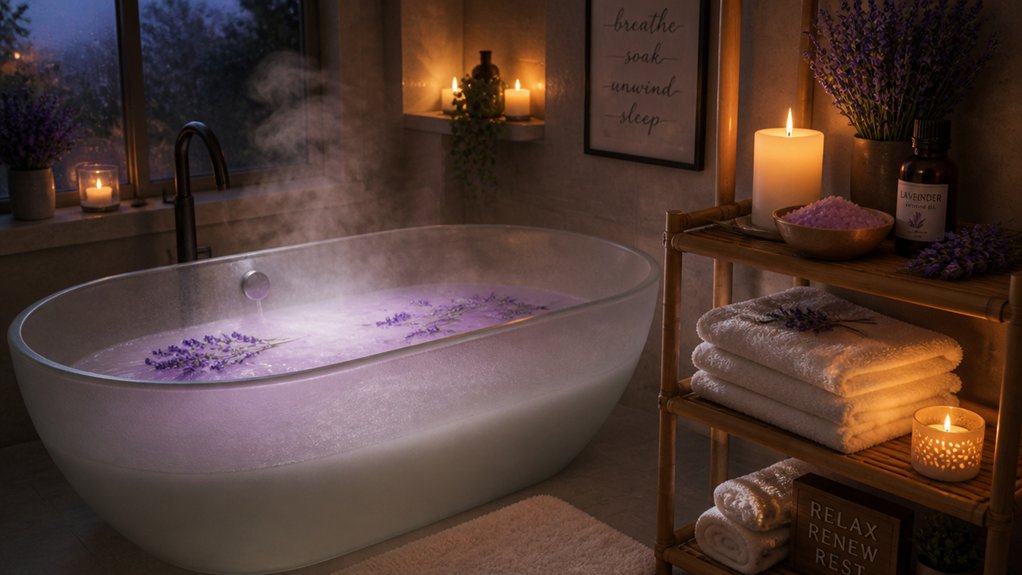
Have you ever wondered if taking a bath before bed can actually improve your sleep? A warm bath or shower, around 104-108.5°F, about 1–2 hours before bedtime can help.
It improves sleep quality by promoting blood flow to your hands and feet, which helps your body cool down afterward and signals your brain to prepare for sleep. This process can help you fall asleep faster and reduce sleep onset latency by roughly 10 minutes.
A warm bath also lowers cortisol levels and blood pressure, supporting relaxation and better sleep efficiency. By aligning your wake cycle through this routine, you set the stage for deeper, more restful sleep. Incorporating guided relaxation techniques and calming sounds during your bath can further enhance this meditative state, promoting overall mental and physical relaxation before sleep.
How Baths Affect Sleep Quality and Body Temperature
Taking a warm bath before bed directly influences your sleep quality by triggering a significant drop in core body temperature, which is essential for falling asleep efficiently. When you soak in warm water between 104-109°F, blood flow increases to your skin’s surface, helping your body dissipate heat and prepare for sleep. This thermoregulatory process supports your natural circadian rhythm, as your core body temperature naturally peaks in the late afternoon and declines before sleep. High-powered chillers for cold plunge pools optimize rapid cooling, further aiding in the body’s cooling process after a warm bath, and efficient insulation and pump design significantly impact overall effectiveness.
What Are the Best Types of Baths to Promote Sleep?
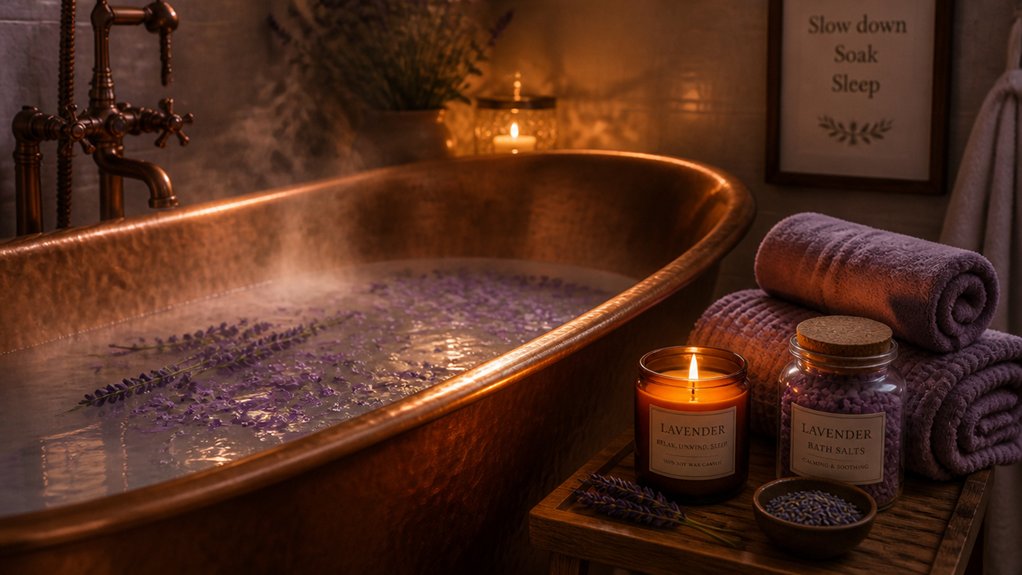
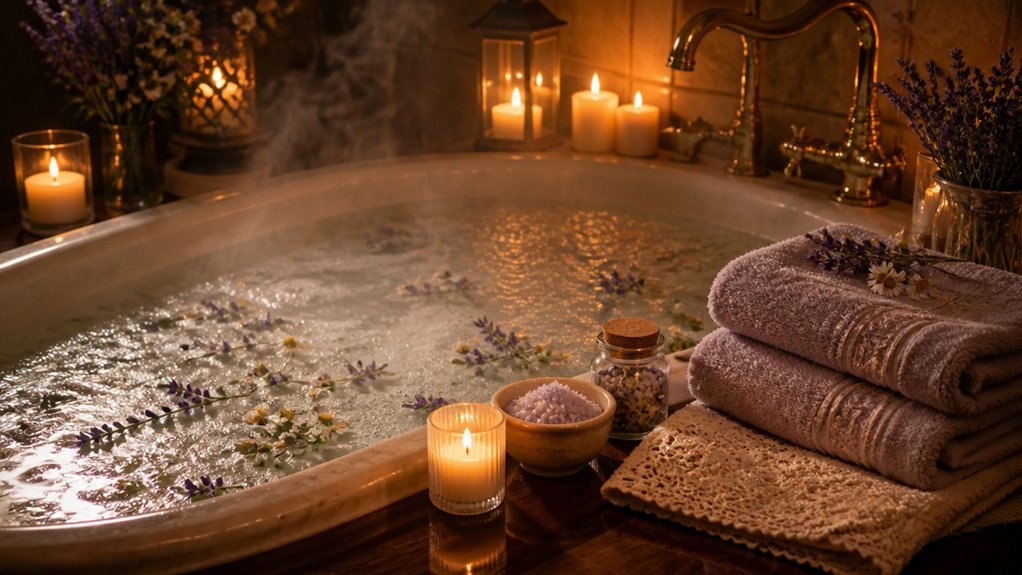
What types of baths are most effective in promoting sleep? A warm bath or shower taken 1 to 2 hours before bed at 104-109°F (40-42°C) is ideal. This temperature range helps boost peripheral blood flow and facilitates rapid core body cooling, signaling your brain to prepare for sleep. Incorporating elements like Epsom salts or lavender essential oil can enhance relaxation, offering additional stress relief. These baths should be part of your bedtime routine, helping reduce physical tension and lowering blood pressure, especially in older adults. Soaking in warm water for 10 to 20 minutes promotes better sleep onset and improves sleep quality overall. Including dual-wall insulation in your bath products can help maintain water temperature, making your relaxation routine more effective and comfortable. This simple, soothing routine effortlessly integrates relaxation and physiological cues to support restful sleep.
When Is the Ideal Time to Take a Bath Before Bed?
Wondering when to take a bath before bed for the best sleep benefits? The ideal time is about 1 to 2 hours before your scheduled sleep.
The best time for a bath is 1 to 2 hours before bed to enhance sleep quality.
A hot bath, ideally lasting 20-30 minutes at 98–104°F, helps your body relax and promotes the natural circadian temperature decline.
Taking the bath too close to bedtime, like right before bed, may hinder your body’s ability to cool down, reducing sleep benefits.
Instead, a bath before bed should be timed so you finish about 60 to 90 minutes before bed, allowing blood flow to increase and your body to start cooling. This timing signals your brain that it’s time to rest, paving the way for improved sleep quality and quicker sleep onset.
A warm shower during this window can have a similar effect. Heat therapy can also promote relaxation and support better sleep patterns when used appropriately before bedtime.
Are There Risks or Precautions to Consider With Evening Baths?
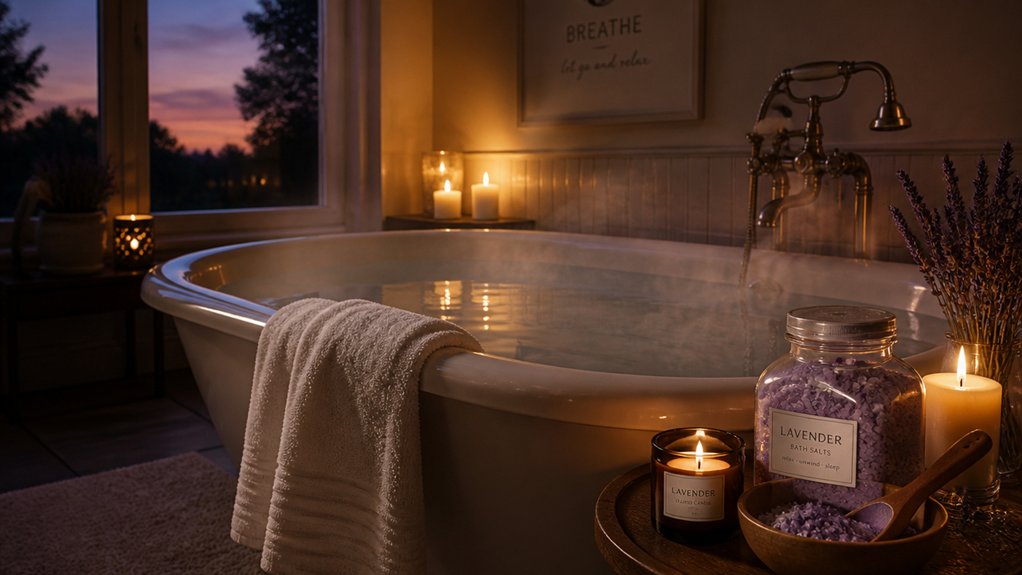
Are there any risks or precautions you should be aware of when taking evening baths? Yes, some factors can affect your health and sleep. Water that’s too hot, especially a hot shower above 108°F for over 10 minutes, increases skin dryness and irritation.
Older adults should prefer warm showers instead of steaming hot ones to avoid blood pressure fluctuations that could lead to dizziness. Cold showers help boost alertness by raising cortisol and norepinephrine, which may interfere with sleep.
To optimize sleep, avoid taking a bath right before bed; instead, do it 1–2 hours earlier to allow your body to cool down naturally. Also, neglecting to reduce screen time before bathing can reduce sleep benefits. Incorporating a pH-balanced cleansing body wash can help protect sensitive skin and maintain moisture, supporting a more comfortable transition to rest.
Frequently Asked Questions
Which Bath Is Best Before Sleep?
A warm bath taken 1-2 hours before sleep is best, ideally at 104–108°F. It helps you relax, cools your body afterward, reduces stress, and promotes faster, deeper sleep by aligning with your natural temperature drop.
What Is the 3 3 3 Rule for Sleep?
The 3 3 3 rule for sleep recommends waiting 3 hours after dinner, engaging in 3 minutes of relaxation exercises, and drinking 3 glasses of water. It promotes better sleep by calming your body and supporting digestion.
Which Bath Induces Sleep?
A warm bath before bed induces sleep by lowering your core body temperature and relaxing muscles. Take it 1-2 hours before bedtime in water around 104-109°F to signal your brain it’s time to wind down.
What Is the 20 Minute Rule for Insomnia?
The 20-minute rule for insomnia tells you to get out of bed if you can’t fall asleep within 20 minutes. During this time, do relaxing activities outside your bedroom, helping your brain associate your bed with sleep only.