Chilly water therapy can help you sleep better by lowering your core body temperature, which signals your body to produce melatonin and prepares you for restful sleep. It also activates your parasympathetic nervous system, helping you relax and reduce stress. To get the best benefits, do cold plunges about 1–2 hours before bed for 2–7 minutes, and create a cool, dark sleep environment afterward. Stick with these tips to optimize your sleep—more helpful insights are on the way.
Can Cold Water Therapy Help You Sleep Better?
Ever wondered if cold water therapy can boost your sleep? Immersing in cold water about 1–2 hours before bed lowers your core body temperature, signaling your body to prepare for sleep.
Cold water therapy before bed helps lower core temperature, signaling your body to prepare for restful sleep.
Cold exposure activates the parasympathetic nervous system, encouraging relaxation and improving sleep quality. Cold water therapy can also increase melatonin levels, aiding in quicker sleep onset and enhancing slow-wave sleep—key for rest and physical recovery.
Additionally, cold immersion improves circulation through vascular constriction and dilation, reducing muscle inflammation and promoting longer, less disrupted sleep. Short sessions of 2–7 minutes, repeated a few times weekly, can help decrease stress and anxiety, making it easier to wind down.
Just be cautious not to do cold exposure immediately before sleeping to avoid adrenaline spikes that hinder sleep.
How Does a Drop in Body Temperature Trigger Melatonin Production?
When your core body temperature drops, it activates your pineal gland, prompting it to release more melatonin. Cold exposure during therapy mimics natural evening cooling, boosting melatonin production and syncing with your sleep cycle. A stable and accurate blood oxygen level measurement can help monitor how effectively your body responds to cold stress during therapy sessions.
Temperature Drop Activates Pineal
A drop in core body temperature acts as a signal for your brain to start producing melatonin, the hormone responsible for sleep regulation. Cold water therapy and cold exposure lower your body temperature, mimicking natural evening cooldowns. This decline prompts the hypothalamus to activate the pineal gland, increasing melatonin production. As your temperature drops below a specific threshold, your circadian sleep-wake cycle is reinforced, encouraging shifts into deeper sleep stages. This process helps sustain melatonin levels, leading to more consistent sleep cycles and improved sleep quality. Using insulation features in your cold plunge setup can maintain optimal cooling effects for better sleep support.
Cold Stimulates Melatonin Secretion
Lowering your core body temperature sends a clear signal to your brain that it’s time to rest by activating the pineal gland. Cold exposure, such as cold water immersion, triggers this thermoregulatory response, which mimics the natural evening temperature decline.
This drop in core body temperature stimulates an increase in melatonin secretion, the hormone responsible for signaling sleep onset. Elevated melatonin helps regulate your circadian rhythm, aligning your body’s internal clock with the sleep-wake cycle. Additionally, breathing patterns supported by guided meditation devices can help facilitate this cooling process by calming the nervous system.
As melatonin levels rise, you’ll find it easier to fall asleep faster and experience deeper stages like slow-wave sleep and REM sleep. By cooling your body, you support the natural process that promotes restorative, quality sleep and enhances overall sleep duration.
Sleep-Wake Rhythm Regulation
A drop in your core body temperature acts as a vital signal to your brain that it’s time to wind down, directly influencing melatonin production. Cold therapy, like chilly water exposure, lowers your body temperature, mimicking the natural evening decline in temperature. This thermal shift helps regulate your sleep-wake rhythm by signaling your circadian rhythm to promote relaxation and prepare your body for sleep. When your core temperature decreases, it triggers the pineal gland to increase melatonin production, which helps you sleep better by facilitating the change to deep sleep. Additionally, adaptogens can support your stress response and improve sleep quality during cold therapy routines. This alignment of your body’s internal clock with environmental light-dark cycles strengthens sleep onset and maintenance, supporting restorative sleep. Cold water therapy consequently plays a critical role in regulating your sleep-wake rhythm and promoting overall sleep health.
How Cold Exposure Calms Your Nervous System and Reduces Stress?
Cold exposure triggers an immediate activation of your sympathetic nervous system, flooding your body with adrenaline and norepinephrine that spark a “fight or flight” response. During a cold water bath, this hormonal surge boosts alertness but also sets the stage for long-term stress reduction.
After about 3.5 minutes, the parasympathetic nervous system takes over, inducing a rest-and-digest state that promotes relaxation and nervous system balance. Regular cold exposure trains your nervous system to handle stress better, enhancing resilience and reducing anxiety. It also helps reduce inflammation, which can contribute to chronic stress.
The calming effects of this process lower heart rate and muscle tension, creating a sense of calm that supports restful sleep. Engaging in recovery practices such as massage oils and balms can further enhance relaxation and aid in nerve and muscle recovery. All these responses make cold water therapy an effective tool for calming your nervous system and easing stress.
When and How Long Should You Do Cold Plunges Before Bed?
Wondering when to take a cold plunge for maximum sleep benefits? Aim to do cold plunges 1 to 2 hours before bedtime. This timing allows adrenaline levels to normalize, helping you relax and prepare for sleep.
Keep immersion duration between 2 to 7 minutes; start with shorter sessions if you’re a beginner and gradually increase as tolerated. Maintaining a calm and steady approach during your plunge enhances parasympathetic nervous system activation, key to winding down peacefully.
Consistent practice, about 2 to 3 times a week, maximizes sleep benefits by improving temperature regulation and melatonin production. Avoid doing cold plunges right before bed, as the initial adrenaline surge can hinder sleep onset. Proper timing and duration promote better sleep and long-term adaptation. Additionally, using reliable Recovery Tracking Apps can help monitor your sessions and optimize your recovery process.
How to Create a Sleep-Friendly Environment After Cold Therapy?
After cold therapy, set your bedroom temperature between 15-20°C to help maintain your lowered core temperature and support better sleep.
Keep the room dark, turn off screens, and avoid warm bedding to enhance melatonin production and prevent disrupting the cooling effect.
Creating a quiet, comfortable space with calming routines can further promote restful sleep and maximize the benefits of your cold plunge.
A well-insulated room with water-resistant construction features can also help maintain a consistent temperature and prevent unwanted fluctuations.
Maintain Cool Bedroom Temperature
Creating a sleep-friendly environment involves maintaining a cool bedroom temperature that supports the body’s natural cooling process after cold water therapy. A cool bedroom environment between 15-20°C (59-68°F) helps maintain core temperature, essential for deep sleep and overall sleep hygiene.
This temperature range prevents rewarming that could negate the calming effects of cold immersion, promoting parasympathetic activation and reduced stress. Using breathable, moisture-wicking bedding enhances body temperature regulation by supporting the sustained drop in skin and core temperatures needed for sleep onset.
Keeping the room cool also boosts melatonin production, aiding your natural sleep-wake cycle. By preserving a consistently cool environment, you maximize the benefits of chilly water therapy and enjoy more restful, restorative sleep.
Minimize Bright and Noise
To support the calming effects of cold water therapy, minimizing exposure to bright light and noise is essential in creating a sleep-friendly environment. After cold therapy, reducing bright light prevents melatonin suppression, helping maintain your natural sleep-wake cycle. Use blackout curtains or eye masks to create a dark environment that promotes parasympathetic relaxation, which is vital for restful sleep. Incorporating durability and design features in your sleep space can further enhance its calming properties, ensuring the environment remains conducive to relaxation despite moisture or temperature fluctuations. Noise reduction with earplugs or white noise machines diminishes disturbances, allowing you to sustain the slow-wave sleep and REM sleep phases your body needs for recovery. Keeping your bedroom temperature between 15-20°C (59-68°F) prevents negating the body temperature drop from cold therapy. Establishing a calm, quiet routine post-cold exposure solidifies nervous system resetting and enhances overall sleep quality.
Common Mistakes to Avoid When Using Cold Water Therapy for Better Sleep?
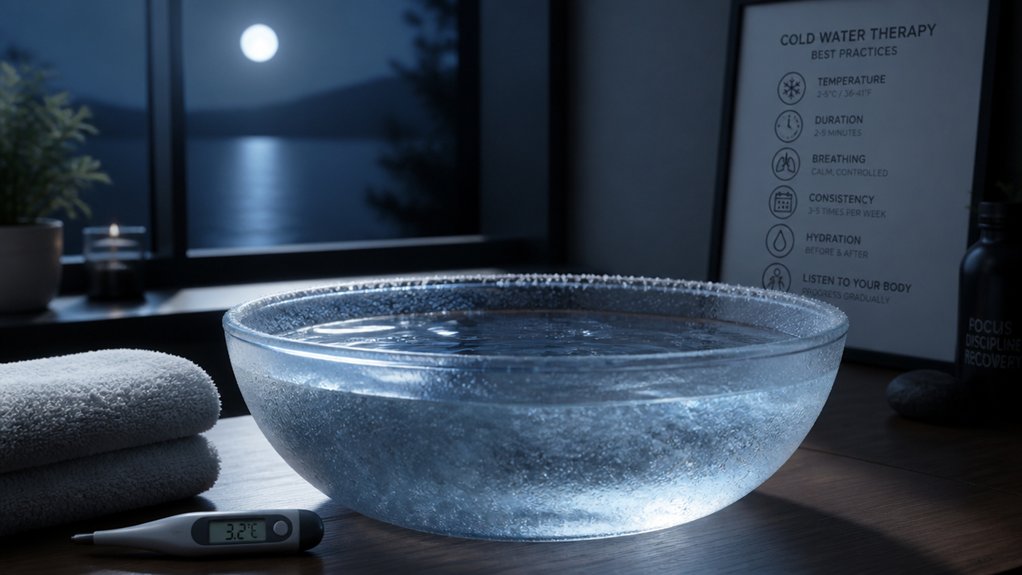
Are you aware of common pitfalls that can undermine the benefits of cold water therapy for sleep? Diving into cold showers or ice baths at the wrong time or duration can do more harm than good.
Cold water therapy benefits can be lost with improper timing or duration—know the risks for better sleep.
To promote better sleep, avoid taking ice baths immediately before bed, as adrenaline spikes can increase alertness and delay sleep onset. Don’t exceed recommended immersion times of 3–7 minutes to prevent stress on your body and possible cardiovascular issues.
After cold therapy, steer clear of warm environments or heated blankets that negate cooling effects and hinder melatonin production. Beginners should avoid very cold temperatures and long sessions—gradually build tolerance.
Also, consult your doctor if you have health issues like high blood pressure before starting cold water therapy.
Frequently Asked Questions
Is Cold Water Therapy Good Before Bed?
Cold water therapy is good before bed if you time it 1–2 hours prior, allowing relaxation to set in. It lowers your core temperature, boosts melatonin, and improves sleep quality, but avoid immediate exposure right before sleep.
What Is the 3 3 3 Rule for Sleep?
The 3 3 3 rule helps you relax before sleep by taking three deep breaths, identifying three visual things, and naming three sounds. It calms your mind, reduces stress, and promotes a peaceful shift into restful sleep.
What to Mix With Warm Water Before Bed?
You can mix lavender or chamomile essential oils, Epsom salts, or herbal teas like valerian root into warm water before bed. Adding a splash of apple cider vinegar or ashwagandha powder promotes relaxation, helping you sleep better.
Are Cold Plunges Good for CFS?
Cold plunges can benefit your CFS symptoms by boosting circulation, reducing muscle soreness, and helping your nervous system recover. However, approach them carefully, start slowly, and consult your doctor to prevent cardiovascular strain or adverse effects.