
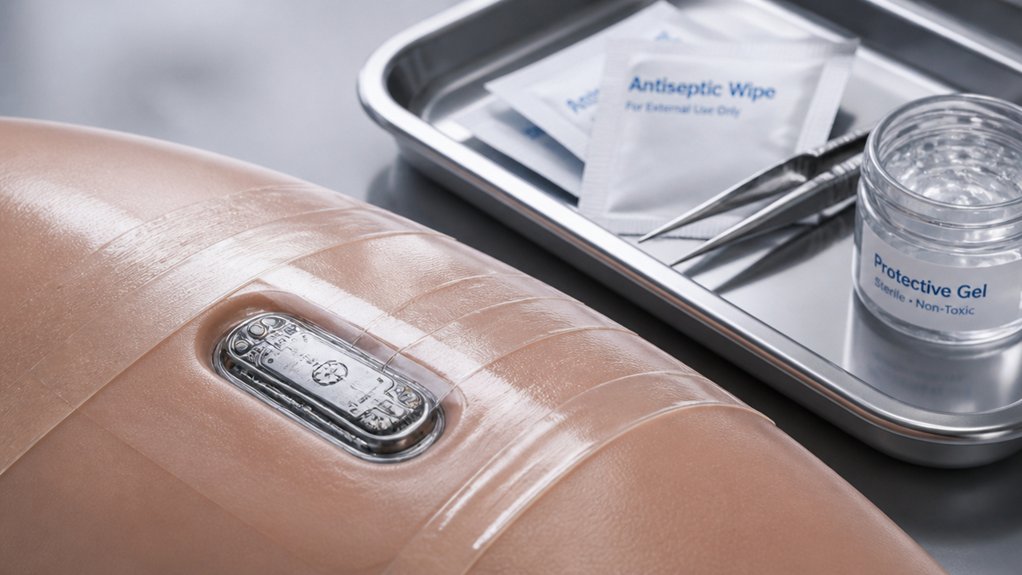
To protect your implantable device from immersion risks, keep at least 15 cm away from household electronics, magnets, and security wands. Always inform medical staff about your device before procedures and avoid high-impact sports or intense arm activities that could damage it. Use waterproof covers during water exposure and stay cautious around saltwater or conductive fluids. Cold weather doesn’t harm but keeps your skin dry to prevent tissue damage. Learn more tips to keep your device safe in various environments.
Why Magnetic Fields and MRI Environments Are Risks to Your Device
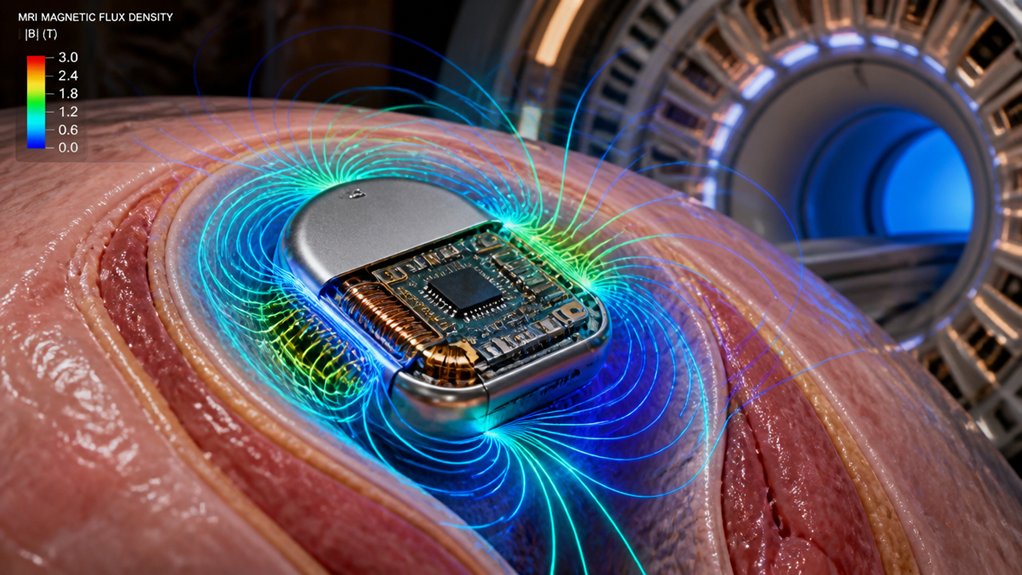
Magnetic fields and MRI environments pose significant risks to your implantable cardiac device because their strong magnetic forces can interfere with device operation.
When you enter an MRI scanner, the magnetic fields exceeding 10 gauss or 1 mTesla can activate the device’s internal magnetic switch, unintentionally altering pacing or disabling defibrillator therapies. This can suspend therapy delivery and compromise your safety.
Magnetic fields over 10 gauss can activate your device’s switch, disrupting therapy and endangering your safety.
To prevent harm, device manufacturers incorporate MRI Protection Mode, which suspends device functions during scans, and may require a device implant that’s compatible with MRI procedures.
Exposure to high electromagnetic interference from the MRI scanner or nearby metallic objects within 60 cm can cause electrical malfunctions, battery drain, or loss of therapy.
Always follow safety protocols to protect your implantable cardiac device during MRI procedures. Waterproof timer ratings and device specifications are important factors to consider when planning for clinical procedures involving immersion or exposure to water environments.
How Far Should You Stay Away From Household Electronics and Magnets
Ever wondered how close you can safely get to household electronics and magnets with an implantable cardiac device? To prevent electromagnetic interference, keep all magnets, including those in consumer electronics and accessories, at least 15 cm (6 inches) away.
This distance avoids activating your device’s magnetic switch and guarantees proper device function. When using cellular phones, hold them on the opposite side of your implant, maintaining a 15 cm distance.
Be cautious around security systems, magnetic chargers, and metal detectors—stay at least 15 cm away from security wands or chargers. Household appliances like microwaves, TVs, and computers are generally safe if used normally and not held directly over your device.
Avoid leaning on or staying close to large stereo speakers and industrial motors, which can disrupt your implant’s operation. Additionally, understanding the measurement parameters and display types of monitoring devices can help you select the safest options around electronic equipment.
How to Protect Your Device During Medical Procedures and Security Checks
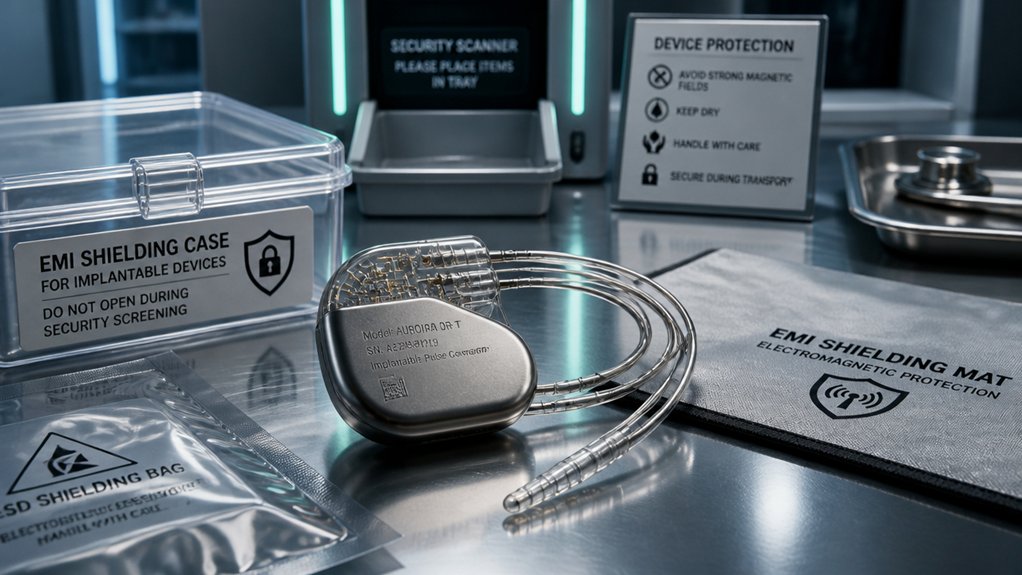
Protecting your implantable device during medical procedures and security checks requires proactive communication and adherence to safety protocols. Always inform medical staff and security personnel about your implantable cardiac devices, especially implantable defibrillators, before any procedure or screening.
During airport security, keep at least 15 centimeters (6 inches) distance from handheld security wands, magnet accessories, and phones to prevent interference. When passing through electronic article surveillance or anti-theft detectors, do so at a normal pace without lingering or leaning to avoid disrupting your device’s normal operation or causing inappropriate therapy delivery. Ensure your device maintains proper water resistance during immersion in aquatic environments to prevent damage during water therapy or activities.
MRI scans are only safe if your device is MR Conditional and strictly follow guidelines. Avoid exposure to diathermy or immersion in conductive fluids to maintain your device’s functionality and safety during medical procedures.
What Activities or Sports Could Damage Your Implant?
Engaging in certain activities or sports can pose a risk to your implantable cardiac devices if not chosen carefully. High-impact contact sports or activities that cause blunt trauma can damage the implanted device, dislodge leads, or cause adverse events.
Heavy weightlifting or intense arm flexing near the device can affect the function or cause device malfunction. While swimming and water immersion are generally safe, saltwater or conductive fluids might cause interference or reduce defibrillation efficacy.
Activities involving electromagnetic fields, such as welding equipment or power tools with electrical currents above 160 amps, can disrupt device operation or cause temporary malfunctions. Always maintain recommended distances from devices used with strong electromagnetic emissions to prevent interference and protect your implanted device. Additionally, using specialized protective equipment can help shield your device from these electromagnetic sources.
Precautions for Water Immersion, Cold Weather, and Other Environmental Exposures
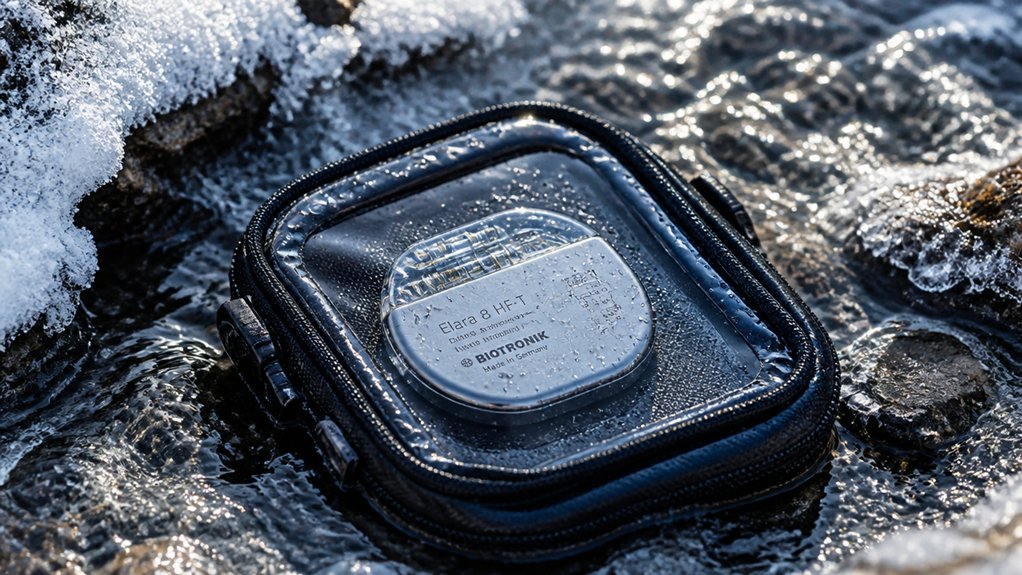
Water immersion, cold weather, and other environmental exposures can impact the safety and function of your implantable cardiac device if you’re not careful. A durable tank cover can help protect your equipment from environmental elements when used appropriately. For patients with implantable devices, immersion in saltwater or conductive fluids should be avoided, as it may divert shock energy and affect the device’s ability to deliver therapy, especially in patients with low BMI. Waterproof implantable cardiac devices generally tolerate water exposure well, but prolonged or deep immersion can damage components or lead integrity. Cold weather exposure doesn’t directly harm your device, but you should protect the implant site from extreme temperatures to prevent skin irritation or tissue damage. Always keep the area clean and dry after water exposure and follow your physician’s advice on bathing, swimming, and environmental precautions to maintain normal pacing and device function.
Frequently Asked Questions
What Precautions Should You Take When Having an Implantable Defibrillator?
When having an implantable defibrillator, avoid saltwater, magnetic fields, and excessive arm movement. Keep a safe distance from electronics and follow your doctor’s guidance on MRI, diathermy, and device compatibility to prevent malfunction or injury.
What Precautions Should Be Taken When Using an Implantable Loop Recorder?
You should avoid swimming in saltwater, exposing the device to metal contact or pressure, and being near strong electromagnetic sources. Always inform healthcare providers about your device, and stay away from security systems or MRI without clearance.
What Are the Risks of Implantable Devices?
The risks include device malfunction, such as impaired sensing or therapy delivery, device migration, lead dislodgment, and interference from electromagnetic fields or conductive fluids. You should avoid activities like swimming to minimize these hazards and guarantee device effectiveness.
What Must Patients With Implantable Devices Usually Carry?
You must carry a medical ID bracelet or necklace indicating your implant, an ID card with device details, and access to your physician’s contact info. Present these at security checkpoints, ensuring emergency responders can provide timely, accurate care.