

If you have an autoimmune condition, avoid cold exposure or cold therapies without consulting your healthcare provider. Cold can cause vasoconstriction, worsen inflammation, and trigger flare-ups, especially with conditions like Raynaud’s, lupus, or multiple sclerosis. Pay attention to symptoms like numbness, pain, or skin changes. Use protective clothing and gradually manage temperature changes. To better understand the specific precautions for your situation and how to stay safe, keep exploring this important topic.
Understanding How Cold Exposure Can Trigger Autoimmune Flares

Cold exposure can trigger autoimmune flares by causing blood vessels to constrict, which reduces blood flow to tissues. This vasoconstriction increases inflammation and stresses vulnerable areas, potentially worsening symptoms.
When exposed to cold, your immune system responds by releasing pro-inflammatory cytokines, amplifying autoimmunity. In conditions like lupus, this immune activation can lead to heightened disease activity and flare-ups.
Cold temperatures may also disrupt normal immune regulation, promoting autoantibody production. If you have an autoimmune disease, maintaining warmth and avoiding prolonged cold exposure become essential to prevent exacerbation.
Which Autoimmune Conditions Are Most Sensitive to Cold?
Many autoimmune conditions are highly sensitive to cold, with Raynaud’s phenomenon leading the list due to its severe vasospasm and color changes in the fingers and toes. Cold exposure can also trigger or worsen symptoms in diseases like multiple sclerosis, cryoglobulinemia, and Sjögren’s syndrome by affecting nerve conduction and blood flow. Recognizing these sensitivities helps you take appropriate precautions to prevent flare-ups and manage symptoms effectively. Incorporating adaptogens may support stress resilience and immune balance, potentially providing additional cold-related protection.
Raynaud’s Phenomenon Susceptibility
Certain autoimmune conditions make individuals more prone to Raynaud’s phenomenon, especially those where blood vessel constriction becomes exaggerated in response to environmental stimuli.
You’re more likely to experience severe episodes if you have these autoimmune diseases:
- Systemic sclerosis (scleroderma) – affects about 90% of cases, causing chronic and severe vascular constriction, tissue damage, and ulcers.
- Lupus (SLE) – 30-50% of patients show Raynaud’s, with cold exposure triggering immune-mediated vasospasms.
- Mixed connective tissue disease – often involves pronounced cold sensitivity leading to vascular constriction.
- Sjögren’s syndrome and rheumatoid arthritis – involve Raynaud’s, but less intensely sensitive to cold.
Cold exposure aggravates these conditions by enhancing immune-mediated vascular responses in extremities, with bromine stability at low temperatures being a relevant consideration for those managing cold-related symptoms.
Cold-Induced Symptom Flare-Ups
Individuals with autoimmune conditions that involve blood vessel sensitivity often notice their symptoms worsen when exposed to cold environments. Cold exposure can trigger symptom flare-ups by causing the immune system attacks to become more active or impair nerve conduction.
Conditions like Raynaud’s phenomenon see blood vessels spasm and change color in response to cold, leading to pain. In multiple sclerosis (MS), cold can worsen neurological symptoms, a phenomenon called Uhthoff’s. Additionally, lupus erythematosus (SLE) patients may experience increased skin stiffness and pain.
Cryoglobulinemia, a vasculitis, is highly sensitive to cold, as it causes abnormal proteins to precipitate, inflaming vessels and causing ulcers. Cold-triggered hives and red blood cell destruction are also risks in related autoimmune conditions, emphasizing the need for cold avoidance.
Is Cold Therapy Safe for People With Autoimmune Diseases?
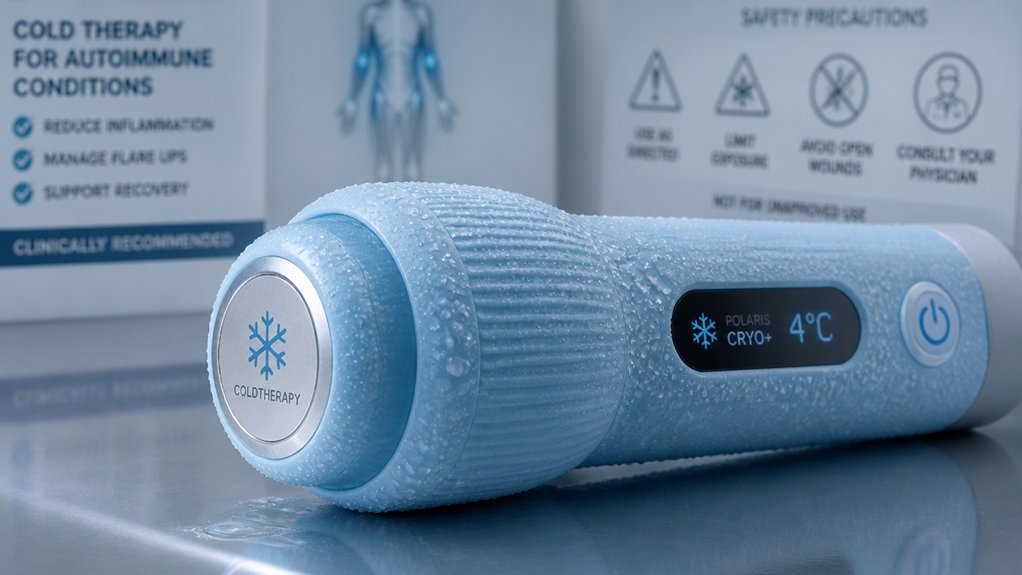
Is cold therapy safe for people with autoimmune diseases? It can be beneficial for managing inflammation and easing symptoms like joint pain from rheumatoid arthritis or lupus. However, caution is key.
Here are important considerations:
- Consult your healthcare provider before starting cold therapy to make certain it won’t trigger flare-ups or worsen symptoms.
- Use cold therapy in moderation to avoid skin damage or circulatory issues common in autoimmune conditions.
- Be cautious if you have autoimmune neuropathies or Raynaud’s phenomenon, as cold sensitivity increases injury risk.
- Always monitor your symptoms; if cold therapy worsens inflammation or discomfort, discontinue use immediately.
While generally safe for some, cold therapy’s impact on your immune system varies—personalized medical advice is essential. Tub capacity and materials can influence treatment safety and comfort during therapy sessions.
How Does Cold Exposure Affect Your Medications and Immune Response?
Cold exposure can influence how your medications work and how your immune system responds. When exposed to cold, vasoconstriction reduces peripheral circulation, which may alter the absorption and metabolism of medications for autoimmune diseases. This can affect the effectiveness of drugs like immunosuppressive drugs, potentially increasing side effects or diminishing their impact.
Additionally, cold exposure can temporarily suppress or dysregulate your immune response, raising the risk of infections or triggering autoimmune flares, especially in conditions like systemic lupus erythematosus. People with autoimmune diseases might experience more severe symptoms during cold environments, requiring adjustments in medication.
If you’re on corticosteroids or immune-modifying therapies, cold stress could further complicate disease management by increasing susceptibility to respiratory infections or altering drug efficacy. Moreover, understanding how water clarifiers are formulated can help you maintain equipment safely while managing your water systems during colder months, ensuring that no harmful residues interfere with your health or treatments.
What Symptoms Should You Watch for During Cold Exposure?

What symptoms should you watch for during cold exposure to protect your health? Recognizing signs early can prevent complications.
- Changes in finger or toe color (white, blue, then red), numbness, tingling, or pain may indicate Raynaud’s phenomenon, which affects impaired circulation in autoimmune diseases.
- Skin redness, swelling, or blisters could signal chilblains, inflammation triggered by cold exposure.
- Muscle stiffness, joint pain, or increased weakness might occur, especially if you have lupus or scleroderma.
- Symptoms of hypothermia, like intense shivering, confusion, slurred speech, or fatigue, are crucial to watch since impaired thermoregulation can be common with autoimmune conditions.
Pay attention, as these symptoms signal the need for prompt medical care to protect your immune system and overall health. Cold exposure can also influence blood oxygen levels, impacting your overall well-being during autoimmune episodes.
Why Skin Involvement Requires Special Caution With Cold
Autoimmune skin conditions like lupus and scleroderma involve inflammation and vascular changes that make your skin especially vulnerable to cold exposure. Cold temperatures trigger vasoconstriction, narrowing blood vessels and reducing blood flow to the skin, which can worsen inflammation and tissue damage.
Autoimmune skin conditions increase sensitivity to cold, risking inflammation and tissue damage with exposure. Stay warm and protected.
If you have Raynaud’s phenomenon, cold exposure can cause painful color changes, numbness, and rapid flare-ups. Protecting your skin with appropriate clothing is essential to minimize cold-induced triggers.
Prolonged exposure can intensify autoimmune activity, leading to more severe skin lesions or rashes. Your skin’s heightened sensitivity means you must take extra caution during colder weather, avoiding exposure whenever possible. Ensuring your environment is kept warm with appropriate protective cold plunge gear helps prevent flare-ups and minimizes the risk of injury.
Can Cold Exposure Worsen Nerve or Blood Vessel Symptoms?
Cold exposure can lead to blood vessel constriction, which decreases blood flow and worsens symptoms like pain and numbness. A filtration system in some chillers helps maintain water quality, but prolonged cold exposure still risks aggravating nerve sensitivity and causing more discomfort or muscle weakness. To prevent flare-ups, it’s important to manage your environment and protect yourself from prolonged cold exposure.
Cold-Induced Vasoconstriction Effects
Exposure to cold can lead to vasoconstriction, which narrows blood vessels and reduces blood flow. This reaction can worsen symptoms in autoimmune diseases involving nerves and blood vessels.
When blood flow decreases, nerves may experience ischemia, increasing pain or sensory disturbances. Cold-induced vasoconstriction can also trigger inflammation and tissue hypoxia, further damaging small vessels.
If you have an autoimmune condition, preventing cold exposure is essential. Key considerations include:
- Reduced blood flow and oxygen delivery increase nerve and tissue damage.
- Vasoconstriction may worsen inflammation in affected tissues.
- Prolonged cold can intensify microvascular damage.
- Protective measures like warming gloves help avoid flare-ups.
- Ozone generation can sometimes be used in controlled environments to improve water sanitation, but care must be taken to avoid exacerbating vasoconstriction symptoms due to cold exposure.
Nerve Sensitivity Increase
When blood vessels constrict in response to cold, nerve sensitivity can increase, leading to more intense symptoms like numbness, tingling, and pain. Cold exposure reduces blood flow to nerves and extremities, worsening symptoms in autoimmune diseases such as peripheral neuropathy or Raynaud’s phenomenon. This constriction triggers inflammatory responses and increases sensory nerve excitability, heightening nerve sensitivity. To help manage these effects, consider the following:
| Cold Exposure Effect | Impact on Nerves | Precaution |
|---|---|---|
| Vasoconstriction | Decreases blood supply to nerves | Wear protective clothing |
| Inflammatory response | Elevates nerve hypersensitivity | Avoid sudden temperature changes |
| Blood flow reduction | Worsens nerve pain | Minimize cold exposure |
| Symptom flare-ups | Increase discomfort | Monitor symptoms closely |
| Autoimmune exacerbation | Heightened nerve and vessel issues | Maintain warmth and care |
Protecting your immune system from cold reduces nerve and blood vessel issues.
Symptom Flare Risks
Experiencing sudden temperature drops can greatly increase the risk of symptom flares in autoimmune conditions affecting nerves and blood vessels. Cold exposure triggers vasoconstriction, reducing blood flow and worsening symptoms.
If you have an autoimmune disease like Raynaud’s phenomenon or autoimmune neuropathy, you’re especially vulnerable to cold-induced flare-ups. Here’s how cold exposure can impact you:
- Nerves may become numb or tingling due to impaired conduction.
- Blood vessels can inflame, leading to vasculitis symptoms worsening.
- Muscle weakness or sensory issues might intensify in cooler environments.
- Your immune system’s response can become dysregulated, amplifying inflammation.
To prevent symptom flares, keep warm and avoid sudden temperature changes, supporting your nerves and blood vessels against cold-triggered damage.
What Steps Should You Take If Cold Therapy Triggers a Flare?
Have you noticed that cold therapy seems to worsen your symptoms instead of easing them? If it triggers a flare in your autoimmune disease, stop cold therapy immediately to prevent further inflammation. Notify your healthcare provider without delay to evaluate your symptoms and adjust your treatment plan. Use alternative methods like gentle heat therapy or prescribed anti-inflammatory medications under medical guidance to manage pain and swelling. Monitor your symptoms closely—watch for increased pain, swelling, or skin color changes—and seek urgent care if things worsen. Do not reapply cold therapy until your doctor clears you. Taking these steps helps minimize immune system irritation and prevents aggravating your autoimmune response.
| Step | Explanation |
|---|---|
| Stop cold therapy | Prevent further inflammation and tissue irritation |
| Consult healthcare provider | Get professional assessment and guidance |
| Use alternative methods | Rely on heat therapy or medications as advised |
| Monitor symptoms closely | Track changes and seek urgent care if severe |
| Reapply cold therapy | Only after healthcare clearance |
Alternatives to Cold Therapy for Managing Autoimmune Symptoms
If cold therapy triggers a flare in your autoimmune condition, exploring alternative methods can help manage symptoms safely. These options support your immune system and reduce inflammation, enhancing symptom management.
If cold therapy worsens your autoimmune symptoms, try gentle heat, mindfulness, and anti-inflammatory diets for safer relief.
Consider:
- Heat therapy — relaxes muscles and improves blood flow, easing stiffness and pain.
- Gentle physical activity — like stretching or yoga, which can alleviate joint discomfort without worsening inflammation.
- Topical analgesics — such as capsaicin or menthol, providing localized pain relief without cold application.
- Mind-body techniques — including meditation or deep breathing, which may calm immune responses and lower stress-induced flare-ups.
Pair these with anti-inflammatory diets rich in omega-3s, antioxidants, and vitamins to further support immune health and reduce systemic inflammation.
Consult Your Healthcare Provider Before Trying Cold Exposure
Before trying cold exposure, you should talk to your healthcare provider to understand how it might impact your autoimmune condition.
Cold shock can increase stress on your immune system and potentially trigger symptom flares, especially if you have circulation issues.
Since everyone’s response varies, a personalized assessment guarantees you weigh the potential benefits and risks properly.
Cold Shock Risks
Considering cold exposure therapies might seem appealing, but they carry significant risks for individuals with autoimmune conditions affecting the heart or blood vessels. Cold shock can cause rapid vasoconstriction and cardiovascular stress, which may lead to serious complications.
If you have an autoimmune disease, especially with neuropathy or impaired temperature regulation, cold shock could worsen your symptoms or cause tissue damage. Additionally, the sudden cold can trigger immune system stress, leading to inflammation flare-ups.
To stay safe:
- Always consult your healthcare provider before attempting cold therapies.
- Monitor your responses closely during cold exposure.
- Avoid sudden, extreme cold shocks; opt for controlled, gradual cooling.
- Be aware of signs indicating excessive immune stress or cardiovascular issues.
Symptom Flare Triggers
Cold exposure can act as a trigger for symptom flares in autoimmune conditions by activating inflammatory pathways and putting stress on your immune system. When you experience cold exposure, your body responds with vasoconstriction, which can worsen symptoms like joint stiffness, muscle weakness, and pain common in autoimmune diseases.
Cold temperatures may also increase the risk of respiratory infections, known to trigger flares. Because individual responses vary, it’s essential to consult your healthcare provider before trying cold therapies like ice baths or cold showers. They can help determine if cold exposure could exacerbate your specific condition or risk triggering symptom flares.
Managing temperature changes carefully is vital to prevent unnecessary stress on your immune system and avoid worsening your autoimmune symptoms.
Individual Response Variability
Because responses to cold exposure can differ widely among individuals with autoimmune conditions, it’s essential to consult your healthcare provider before trying any cold therapies. Your immune system’s unique response can influence whether cold triggers autoimmune symptoms or improves your condition.
Recognizing individual response variability is vital for safety and effectiveness.
Consider these points:
- Some autoimmune diseases may worsen with cold, causing symptoms like joint pain or Raynaud’s phenomenon.
- Cold exposure might exacerbate vascular sensitivity, reducing blood flow to extremities.
- Variability in immune response depends on disease type, severity, and individual health status.
- Clinical guidance from your healthcare provider minimizes risks of triggering autoimmune flares or adverse reactions.
Always consult your health care provider to tailor any cold exposure to your specific autoimmune condition.
Frequently Asked Questions
What Precautions Should You Take for Autoimmune Disease?
You should consult your healthcare provider about medications, avoid live vaccines if severely immunocompromised, inform them of any illnesses, monitor for flares, and maintain open communication to manage your condition safely and reduce risks.
What Are the Top 5 Worst Autoimmune Diseases?
You should be aware that the top five worst autoimmune diseases are multiple sclerosis, systemic lupus erythematosus, type 1 diabetes, rheumatoid arthritis, and myositis, as they cause severe, life-threatening organ damage, disability, and drastically impact your quality of life.
What Are the Dangers of Autoimmune Diseases?
Autoimmune diseases can threaten your health by causing organ damage, increasing infection risks, and triggering severe flare-ups. If untreated or unmanaged, you could face disability, life-threatening complications, or permanent damage. Recognize symptoms early and seek prompt medical care.
What Should You Avoid With Autoimmune Disease?
You should avoid live vaccines if severely immunocompromised, smoking, environmental toxins, certain medications, high-inflammatory foods, obesity, and unnecessary medications. These can worsen autoimmune symptoms or increase risks, so always consult your doctor before making any health-related changes.