Cold plunge therapy can help ease tendon inflammation and reduce pain by causing blood vessels to constrict, which limits swelling and inflammation. It also slows nerve signals, numbing pain sensations and promoting faster recovery. Regular use lowers inflammatory markers and supports tissue healing at the cellular level. But it’s important to follow safety guidelines and avoid plunges during the acute injury phase. Keep going to discover how to maximize these benefits safely and effectively.
How Cold Plunge Therapy Reduces Tendon Inflammation and Pain
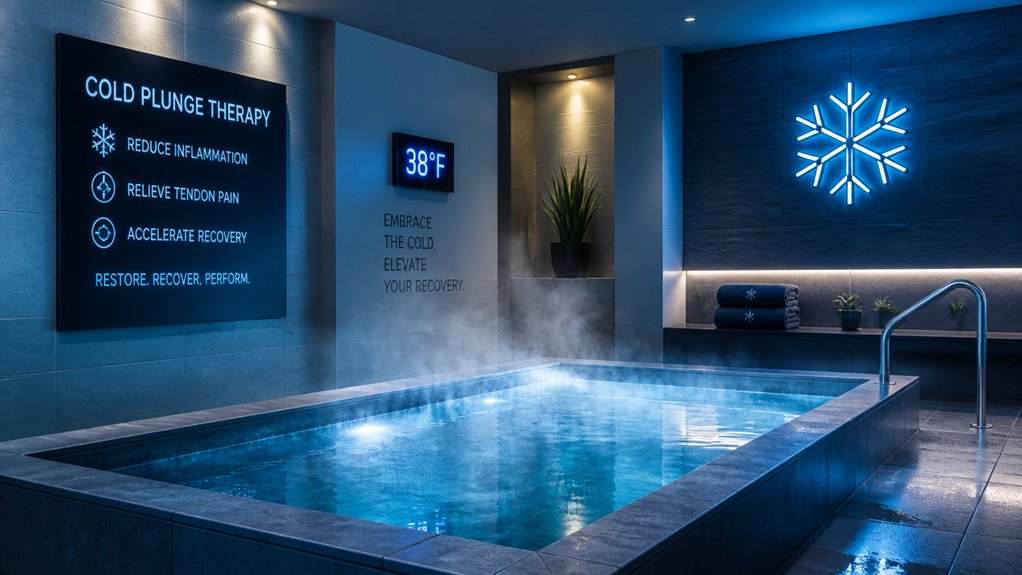
Cold plunge therapy effectively reduces tendon inflammation and pain by inducing vasoconstriction, which constricts blood vessels and limits blood flow to the affected area. Cold water immersion at 50-59°F causes blood vessels to tighten, decreasing swelling and inflammatory responses.
This process helps calm tendon inflammation and provides pain relief by numbing nerve endings and slowing nerve signal transmission. Cold plunge therapy fundamentally supports recovery by managing inflammation early after injury, preventing excessive swelling that can delay healing.
Regular use of cold water immersion as part of physical therapy guarantees the reduction of inflammatory markers and promotes a more controlled healing environment. Incorporating cold plunge therapy immediately after injury optimizes the initial stages of tendon recovery and helps you stay on track with your healing process.
How Cold Therapy Supports Tendon Healing at the Cellular Level
By reducing blood flow and metabolic activity within tendon tissues, cold therapy directly influences cellular processes essential for tendon healing. Cold immersion induces vasoconstriction, limiting tendon inflammation by decreasing inflammation-causing cells and pro-inflammatory cytokines like interleukin-1β and tumor necrosis factor-alpha. It slows cellular metabolism, reducing oxidative stress and minimizing tissue damage. Additionally, cold therapy triggers norepinephrine release, which promotes vasoconstriction and has anti-inflammatory effects. Nerve conduction velocity drops during cold immersion, providing analgesic benefits that ease pain. These combined effects support efficient tendon repair by controlling inflammation and promoting a favorable environment for recovery. Proper water temperature regulation, using an appropriate chiller, is crucial for effective temperature control during therapy sessions.
How to Use Cold Plunges Safely for Tendon Recovery
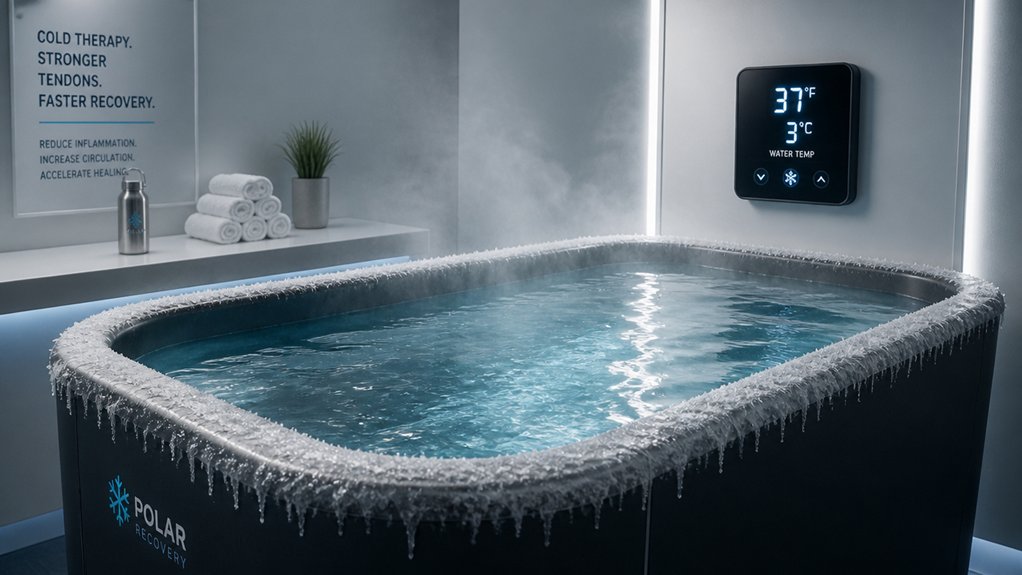
To maximize tendon recovery and minimize risks, it’s essential to use cold plunges correctly. Stick to cold water temperatures between 50-59°F (10-15°C) and limit immersion therapy to 1-5 minutes. This range helps reduce inflammation without risking frostbite or hypothermia. Using a thermometer or a temperature control system can help maintain precise and consistent water temperatures. Limit sessions to 1-2 times per week initially, and increase frequency gradually as tolerated—overdoing it can impair tissue healing. Always dry and warm the affected tendon area promptly after the cold plunge to prevent prolonged numbness and guarantee proper circulation. Avoid cold plunges immediately after resistance training; wait at least four hours, as cold exposure might hinder recovery. If you have cardiovascular issues or diabetes, consult your healthcare provider before starting cold plunge therapy to ensure safety.
Combining Cold Plunges With Other Treatments for Better Tendon Healing
Combining cold plunge therapy with other treatments can enhance your tendon healing process by targeting different aspects of recovery. Using cold water immersion promptly after activity reduces swelling and tendon inflammation, limiting tissue damage.
Alternating cold plunges with heat therapy, like warming pads or infrared saunas, helps manage swelling and promotes blood flow—crucial for tissue repair. Incorporating cold plunges into your physical therapy and active recovery routines boosts tendon healing by maintaining flexibility and strength while reducing inflammation.
Applying cold within 10-15 minutes after activity minimizes acute inflammation, while later heat therapy supports ongoing tissue repair at advanced stages. Properly combining cold plunges with rest, elevation, and targeted exercises optimizes recovery outcomes and accelerates tendon healing. Wavelengths emitted by red and near-infrared devices can penetrate deep tissues, further supporting healing processes.
When Should You Avoid Cold Plunges for Tendon Injuries
Ever wonder when cold plunges might do more harm than good for tendon injuries? You should avoid immersing yourself in cold water during the acute inflammatory phase, especially if swelling and pain are prominent. Cold constricts blood vessels, which can worsen poor circulation and slow healing.
If you have nerve issues, sensory impairments, or peripheral neuropathy, cold water increases frostbite risk and nerve damage.
People with cardiovascular problems, high blood pressure, or diabetes should consult a doctor before cold plunging, as the shock can strain the heart and impair blood flow.
Pregnant individuals and those with cold agglutinin disease must steer clear, since cold exposure might trigger systemic complications.
Prolonged immersion over ten minutes can further impede tissue repair and increase tendon stiffness. Additionally, cold plunge thermometers with timer features help prevent overexposure by alerting you when the recommended time has elapsed.
Frequently Asked Questions
Are Cold Plunges Good for Tendonitis?
Cold plunges can help reduce tendonitis inflammation by constricting blood vessels and decreasing swelling. You should use them briefly during the early stages, but combine with rest, proper treatment, and avoid prolonged exposure to support healing effectively.
Does Cold Plunge Get Rid of Inflammation?
Yes, cold plunges reduce inflammation by causing vasoconstriction, which limits blood flow and swelling. They also numb pain temporarily, helping you manage tendon inflammation more comfortably. However, they don’t speed up long-term healing, so combine with physical therapy.
When Should You Not Do a Cold Plunge?
You shouldn’t do a cold plunge if you have heart disease, high blood pressure, diabetes, or circulation issues. Avoid it during pregnancy, with cold intolerance conditions, or if you experience symptoms like dizziness, chest pain, or numbness during immersion.
How Long Does an Ice Bath Take to Reduce Inflammation?
An ice bath typically takes 10 to 15 minutes to effectively reduce inflammation, but for beginners, start with 30 seconds to 1 minute and gradually increase the duration. Always avoid exceeding 15 minutes to prevent tissue damage.