To quickly reduce swelling after immersion, start with cold therapy like ice packs or cold water immersion to constrict blood vessels and limit inflammation. Elevate the limb above your heart for at least 20 minutes to promote fluid drainage, and gently move muscles to stimulate lymphatic flow. Apply light compression without restricting circulation. For persistent swelling, consider advanced treatments or consult a professional. Keep practicing these steps to support faster recovery and prevent future issues—more helpful tips are ahead.
What Are the Effects of Cold Water Immersion on Swelling and Inflammation?
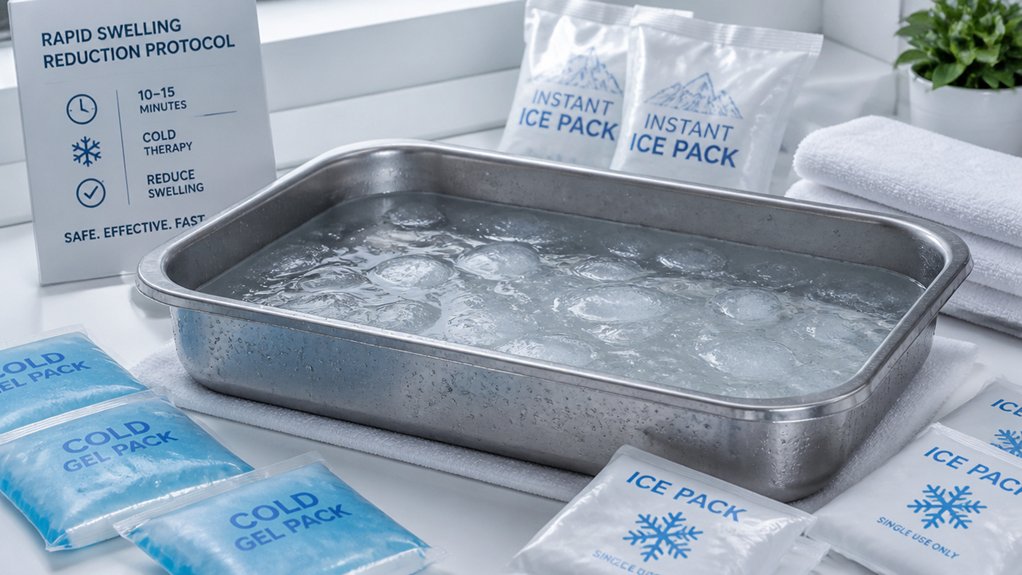
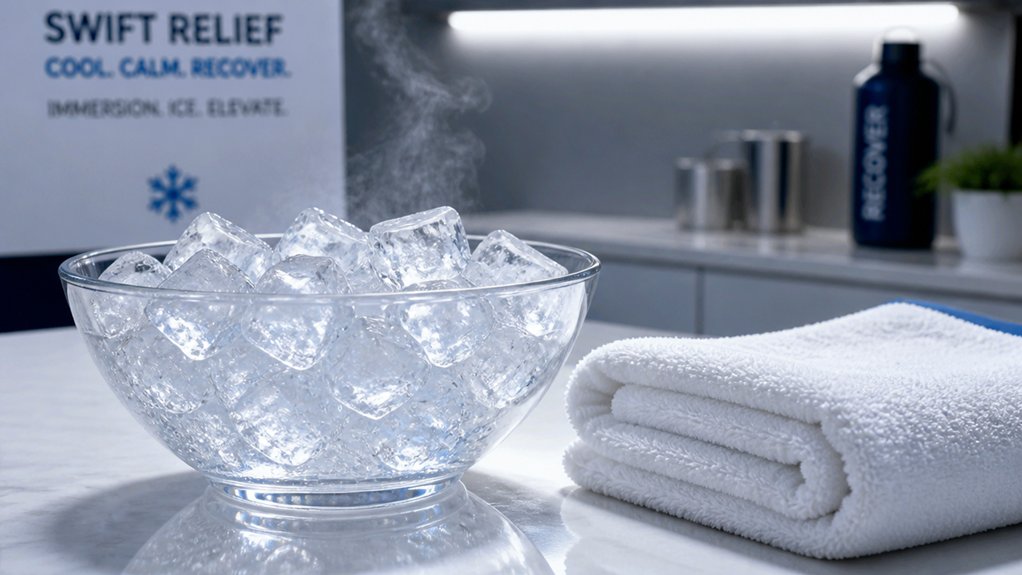
Cold water immersion (CWI) is an effective method for reducing swelling and inflammation after injury or intense exercise. When you immerse in cold water, it causes vasoconstriction, narrowing blood vessels and decreasing blood flow to the injured area. This limits the inflammatory response and helps control swelling.
Cold water also slows metabolic processes, reducing tissue breakdown and excess fluid accumulation, which contributes to edema. After the immersion, vasodilation occurs, encouraging blood flow that helps flush out metabolic waste and excess fluids.
Additionally, cold therapy stimulates the release of norepinephrine, which helps regulate inflammatory markers like TNF-alpha, further minimizing swelling. Overall, cold water immersion’s physiological effects greatly reduce inflammation and swelling, making it an effective approach for recovery. Temperature modulation plays a key role in balancing inflammation and promoting optimal healing.
How to Quickly Reduce Swelling After Your Cold Water Plunge : A Step-by-Step Guide
After completing your cold water immersion, taking immediate steps to reduce swelling can speed up recovery.
Post-immersion, elevate and compress to reduce swelling and promote faster recovery.
First, elevate the injured limb above heart level for 20 minutes to promote fluid drainage and decrease swelling. Second, apply gentle compression with an elastic bandage, wrapping from the distal to proximal part to support lymphatic return without cutting off circulation.
Third, perform light, pain-free muscle contractions like ankle pumps or quad sets during elevation to activate venous and lymphatic flow, reducing pooled fluid. Fourth, consider using compression therapy boots with appropriate pressure settings to enhance circulation and further diminish swelling multi-chamber designs. Finally, avoid excessive anti-inflammatory medications immediately after immersion, allowing natural healing to occur.
These simple steps effectively minimize swelling, improve circulation, and help your injured limb recover faster after a cold plunge.
How Can Cold Water Therapy and Gentle Movement Help Drain Swelling?
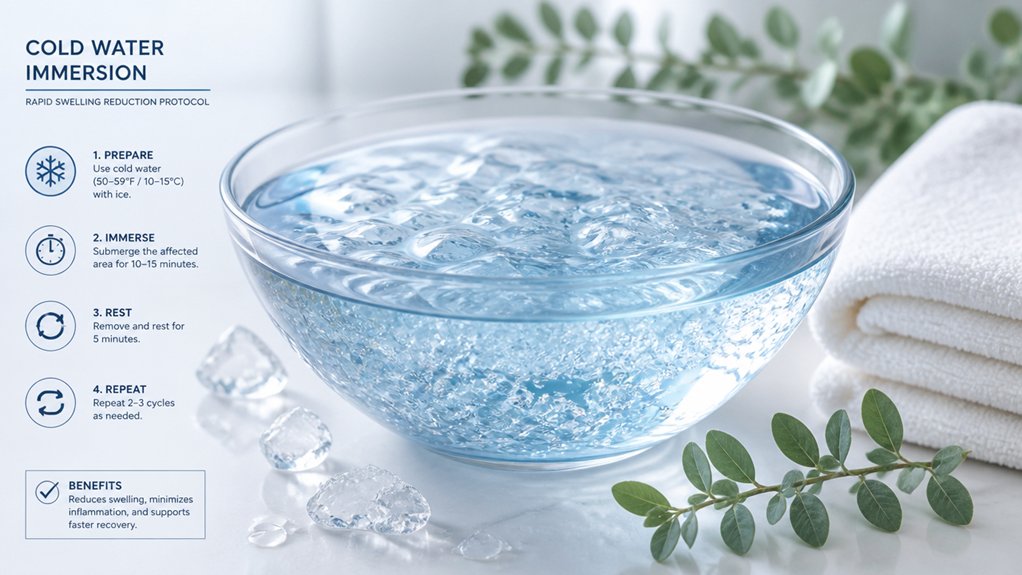
Cold water therapy causes blood vessels to constrict, which helps limit swelling by reducing blood flow.
When you do gentle movements like ankle pumps afterward, it encourages lymphatic drainage and improves circulation. This combined approach speeds up swelling reduction and clears waste from the injured area.
Enhances Lymphatic Drainage
When you immerse a swollen limb in cold water, the vasoconstriction that occurs immediately reduces blood flow, which helps limit fluid leakage into surrounding tissues. This initial step aids in reducing swelling fast and minimizes fluid from pooling.
Cold water therapy also induces alternating vasoconstriction and vasodilation, flushing metabolic waste and excess interstitial fluid through the lymphatic systems. Gentle movement, like ankle pumps and muscle contractions, stimulates lymphatic flow, supporting active recovery.
To further enhance lymphatic drainage:
- Boosts circulation by encouraging fluid movement.
- Promotes the Manual Lymphatic approach, aiding in drained swelling.
- Helps regulate inflammation via norepinephrine release.
- Supports injured tissue healing by facilitating fluid removal.
- Using water treatment liquids can help maintain water clarity and hygiene, creating an optimal environment for recovery.
Together, these actions improve lymphatic function and accelerate swelling reduction.
Promotes Gentle Circulation
Gentle movement combined with cold water therapy helps promote circulation and encourages fluid drainage from swollen tissues. Cold reduces blood flow initially through vasoconstriction, limiting new swelling, then vasodilation boosts circulation to flush out fluid away. This “pumping” effect enhances venous and lymphatic return, reducing swelling in the injured or affected area. Gentle movement during and after immersion, like ankle pumps or light stretches, stimulates muscle contractions that aid in fluid drainage, providing pain relief. The norepinephrine released during cold exposure also lower inflammatory markers, helping the body resolve swelling faster. Incorporating adaptogenic support can further optimize the body’s response to stress and inflammation, promoting faster recovery. Alternating vasoconstriction and vasodilation facilitates gentle circulation without stressing injured tissues.
What Are the Best Techniques for Compressing and Elevating After Cold Therapy?
What’re the most effective ways to compress and elevate your limb after cold therapy? Start with compression wrapping: begin at the furthest point from the heart and overlap the elastic bandage by 50%, ensuring smooth, even pressure without cutting off circulation.
Next, elevate the swollen area above heart level using firm pillows; keep it elevated at least 20 minutes to promote fluid drainage. Maintain elevation between compression sessions to improve circulation and prevent fluid pooling.
When applying compression, keep the elastic bandage snug but not tight—regularly check for numbness, discoloration, or pain to avoid restricting blood flow. Combining elevation and compression simultaneously optimizes lymphatic and venous return, effectively reducing swelling after cold therapy. Additionally, using fast-absorbing topical creams can support muscle recovery and decrease inflammation post-treatment.
When Should You Use Advanced Treatments for Persistent Swelling?
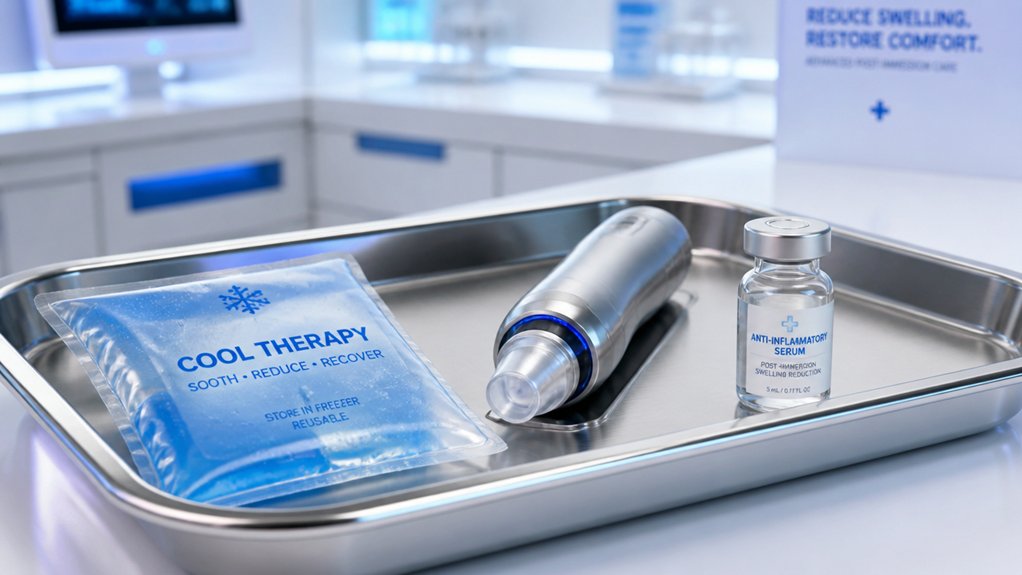
If your swelling sticks around after a few days of home care or keeps coming back, it’s time to explore advanced treatments. A muscle recovery approach that incorporates specialized tools like gua sha or lymphatic drainage massage can enhance circulation and reduce inflammation more effectively.
When other measures don’t work, consulting a professional can help target the root cause and provide relief.
Indicators for Advanced Therapy
Determining when to pursue advanced therapies for persistent swelling can be essential for effective recovery. You should consider such treatments if:
- Swelling lasts beyond a few days despite consistent elevation, compression, and home care.
- Swelling worsens or causes significant limits in joint mobility, pain, or stiffness that affect daily activities.
- You notice skin changes like redness, warmth, or signs of infection, requiring immediate medical attention before proceeding.
- Swelling becomes chronic or unresponsive to conventional methods, indicating possible lymphatic system issues or lymphedema, warranting specialized care from certified therapists.
Addressing these indicators promptly helps prevent further complications and supports ideal healing.
Specialized Treatment Options
Persistent swelling that doesn’t improve with basic home care, such as elevation and compression, signals the need to evaluate advanced treatment options. When swelling stays or worsens after several days, it can hinder healing, cause stiffness, or disrupt daily activities. Incorporating cold therapy knee sleeves can aid in managing inflammation and reducing swelling more effectively during the initial stages of recovery. Certified lymphedema therapists recommend specialized treatments like Manual Lymphatic Drainage (MLD) and Intermittent Pneumatic Compression (IPC) to effectively reduce swelling. MLD uses gentle strokes to stimulate lymph flow, while IPC devices deliver wave-like compression to move fluid to the body’s core. Complete Decongestive Therapy (CDT), combining MLD, compression, exercises, and skin care, is the gold standard for managing chronic swelling and post-operative swelling. If swelling worsens with pain or redness, seek professional evaluation for personalized therapy options to improve recovery.
Tips to Support Your Recovery and Prevent Future Swelling
To support your recovery and prevent future swelling after immersion, adopting simple strategies can make a significant difference. First, elevate the swollen limb above heart level for at least 20 minutes multiple times daily to improve lymphatic drainage and reduce swelling.
Second, use gentle compression garments to support blood vessels and encourage blood flow, helping the soft tissue heal efficiently.
Third, stay well-hydrated and follow a low-sodium, anti-inflammatory diet with berries and omega-3s to strengthen vascular health.
Finally, incorporate light movements like ankle pumps or quad sets, which activate muscle contractions, aiding fluid return and preventing stiffness. Scheduled cold therapy, such as ice packs or cold water immersion, also helps manage inflammation and minimize persistent swelling. Incorporating protein intake with fast-absorbing amino acids and digestive support can further enhance tissue repair after cold exposure.
Frequently Asked Questions
What Helps Swelling Go Down Immediately?
To reduce swelling immediately, elevate your limb above your heart, apply gentle compression with an elastic bandage, use cold therapy, perform light muscle contractions, and avoid standing or weight-bearing. These actions work together to promote fluid drainage quickly.
What Is the 20 20 Rule for Ice?
The 20-20 rule for ice involves applying ice for 20 minutes, then taking a 20-minute break before reapplying. This method prevents skin damage, maintains effective cooling, and helps reduce swelling safely.
Does Ice Really Bring Down Swelling?
Yes, ice can reduce swelling by causing vasoconstriction and limiting fluid buildup. However, you should apply it gently and in moderation, balancing it with compression and elevation to support proper healing without hindering inflammation.
Why Is Ice No Longer Recommended?
Ice is no longer recommended because it can cause excessive vasoconstriction, tissue hypoxia, and delay healing. Controlled cold therapy at specific temperatures supports swelling reduction without hindering the body’s natural inflammatory process.