
To prevent panic attacks during plunges, focus on grounding with cold water, scents, or tactile tools like stress balls to distract your senses. Practice controlled breathing, such as square or diaphragmatic breaths, to calm your nervous system. Gradually acclimate to cold exposure to build confidence and reduce anxiety. Recognize your triggers and create a safe environment for each plunge. Keep exploring ways to stay composed—you’re about to discover even more effective strategies.
How Cold Water Grounding Can Quickly Reduce Panic Symptoms

When you start feeling a panic attack coming on, using cold water grounding can quickly pull you back to the present. Splashing cold water on your face or holding ice cubes creates intense physical sensations that divert your focus from internal panic symptoms.
Cold water also counters the warmth and heat feelings typical of a panic attack, helping to stabilize your body’s physical state. Dunking your head in a bowl of ice water provides a strong sensory anchor, engaging your tactile and temperature senses to interrupt escalating anxiety.
The shock of cold stimulates your vagus nerve, which can slow your heart rate and activate your parasympathetic nervous system, calming the panic response. Cold water grounding offers immediate, portable relief, reducing panic symptoms within minutes measurement parameters and supporting your body’s recovery process.
Using Ice, Scent, and Tactile Tools During a Cold Plunge
Using ice, scented items, and tactile tools during a cold plunge can greatly enhance grounding efforts and prevent panic from escalating. Holding ice cubes provides intense cold sensory input that sharply shifts your focus away from internal panic symptoms, reducing the overall panic attack severity.
A breathing exercise device or similar tool can help regulate your breathing pattern, further calming your nervous system during the process.
Scented essential oils or strong-smelling items, like herbs or aromatic sprays, help divert your attention externally, calming your mind through olfactory stimulation. Tactile tools such as stress balls or fidget spinners offer soothing tactile sensations that keep you grounded while submerged.
Combining cold sensations with external sensory distractions interrupts the panic cycle by redirecting your attention from internal symptoms to external stimuli. Keeping a small kit nearby guarantees quick access, empowering you to prevent panic attacks during cold plunges effectively.
How Strong Flavors Like Sour Candy Distractions Help During Panic

Strong flavors like sour candy can serve as effective distractions during a panic attack by engaging your taste buds with intense, rapid sensations. The sharp, tangy taste of sour candy, especially Warheads, provides a sudden sensory stimulus that interrupts racing thoughts. Using sour candy or other strong flavors (hot sauce, wasabi) stimulates multiple sensory pathways, helping you stay grounded. Here’s how sour candy helps: 1. Redirects attention away from internal panic signals. 2. Triggers a neurological “grounding” effect, focusing your brain externally. 3. Provides quick relief by shifting sensory awareness. 4. Offers accessible, immediate distraction in stressful moments. Incorporating pH-balanced cleansers in your routine can also help maintain a calm and resilient skin barrier, supporting overall emotional and physical well-being. Keeping sour candy in your survival kit can make a big difference, calming panic and helping you regain control during plunges or stressful situations.
Breathing Tricks to Calm Yourself Before and After Cold Exposure
Preparing your breathing before and after cold exposure can greatly reduce panic symptoms and help you stay calm. Breathing slowly and intentionally activates your nervous system’s calming response. Practice square breathing—inhale for 4 counts, hold for 4, exhale for 4, hold for 4—to regulate your heart rate and prevent hyperventilation.
Deep diaphragmatic breathing, focusing on expanding your abdomen rather than your chest, improves oxygen flow and soothes your nerves during cold plunges. Techniques like 4-7-8 breathing (inhale 4, hold 7, exhale 8) prepare your body against panic reactions.
Using breath counting or triangle breaths (3 counts each phase) keeps your mind focused, reducing breathlessness. Controlled exhalations and audible sighs relax muscles and counteract the fight-or-flight response triggered by cold stress. Incorporating your awareness of timer accuracy ensures you stay relaxed and confident during each session.
Recognizing Personal Triggers to Prevent Panic During Cold Baths
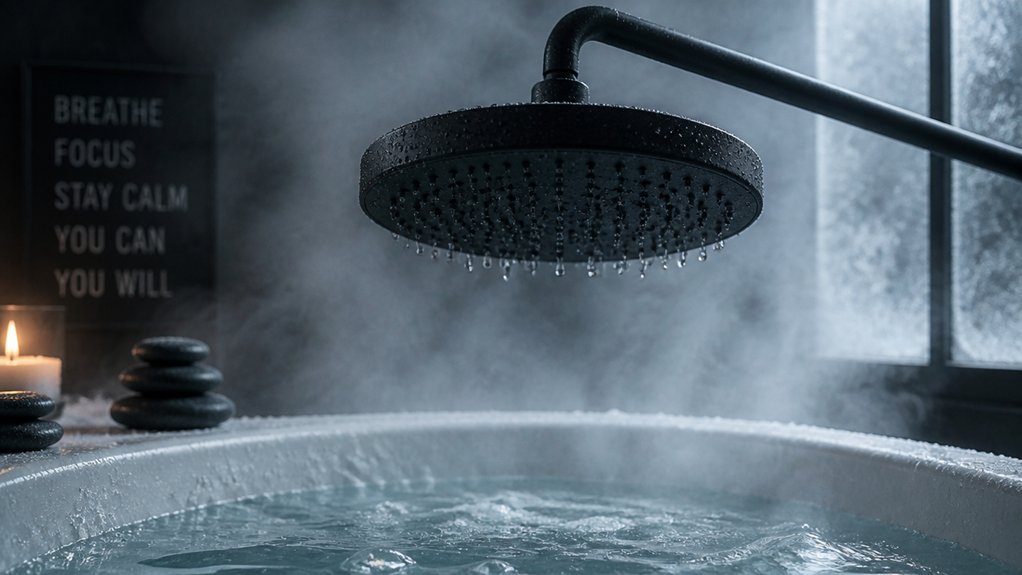
Understanding your personal triggers is essential for preventing panic during cold baths. Identifying what sets off your panic response—such as fear of cold, enclosed spaces, or jarring temperature changes—allows you to anticipate issues and stay calm.
To manage this, consider these steps:
- Recognize specific fears or sensations that heighten your anxiety.
- Gradually expose yourself to cold water to build tolerance.
- Practice controlled breathing techniques before and during immersion to keep panic at bay.
- Be aware of your usual anxiety cues, using grounding methods proactively.
- Incorporate breathing modes that support rhythm stabilization, helping to maintain a steady mental state during the plunge.
Avoid plunging when you’re overly stressed or fatigued, which can heighten your sensitivity to triggers. Being aware of personal panic cues helps you stay composed, preventing full-blown panic during cold baths.
Staying Calm With Mindfulness and Mantras During Your Cold Plunge
Focusing your attention on mindfulness and mantras during a cold plunge can help you stay composed and prevent panic from taking over. Focus on breathing deeply and slowly, which helps reduce adrenaline and hyperventilation. Repeating calming mantras like “This will pass” or “I am safe” redirects your mind from racing thoughts to reassurance. Incorporating adaptogen blends into your routine can further support your stress resilience and promote a calmer mental state during cold exposure. As you immerse yourself, observe the sensations—the cold water’s texture and temperature—without resistance, cultivating acceptance. Combining mindfulness with sensory grounding and positive self-talk stabilizes your emotional state and interrupts the panic cycle.
Building a Mental First Aid Kit to Manage Cold Pool Anxiety
Building a mental first aid kit tailored for cold pool anxiety equips you with quick, effective tools to manage discomfort and prevent panic attacks. It helps you stay grounded and shift focus away from cold-induced fears.
Create a mental first aid kit to stay grounded and manage cold pool anxiety effectively.
Consider including:
- Sensory items like ice cubes or cold water to distract and calm your mind.
- Tactile objects such as stress balls or fidget spinners to provide physical reassurance.
- Strong mints or sour candies to stimulate taste receptors and serve as a sensory anchor.
- Written coping statements and breathing instructions to encourage mental reassurance and controlled breathing.
- Using Cold Plunge Thermometers to monitor water temperature accurately can help you feel more in control and reduce fear of unexpected cold exposure.
Adding familiar soothing scents or essential oils can further ground your attention.
These items support you in quickly counteracting panic symptoms triggered by the cold, helping prevent attacks from escalating.
Gradually Building Tolerance to Cold Therapy to Reduce Panic Risks
To reduce the risk of panic attacks during cold plunges, gradually increasing your exposure to cold therapy can make a significant difference. Starting with brief, mild cold water immersion sessions helps your nervous system adapt, lowering the fight-or-flight response that often triggers panic.
As you build tolerance, you can slowly extend the duration and decrease the temperature, boosting your confidence and control. Consistent cold therapy practice supports better regulation of your breathing and heart rate, key factors in managing panic symptoms.
Pairing cold exposure with grounding techniques, such as focusing on external sensations, reinforces a sense of calm. Scientific evidence shows that progressive cold therapy can strengthen your autonomic nervous system, making sudden cold plunges less likely to provoke panic. Incorporating proper insulation and water treatment into your setup can also help maintain consistent temperatures, aiding your gradual adaptation process.
Creating a Calm Environment to Prevent Panic During Cold Dips
Creating a calm environment is essential for reducing panic during cold dips, as a peaceful setting helps minimize sensory overload that can trigger anxiety.
A tranquil environment helps prevent panic and keeps anxiety at bay during cold dips.
When your surroundings are quiet and free of distractions, you can better focus on your breathing and stay centered. To foster this calming atmosphere, consider:
- Reducing noise and avoiding sudden sounds.
- Focusing on external sights and sounds to anchor your attention.
- Using tactile grounding items like stress balls or fidget toys.
- Practicing soothing self-talk or calming coping statements.
Deep, steady breathing helps maintain your composure and calm your mind throughout the dip.
When to Seek Professional Support for Cold Plunge-Related Anxiety
If you notice frequent panic attacks or if anxiety about cold plunges disrupts your daily life, it’s time to seek professional support.
Recognize symptoms like persistent fear, hyperawareness, or failure of self-help methods to manage your anxiety. Consulting a healthcare provider can help you develop personalized strategies to safely handle cold water immersion.
Recognizing Anxiety Symptoms
Understanding when cold plunge-related anxiety warrants professional support is essential for your well-being. You should consider seeking help if your symptoms become frequent, intense, or interfere with daily life.
Watch for signs like:
- A racing heartbeat that persists or worsens during plunges
- Shortness of breath, dizziness, or sweating that feels uncontrollable
- Feelings of impending doom or persistent fear of cold plunges, even after repeated exposures
- Chest pain or symptoms similar to a heart attack during or after plunges
If these symptoms are present, especially if they disrupt your routine, it’s time to consult a healthcare provider. Recognizing these signs early helps prevent escalation and guarantees you get the proper support.
Accessing Professional Support
When your anxiety symptoms during cold plunges become frequent or severe enough to disrupt your daily routine, seeking professional support can make a significant difference. Recognizing when to reach out is vital for your health care. If panic attacks happen often or interfere with your life, consulting a mental health professional is essential. They can provide cognitive-behavioral therapy (CBT) tailored to your needs and develop a structured exposure plan to help you acclimate safely. If panic occurs unpredictably despite self-help efforts, a healthcare provider may prescribe medications like SSRIs or benzodiazepines for short-term relief. Remember, timely intervention can reduce anxiety and keep you safe during cold plunges.
| When to Seek Support | Why It Matters | Your Next Step |
|---|---|---|
| Frequent panic | Disrupts life | Contact a health care professional |
| Unpredictable attacks | Risks health | Schedule an evaluation |
| Severe daytime anxiety | Affects routines | Consider therapy or medication |
Lifestyle Habits That Support Anxiety Management in Cold Therapy
Building habits like regular exercise, deep breathing, and mindful relaxation can greatly reduce anxiety during cold therapy.
Staying hydrated and eating balanced meals support your nervous system, making it easier to stay calm. Limiting stimulants like caffeine and alcohol also helps prevent panic attacks while plunging.
Consistent Breathing Practices
Practicing consistent breathing techniques is essential for managing anxiety during cold plunges, as they help regulate your heart rate and control panic responses. When you Breathe deeply and intentionally, you modulate your body’s physical reaction to cold shock.
Incorporate these habits to build resilience:
- Use square breathing—inhale, hold, exhale, hold—for a calming rhythm.
- Practice 4-7-8 breathing before and during your plunge to promote relaxation.
- Focus your attention on controlled, steady breaths to maintain oxygen flow.
- Make breath exercises part of your daily routine to strengthen your calmness during unexpected cold exposure.
These habits shift your focus from internal panic sensations to a steady rhythm, helping you feel grounded and less overwhelmed.
Stress Reduction Techniques
Implementing stress reduction habits into your daily routine can greatly improve your ability to stay calm during cold therapy. One effective method is progressive muscle relaxation, which involves tensing and relaxing muscle groups to reduce overall tension. Practice this daily to lower your baseline stress levels, making panic less likely during cold plunges.
Combined with deep breathing techniques like square breathing, progressive muscle relaxation helps regulate your nervous system and ease anxiety. Maintaining a balanced lifestyle—getting enough sleep, staying hydrated, and eating well—also supports your resilience against cold-triggered stress.
Hydration and Nutrition
Staying properly hydrated and fueling your body with the right nutrients can greatly enhance your ability to manage anxiety during cold therapy. Proper hydration helps regulate body temperature and supports cardiovascular health, reducing panic symptoms.
To optimize your experience, consider these tips:
- Drink water before and after cold plunges to maintain steady hydration levels.
- Eat balanced meals rich in complex carbs and proteins to keep blood sugar stable, preventing dizziness and irritability.
- Limit caffeine and alcohol intake, as they can disrupt hydration and nervous system balance, increasing panic risks.
- Incorporate magnesium and B vitamin-rich foods, which help regulate your nervous system and improve stress resilience.
Consistent hydration and nutrition routines support overall stability, lowering the likelihood of panic during cold exposure.
How Stress and Anxiety Impact Your Body During Cold Exposure
When you’re exposed to cold temperatures, your body reacts swiftly through a stress response that can heighten feelings of anxiety. This response releases adrenaline and cortisol, which raise your heart rate and blood pressure, potentially making panic symptoms worse.
The fight-or-flight reaction activates, causing hyperventilation and muscle tension that mimic panic attack sensations. Additionally, cold exposure heightens your awareness of bodily sensations, increasing focus on physical discomfort or rapid breathing, which can escalate anxiety.
However, practicing controlled breathing and mindfulness during cold plunges helps counteract this stress response. Over time, with proper acclimatization and stress management, your body can activate the parasympathetic nervous system, calming anxiety and reducing the risk of panic attacks during cold exposure.
Practicing Safe Cold Immersion to Avoid Triggering Panic
Practicing safe cold immersion involves taking deliberate steps to minimize the risk of triggering panic attacks. First, start gradually—begin with shorter, less intense cold water exposures to build your tolerance and reduce anxiety.
Begin with brief cold exposures to gradually build tolerance and ease anxiety during immersion.
Second, use controlled breathing techniques like deep diaphragmatic or square breathing before and during immersion to prevent hyperventilation and panic.
Third, make certain you’re in a calm, safe environment with trusted supervision, easing anxiety and providing reassurance during plunges.
Fourth, stay aware of your personal panic triggers, such as sudden cold exposure or isolation, and avoid them.
Post-Cold Plunge Relaxation Techniques to Reset Anxiety
After completing a cold plunge, implementing relaxation techniques helps reset your anxiety levels and prevents panic attacks. One effective method is progressive muscle relaxation, where you tense muscles for five seconds then release for ten seconds, physically easing tension.
Combining this with deep diaphragmatic breathing—inhale for four counts, hold, then exhale—restores calm by regulating your nervous system. Engaging your five senses through mindful observation of sounds, textures, and sights after the plunge further grounds you, diverting attention from internal distress.
Repeating reassuring statements like “This will pass” reinforces mental reassurance. Finally, shifting to a quiet, safe environment minimizes sensory overload, creating ideal conditions for recovery and reducing the likelihood of panic during future cold plunges.
Frequently Asked Questions
Will a Cold Plunge Help a Panic Attack?
Yes, a cold plunge can help during a panic attack by stimulating sensory grounding, slowing your heart rate, and activating your calm nervous system, which diverts focus from anxiety symptoms and provides immediate relief through intense tactile sensations.
How to Relax During a Panic Attack?
During a panic attack, you can relax by practicing slow, controlled breathing, grounding yourself with your senses, repeating calming phrases, focusing on your environment, and tensing then releasing muscles to ease tension and promote calm.
How to Tell if It’s a Panic Attack or Something Else?
You can tell if it’s a panic attack by noticing sudden symptoms like rapid heartbeat, shortness of breath, and chest pain, especially if they peak quickly and aren’t linked to physical illness; feeling detached or overwhelmed also points to a panic attack.
What Is the 3 3 3 Rule for Panic Attacks?
The 3 3 3 Rule helps you manage panic attacks by focusing on three things you see, hear, and feel, grounding you in the present and reducing anxiety. It’s simple, portable, and effective everywhere.