
To use therapeutic water immersion for emotional regulation, start with gentle, self-paced sessions like float therapy or warm soaks to promote relaxation. Incorporate slow, exhale-focused breathwork and mindfulness during your immersion to activate your nervous system’s calming pathways. Track your emotional responses and gradually adjust water temperatures or durations to build resilience. With consistent practice and mindful awareness, you’ll reinforce your ability to manage stress and emotional ups and downs effectively—more strategies await if you continue exploring this approach.
How Water Supports Emotional Regulation and Stress Release

Water immersion actively promotes emotional regulation and stress release by creating a tranquil environment that calms the mind and body.
Water immersion fosters emotional calm and stress relief through a soothing, tranquil environment that nurtures the mind and body.
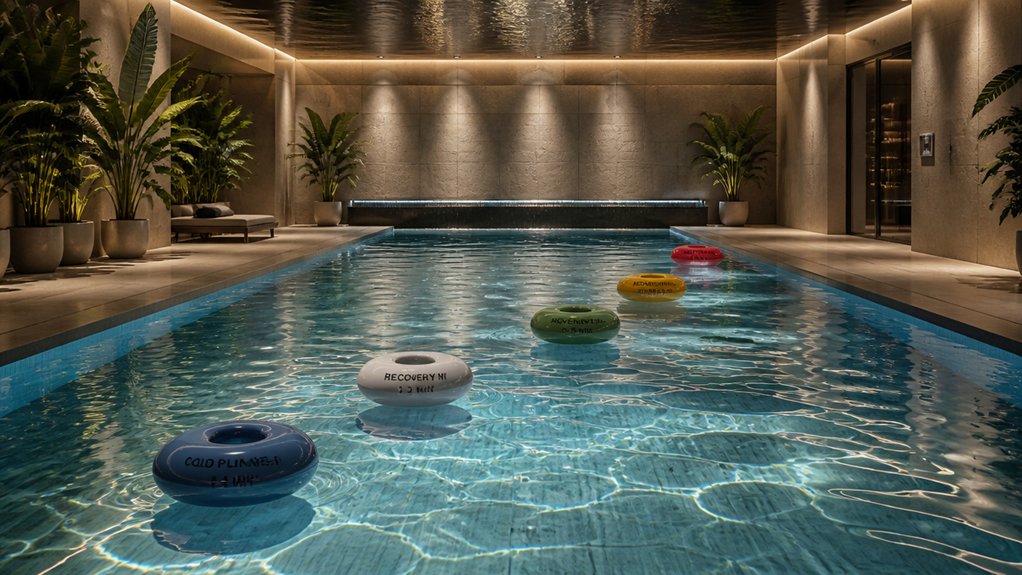
In a therapeutic pool, the buoyancy and gentle pressure of water ease physical tension and reduce anxiety, supporting emotional healing. As you float, tactile stimulation from the water provides comfort and promotes a sense of safety, essential for emotional expression.
Rhythmic water movements induce mental tranquility, helping you achieve emotional balance and mindfulness. The weightlessness minimizes sensory input, allowing you to release mental burdens and lower cortisol levels that contribute to stress.
This safe space encourages emotional acceptance and resilience, making it easier to process trauma and foster inner peace. Additionally, cold plunge tubs designed for optimal temperature control enhance the therapeutic benefits of emotional regulation and stress reduction. Overall, water immersion helps you achieve relaxation and emotional stability through a calming and restorative environment.
The Science of Water’s Calming Effects on Your Nervous System
When you immerse yourself in water, your nervous system benefits from a range of calming effects that help reduce stress and promote emotional well-being. Water immersion lowers cortisol production, directly decreasing stress hormones and calming your nervous system.
The buoyancy and warmth of water ease physical tension, reducing sympathetic nervous system overactivation, which diminishes anxiety. Additionally, the rhythmic movement and sensory reduction in water induce theta brain waves associated with deep relaxation and emotional balance.
Hydrostatic pressure from water immersion stimulates the vagus nerve, supporting parasympathetic nervous system activity. Some advanced water therapy devices incorporate temperature modulation similar to cold plunge techniques, magnifying these calming effects.
Different Types of Water Therapy for Mental Well-Being
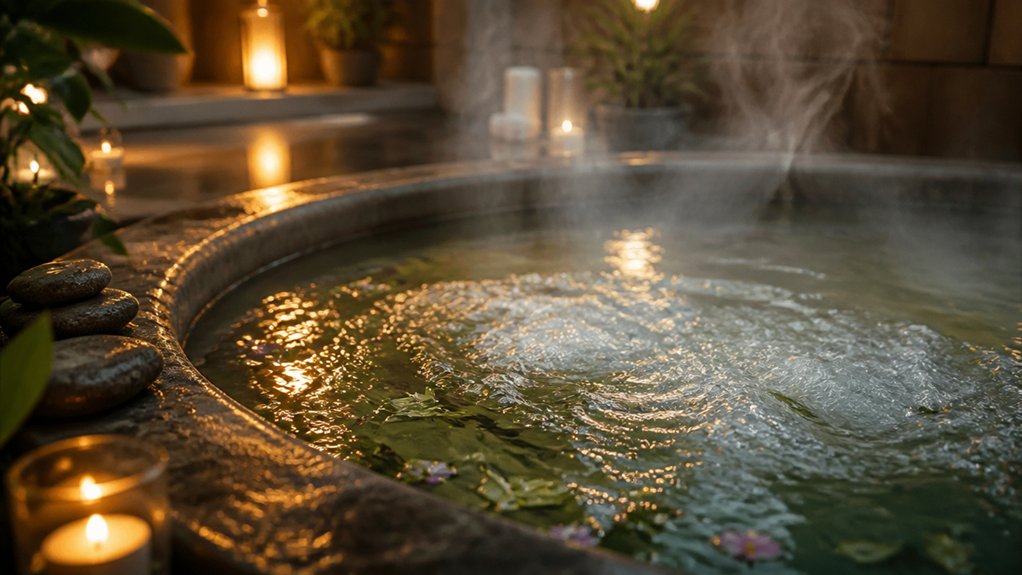
Exploring different types of water therapy reveals powerful tools for enhancing mental well-being. Water immersion practices like float therapy use a high-density Epsom salt solution at skin temperature to foster deep emotional regulation by reducing anxiety and cortisol levels. Cold water immersion, typically at or below 59°F, triggers neurohormetic responses, boosting norepinephrine and improving limbic connectivity, which elevates mood and resilience. Adaptogens support stress modulation and recovery, and incorporating them into routines can enhance the benefits of cold plunges by maintaining mood and energy stability during and after immersion. Hydrotherapy pools offer buoyancy and tactile pressure, supporting mindfulness, stress relief, and emotional expression within controlled environments. Aquatic relaxation techniques like floating, Watsu, and guided imagery in warm water deepen the mind-body connection, reduce muscle tension, and promote emotional healing. These modalities leverage water’s sensory and thermal properties to facilitate emotional regulation and trauma processing in a safe, supportive setting.
How Float Therapy Boosts Mental Clarity and Emotional Balance
Float therapy enhances mental clarity and emotional balance by creating a state of profound sensory reduction that calms hyperactive nervous responses. As your body relaxes in skin-temperature water saturated with magnesium sulfate, your nervous system’s overactivity diminishes, supporting emotional regulation. During a 90-minute session, you’ll notice decreased cortisol levels and reduced amygdala activity, leading to sharper mental clarity and less anxiety. To maximize benefits: 1. Magnesium absorption promotes muscle relaxation and neuroinflammation reduction. 2. Sensory reduction minimizes stress and mental clutter. 3. Buoyancy alleviates physical tensions, aiding emotional balance. 4. Eco-friendly water treatments help maintain clean, sustainable water environments that support ongoing wellness routines. Together, these effects facilitate deeper mind-body connection, helping you stabilize moods and foster emotional resilience through float therapy’s calming and clarifying influence.
Cold Water Immersion Benefits for Anxiety and Mood
Cold water immersion offers powerful mental health benefits by rapidly activating your body’s relaxation responses and boosting mood-regulating chemicals. CWI triggers a surge of neurochemicals like norepinephrine and dopamine—530% and 250% increases—that enhance motivation, emotional regulation, and resilience against anxiety.
Immersing in water at or below 59°F stimulates the parasympathetic nervous system through the mammalian diving reflex, reducing your heart rate and calming stress responses. Regular cold plunges lower cortisol levels for hours after immersion, improving stress management and decreasing anxiety symptoms.
Incorporating controlled breathwork during cold water exposure helps you manage the initial cold shock and promotes autonomic regulation. Over time, this consistent practice builds psychological resilience, reduces negative emotions, and fosters a more balanced mood state.
Easy Steps to Incorporate Water Therapy Into Your Self-Care Routine
To create calm moments, start by setting aside time for a warm water immersion in your routine, aiming for at least 30 minutes. Incorporate slow, deep breathing during your session to boost relaxation and mindfulness. Using breath control tools or guided techniques can enhance your lung capacity and overall respiratory efficiency, supporting your emotional balance. Finish with a few minutes of journaling or quiet reflection to strengthen emotional resilience.
Creating Calm Moments
Creating calm moments with water therapy is simple and accessible. To foster emotional calm and stress relief, incorporate warm water immersion (around 93.5°F) for 20–30 minutes into your routine.
This helps promote muscle relaxation, lowers cortisol levels, and soothes emotional tension. A gentle and consistent approach, supported by the use of water treatment liquids, can enhance the overall calming effect and maintain water clarity.
For added comfort, try these steps:
- Use hydrotherapy jets or gentle water movements during your soak to enhance tactile stimulation and help regulate anxiety.
- Practice slow, controlled breathing while floating or soaking to activate your parasympathetic nervous system, supporting emotional balance.
- End each session with mindful journaling or reflection to reinforce feelings of calm and deepen emotional awareness.
Simple Water Practices
Incorporating simple water practices into your self-care routine makes emotional regulation accessible and effective. Begin with water immersion in a therapy pool or warm bath at around 93.5°F to promote relaxation and reduce cortisol, supporting stress relief.
Combine slow rhythmic breathing with gentle movements during your session to enhance parasympathetic activation, fostering calmness and emotional balance. Floating with reduced sensory input can deepen mindfulness and help process emotions safely.
Practice brief cold water exposure or cold face immersion to trigger endorphin release, aiding mood stabilization. Incorporating guided imagery or progressive muscle relaxation during water immersion can amplify relaxation and boost self-awareness.
Using advanced cooling technology like acrylic cold plunge tubs can optimize your therapy experience by providing precise temperature control and quick adjustments, making your self-care session more effective and enjoyable.
These easy steps allow you to harness water’s therapeutic benefits to manage emotions and promote well-being effortlessly.
Safe Practices for Water-Based Emotional Healing
Ensuring safety during water-based emotional healing requires careful preparation and ongoing monitoring. Start with psychological screening to confirm you’re not experiencing active flashbacks, high anxiety (≥7/10), recent panic attacks, or dissociation. This step is essential to minimize risks associated with water immersion therapy.
During sessions, maintain control through self-paced practices and encourage gradual acclimatization to avoid panic or hyperarousal. Use warm water settings close to skin temperature (~93.5°F) to support nervous system regulation and promote emotional safety. Incorporate insulation features in your setup to help sustain consistent temperatures and enhance comfort throughout the session.
Key points to prioritize:
- Conduct thorough psychological screening before each session.
- Allow self-paced sessions for comfort and control.
- Include post-session recovery with warm water and journaling to aid emotional processing.
Recognizing and Managing Psychological Risks of Water Immersion
Recognizing and managing psychological risks associated with water immersion is essential to prevent adverse reactions and support trauma recovery.
Cold Water Immersion (CWI) can trigger a cold shock response that mimics panic or hyperarousal, which may worsen symptoms for those with PTSD or panic disorder. A thorough psychological screening helps identify risk factors like recent panic attacks, dissociation, flashbacks, nightmares, or high anxiety levels, reducing the chance of negative outcomes.
Cold water immersion may exacerbate PTSD symptoms if not properly screened. Always consult professionals first.
On the day of immersion, avoid CWI if you’re experiencing active PTSD symptoms, dissociation, or sleep issues, and consider sticking to float therapy. Poorly managed water sessions can reinforce fear responses, hindering emotional regulation.
Consulting mental health professionals beforehand guarantees safe practice and promotes effective trauma recovery.
Combining Water Therapy With Breathwork and Mindfulness for Emotional Recovery
Combining water therapy with breathwork and mindfulness creates a powerful synergy that enhances emotional recovery.
When you engage in water immersion alongside intentional breathwork, you activate your parasympathetic nervous system, promoting calmness and emotional regulation.
Practicing mindfulness during therapy deepens your awareness of bodily sensations, aided by water’s buoyancy and warmth, which fosters a stronger mind-body connection.
To maximize benefits:
- Incorporate slow, exhale-extended breathwork during water immersion for stress reduction.
- Maintain mindful awareness of sensations to support emotional resilience.
- Use guided breath and mindfulness techniques after cold plunges for safe discomfort navigation.
This combined approach amplifies emotional healing, reduces anxiety, and increases long-term stress management.
It’s a scientifically supported method to accelerate emotional regulation through therapeutic water immersion.
Tracking Progress and Adjusting Water Therapy for Long-Term Resilience
Tracking your progress with water therapy is essential for building long-term resilience. Monitoring your emotional wounds, stress hormone levels, and reactions before, during, and after each session helps identify trends and measure growth.
Use self-assessment tools like mood journals and calmness ratings to evaluate your emotional regulation progress. Adjust session length, water temperature, or modality based on these insights—longer float sessions (>60 minutes) can deepen relaxation, while gradual cold water immersion (from 60–90 seconds up to 2–3 minutes) boosts stress mastery.
Consistent post-session reflections allow you to refine breathing exercises, optimize water temperature, and adjust schedule, all serving to enhance emotional resilience and trauma management over time. Regular tracking guarantees your water therapy remains effective and tailored to your evolving needs.
Overcoming Barriers and Building Confidence With Water-Based Self-Help
To overcome water anxiety and build confidence, start with gentle, controlled exposures like warm soaks or float sessions that promote calmness and familiarity.
Focus on cultivating mindful presence through slow, exhale-extended breathing and water immersion techniques that help you stay centered.
As you progress, trust in your practice grows by monitoring your comfort levels, celebrating small successes, and reinforcing your resilience through reflection.
Overcoming Water Anxiety
Overcoming water anxiety begins with gentle, intentional steps that build your comfort and confidence gradually. Starting with shallow, warm water immersion helps reduce initial anxiety by increasing familiarity with the aquatic environment.
Using controlled breathing, such as slow exhale-extended breaths, helps manage cold stress responses and anxiety symptoms during water therapy.
To deepen your emotional regulation, consider sensory reduction techniques like flotation-REST, which lower stimulation and promote calmness. Building client control through pacing encourages mastery over discomfort and boosts confidence.
Remember these key strategies:
- Progress slowly from shallow to deeper water.
- Incorporate controlled breathing to regulate cold stress.
- Focus on pacing for consistent, manageable exposure.
These steps help you overcome water anxiety by fostering a sense of safety, control, and increased emotional resilience.
Cultivating Mindful Presence
Engaging with water-based self-help practices can greatly enhance your ability to cultivate mindful presence, even when facing barriers like discomfort or anxiety. Water immersion creates a low-stimulation environment that shifts your focus inward, reducing hyperarousal and supporting emotional regulation.
The buoyancy and gentle pressure of water improve body awareness and ground you in the present moment. Practicing slow, controlled breathing helps mitigate sensory overwhelm by promoting parasympathetic activation, aiding nervous system regulation.
Gradually exposing yourself to water therapy, such as float sessions, builds confidence in tolerating discomfort while strengthening your nervous system. After water immersion, mindful journaling encourages reflection on sensations and emotions, reinforcing mindful presence and depth of emotional insight.
This approach nurtures resilience and confidence in your mindfulness practice.
Building Trust in Practice
Building trust in water-based self-help involves creating a safe, client-controlled environment that supports gradual progress. When you feel in control, it’s easier to build resilience and manage anxiety effectively.
Focus on gradual exposure, introducing sensations like buoyancy and temperature slowly to reinforce trust. Incorporate mindful breathing techniques, such as slow exhale, to calm autonomic responses and deepen emotional regulation.
To strengthen confidence, consider these key strategies:
- Maintain clear communication about sensory effects and emotional responses during immersion.
- Foster a client-controlled environment that allows pacing and reassurance.
- Use warm recovery periods and journaling to reflect, consolidating positive experiences.
These steps promote trust, reduce anxiety, and support emotional healing through mindful water immersion.
Frequently Asked Questions
Can Water Therapy Be Effective for Severe Emotional or Psychological Disorders?
Water therapy can be effective for severe emotional or psychological disorders, helping you relax, reduce anxiety, and improve mood. However, it should complement professional treatment, as severe conditions often require additional therapies and support for thorough management.
How Long Should Each Water Immersion Session Last for Optimal Emotional Benefits?
You should aim for each water immersion session to last about 15 to 20 minutes. This duration is sufficient to promote relaxation without causing fatigue, helping you maximize emotional benefits while reducing stress effectively.
Are There Age Restrictions or Considerations for Water-Based Emotional Regulation Techniques?
You should consider age restrictions and individual health conditions when using water-based emotional regulation techniques. Consult with a healthcare provider for personalized guidance, especially for children, seniors, or those with medical concerns, to guarantee safe and effective practice.
What Signs Indicate That Water Therapy Might Not Be Suitable for Someone?
If you experience panic, dizziness, or breathing difficulties during water therapy, it’s a sign it might not be suitable for you. Stop immediately and consult a healthcare professional to guarantee safety and explore alternative emotional regulation methods.
How Often Should I Practice Water Immersion for Sustained Emotional Resilience?
You should practice water immersion two to three times weekly, allowing your body and mind to adapt gradually. Consistency enhances emotional resilience, but listen to your body and adjust frequency if you experience discomfort or fatigue.