
Cold water plunges activate your sympathetic nervous system, releasing norepinephrine, which boosts focus and mental clarity. They increase blood flow and oxygen delivery to the brain, sharpening your alertness and concentration. Cold exposure also triggers a flood of mood-boosting chemicals like dopamine and endorphins, lifting your mood and motivation. Whether full-body or facial, these methods provide quick mental resets and emotional balance. Keep going to discover how to maximize these powerful benefits safely.
How Cold Water Boosts Brain Oxygen and Mental Alertness

When you immerse yourself in cold water, your sympathetic nervous system activates quickly, prompting your body to release norepinephrine. This surge boosts blood flow, increasing cerebral blood flow and delivering more oxygen to your brain.
As a result, your mental alertness sharpens, and cognitive function improves. The cold shock response also triggers the release of endorphins and norepinephrine, creating a feeling of heightened focus and energy.
Over time, dopamine levels gradually rise by 2–3 times, supporting sustained motivation and mental clarity. Controlled breathing during cold water immersion enhances oxygenation further and activates brain stress adaptation pathways.
This combination helps reset your brain’s alertness and resilience, making cold water immersion a powerful tool to boost mental clarity and overall cognitive performance. Incorporating breathing exercises with resistance tools can further enhance the efficiency of oxygen delivery and stress regulation during cold plunge routines.
How Cold Shock Response Boosts Your Focus and Clarity
The cold shock response ignites your body’s fight-or-flight system, rapidly activating the sympathetic nervous system and releasing norepinephrine. When you take a cold plunge, this surge increases blood flow to your brain, sharpening focus and mental clarity.
The cold shock triggers rapid breathing and an increased heart rate, serving as a reset that helps you recenter your mind. Endorphin release from cold water immersion boosts your mood, strengthening cognitive function and concentration. Additionally, dopamine levels spike by 2–3 times, supporting motivation and sustained attention.
Regular exposure to this response trains your controlled breathing under stress, building mental resilience and helping you maintain clarity during challenging situations. Overall, the cold shock response primes your mind for sharper focus and mental acuity.
How Cold Water Elevates Mood-Enhancing Brain Chemicals

Cold water immersion triggers a surge of mood-enhancing brain chemicals, with dopamine, endorphins, and norepinephrine playing central roles. When you plunge into a cold water or use a cold plunge tub, these chemicals flood your brain, producing immediate mental health benefits.
Dopamine levels increase by 2–3 times, boosting motivation, focus, and mood hours after the cold exposure. Endorphins, released during cold plunges, create feelings of pain relief and well-being similar to a runner’s high. Activation of cold receptors in the water stimulates norepinephrine, enhancing alertness and mental clarity.
Additionally, cold exposure reduces cortisol levels, lowering stress hormones that can harm your mood. These combined effects make cold water a powerful tool to elevate your mental resilience and overall emotional health.
Full-Body vs. Facial Cold Exposure: Which Boosts Your Brain Best?
Have you ever wondered which cold exposure method offers the greatest mental boost—full-body immersion or just cooling the face?
Full-body cold plunging at 10–15°C activates your sympathetic nervous system, increasing blood flow to the brain and boosting alertness, focus, and energy for hours. It also triggers a significant endorphin and dopamine release, enhancing mood and mental clarity.
Full-body cold plunges boost alertness, focus, and mood by activating your sympathetic nervous system and releasing endorphins and dopamine.
In contrast, facial cold water immersion activates your parasympathetic nervous system through the diving reflex, lowering heart rate and promoting calming effects that aid emotional regulation and quick cognitive resets.
While full-body plunging provides longer-lasting mental resilience and motivation, facial immersion offers rapid mood shifts and immediate cognitive clarity. Both methods complement each other, and their strategic combination maximizes your brain’s benefits.
Additionally, compressor power and optimized insulation in chillers can enhance the overall effectiveness of cold exposure routines, ensuring rapid cooling and sustained temperature control for maximum mental health benefits.
Safe Ways to Use Cold Water for Maximum Mental Benefits
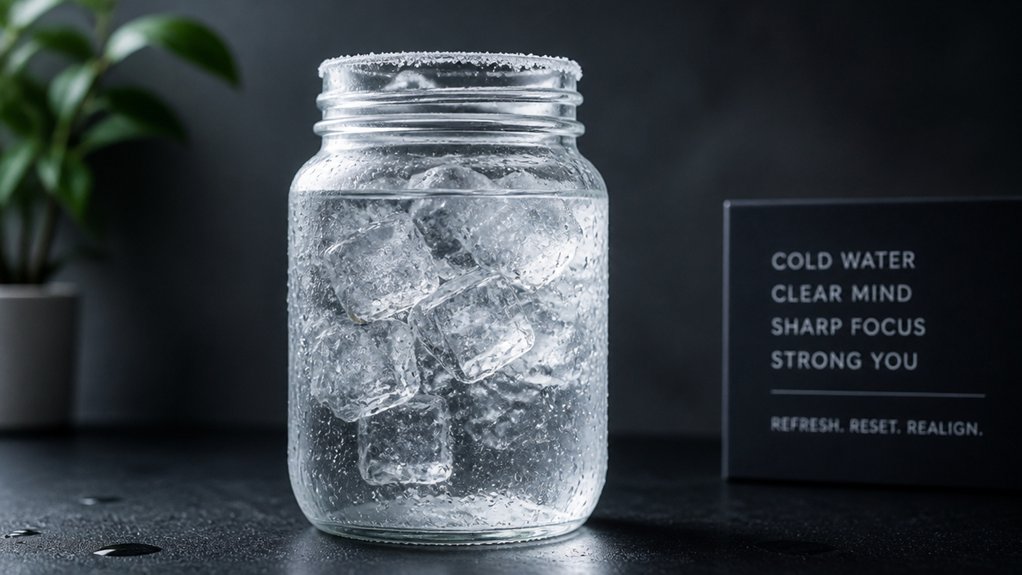
To safely harness the mental benefits of cold water, start with brief immersions like cold showers or facial dips lasting 30 to 90 seconds. This helps you acclimate and activates emotion-regulating TIPP skills before progressing to cold plunging. Incorporating water treatment solutions can help maintain water quality and safety, further supporting a healthy cold plunge routine. Limit initial cold plunges to 1-2 minutes at 50–59°F (10–15°C). Practice slow nasal breathing during immersion to manage the cold shock response and prevent hyperventilation. Always enter the water gradually to minimize nervous system stress and avoid involuntary gasping or cardiac risks. Never plunge alone initially, and steer clear of natural bodies with currents for safety. Regular exposure, 2-4 times weekly, boosts mental clarity while ensuring proper hygiene and temperature control optimize neurochemical mood benefits safely.
Frequently Asked Questions
Is a Cold Plunge Good for Your Mental Health?
Yes, a cold plunge benefits your mental health by boosting your mood, focus, and resilience. It reduces stress, anxiety, and negative emotions while strengthening mental toughness, discipline, and emotional regulation, helping you feel more centered and motivated daily.
Is a Cold Plunge Good for Your Brain?
Yes, a cold plunge benefits your brain by increasing dopamine and norepinephrine, which boost your mood, focus, and energy. It also enhances stress resilience, cognitive alertness, and emotional control through brain stress adaptation pathways.
Are Daily Cold Plunges Good for You?
Yes, daily cold plunges are good for you. They boost mental clarity, reduce stress, improve mood, and enhance discipline. You’ll feel more alert, focused, and resilient, making it easier to handle daily challenges naturally and with greater calmness.
What Happens After 30 Days of Ice Baths?
After 30 days of ice baths, you’ll notice increased dopamine, sharper focus, and improved emotional regulation. Your stress resilience grows, mental fog decreases, and you become more disciplined, making it easier to handle challenging cognitive tasks and stay motivated.