The three best cold therapy methods to reduce soreness are ice baths, ice packs, and cold plunge tubs. Ice baths and plunges fully submerge your body or limbs, helping limit inflammation and promote faster recovery, especially after intense workouts. Ice packs are great for targeting specific painful areas. To maximize benefits safely, follow recommended temperatures and durations. Keep exploring to discover how to choose and use these methods effectively for your recovery needs.
How Cold Water Immersion Helps Sore Muscles and Speeds Recovery
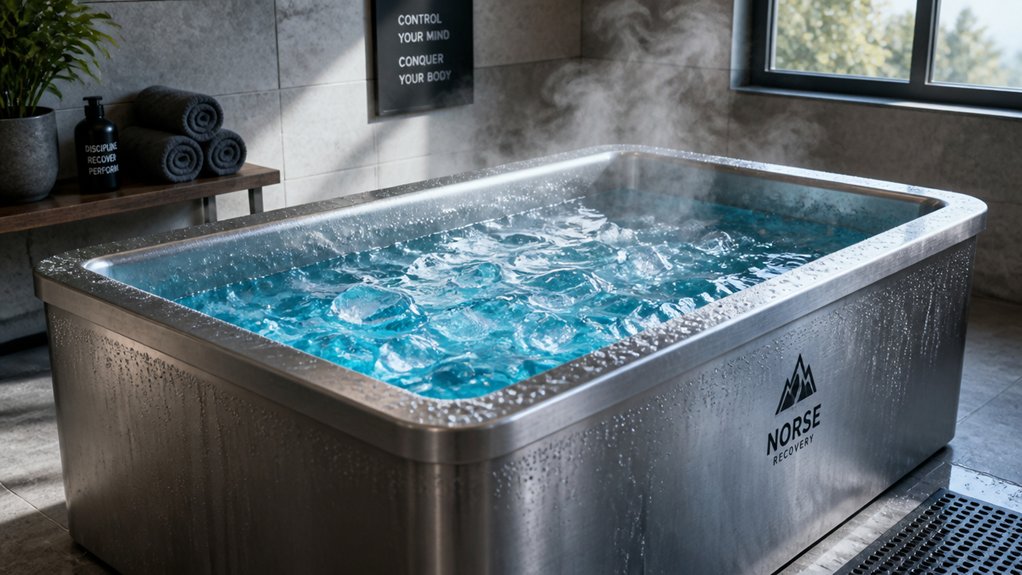
Cold water immersion (CWI) is a highly effective method for reducing soreness and speeding up recovery after intense exercise. Applying cold therapy for pain, such as ice baths, helps combat muscle soreness and delays onset muscle soreness (DOMS).
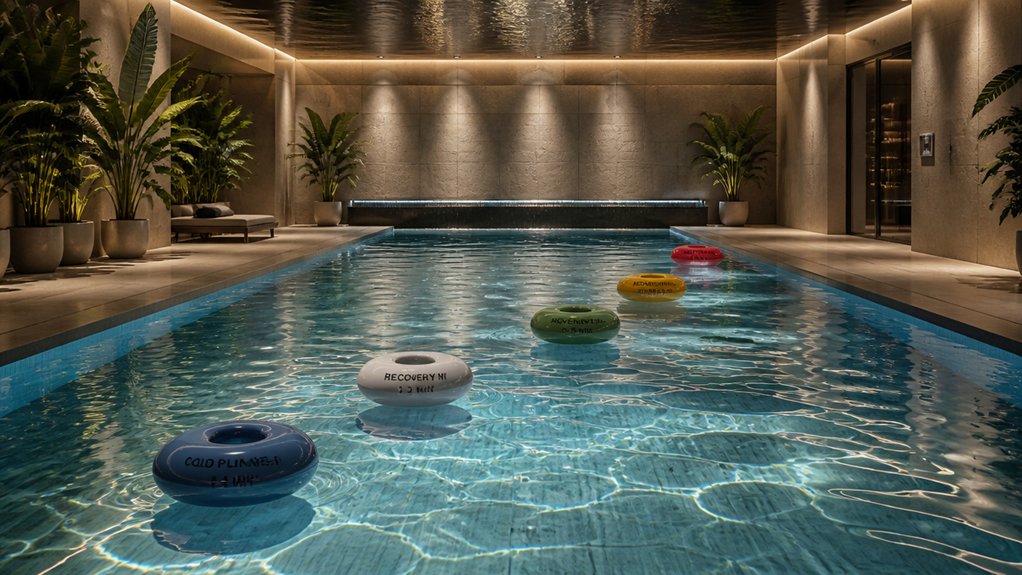
The cold water reduces inflammation by constricting blood vessels, which limits swelling and pain. After stepping into an ice bath, your blood vessels constrict, decreasing blood flow and slowing metabolic activity in muscles. When you exit, vasodilation occurs, aiding the removal of metabolic waste and promoting recovery. Additionally, choosing the right cold plunge tub capacity and insulation can optimize the benefits of cold water therapy.
Using ice packs or cold water immersion regularly supports post-exercise soreness relief and enhances sports medicine outcomes. While CWI effectively reduces pain and inflammation, it’s essential to balance its use to avoid interfering with muscle growth triggered by resistance training.
Safe and Simple Ways to Use Ice Baths After Exercise
To safely reap the benefits of ice baths after exercise, it’s important to follow simple guidelines that minimize risks. Use cold therapy, like ice baths, at temperatures between 10-15°C (50-59°F) for 2 to 15 minutes to reduce swelling and soreness after exercise.
Keep sessions within 15 minutes to avoid skin damage and hypothermia, allowing your body to build cold tolerance gradually. Always monitor your body’s response—discontinue if you experience numbness, excessive shivering, or loss of sensation.
Apply ice carefully, especially when fully submerged, and consider performing ice baths on rest days or before intense sessions to aid recovery. Proper material durability in cold plunge tubs can help maintain safety and function during repeated use. With supervision, these safe and effective methods help manage pain and prevent tissue damage by constricting blood vessels and calming muscle soreness.
Ice Pack or Cold Plunge: Which Is Better for Your Workout Recovery?
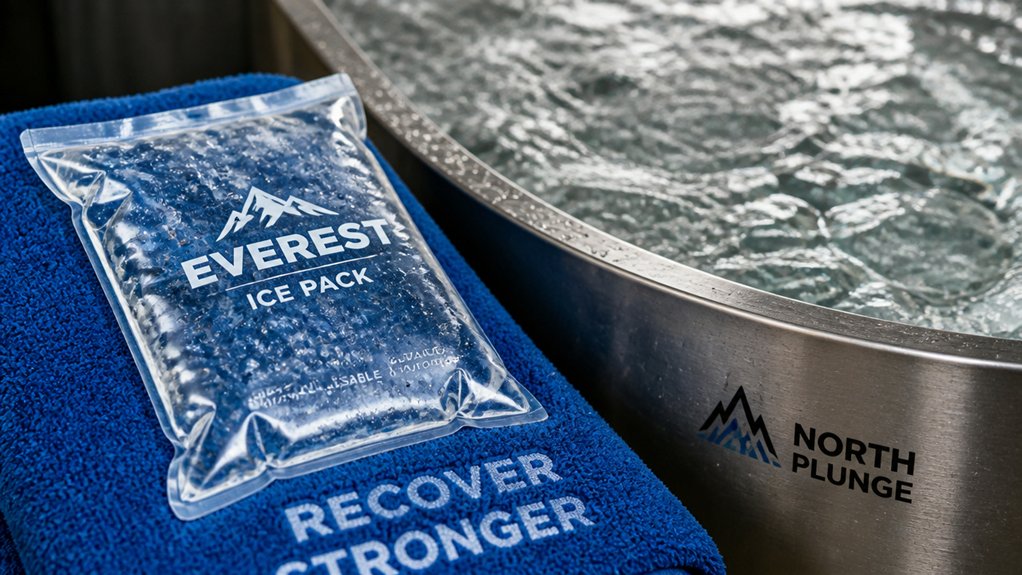
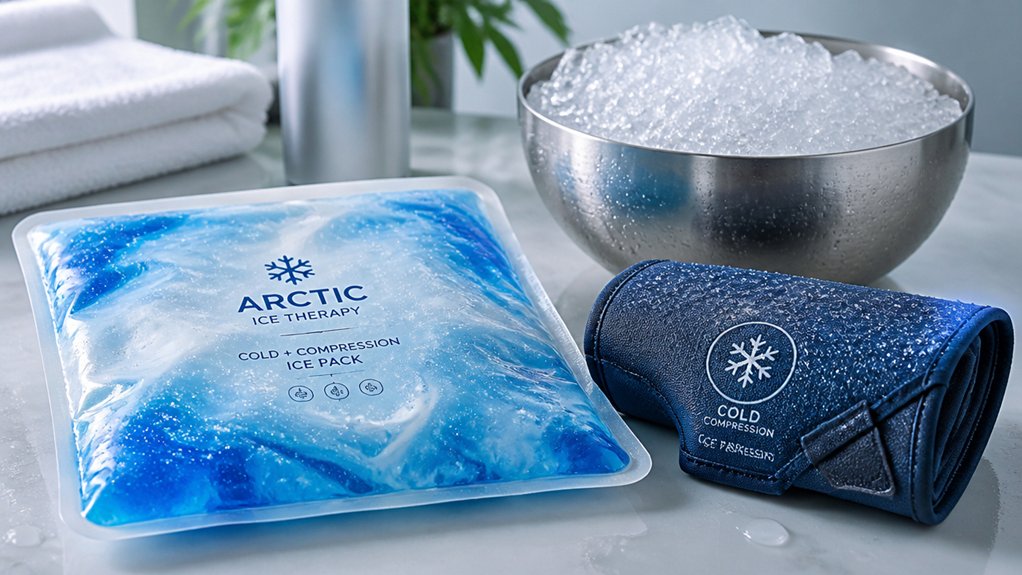
Are you wondering whether an ice pack or a cold plunge is better for your workout recovery? Ice packs provide targeted cold therapy, reducing pain, swelling, and inflammation around specific sore areas. Typically applied for 10–20 minutes, they’re ideal for localized injury pain management. Cold plunges, immersing your entire body in cold water at 10–15°C, offer broader recovery benefits, reducing systemic soreness and inflammation after intense workouts. However, cold plunges may impair muscle repair if used immediately post-exercise, especially during muscle-building phases. To help decide, consider this comparison:
| Feature | Ice Pack | Cold Plunge |
|---|---|---|
| Scope | Localized pain and swelling | Whole-body soreness reduction |
| Duration | 10–20 minutes | 2–15 minutes |
| Best For | Targeted injury and inflammation control | Rapid overall recovery |
| Caution | Avoid excessive use post-workout | May hinder muscle growth |
Additionally, use of anti-chafe balms can enhance comfort during cold-water therapy sessions by preventing skin irritation from prolonged exposure.
Frequently Asked Questions
What Is the Best Cold Therapy for Sore Muscles?
You should use localized cold packs, cold water immersion, or targeted ice application for sore muscles. Applying cold within 48 hours post-exercise reduces inflammation, pain, and soreness effectively, helping you recover faster and feel less discomfort.
What Is the 20 20 Rule for Ice?
The 20 20 rule for ice advises you to apply ice for 20 minutes, then wait 20 minutes before reapplying. This technique protects your skin while effectively reducing soreness, preventing frostbite, and avoiding tissue damage.
Why Is Ice No Longer Recommended?
You shouldn’t rely on ice because it can suppress inflammation needed for muscle repair, hinder long-term growth, and reduce muscle protein synthesis. Instead, focus on movement and gradual loading for better recovery and ideal muscle development.
What Helps Heal Sore Muscles Quickly?
You can heal sore muscles quickly by applying cold therapy like ice packs or cold-water immersion for 10-20 minutes, resting, staying hydrated, and doing gentle movement. Target high-vascular areas to enhance relaxation and recovery efficiently.