For ideal recovery, you should alternate heat and ice treatments after lifting sessions. Apply heat at 100–104°F for 3–5 minutes to relax muscles, then follow with cold immersion at 50–59°F for 1–3 minutes to reduce inflammation. Repeat this cycle 3–5 times, ending with cold. Be sure to stay within safe durations, use proper barriers, and tailor the protocol to your needs. Continue exploring these techniques to boost your healing process even further.
Understanding Cold and Heat Therapy for Muscle Recovery
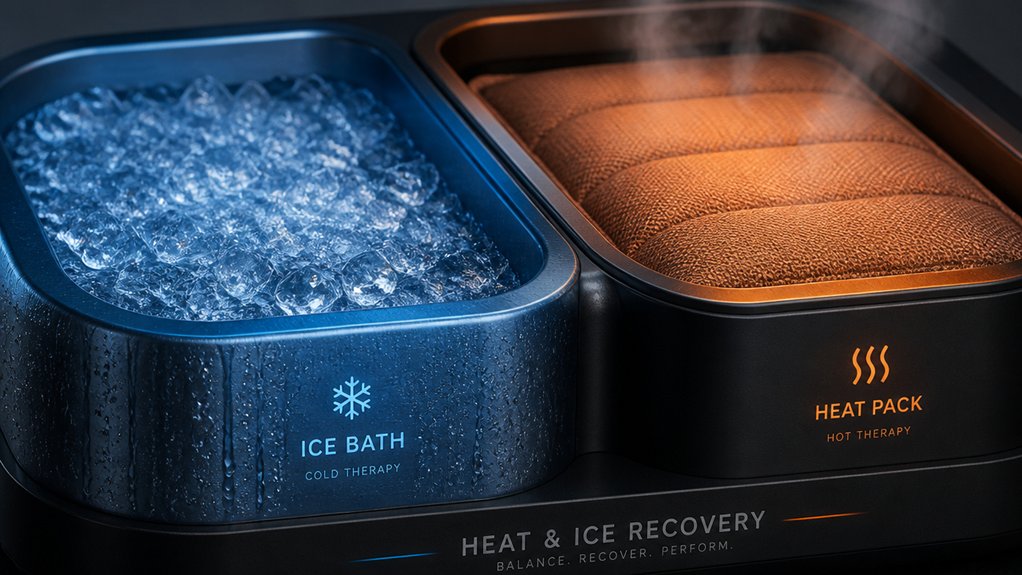
Understanding how cold and heat therapy aid muscle recovery is essential for weightlifters aiming to optimize their results. Cold therapy, applied within 48 hours after training, reduces inflammation, edema, and muscle soreness by numbing pain receptors and causing vasoconstriction, which limits swelling. Using proper heat settings ensures safe and effective therapy, minimizing risks of burns or overheating.
Heat therapy, used immediately after workouts, increases blood flow through vasodilation, helping muscles relax, boosting metabolism, and activating repair enzymes to prevent tissue damage. Applying heat strengthens tissue elasticity and accelerates strength recovery, while cold therapy later helps restore strength further.
Both therapies support recovery, but at different times: heat enhances immediate healing, and cold minimizes soreness and pain during the first days. Incorporating both strategies guarantees faster, more efficient muscle recovery and better training outcomes.
When and Why to Use Cold Therapy After Lifting Sessions
Knowing when to apply cold therapy after lifting sessions can greatly boost your recovery. Use cold therapy within 48 hours post-exercise to target inflammation and reduce muscle soreness from micro-tears.
Applying cold immediately after lifting and up to 24 hours later provides significant pain relief and minimizes discomfort from delayed onset muscle soreness (DOMS). Cold immersion or ice application helps limit edema by causing vasoconstriction, which reduces blood flow to inflamed muscles. Additionally, using cold therapy in conjunction with water treatment liquids can enhance water clarity and hygiene, promoting a more effective recovery environment.
This targeted approach not only eases pain but also controls swelling, supporting faster recovery. Athletes often prefer cold therapy after intense squat or resistance workouts to enhance healing and prepare for the next session. Using cold therapy at the right time optimizes recovery and helps maintain your training momentum.
How Heat Therapy Helps Relax Muscles and Reduce Stiffness
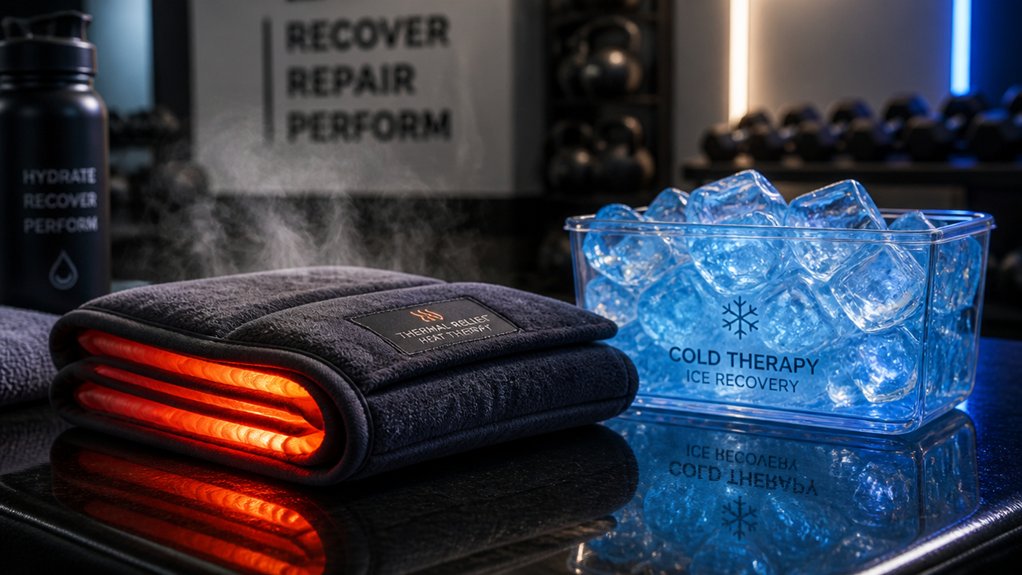
Heat therapy increases blood flow to your muscles, helping them relax and reduce stiffness. Applying heat for about 20 minutes after lifting supports faster tissue repair and improves flexibility.
Regular sessions can keep your muscles looser and lessen soreness later on.
Muscle Relaxation Enhancement
Applying heat after weightlifting directly enhances muscle relaxation by increasing blood flow, which delivers oxygen and nutrients essential for easing stiffness. Heat therapy causes vasodilation, promoting circulation that helps eliminate metabolic waste and reduces tightness.
About 20 minutes of heat application boosts muscle tissue metabolism, speeding repair and decreasing soreness. It also improves muscle elasticity, lowering joint stiffness and making stretching more effective.
This increased circulation enhances muscle relaxation and supports long-term relief from chronic stiffness. Using heat strategically can optimize recovery by:
- Promoting vasodilation for better circulation
- Accelerating tissue repair through increased metabolism
- Reducing muscle tightness and soreness
- Enhancing elasticity to prevent injury
- Supporting relaxation and long-term flexibility
Improved Flexibility Gains
By increasing blood flow and reducing muscle tightness, heat therapy directly contributes to improved flexibility gains. When you apply heat, vasodilation occurs, boosting blood circulation and delivering oxygen and nutrients to stiff muscles. This process promotes muscle relaxation and helps loosen tight elastic tissues, especially in chronic stiffness cases. Using heat therapy with far infrared heat enhances penetration depth and efficacy, making it even more effective for muscle recovery. Spending around 20 minutes with heat enhances your range of motion and diminishes joint stiffness, making stretching more effective before workouts. Heat therapy also supports faster soft tissue healing by increasing metabolism, which further aids in improving flexibility over time. Regular use guarantees muscles stay relaxed, reducing resistance to stretching and increasing flexibility gradually. Overall, incorporating heat therapy into your recovery routine can lead to more effective flexibility improvements and better performance.
Best Times to Apply Cold vs. Heat for Optimal Recovery
When’s the best time to switch between cold and heat therapies for ideal recovery after weightlifting? Effective timing is key to optimizing your weightlifting recovery.
Timing your cold and heat therapies appropriately accelerates recovery and reduces soreness after weightlifting.
Use heat therapy immediately after intense sessions to relax muscles and enhance blood flow, preventing elastic tissue damage. Cold therapy, on the other hand, should be applied within 24 to 48 hours post-exercise to reduce inflammation and manage delayed onset muscle soreness (DOMS). Applying cold therapy 24 hours later has been shown to better restore strength. Ending contrast therapy with a cold phase helps maximize inflammation reduction and nervous system recovery.
In addition, incorporating magnesium-rich creams after cold therapy can support muscle recovery and hydration, promoting faster healing during the recovery process.
How to Combine Cold and Heat Therapies in Your Recovery Routine
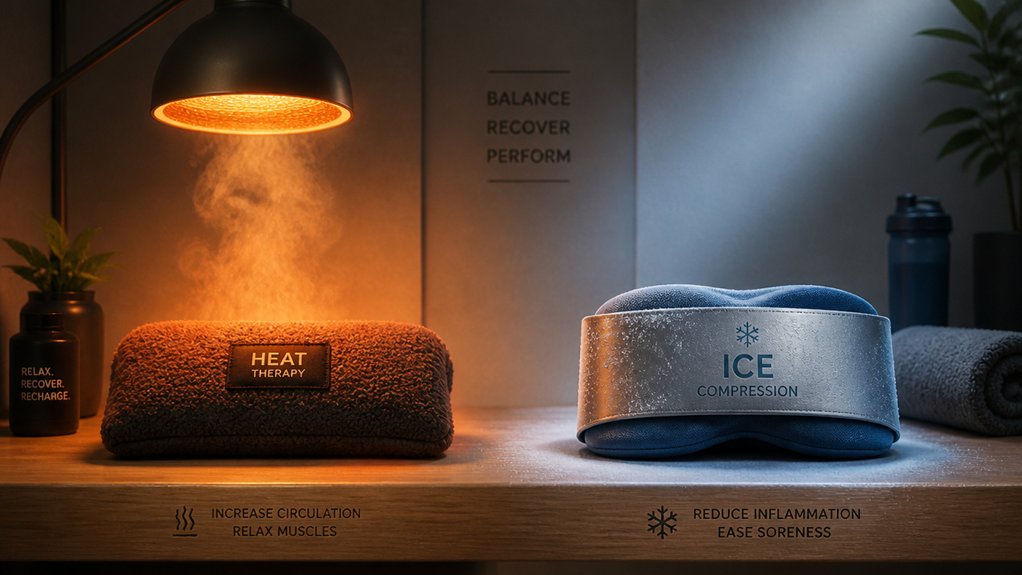
To combine cold and heat therapies effectively, focus on the right timing and sequence—start with heat to relax muscles, then switch to cold to reduce inflammation.
Keep your cycles short and rapid, switching within 60 seconds to maximize circulation and recovery.
Always tailor your routine to your body, and avoid overdoing it to stay safe and get the best results.
Timing and Sequence
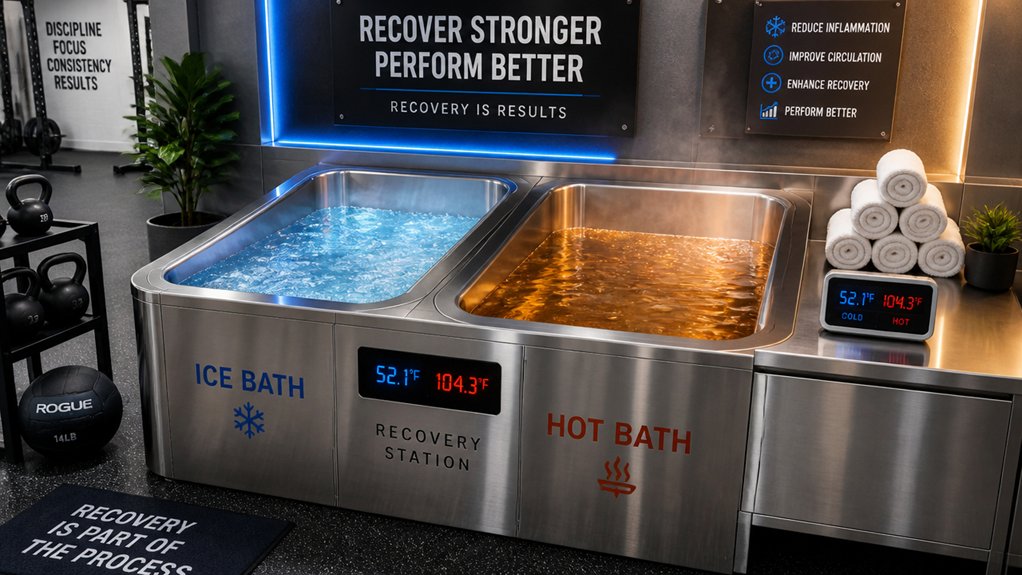
Timing and sequence are essential for maximizing the benefits of heat and cold therapies in your recovery routine. To enhance blood flow and prevent elastic tissue damage, start with heat therapy for 3–5 minutes at 100–104°F immediately after exercise. Follow with cold therapy for 1–3 minutes at 50–59°F to reduce inflammation and numb pain, preferably within an hour of training. Incorporating devices with temperature adjustment capabilities ensures swift transitions and effective therapy shifts. Alternate between heat and cold cycles 3–5 times, ending with cold to optimize inflammation reduction and nervous system recovery. Keep total sessions between 20–40 minutes, guaranteeing rapid shifts (<60 seconds) to boost vascular pumping and waste removal. Proper sequencing guarantees you reap the full advantages of alternating heat and cold therapy, supporting effective recovery and injury prevention.
Cycle Duration and Frequency
Optimizing your recovery routine involves carefully managing how often and how long you cycle between heat and cold therapies. For effective contrast therapy, alternate 3–5 minutes of heat application (100–104°F) with 1–3 minutes of cold (50–59°F). Repeat this cycle 3–5 times per session for a total of 20–40 minutes. Consistent sessions 2–4 times weekly help maximize benefits like reduced soreness and inflammation. Proper cycle duration is key: longer heat phases promote relaxation, while shorter cold intervals target inflammation. To visualize, consider the following:
| Duration of Heat | Duration of Cold | Number of Cycles |
|---|---|---|
| 3–5 min | 1–3 min | 3–5 |
| 3–5 min | 1–3 min | 3–5 |
| 3–5 min | 1–3 min | 3–5 |
| 3–5 min | 1–3 min | 3–5 |
| Total time |
Safety and Personalization
Successfully combining heat and cold therapies requires careful attention to safety and individual needs. Always personalize timing and duration based on your injury status, targeting heat for stiffness or soreness and cold for acute inflammation within the first 48–72 hours.
Follow essential safety measures, such as avoiding heat on fresh injuries or swelling, and steering clear of cold therapy if you have contraindications like Raynaud’s disease or impaired sensation. Adjust cycles depending on your recovery goals—more heat for chronic pain or stiffness, more cold for acute pain and alertness.
Keep these guidelines in mind:
- Monitor individual responses throughout therapy
- End each session with cold to reduce inflammation
- Seek professional guidance for personalized protocols
- Limit heat or cold duration based on safety measures
- Respect your body’s signals and adjust accordingly
- Use water treatment solutions to maintain water hygiene and prevent contamination during cold plunge routines
Step-by-Step Guide to Contrast Therapy for Faster Healing
To effectively use contrast therapy for faster healing, start by applying heat to your muscles within an hour after weightlifting. Use heat and cold therapy by applying heat at 100–104°F for 3–5 minutes to boost blood flow and relax your muscles.
Apply heat at 100–104°F for 3–5 minutes within an hour after lifting to enhance blood flow and relax muscles.
Follow this with cold immersion at 50–59°F for 1–3 minutes to promote vasoconstriction, reduce inflammation, and numb pain receptors. Repeat these cycles 3–5 times, totaling 20–40 minutes, ending with cold to maximize inflammation reduction and nervous system recovery.
Maintain rapid shifts of less than 60 seconds between heat and cold to enhance the vascular pumping effect, which aids in nutrient delivery and waste removal. Additionally, selecting a low-EMF infrared sauna can help minimize health risks during frequent contrast therapy sessions.
Always stay hydrated and avoid contrast therapy if you have health issues or open wounds without medical advice.
Tools and Tips for Safe and Effective Thermal Treatments
Using the right tools and following safety tips can make thermal treatments more effective and reduce the risk of injury. Always use a barrier like a towel between your skin and ice or heat packs to prevent frostbite or burns. Limit cold therapy to 15-20 minutes and heat therapy to about 20 minutes to avoid tissue damage. Selecting a thermometer with a suitable waterproof rating ensures durability in wet or treated environments. Guarantee your equipment maintains proper temperature, aiming for heat at 100–104°F and cold at 50–59°F for consistent recovery. Avoid therapy on areas with impaired sensation, open wounds, or vascular conditions like Raynaud’s disease. Hydrate well before and after your sessions. Regularly monitor your skin condition to catch signs of irritation early. Keep these tools and tips in mind to safely manage pain, blood flow, and muscle recovery during your therapy.
Common Mistakes to Avoid When Using Cold and Heat Therapy
While tools and safety tips set the groundwork for effective thermal treatments, knowing what common mistakes to avoid can prevent setbacks and injury. Applying heat or cold therapy at the wrong time can hinder recovery.
For example, using heat immediately after a fresh injury can increase blood flow, causing blood vessels to constrict and worsening inflammation, delaying healing. Cold therapy shouldn’t be applied continuously beyond 15-20 minutes, as it risks tissue damage, numbness, or frostbite.
Always use a barrier like a towel to prevent burns or frostbite when applying heat or cold directly to your skin. Also, avoid delaying cold therapy after exercise, as initiating treatments within one hour can optimize the inflammatory process and reduce soreness.
Frequently Asked Questions
What Is the 20 20 20 Rule for Ice?
The 20 20 20 rule involves applying ice for 20 minutes, then taking a 20-minute break, repeating this cycle to reduce inflammation safely. It helps you avoid skin damage while maximizing recovery benefits after intense weightlifting sessions.
Is It Better to Use Ice or Heat After Lifting Weights?
You should use heat immediately after lifting to relax muscles and boost blood flow, then apply cold within 24 hours to reduce inflammation and soreness. Combining both optimizes recovery and minimizes strength loss effectively.
What Vitamins Help Reduce Muscle Fatigue?
You should focus on vitamins like D, B6, B12, and folate, which support muscle function and energy production, and antioxidants such as C and E to reduce oxidative stress, helping your muscles recover faster and fight fatigue.
How to Do Hot and Cold Therapy for Muscle Recovery?
You start with 3–5 minutes of heat at 100–104°F to relax muscles, then switch to cold at 50–59°F for 1–3 minutes, repeating 3–5 times. End with cold to reduce inflammation and promote recovery within an hour.