Maintaining proper temperatures in saunas and ice baths is essential to maximize benefits and stay safe. For best results, keep saunas between 150-195°F to promote cardiovascular health without risking dehydration or discomfort. Use cold plunges between 50-60°F for effective vasoconstriction and recovery, avoiding extreme cold that can cause hypothermia. Balancing session duration and gradual adjustments helps prevent risks and enhances your experience. Want to find out more about optimizing your thermal therapies? Keep going to discover the details.
Why Proper Sauna and Ice Bath Temperatures Matter
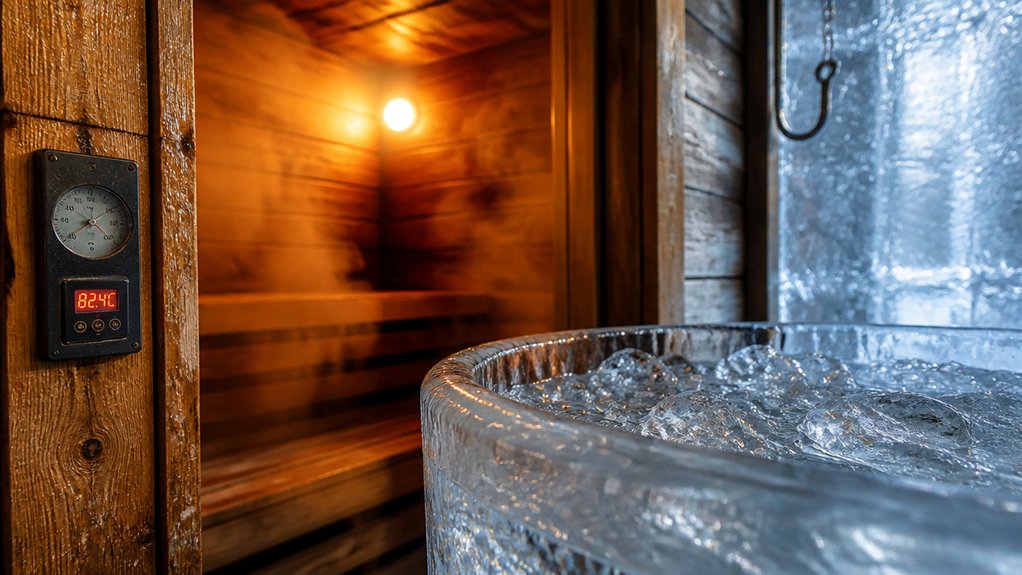
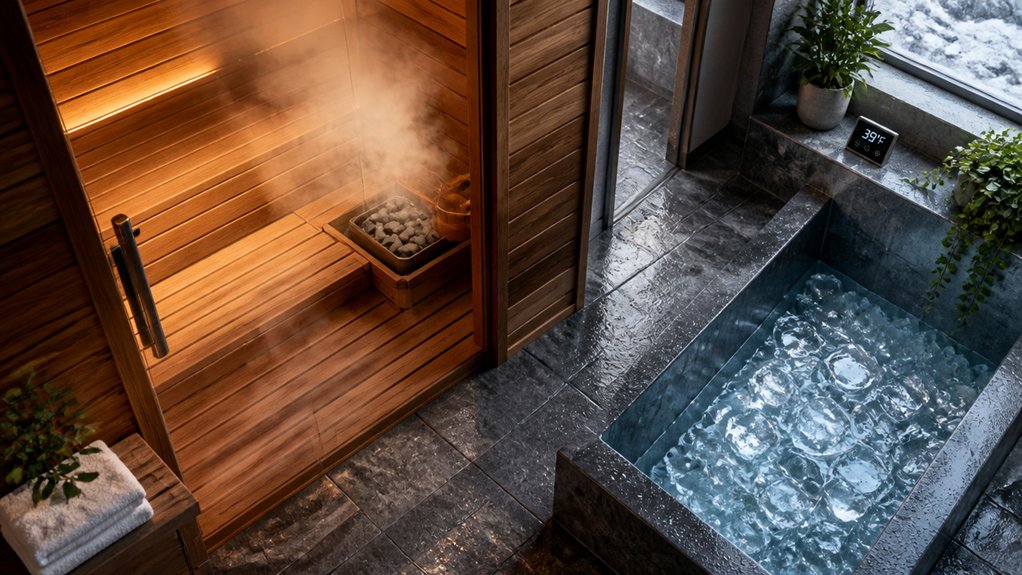
Understanding why proper sauna and ice bath temperatures matter is key to maximizing their benefits and avoiding risks. In a sauna, maintaining temperatures between 150-195°F promotes vasodilation, which improves circulation and supports cardiovascular health, while preventing overheating. Low EMF infrared technology can enhance safety by reducing electromagnetic field exposure during sessions. For cold exposure, ice bath temperatures around 39-55°F trigger vasoconstriction, helping activate metabolic processes without risking cold shock or hypothermia. Staying within these ranges guarantees you gain benefits like heat shock protein production, which aids in cellular repair and immune function, with minimal danger.
Deviating from recommended temperatures can cause dehydration, cardiovascular strain, or hypothermia, weakening the therapy’s effectiveness. Proper temperature management is essential for safe, effective sauna and ice-bath sessions.
What Are the Best Sauna Temperatures for Health and Recovery?
What’re the best sauna temperatures for optimizing health and recovery? The ideal sauna use involves staying within peak sauna temperatures between 150-195°F (65-90°C). These heat exposure levels allow your body temperature to rise safely, promoting cardiovascular health through vasodilation and elevated heart rate.
Finnish saunas often operate at 175-212°F (80-100°C), maximizing benefits like muscle recovery, immune boosting, and heat shock protein production. Starting at lower temps around 150°F helps your body adapt gradually, with sessions lasting 15-20 minutes.
Temperatures above 195°F may cause discomfort and dehydration, so personal tolerance and hydration are essential for safe, effective sauna use. Maintaining the right temperatures guarantees you get the maximum health and recovery benefits while avoiding risks appropriate heat levels.
How Cold Should Your Ice Bath Be for Effective Recovery?
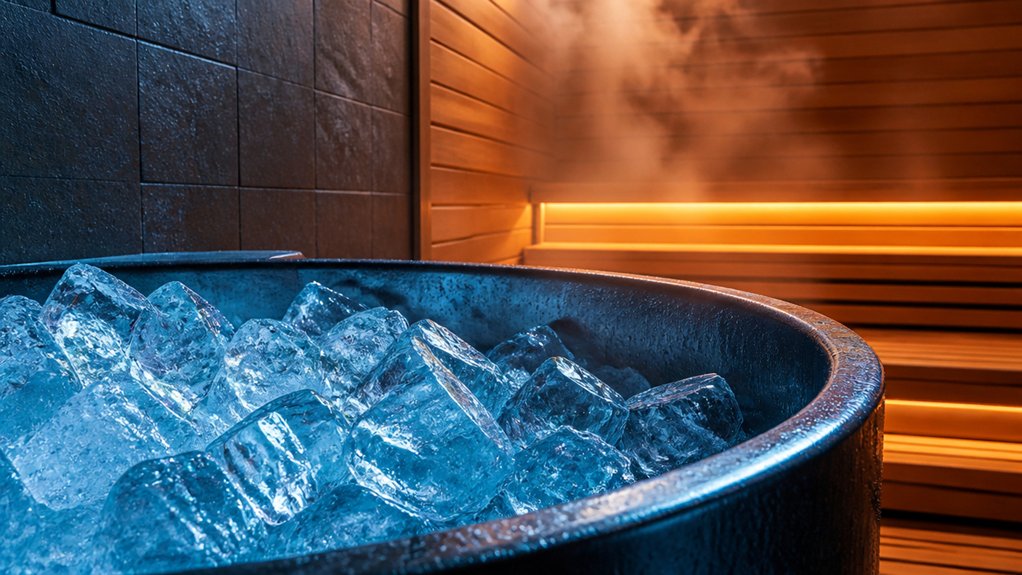
Have you ever wondered how cold your ice bath should be to maximize recovery? For effective results, aim for a temperature between 50-60°F (10-15°C). This range promotes vasoconstriction, reducing inflammation and muscle soreness without risking hypothermia.
Immersing at around 50-55°F for 2-5 minutes can boost recovery while supporting your immune system. Water colder than 50°F increases hypothermia risk, especially if you stay long enough to overcool. Adjust the temperature based on your experience to avoid shock or overexposure.
Maintaining consistent cold exposure also activates brown fat, helping regulate body temperature and enhance metabolic health. Finding the right coldness level guarantees you get the benefits of ice bath therapy without unnecessary dangers. Using a quiet ice bath chiller ensures your recovery sessions remain peaceful and undisturbed.
How to Balance Temperature and Duration for Safe Contrast Therapy
Finding the right balance between temperature and duration is key to safe contrast therapy. Stick to sauna temps of 150-195°F for 15-20 minutes and cold plunges at 39-55°F for 1-5 minutes, adjusting as your body adapts.
A controlled environment ensures safer and more effective sessions, preventing overheating or shock from sudden temperature changes.
Remember to allow recovery time and start with shorter sessions if you’re new to heat and cold contrasts.
Optimal Temperature Ranges
Balancing temperature and duration in contrast therapy is essential to maximize benefits while maintaining safety. Stick to ideal temperature ranges: 150-195°F (65-90°C) for sauna sessions and 39-60°F (4-15°C) for cold plunges. These ranges guarantee effective vasodilation and vasoconstriction, boosting cardiovascular benefits and promoting heat shock protein production. Duration matters too: 15-20 minutes in the sauna and 1-5 minutes in the cold plunge, based on comfort. Here’s a quick guide:
| Temperature Range | Duration | Key Benefit |
|---|---|---|
| Sauna: 150-195°F | 15-20 mins | Vasodilation, arterial flexibility |
| Cold Plunge: 39-60°F | 1-5 mins | Vasoconstriction, immune activation |
| Changeover Zones | 1-5 mins | Improving vascular responsiveness |
Sticking within these ranges guarantees safe, effective contrast therapy, training your vascular responsiveness safely. Additionally, being aware of the materials and insulation in your cold plunge setup can influence how quickly and effectively you reach and maintain desired temperatures.
Adjusting Duration Safely
To adjust your contrast therapy safely, it’s essential to tailor the duration of each phase based on temperature, your personal tolerance, and overall response.
For saunas and cold plunges, start with shorter durations—15-20 minutes in the sauna at 150-195°F, then switch to an ice bath for 1-12 minutes. Beginners should begin with 1-2 minutes at milder temperatures (around 50-60°F) to gradually increase tolerance without shock. Alternating long heat exposure with shorter cold bursts helps prevent excessive thermal stress and protect blood vessels.
Always monitor how your body responds and increase durations or temperatures gradually. Doing so guarantees your contrast therapy remains safe, minimizes adverse reactions, and maintains consistent water temperature to optimize the benefits of thermal stress on circulation and recovery.
How Temperature Affects Circulation and Vascular Health
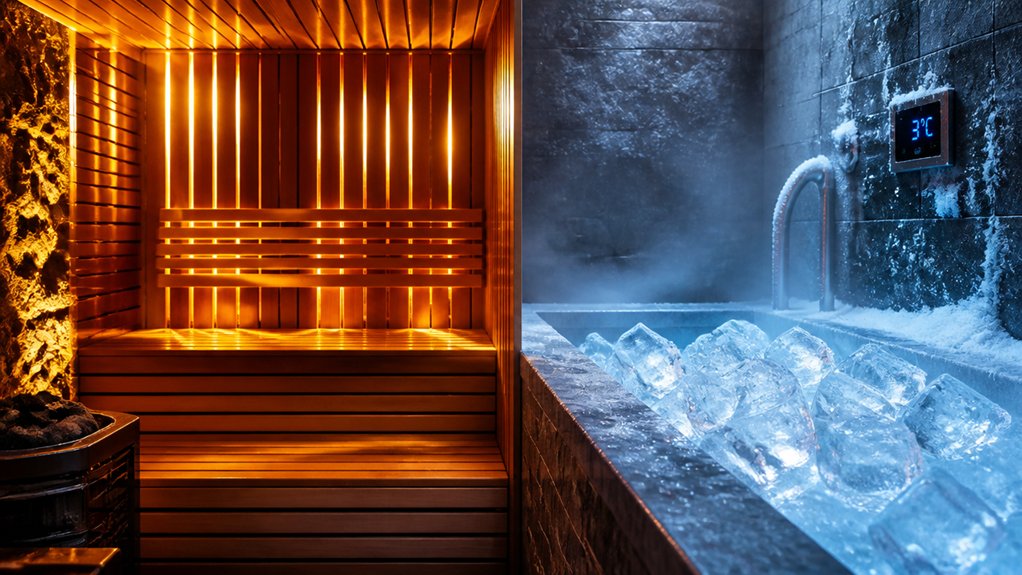
Temperature plays a crucial role in shaping your circulation and vascular health. When you use a sauna, the heat (175-212°F) causes vasodilation, expanding blood vessels and increasing blood flow. Your heart rate rises to 120-150 bpm, which improves arterial flexibility and overall circulation. Properly engineered cooling systems help maintain consistent and safe sauna temperatures for optimal benefits. Conversely, cold plunges (50-60°F) trigger vasoconstriction, narrowing blood vessels and raising blood pressure temporarily. This strengthening of vascular tone benefits long-term vascular health. Alternating between sauna and ice bath trains your vascular system by rhythmically expanding and constricting blood vessels, boosting circulation and endothelial function. Keep temperatures within safe ranges—above 150°F for sauna and 39-59°F for cold plunges—to maximize benefits and avoid risks. Proper temperature management enhances blood vessel pliability and reduces cardiovascular risks.
What Are the Risks of Using the Wrong Temperatures?
Exposing your body to temperatures outside safe ranges can lead to serious health risks. In a sauna heated above 212°F (100°C), you risk dehydration, dizziness, and arrhythmia, especially if you’re vulnerable.
Conversely, an ice bath below 39°F (4°C) can cause hypothermia or frostbite if you stay in too long. Cold plunges under 50°F (10°C) may dangerously elevate blood pressure and strain your heart, risky if you have cardiovascular disease.
Incorrect temperature contrasts—like jumping into a cold plunge after a sauna—can reduce heat therapy benefits and increase cardiovascular strain. Failing to gradually adapt may result in shock, hyperventilation, or fainting, heightening injury and emergency risks.
Additionally, understanding material durability and protection can help minimize injury if suits are not properly suited or maintained. Using the wrong temperatures puts your health at unnecessary danger during sauna and ice-bath sessions.
How to Personalize Sauna and Cold Plunge Temperatures for Your Goals
To personalize your sauna and cold plunge temps, start by honestly evaluating what feels comfortable and manageable for you.
Then, tailor the temperature and duration to match your specific goals, whether they’re relaxation, circulation, or metabolic boost. Adjust gradually over time to guarantee safety and maximize the benefits you’re aiming for.
Assess Personal Comfort Levels
How do you find the right comfort zone when adjusting sauna and ice-bath settings? Personal comfort is key to maximizing benefits and avoiding risks, so pay close attention to how your body responds.
When using a sauna, notice your heart rate and how your body tolerates heat; if you feel dizzy or overly exhausted, lower the temperature.
For a cold plunge, monitor shivering, discomfort, and cold water tolerance; sticking to 1-2 minutes initially helps prevent adverse effects like hypothermia.
Everyone’s threshold varies, so adjust the temperature based on your sensations. Properly evaluating your comfort guarantees you activate the benefits of heat and cold shock proteins without pushing beyond safe limits, optimizing your experience while avoiding possible health risks.
Adjust Based On Goals
Your specific health and fitness goals should guide how you set the temperatures for your sauna and cold plunge sessions. For cardiovascular benefits and metabolism boosts, opt for higher sauna temperatures (up to 200°F) and colder plunges (near 39°F). If relaxation or recovery is your goal, lower sauna temps (100-140°F) and milder cold (50-60°F) are more suitable. Use the table below to personalize your routine:
| Goal | Sauna Temp Range | Cold Plunge Temp Range |
|---|---|---|
| Relaxation | 100-140°F | 50-60°F |
| Recovery | 150-175°F | 50-55°F |
| Metabolic Boost | Up to 200°F | Near 39°F |
| Cardiovascular | 175-195°F | 39-50°F |
| Immune Support | 175-195°F | 39-50°F, repeated cycles |
Adjust gradually to match your comfort and goals.
Why Gradually Adjusting Temperatures Improves Safety and Results
Adjusting sauna and ice-bath temperatures gradually allows your body to adapt safely and effectively. By slowly increasing the sauna temperature from 150°F to 195°F over sessions, you give your cardiovascular system time to adjust, preventing sudden heart rate spikes up to 150 bpm.
Similarly, gradually lowering ice bath temperature within the 50-60°F range reduces hypothermia risk and minimizes shock to blood vessels, avoiding dangerous blood pressure spikes. This gradual adjustment fosters better tolerance by strengthening your vascular system through controlled vessel dilation and constriction cycles.
Starting with shorter sessions and moderate temperatures lets your body build resilience without overstressing your stress response. Incremental changes help prevent adverse effects like dizziness, arrhythmia, or fainting, ensuring safer, more effective adaptation to the thermal stress.
How Different Sauna Types and Cold Plunge Settings Compare
Different sauna types and cold plunge settings offer distinct benefits and experiences, so choosing the right combo aligns with your health goals. Finnish saunas operate at 150-200°F, promoting vasodilation and increased blood flow for cardiovascular health. Infrared saunas work cooler at 100-140°F but penetrate tissues deeply, delivering relaxing and cardiovascular benefits. Cold plunge baths at 39-59°F induce vasoconstriction, stimulating metabolic activation and vascular pumping through contrast therapy. Beginners often start with shorter, colder dips, while experienced users tolerate longer durations at warmer temperatures. Alternating between hot sauna sessions and cold plunges enhances blood circulation by triggering vasodilation and vasoconstriction.
| Sauna Type | Temperature Range | Cold Plunge Settings |
|---|---|---|
| Finnish sauna | 150-200°F | 39-59°F, 1-5 min |
| Infrared sauna | 100-140°F | 50-60°F, 2-5 min |
| Cold plunge baths | 39-59°F | N/A |
| Contrast therapy | Mix of both | Alternating times |
| Benefits | Vasodilation, blood flow | Vasoconstriction, blood flow |
Frequently Asked Questions
What Is the 200 Rule for Saunas?
The 200 Rule for saunas guides you to limit sessions by dividing 200 by the sauna’s temperature in Fahrenheit, typically resulting in 15-20 minutes for safe, effective heat exposure, balancing benefits and risks without overdoing it.
Is Sauna Good for High Cortisol?
Yes, sauna use can help reduce high cortisol levels by promoting relaxation, releasing endorphins, and improving stress resilience. Regular sessions, kept within safe temperatures of 150-195°F, support your body’s ability to manage stress more effectively.
Does Sauna Help Hashimoto’s?
Sauna might support Hashimoto’s by improving circulation, reducing inflammation, and boosting immune resilience, but it won’t cure the condition. Always consult your healthcare provider before use, as overheating can stress your thyroid and affect hormones.
Is It Better to Ice Bath Then Sauna or Sauna Then Ice Bath?
You should do the sauna first, then the ice bath. This sequence boosts cardiovascular health, enhances circulation, and promotes mental toughness. Starting with ice baths can blunt the benefits of a sauna and isn’t as safe.