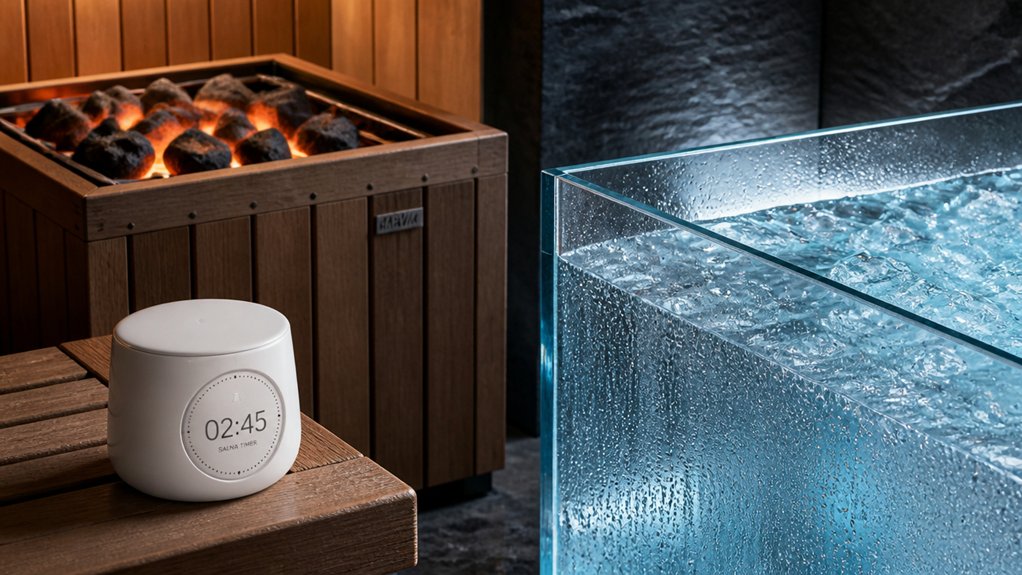
Timing is key to getting the most from sauna and ice bath contrast therapy. Start with a sauna for muscle relaxation and improved blood flow, then wait 2-5 minutes before plunging into cold water to help your nervous system adjust. Most people do 2-3 cycles, keeping duration between 10-20 minutes in the sauna and 2-5 minutes in the cold. Adjust based on your goals and body signals—continue exploring to optimize your routine.
Why Timing Matters in Sauna and Cold Plunge Contrast Therapy
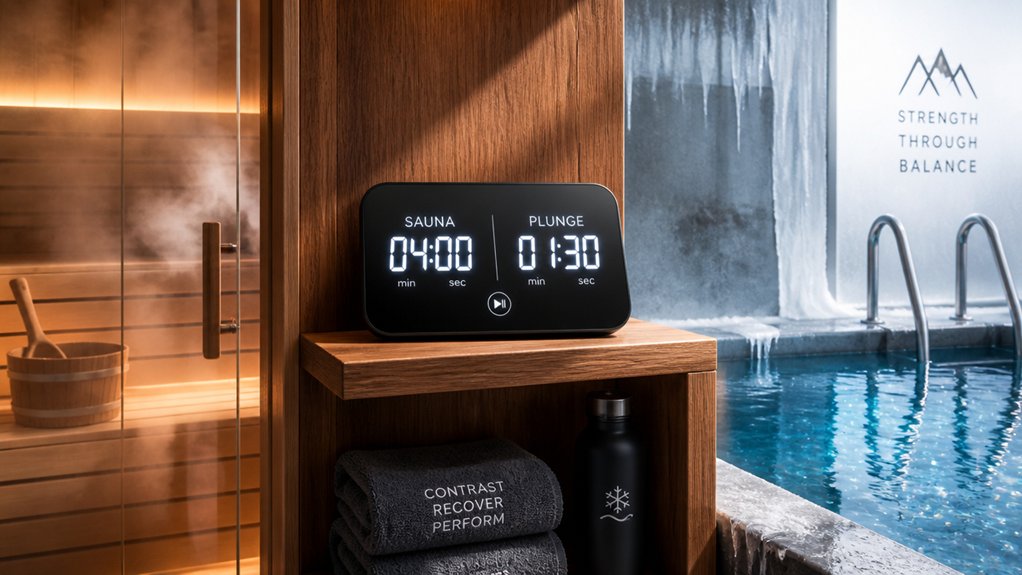
Timing is essential in sauna and cold plunge contrast therapy because it directly influences the physiological and mental benefits you experience.
Proper timing in contrast therapy maximizes relaxation, alertness, and recovery benefits.
When you start with a sauna session, your body responds by increasing blood flow and triggering a relaxation response, especially if done in the evening to boost sleep quality.
Following this with a cold plunge activates your fight-or-flight response, releasing norepinephrine and promoting alertness. A brief 2-5 minute pause allows your nervous system to adapt, maximizing the benefits of contrast therapy.
Cold plunges typically last 2-5 minutes after a longer sauna session to reduce inflammation and aid recovery.
Proper timing and sequence enhance your body response, whether you seek relaxation, mental clarity, or recovery. Ensuring the right contrast therapy duration can optimize your overall experience and health benefits.
Should You Do Cold Plunge or Sauna First?
Should you start with the cold plunge or the sauna? Starting with the sauna is recommended if your goal is muscle relaxation, increased blood flow, and reduced inflammation.
This warm-up induces sweating and loosens tight muscles, making the cold plunge more effective afterward. A cold plunge following the sauna triggers vasoconstriction and adrenaline release, sharpening your alertness and boosting circulation benefits through thermal contrast cycling.
If you prefer an energizing start, beginning with the cold plunge can energize your nervous system, setting a brisk tone for the session. A brief 2-5 minute pause between the two allows your nervous system to adjust, regardless of the order chosen.
Both sequences influence your outcomes: sauna-first supports recovery and detox, while cold-first enhances mental clarity. Portable sauna models with rapid heat-up times and adjustable temperatures can optimize this contrast therapy routine.
How Long Should You Stay in the Sauna for Best Results?
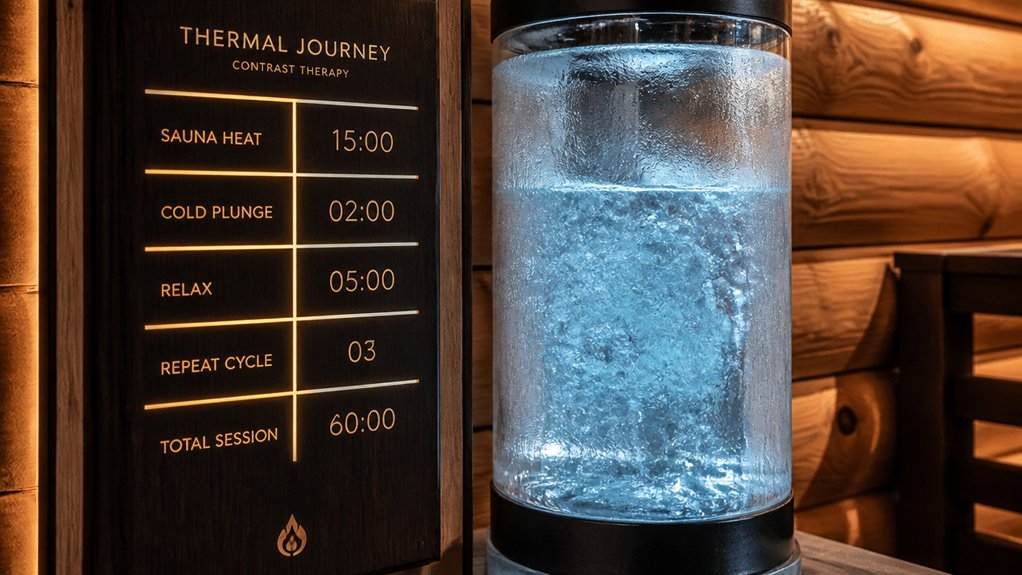
How long you stay in the sauna can considerably impact your experience and benefits. Generally, sauna sessions lasting between 10 to 30 minutes are ideal. Most people find 15-20 minutes to be best for muscle relaxation and cardiovascular health.
If you’re a beginner, start with shorter durations of 10-15 minutes, gradually increasing the time as you become more comfortable. Maintaining sauna temperatures between 65-90°C supports effective heat exposure without risking overexposure.
Remember to hydrate before and after your session to replace fluids lost through sweating. Staying within the recommended time frames maximizes benefits while minimizing risks. Incorporating the use of personalized heat therapy can further enhance recovery and relaxation.
Proper timing enhances your overall experience and helps you enjoy the full advantages of improved circulation, relaxation, and potential detoxification.
What’s the Ideal Duration for Cold Plunge Sessions?
The ideal cold plunge lasts between 2 and 5 minutes for most individuals, but your experience level influences the best time. Staying in too long can show signs of overexposure, like numbness or shivering, which should signal you to get out. Beginners should start with shorter sessions, gradually increasing duration as their tolerance improves. Using appropriately insulated ice bath tubs can help maintain consistent temperatures and improve your overall recovery experience.
Optimal Cold Exposure Time
Figuring out the ideal length for a cold plunge can make a significant difference in maximizing benefits while avoiding discomfort. Usually, 1 to 12 minutes is optimal, with about 1 minute per degree Celsius of water temperature. Beginners should start with 30 seconds to 2 minutes, gradually increasing by 15-30 seconds. Most contrast therapy protocols recommend 2-5 minutes in the ice bath to effectively reduce inflammation and enhance circulation without causing pain. Longer sessions beyond 10-12 minutes risk hypothermia and aren’t necessary for recovery or well-being. To enhance cold plunge therapy, listen for discomfort and exit immediately if needed. Remember, the goal is to balance benefits with safety effectively.
Additionally, ensuring your insulation layers are adequate can help maintain a consistent temperature and extend your session comfortably.
Signs of Overexposure
Knowing when you’ve overstayed your welcome in an ice bath is essential for safety. Overexposure to cold can cause your body to react negatively, so watch for signs like intense numbness, persistent shivering, dizziness, or overwhelming discomfort. These symptoms indicate your body is struggling to adapt and may be approaching a dangerous point.
If you experience severe cold discomfort or uncontrollable shaking, it’s imperative to exit immediately. Staying too long increases the risk of hypothermia, impaired circulation, and stress on your cardiovascular system. Additionally, understanding how sensor accuracy can be affected under cold stress helps in monitoring your physiological responses effectively.
To avoid overexposure, begin with shorter sessions—around 2-3 minutes—and gradually extend your cold plunge time as your tolerance improves. Listening to your body’s signals guarantees you enjoy the benefits of cold exposure safely and effectively.
Differences by Experience Level
Your experience level greatly influences the ideal duration for cold plunge every session. Beginners should start with 30-60 seconds at 10-15°C, gradually increasing duration by 15-30 seconds as your physical tolerance improves. Utilizing proper water treatment can help maintain water quality and safety during your sessions.
Intermediate users can aim for 2-5 minutes, balancing effective inflammation help reduce without causing excessive cold shock.
Advanced practitioners often extend cold plunge time to 5-10 minutes, which helps optimize circulation and mental resilience. Always monitor your comfort and practice controlled breathing to avoid overexposure.
The rule of about 1 minute per degree Celsius in water temperature applies, helping you prevent hypothermia or excessive discomfort. Progress gradually and listen to your body, ensuring safe adaptation with every cold plunge session.
How Many Cycles of Hot and Cold Should You Do?
Most experts recommend doing 2-3 cycles of alternating hot and cold, but you should pay close attention to how your body responds. Start with shorter sessions and gradually increase the number of cycles as you build tolerance. Monitoring your comfort and recovery guarantees you get the maximum benefits without overdoing it. Incorporating a waterproof shower timer can help you precisely track session durations and maintain consistent timing during your cold exposure training.
Optimal Cycle Count
Typically, performing 2 to 3 cycles of alternating sauna and ice bath sessions offers the most benefits. You should aim for about 10-15 minutes in the sauna followed by 2-5 minutes in the ice bath, repeating these cycles per session.
This approach maximizes improved circulation, helps with muscle soreness, and promotes faster recovery. Repeating 2-3 heat and cold cycles creates a balance between heat and cold exposure, boosting both circulation and muscle repair.
Ending with cold immersion is especially effective in reducing inflammation and soreness after multiple cycles. If you’re new, start with fewer cycles—say, 1 or 2—and gradually increase as your endurance and comfort improve.
Always listen to your body to avoid overheating or hypothermia.
Monitoring Body Response
| Hot and Cold | Duration | Signal to Stop |
|---|---|---|
| Sauna | 10-30 min | Dizziness, fatigue |
| Ice bath | 1-12 min | Excess soreness or discomfort |
| Shift | 1-3 min | Unusual body sensations |
| End session | – | Based on body signals |
How Long Should Rest Be Between Sauna and Cold Plunge?
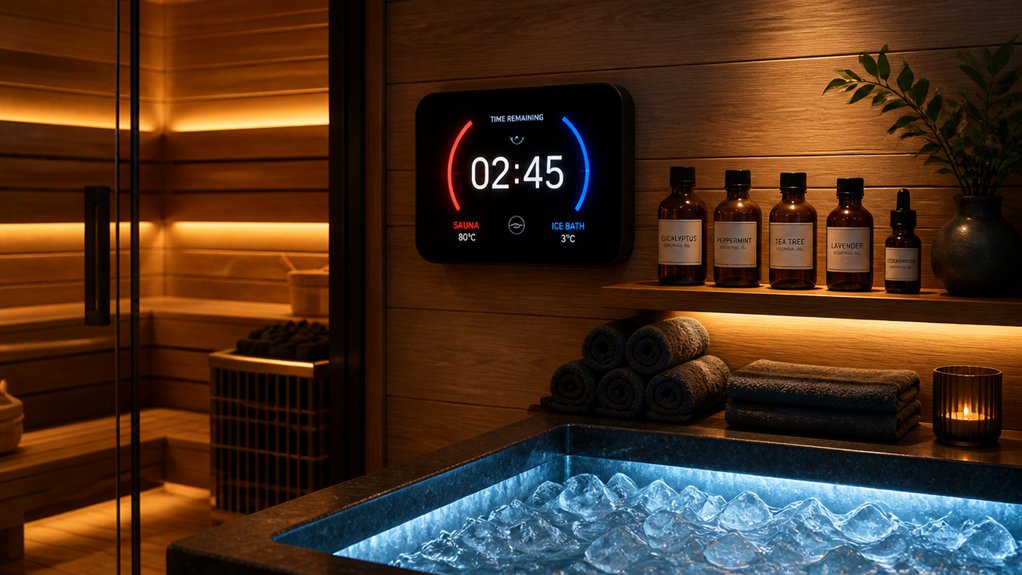
How long should you wait between a sauna session and a cold plunge? A rest period of 2-5 minutes is recommended to help your nervous system adjust.
This short pause allows your heart rate and body temperature to stabilize, preventing shock and discomfort. During this time, focus on controlled breathing and hydration to support thermoregulation and set the stage for effective contrast therapy.
Rushing the changeover can hamper recovery and increase risk, especially for beginners. Keep within this 2-5 minute window to optimize benefits and guarantee a smooth, safe shift from heat to cold. Although individual tolerance varies, sticking to this timeframe generally provides the best balance between relaxation and stimulation.
When Is the Best Time to Do Contrast Therapy During Your Recovery?
Determining the best time for contrast therapy depends on your recovery goals and daily schedule.
If your aim is muscle recovery, starting with a 10-20 minute sauna session in the evening followed by a brief 2-5 minute ice bath can reduce inflammation and soreness effectively.
For mental alertness and energy boosts, schedule contrast therapy in the morning, beginning with an ice bath to invigorate you, then warming up with a sauna afterward. Remember to pause 2-5 minutes between sauna and ice bath to let your nervous system adjust and optimize thermoregulation.
For post-exercise recovery, alternate 2-3 cycles of 10-15 minutes in the sauna and 2-3 minutes in the ice bath, ending cold to promote inflammation reduction and muscle repair.
How to Time Contrast Therapy for Better Mental Clarity and Energy
To optimize mental clarity and energy, plan your contrast therapy sessions in the morning, starting with a sauna to relax and warm up your body.
Follow with short cold plunges to stimulate alertness and boost your adrenaline; repeat 2-3 cycles for maximum effect.
Finish on a final cold plunge and avoid rewarming to maintain heightened focus and energy throughout the day.
Cold First or Last
Deciding whether to start your contrast therapy with cold or heat can greatly impact your mental and physical benefits. Beginning with cold exposure, like an ice bath, activates your sympathetic nervous system, boosting alertness through cold shock response. This energizes you immediately and sharpens focus.
Following cold with a sauna allows your body to warm gradually, promoting relaxation and easing muscle tension. For mental clarity and energy, many prefer ending with a cold plunge, which leaves you feeling invigorated and alert.
This activating finish enhances adrenaline release and sharpens focus, making you feel more awake and energized. Whether you start with cold or finish with it, timing your sessions to suit your goals can maximize contrast therapy’s benefits for mental clarity and essentiality.
Optimal Cycle Lengths
When planning your contrast therapy sessions for improved mental clarity and energy, precise timing can make a significant difference. To optimize your Sauna And Cold Plunge routine, aim for 2-3 cycles with these guidelines:
- Start with 10-15 minutes in the sauna, warming your body.
- Follow with 2-4 minutes in the ice bath to stimulate alertness.
- Rest 2-5 minutes to let your nervous system adjust.
- Finish with a cold plunge lasting 2-4 minutes, without heat afterward, to maximize wakefulness.
Adjust times per comfort and gradually increase ice bath duration by 15-30 seconds per session. Properly timed contrast therapy enhances mental clarity and energy, especially when the routine is tailored for your body’s response and goals.
Timing for Alertness
Timing your contrast therapy sessions for peak mental clarity hinges on strategically starting with a hot sauna followed by a brief cold plunge. Sauna bathing prompts relaxation, but switching to an ice bath quickly triggers cold shock, activating your sympathetic nervous system and releasing adrenaline and norepinephrine. This boost enhances alertness and mental clarity.
Morning sessions are ideal, as cold exposure after heat maximizes energy and sharpness. Repeat 2-3 cycles of 15-minute sauna and 2-3 minute ice bath, with short pauses for balance. Always end with a final ice bath to sustain heightened alertness and prevent early parasympathetic relaxation.
Controlled deep breathing during cold exposure helps adapt, sharpens focus, and reduces discomfort, ensuring you stay energized and alert throughout the day.
What Are the Risks of Overdoing Cold or Heat Exposure?
Exposing yourself to excessive heat or cold during sauna sessions or ice baths can pose serious health risks. Overexposure increases the likelihood of dehydration, dizziness, and heat exhaustion from extreme fluid loss.
Pushing cold exposure too long—beyond 10-12 minutes at low temperatures—risks hypothermia and cold shock reactions like numbness and impaired movement. Additionally, extended sessions can disrupt your body’s thermoregulation, leading to cardiovascular strain, such as arrhythmias or blood pressure instability.
Be cautious, especially if you:
- Consume too little water during recovery
- Ignore signals of dizziness or numbness
- Prolong sessions beyond recommended durations
- Use extreme temperatures without medical guidance
Repeated overexposure without proper precautions heightens the chances of fainting, cramps, and compromised recovery, especially in vulnerable groups.
How to Adjust Duration and Temperature Based on Your Goals
Understanding how to tailor your sauna and ice bath routines to match your goals can greatly enhance their benefits.
For muscle recovery, alternate 10-15 minute sauna sessions at 65-90°C with 2-3 minute ice baths at 10-15°C, repeating 2-3 cycles and ending on ice bath to reduce inflammation.
To boost mental clarity, use a 10-15 minute sauna followed by 2-4 minutes in the cold plunge, cycling 2-3 times and finishing with cold immersion to maximize alertness.
For relaxation and sleep, start with a short ice bath (2-3 minutes), then extend sauna duration to 10-20 minutes, repeating 2-3 cycles and ending with sauna heat to promote relaxation.
Adjust duration and temperature based on your comfort, gradually increasing time and lowering temperature as tolerated.
Best Times of Day to Do Contrast Therapy for Maximum Benefit
Wondering when to do contrast therapy for maximum benefits? The timing depends on your goals: for energy and mental clarity, do morning contrast therapy.
In the morning, alternating sauna and ice bath cycles boosts alertness and stimulates your nervous system. For muscle recovery and inflammation reduction, evening sessions are ideal.
Here’s a guide:
- Use a sauna in the evening to relax muscles and promote parasympathetic activation.
- Finish with an ice bath to reduce inflammation and enhance muscle recovery overnight.
- In the morning, start with a sauna, then plunge into ice to energize and sharpen focus.
- Schedule contrast therapy before sleep or early in the day, aligning with your recovery and mental clarity needs.
Timing your contrast therapy based on these principles maximizes both physical and mental benefits.
How to Monitor Your Body’s Response and Optimize Your Routine
Monitoring how your body responds during contrast therapy helps you tailor each session for safety and maximum benefit. Pay close attention to signs of dehydration, dizziness, or excessive fatigue, adjusting your time and temperature accordingly.
It’s essential to monitor your heart rate during sessions; if it becomes excessively elevated or irregular, reduce the intensity or duration. Listen to your body—use controlled deep breathing during cold plunges to handle shock and stay comfortable.
Track muscle soreness and mental alertness afterward to refine your routine, guaranteeing it aligns with your recovery or energy goals. Gradually increase exposure times and reduce adjustment intervals based on your tolerance, making only one change at a time. This systematic approach guarantees safe, personalized optimization of your contrast therapy.
Frequently Asked Questions
What Goes First, an Ice Bath or a Sauna?
You should start with a sauna if you’re aiming for muscle relaxation and reducing inflammation, as heat relaxes muscles first. For more energy and mental clarity, begin with an ice bath. Your choice depends on your goals.
How Long Should I Ice Bath After a Sauna?
You should ice bath after a sauna for 2 to 5 minutes at 10-15°C. Beginners start with 1-2 minutes, gradually increasing as you get comfortable. This helps reduce inflammation and aids recovery effectively.
What Is the 200 Rule for Saunas?
The 200 Rule for saunas guides you to keep your temperature in Celsius plus your time in minutes at or below 200. This helps you avoid overheating and dehydration by balancing heat intensity with safe duration during your sauna session.
What Is the Best Routine for Sauna and Cold Plunge?
You should start with a 15-20 minute sauna at 65-90°C, then cool down briefly, followed by 2-5 minutes in a cold plunge, repeating 2-3 cycles, and finish with a cold plunge or sauna based on your goals.