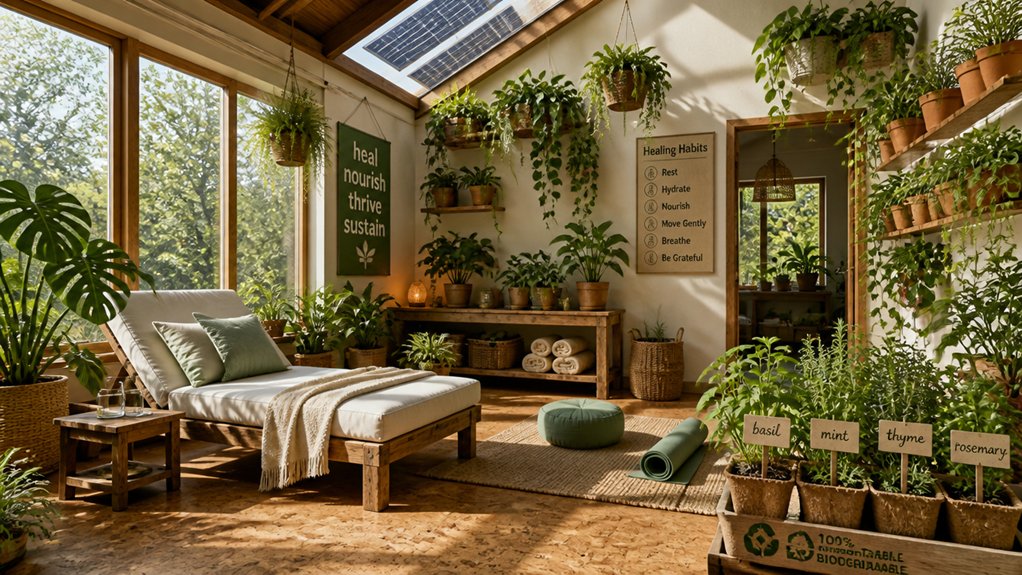
To create the most eco-friendly home recovery setup, use reclaimed wood, recycled steel, and natural insulation like sheep’s wool or cork. Opt for energy-efficient cooling systems such as heat pumps or solar-powered fans. Save water by recycling bathwater and installing low-flow fixtures. Choose biodegradable and recycled components, plus non-toxic paints and sealants. Maintaining these sustainable practices reduces waste, energy use, and chemical impact. Keep exploring for more tips on building a greener, healthier recovery space.
Why Use Eco-Friendly Materials to Build Your Ice Bath
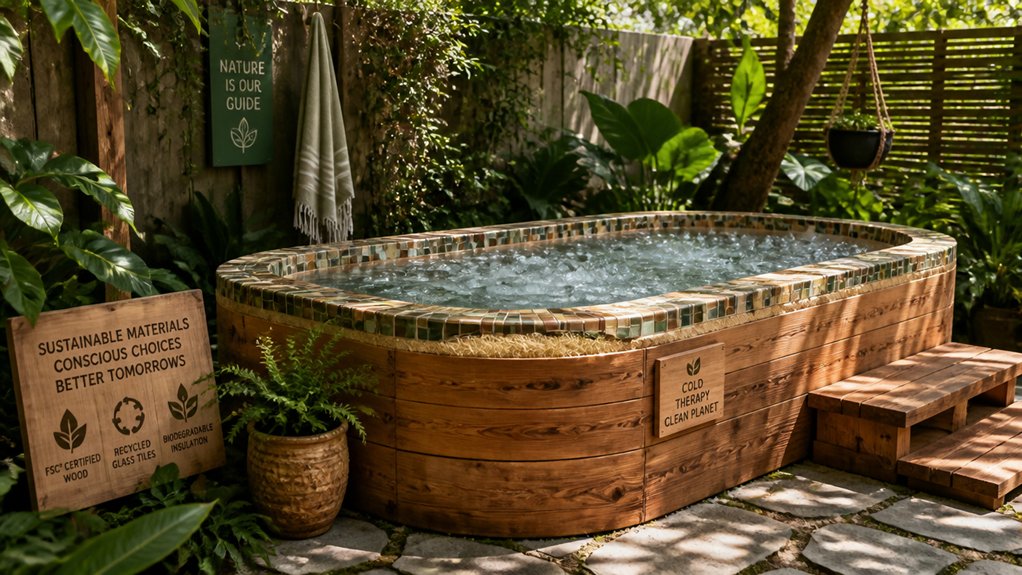
Building your ice bath with eco-friendly materials isn’t just good for the environment — it also benefits your health and the longevity of your setup. Using reclaimed wood or recycled steel reduces waste and minimizes environmental impact by avoiding new timber harvesting and energy-intensive manufacturing.
Eco-friendly insulation materials like sheep’s wool or recycled cotton denim help keep your ice cold efficiently and are biodegradable, ensuring your setup remains sustainable. Choosing non-toxic, VOC-free paints minimizes harmful chemical emissions, supporting better indoor air quality.
Incorporating bamboo provides a durable, moisture-resistant, and rapidly renewable alternative to conventional wood. Additionally, selecting insulation options such as recycled cotton insulation further enhances the eco-friendliness of your recovery space. These biodegradable and recycled components not only help reduce waste but also make disposal or repurposing easier at the end of your setup’s life, making your recovery space both healthy and sustainable.
How to Choose Energy-Efficient Cooling Systems for Your Setup
Are you looking to keep your ice bath setup cool while lowering energy bills? Choose energy-efficient cooling systems like heat pumps or units with ENERGY STAR® certification to cut electricity use and save costs.
Choose energy-efficient cooling systems like heat pumps or ENERGY STAR® units to save on electricity costs.
Consider installing solar attic fans to naturally cool your attic, especially in warm climates.
Properly sealing windows and doors helps prevent cooled air from escaping, reducing HVAC usage and energy waste by up to 30%.
Using programmable thermostats allows you to schedule cooling during prime times, improving home energy efficiency.
Opt for cooling systems with variable speed compressors for precise temperature control and better energy efficiency than single-speed models.
These options help you create a sustainable, cost-effective setup that keeps your ice bath cool without draining your energy resources. Efficient filtration systems also contribute to maintaining water quality while minimizing power consumption.
Simple Ways to Save Water and Recycle During Your Ice Bath Routine
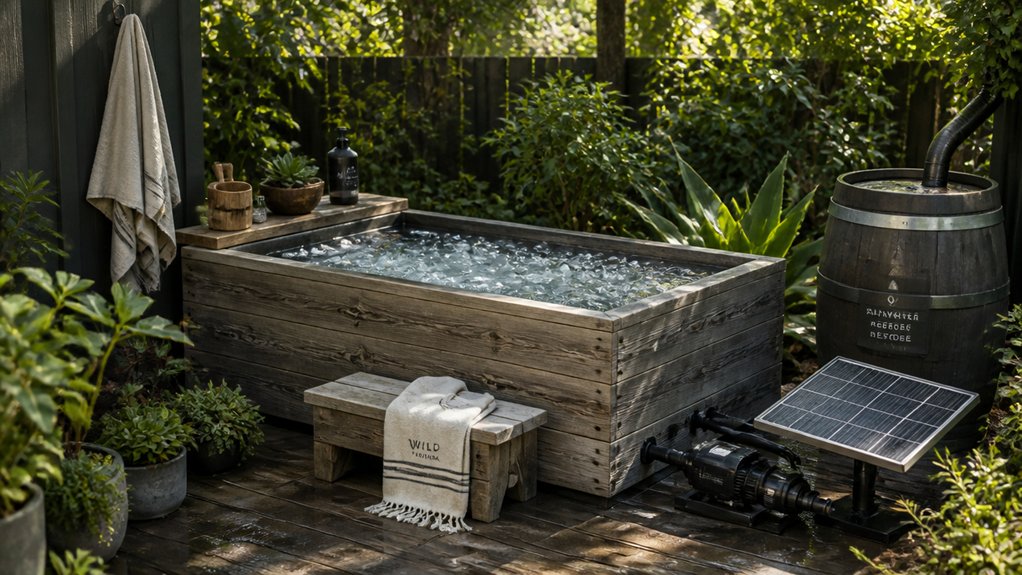
To make your ice bath routine more environmentally friendly, you can easily implement simple water-saving and recycling practices. Use the water from your ice bath to irrigate plants or your garden, reducing water waste and making your home greener. Install water-saving fixtures like low-flow faucets to cut water use by up to 60%. Capture bathwater with rainwater harvesting systems or storage tanks, decreasing reliance on fresh water and lowering your environmental impact. Compost any organic debris, such as herbs or cucumber slices, to recycle nutrients back into your soil. Incorporating eco-friendly water treatments can also help maintain water quality while reducing chemical waste.
How to Select Recycled and Natural Components for Your DIY Ice Bath
Thinking about eco-friendly options for your DIY ice bath? Start with reclaimed wood, repurposed metal, and recycled plastics to build your frame and insulation, reducing waste and saving money. Aware of water treatment considerations, choose treatments that are environmentally safe and non-toxic to ensure your setup remains sustainable while maintaining water quality. Use natural insulating materials like sheep’s wool or cork around the bath to maintain cold temperatures sustainably and lower energy use. Seal your setup with VOC-free, non-toxic sealants to protect materials and improve indoor air quality. Choose eco-friendly paints made from natural minerals to add color or surface protection without harmful chemicals. To minimize environmental impact, source refurbished components, such as tubs or containers from local marketplaces or reclamation centers, supporting waste reduction efforts. These choices create a sustainable, low-impact home recovery space aligned with eco-conscious values.
Tips for Maintaining an Eco-Friendly and Low-Impact Ice Bath Environment
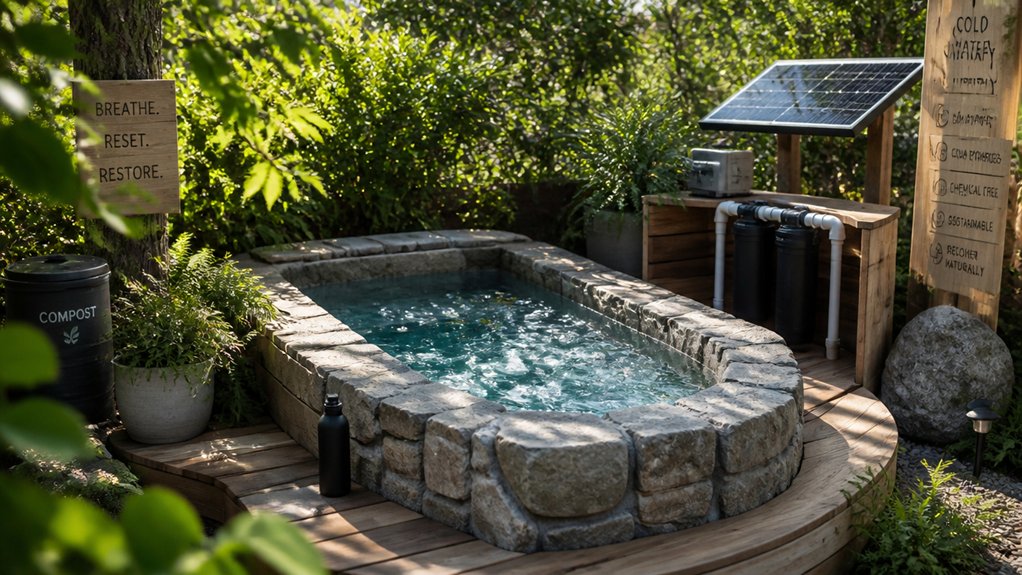
Maintaining an eco-friendly and low-impact ice bath environment requires mindful practices that prioritize sustainability. Use reclaimed materials like wood or metal for the structure to minimize waste and environmental impact. Choose energy-efficient ice-making appliances or harvest natural ice to reduce energy use. Incorporate multi-layer insulation with eco-friendly materials such as sheep’s wool or recycled denim to maintain temperature and cut energy consumption. Set up a water recycling system to filter and reuse bath water, decreasing water waste. Opt for natural, biodegradable cleaning products to keep water clean without harmful chemicals.
These practices help reduce your carbon footprint, lower environmental impact, and promote a more sustainable recovery setup while minimizing waste and supporting a natural, eco-friendly environment.
Frequently Asked Questions
What Is the Most Eco-Friendly Home Heating System?
You should choose a geothermal heating system, as it uses underground energy, reducing your costs and environmental impact greatly. Pair it with energy-efficient windows, insulation, and smart thermostats to optimize efficiency and minimize emissions sustainably and effectively.
What Is the Most Environmentally-Friendly House to Build?
The most eco-friendly house to build incorporates reclaimed materials, uses modular construction, optimizes natural light, and integrates renewable energy sources like solar or geothermal systems, reducing emissions and resource use while promoting sustainability in design and materials.
What Is the Most Eco-Friendly Material to Build a House With?
You should choose bamboo for its fast growth, reclaimed wood to cut emissions, recycled steel to save resources, cork for insulation, and sheep’s wool for energy efficiency. These materials together create an eco-friendly, sustainable, and durable home.
What Are the Best Eco-Friendly Materials for Home Design?
You should choose bamboo, reclaimed wood, recycled steel, cork, and sheep’s wool insulation for eco-friendly home design. These materials are renewable, durable, and enhance indoor air quality, making your space sustainable and healthier for you and the environment.