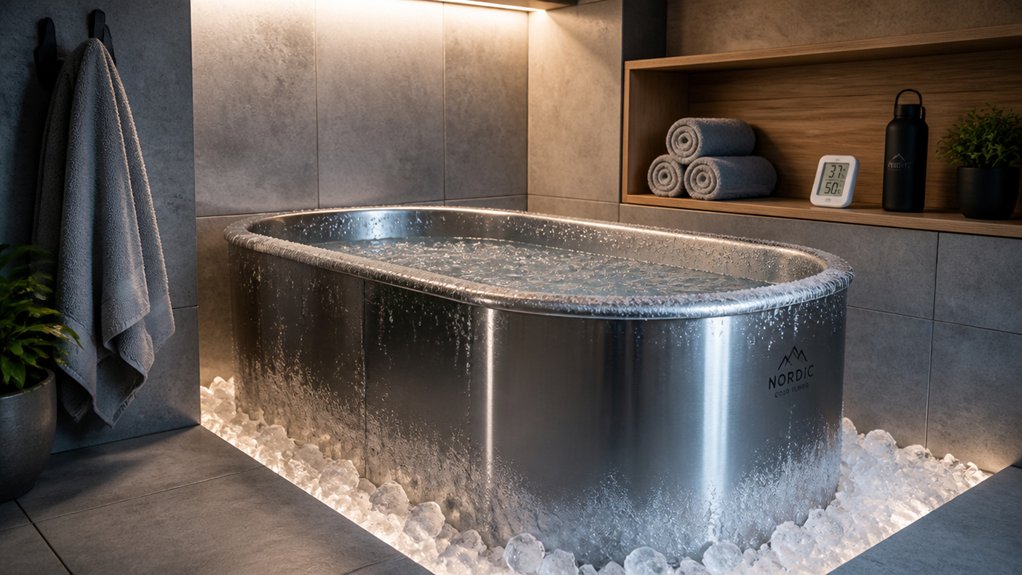
Maintaining your home ice-bath setup keeps the water clean, safe, and effective for recovery. Regularly cleaning, changing water, and checking filtration prevent bacteria buildup, odors, and debris. Monitoring water chemistry and temperature guarantees consistent, comfortable use. Proper care extends the lifespan of your equipment and maintains peak performance. If you follow these tips, you’ll guarantee a hygienic and reliable setup — and there’s more helpful advice to discover along the way.
Why Regular Maintenance Extends Your Ice Bath’s Lifespan
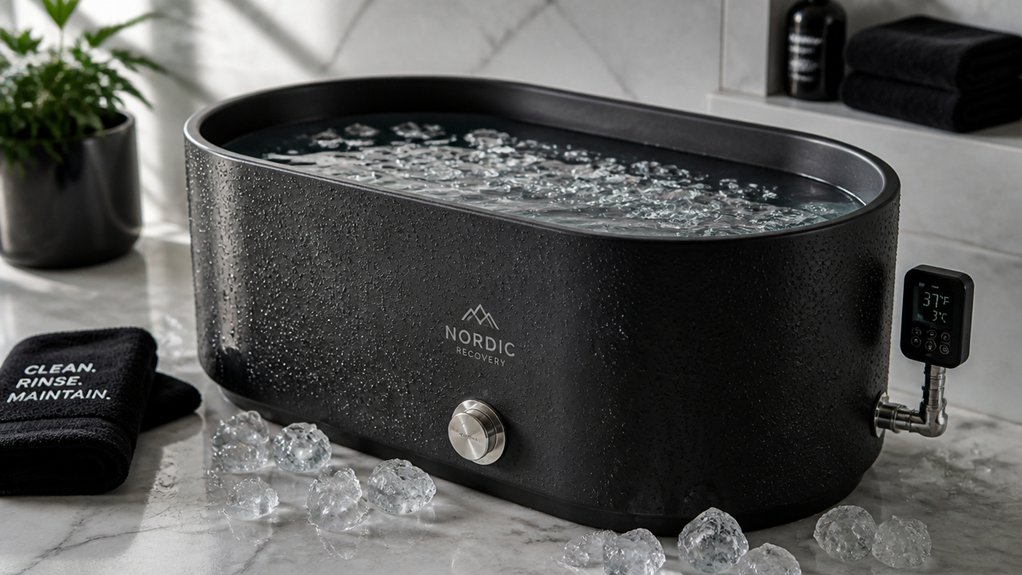
Regular maintenance is key to ensuring your ice bath lasts as long as possible. Using clean water and a good filtration system helps prevent bacteria growth, odors, and surface scum that can damage the tub.
Changing the water every 3-4 days—or every two weeks with advanced models—stops mineral buildup and biofilm formation that can corrode surfaces. Routine cleaning with eco-friendly disinfectants preserves the integrity of your ice bath’s materials, preventing stains and corrosion.
A reliable filtration system reduces debris and harmful microorganisms, minimizing wear on components. Keeping your bath covered and stored in a ventilated space also shields it from dust and environmental contaminants. Clarifiers can help maintain water clarity and reduce debris buildup over time, extending your ice bath’s lifespan.
Together, these maintenance habits protect your investment, ensuring your ice bath remains durable and effective for years to come.
Keep Your Water Clean: Tips for Regular Water Cleaning
Keeping your water clean is essential for a safe and enjoyable ice bath experience. To keep water fresh and bacteria-free, change it every 3-4 days. Using clean, contaminant-free ice prevents impurities from entering your tub.
Regularly wipe down and clean the tub surfaces with eco-friendly disinfectants to curb bacterial growth. If you have a compatible filter system, use it consistently to keep water clear and reduce the need for frequent cleaning. This system helps trap debris and contaminants, making maintenance easier.
Additionally, shower and rinse off before entering to wash away oils, hair, and skin particles. Incorporating water sanitizer compatibility knowledge can help you choose the most suitable sanitizer for your tub to maintain water quality and hygiene. These simple steps help maintain water quality, ensuring a hygienic and pleasant ice bath every time.
How Often Should You Change Your Ice Bath Water?
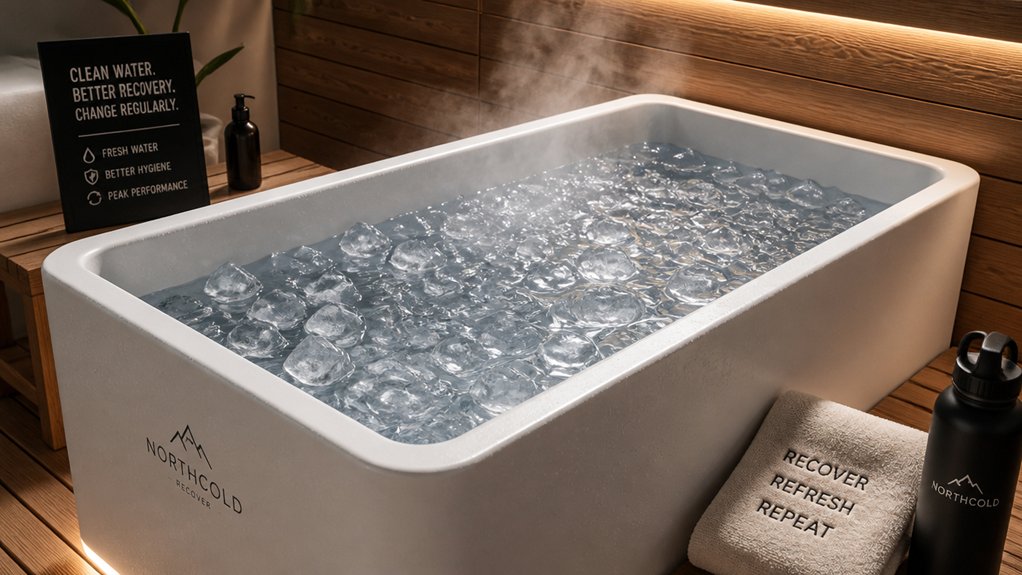
How often should you change your ice bath water? For basic setups, aim to refresh the water every 3-4 days. This prevents bacterial buildup and keeps your bath hygienic.
Change ice bath water every 3-4 days to prevent bacteria and maintain hygiene.
For advanced models like Chill Tubs, you can extend this to about every two weeks, depending on usage and contamination levels. Regularly changing water also avoids stagnation, unpleasant odors, and surface scum.
Consider these points:
- Water should be replaced more frequently with heavy use.
- Stagnant water leads to bacterial growth.
- Cleaning the bath surface helps maintain hygiene.
- Adjust the schedule based on your specific bath model and water treatment practices.
- Using appropriate water treatment liquids minimizes contaminants and extends the time between water changes.
Staying consistent with water regularly changing guarantees your ice bath remains clean, safe, and effective for recovery.
Best Filtration Practices for Clear, Fresh Water
To guarantee your ice bath stays clean and inviting, effective filtration is key. To keep your water clear and free of debris, regularly clean and replace filters every 2-3 weeks, or sooner if they clog or break down.
Use filtration systems designed for your setup, such as mechanical or cartridge filters, to maintain water clarity and reduce contaminants. Run the filtration and circulation pump for at least 4 hours daily, even when not in use, to keep water moving and prevent bacterial buildup.
Rinse filters regularly, soak them in a filter cleaner or mild bleach solution, then dry thoroughly before reinstalling. Incorporating proper filtration compatibility ensures your system performs effectively and maintains water quality. Combining these practices with occasional water changes every 3-4 weeks will help keep your water fresh and prevent buildup of contaminants.
How to Check and Tweak Water Chemistry Safely
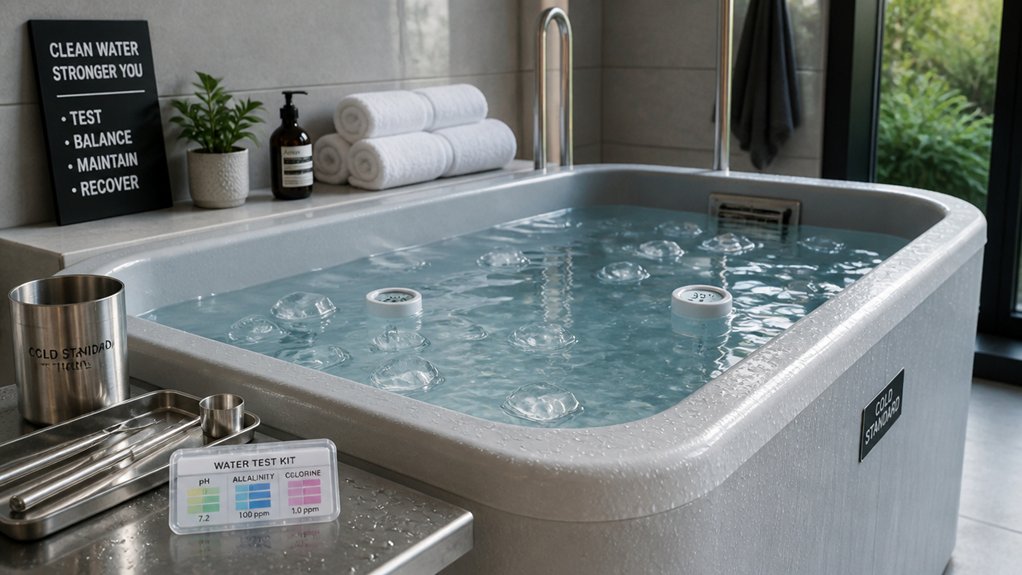
Wondering how to guarantee your ice bath water stays balanced and safe? Regularly check your water chemistry every 1-2 weeks or with each water change.
Focus on maintaining water temperature and water clean by testing pH levels between 7.2 and 7.8, which supports sanitizer effectiveness and prevents corrosion. To tweak water chemistry safely:
- Test total alkalinity first, aiming for 80-120 ppm, and add alkalinity increaser if needed.
- Adjust pH levels after stabilizing alkalinity.
- Keep sanitizer levels within recommended ranges—chlorine at 1-3 ppm or bromine at 3-5 ppm.
- Wait 20-30 minutes of circulation after each chemical addition for proper mixing. Use accurate test strips or liquid kits for precise readings.
- Consider the use of slow-dissolving bromine tablets, which provide consistent sanitation over time without frequent adjustments.
Safe Dosing: Tips for Effective Chemical Use in Your Ice Bath
Guaranteeing safe and effective chemical dosing in your ice bath requires careful measurement and attention to sequence. Begin by testing your water every 1-2 weeks or after each water change. Properly measure doses based on the approximate 100-gallon volume; small errors can upset water chemistry. Add chemicals in a precise order: alkalinity increaser first, then pH adjuster, followed by calcium hardness, and finally sanitizer. Allow 20-30 minutes of circulation between each addition for proper mixing. Keep the tub uncovered during application to prevent gas buildup and odors. Use the table below to guide your dosing process:
| Step | Chemical | Purpose |
|---|---|---|
| 1 | Alkalinity increaser | Stabilizes water pH |
| 2 | pH adjuster | Maintains pH balance |
| 3 | Sanitizer | Ensures water sanitation |
In addition, utilizing high-quality pH testing kits ensures accurate readings, which are crucial for maintaining the appropriate pH level in your ice bath.
Inspect and Clean Pump and Filter Components Regularly
You should check your pump and filter components every 2-3 weeks for blockages or debris that could hinder water flow. Regularly cleaning and rinsing these parts with fresh water keeps them functioning properly and extends their lifespan. Keep an eye out for signs of wear or damage, and replace damaged filters promptly to guarantee your ice bath stays clean and safe. Additionally, inspecting filter cartridges and hoses regularly ensures optimal filtration performance and prevents potential clogging issues.
Check for Blockages and Debris
Regular inspections of your pump and filter components every 2-3 weeks help prevent blockages and debris buildup that can disrupt water circulation. When clear, your ice bath maintains a clean and fresh environment with a consistent temperature. A filtration system plays a crucial role in keeping water quality high and ensuring your equipment functions properly.
To keep things running smoothly, focus on these steps:
- Check for visible debris or obstructions in pump intakes and filter areas.
- Remove any leaves, dirt, or hair that might’ve accumulated.
- Rinse filters thoroughly by soaking in a mild cleaner or diluted bleach, then rinse again.
- Make certain all components are dry and free of buildup before reassembly.
Clean and Rinse Components
Cleaning and rinsing your pump and filter components regularly keeps your ice bath running smoothly. Doing so guarantees efficient water circulation and prolongs the life of your equipment. Rinse filters every 2-3 weeks, soaking them in a cleaner or diluted bleach to remove debris and biofilm buildup. After soaking, rinse thoroughly and dry completely before reinstalling to prevent mold. Maintaining your pump’s intake and impeller prevents clogs, guaranteeing peak flow and reducing system strain.
| Tip | Benefit |
|---|---|
| Rinse the filter every 2-3 weeks | Keeps water clean and clear |
| Soak filters in cleaner or bleach | Removes biofilm and debris |
| Dry filters before reinstall | Prevents mold and contamination |
| Clean pump intake and impeller | Maintains proper water flow |
| Regular cleaning extends equipment life | Saves money long-term |
Inspect for Wear and Damage
Inspecting your pump and filter components regularly is essential for maintaining peak performance and water quality in your ice bath.
Regular checks every 2-3 weeks help spot issues early. To guarantee proper function:
- Look for visible damage or media breakdown, such as paper fragment release.
- Check for debris, dirt, or biological contaminants on the pump and filter.
- Confirm that the filter is clean and not clogged, guaranteeing efficient water flow.
- Inspect for any signs of wear, cracks, or leaks that could strain the pump.
Troubleshoot Common Water Problems (Cloudiness, Odors, Foam)
If your ice bath water turns cloudy or develops odors, it signals a need to adjust your maintenance routine.
Foam on the surface usually points to oils or contaminants that can be controlled with simple cleanups and anti-foam agents. Addressing these issues promptly helps keep your water clear, fresh, and safe to use.
Addressing Water Cloudiness
Cloudy water in your home ice bath usually points to poor filtration or inadequate circulation. To restore clarity, consider these steps:
- Extend pump operation time to guarantee proper water movement.
- Regularly clean or replace filters to prevent debris buildup.
- Implement shock treatments with non-chlorine sanitizers to eliminate contaminants.
- Perform water changes every 3-4 days to reduce impurities that cause cloudiness.
These measures improve filtration, helping your ice bath stay clear and hygienic.
Maintaining good circulation guarantees contaminants don’t settle, while fresh water and sanitization eliminate internal pollutants. If cloudiness persists despite these steps, reassess your filtration system’s efficiency and consider upgrading filters or pumps.
Proper maintenance is key to keeping your home ice bath crystal clear and ready for use.
Eliminating Unpleasant Odors
Unpleasant odors in your home ice bath can quickly become a nuisance, but addressing them starts with understanding their cause—bacterial buildup from organic matter and insufficient sanitation. Bacterial growth releases foul smells, which can be minimized by regular shock treatments, preferably using non-chlorine options, to deep clean the water. Poor filtration or circulation allows organic debris to accumulate, fueling odor development. Running the filtration pump at least 4 hours daily helps prevent this. Foam on the surface can trap odors, so maintaining clean surfaces and encouraging showers before entry reduce contaminants. Regular water changes every 3-4 weeks, along with replacing clogged filters, remove odor-causing contaminants effectively. Consistent maintenance keeps your ice bath fresh and odor-free.
| Issue | Solution |
|---|---|
| Bacterial growth | Regular shock, deep clean |
| Organic buildup | Consistent filtration |
| Surface foam | Use defoamer, shower beforehand |
| Persistent odors | Regular water changes |
Maintain Temperature Stability With Proper Controls
Maintaining temperature stability in your home ice-bath setup is essential for effective cold therapy sessions, and proper controls make this task much easier. A cold plunge chiller or thermostatic controls help guarantee the water stays consistently between 50°F and 59°F (10°C to 15°C).
Consider these key steps:
- Use a reliable cold plunge chiller to maintain steady water temperatures.
- Install thermostatic control systems for precise adjustments.
- Regularly monitor water temperatures to prevent fluctuations.
- Reduce external influences, like room temperature, by insulating the bath.
These controls prevent temperature fluctuations caused by melting ice or ambient warmth, maximize therapeutic benefits, and protect water quality by maintaining peak sanitizer efficiency. Proper temperature stability makes your cold therapy safer and more effective.
Conduct Routine System Checks for Safe and Comfortable Use
Regularly checking your ice bath’s systems is essential for safety and comfort. You should test water quality parameters like pH and sanitizer levels often and inspect the filtration and circulation systems to guarantee they’re working properly.
Keeping everything well-maintained helps prevent issues and keeps your setup in top shape.
Water Quality Monitoring
To guarantee your home ice bath remains safe and comfortable, it’s essential to conduct routine water quality checks. Regular monitoring helps prevent bacteria and maintains ideal conditions.
Here are key steps:
- Test water every 3-4 days for pH levels, aiming for 7.2-7.8 for safe, comfortable ice baths.
- Maintain sanitizer levels, such as chlorine (1-3 ppm) or food-grade hydrogen peroxide (30-50 ppm), to control bacteria.
- Periodically check total alkalinity (80-120 ppm) and calcium hardness (100-250 ppm) to stabilize pH and avoid corrosion or scaling.
- Use reliable test strips or chemical kits to guarantee accurate water measurements after refilling or adjustments.
Consistent water quality monitoring keeps your ice baths hygienic and enjoyable.
Equipment Functionality Checks
How can you guarantee your ice bath system operates safely and effectively? Regular system checks are essential for your cold plunge tubs. Inspect pumps, filters, and drain valves to confirm water circulates smoothly and avoid breakdowns. Check seals and gaskets for wear or leaks, preventing water loss and damage. Verify temperature controls and sensors work correctly, maintaining the proper cold water range for safe use. Also, monitor chemical dispensers or sanitation devices to keep water hygienic. Schedule routine cleaning of mechanical parts to prevent buildup and prolong equipment lifespan.
| Component | Action | Frequency |
|---|---|---|
| Pumps/Filters | Inspect for proper operation | Weekly |
| Seals & Gaskets | Check for leaks or wear | Bi-weekly |
| Temperature Sensors | Verify accuracy | Monthly |
| Sanitation Devices | Confirm proper dosing | Monthly |
Easy Maintenance Tips to Keep Your Ice Bath Ready for Recovery
Maintaining your ice bath doesn’t have to be complicated if you follow a few simple steps.
To guarantee your cold plunge setup stays hygienic and effective, consider these tips:
- Change the water every 3-4 days for basic setups, or about every two weeks for advanced models like Chill Tubs, to prevent bacterial buildup.
- Regularly wipe down the interior surfaces with warm water and a mild detergent or vinegar solution to control odors and bacteria.
- Use clean, contaminant-free ice, and shower beforehand to minimize oils and dirt entering the water, reducing sanitation needs.
- Cover your ice bath when not in use, protecting water quality and slowing chemical loss.
These small steps keep your recovery tool ready, safe, and effective.
Frequently Asked Questions
Can Cold Plunge Lower Cortisol?
Yes, cold plunges can lower cortisol by activating your parasympathetic nervous system and releasing endorphins, which reduce stress hormones. Regular sessions help regulate cortisol levels, improving your mood, recovery, and overall well-being over time.
What Should I Put in My Ice Bath to Keep It Clean?
You should add a food-grade sanitizer like hydrogen peroxide, use clean ice free from dirt, and incorporate a filtration system if possible. Regularly clean surfaces with eco-friendly disinfectants and change the water every 3-4 days for hygiene.
Do Cold Plunges Help Neuropathy?
Cold plunges may help neuropathy by improving circulation, reducing inflammation, and slowing nerve signals temporarily, which can alleviate pain. Regular use might support nerve recovery, but evidence is anecdotal and needs more scientific validation.
Can Ice Baths Help With Lipedema?
Yes, ice baths can help with lipedema by reducing inflammation, alleviating pain, and improving lymphatic drainage. Regular cold therapy enhances circulation and might slow disease progression, but always follow proper hygiene and consult your healthcare provider for safe use.