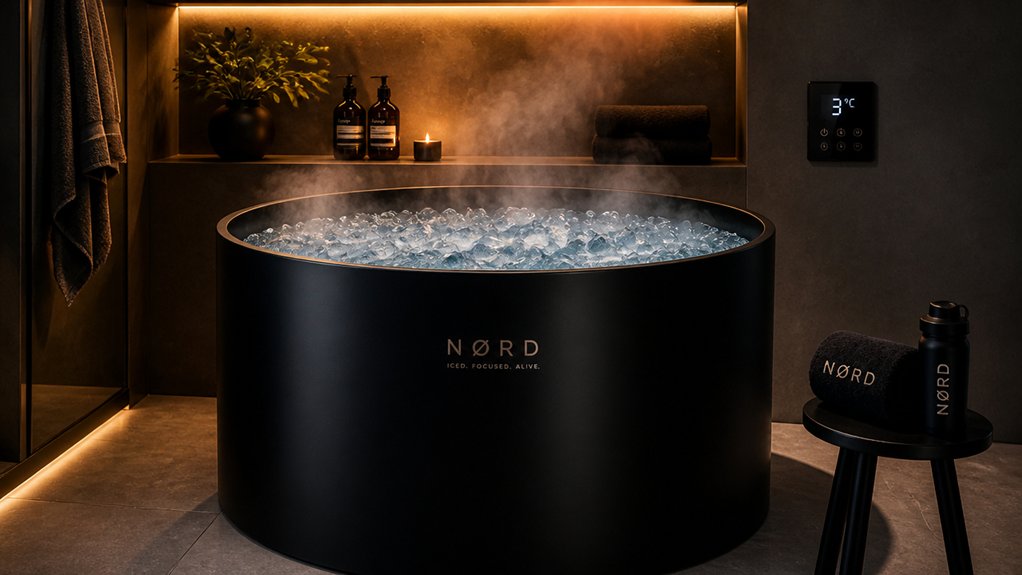
Adding heat to your at-home ice bath makes it safer and more comfortable by stabilizing water temperature, reducing cold shock, and preventing excessive shivering. It helps control the risk of cold-induced vasoconstriction and speeds up recovery by promoting better blood flow. Using controlled heat also makes the experience more enjoyable and less harsh on your body. If you want to learn how to set up a safe, effective heating system, keep exploring the details below.
How Adding Heat Makes Your Ice Bath Safer and More Comfortable
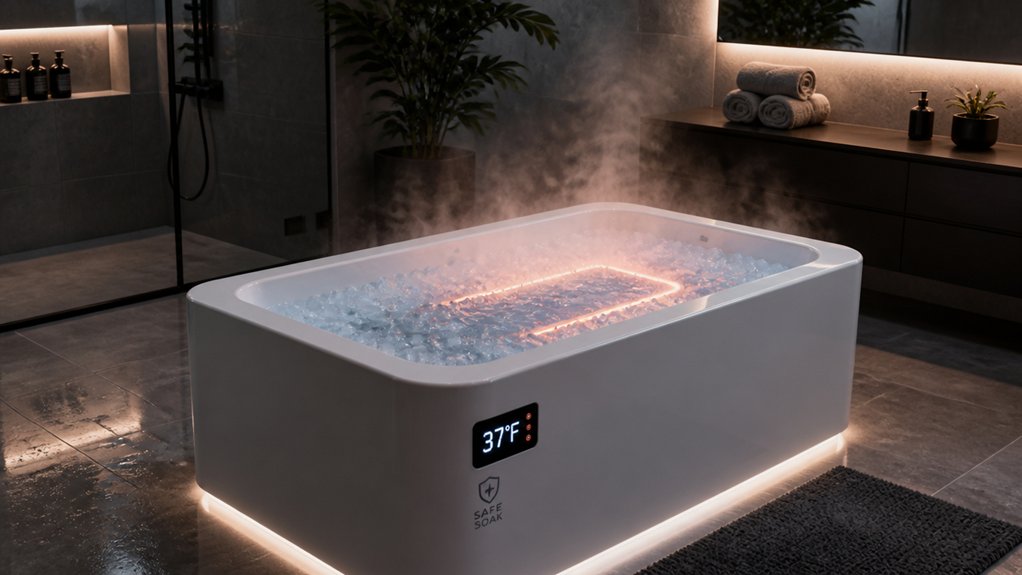
Adding controlled heat to your at-home ice bath can greatly improve safety and comfort by helping you maintain a stable water temperature. During cold water immersion, fluctuations in water temperature can trigger cold shock or cause you to shiver excessively. Incorporating mild heat gently adjusts the water temperature, making entry and exit more tolerable while reducing the risk of cold-induced vasoconstriction. A temperature management approach through heat application ensures a more pleasant and safer experience. Maintaining a balanced temperature prevents prolonged exposure to dangerously low temperatures, which could affect your core body temperature and lead to dizziness or fainting. Warmth also aids in controlled rewarming, helping you shift safely out of the ice bath and avoid numbness or muscle stiffness. This approach supports effective muscle recovery and can bolster your immune system by managing cold exposure more safely.
How to Control Water Temperature to Prevent Discomfort and Risks
Controlling the water temperature during your ice bath helps prevent discomfort and reduces health risks. Maintaining water temperature between 50-60°F is essential to avoid shock and hypothermia, as temperatures below 45°F can increase discomfort considerably. Utilizing high-powered chillers with smart controls can help maintain precise temperatures, ensuring a safer experience. To guarantee the ice bath is right, consider these strategies:
- Use temperature controllers or chillers for consistent water temperature, reducing fluctuations.
- Start with a warmer temperature (60-65°F) for 2-3 minutes, then gradually lower to 50-59°F for safe acclimation.
- Monitor your body signals during cold immersion to prevent overexposure, especially if already cold or feeling unwell.
Implementing these steps in your cold water therapy helps reduce inflammation and enhances safe adaptation.
The Best Methods to Combine Heat and Cold Safely
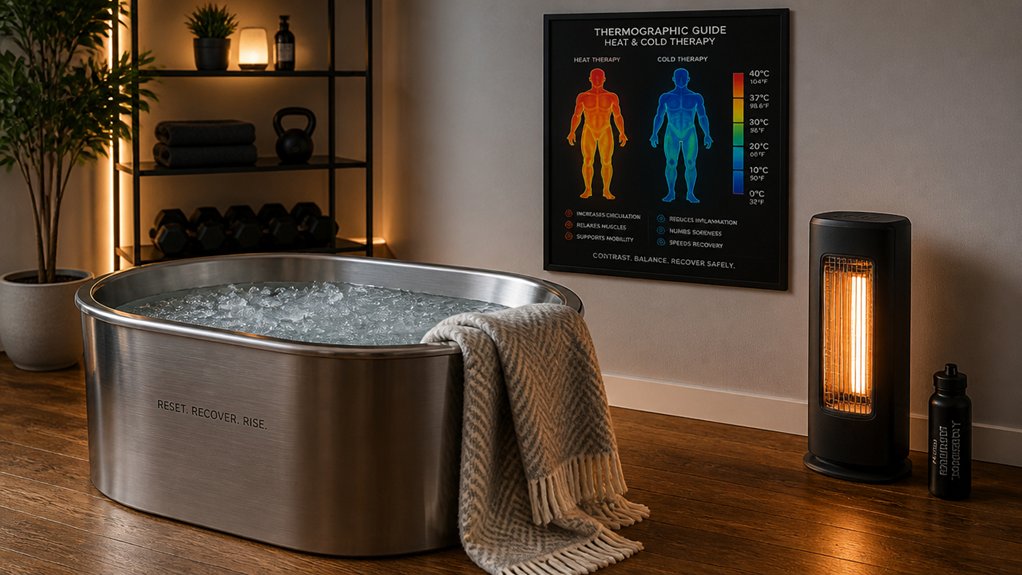
To combine heat and cold safely, it’s important to shift gradually between temperatures to give your body time to adapt. Start with heat therapy, like a sauna or hot shower, before entering your cold plunge, initiating vasodilation to increase circulation.
After cold therapy, such as a cold plunge at 50-59°F, wait 5 to 10 minutes before returning to heat to prevent stress on your cardiovascular system. Maintaining proper temperature control helps avoid extreme shifts that could cause shock or dizziness.
It’s also beneficial to use heat lamps or emitters designed for precise temperature control, ensuring consistent warming and reducing the risk of overheating or uneven heat distribution. Always listen to your body signals, ensuring recovery time between phases. This safe integration of cold plunges and heat enhances circulation, supports muscle recovery, and optimizes the benefits of vasodilation and vasoconstriction without risking overexertion or adverse effects.
Setting Up an Easy and Safe Heating System for Your Ice Bath
Setting up a safe and effective heating system for your ice bath begins with selecting the right equipment to maintain a consistent water temperature. A quality thermostatic heater or integrated temperature control device guarantees your water stays within the recommended 50-60°F range.
To create a safe heating system:
- Use waterproof, GFCI-protected electrical components placed away from water to prevent electrical hazards.
- Combine heating elements with chillers or ice for a stable temperature balance, preventing rapid drops and hypothermia risk.
- Add insulation covers and energy-efficient controls to reduce energy consumption by up to 40%, making temperature maintenance easier and safer.
- Ensure your filtration system provides clean water and minimizes impurity buildup during heated or cooled sessions.
Proper temperature control promotes safety and comfort during your ice bath sessions while minimizing potential risks.
Why Warmth Helps You Recover, Relax, and Enjoy Your Ice Bath More
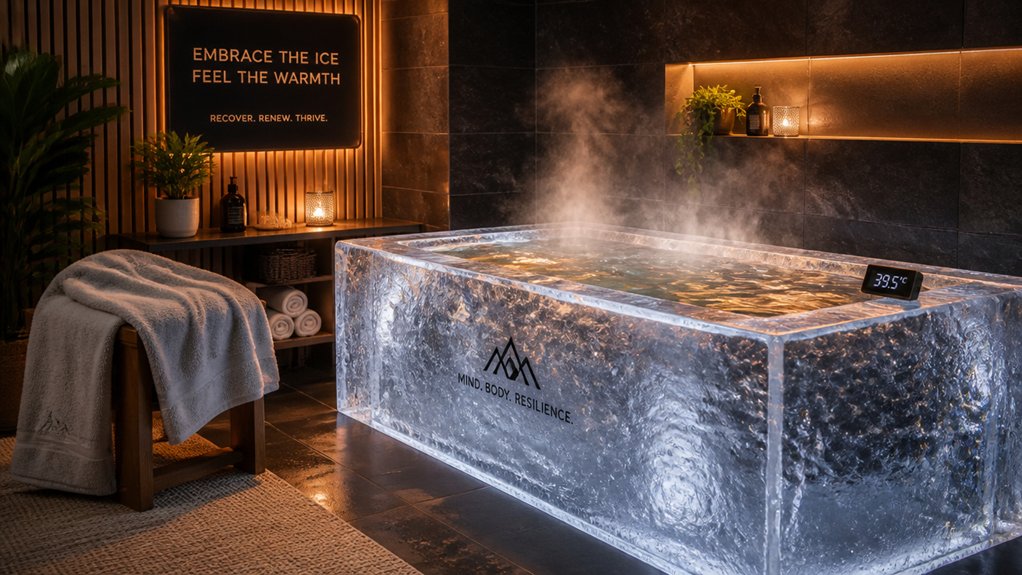
Incorporating warmth into your ice bath routine can greatly enhance your recovery and overall experience. Warmth boosts vasodilation, increasing blood flow and helping nutrients reach sore muscles, which accelerates muscle recovery and promotes relaxation.
A full spectrum infrared sauna can provide comprehensive heat therapy that optimizes circulation and enhances the benefits of contrast therapy.
Warming your body before cold immersion helps maintain core temperature, reducing shock and making cold exposure more tolerable.
After the ice bath, applying warmth speeds up rewarming, minimizing shivering and lowering hypothermia risk for a more comfortable recovery. The contrast between hot and cold stimulates circulation and metabolic rate, supporting quicker inflammation reduction and muscle repair.
Frequently Asked Questions
What Temperature Should an Ice Bath Be at Home?
You should set your at-home ice bath between 50°F and 59°F (10°C to 15°C). This range balances safety with ideal recovery, allowing you to enjoy benefits like reduced inflammation and muscle soreness without risking discomfort or hypothermia.
Can Cold Plunge Lower Cortisol?
Yes, cold plunges can lower cortisol levels over time. You activate your body’s stress response with each session, and with consistent practice over weeks, this exposure helps reduce inflammation and anxiety, ultimately decreasing cortisol production and improving stress regulation.
Can Ice Baths Help With Lipedema?
Ice baths might help with lipedema by reducing inflammation, easing pain, and promoting lymphatic drainage. While evidence is limited, you could experience improved circulation and fluid retention relief, but always consult your healthcare provider first.
Should You Ice Bath Then Heat?
Yes, you should ice bath then heat, but only after waiting at least four hours post-exercise. This promotes circulation and recovery while minimizing risks. Always warm up gradually to avoid shock or cardiovascular stress during changes.