The best small-space ice bath setup is a compact, portable tub made from durable, lightweight materials like inflatable PVC or foldable nylon that fits easily in bathrooms, balconies, or tight corners. Look for features like insulation, drainage, and app-controlled chillers to keep the water cold and convenient to use. To optimize safety and comfort, choose a tub with slip-resistant surfaces and plan your placement near water sources. Keep exploring to discover how you can create an effective, space-saving recovery system.
Why Consider a Small-Space Ice Bath for Recovery?
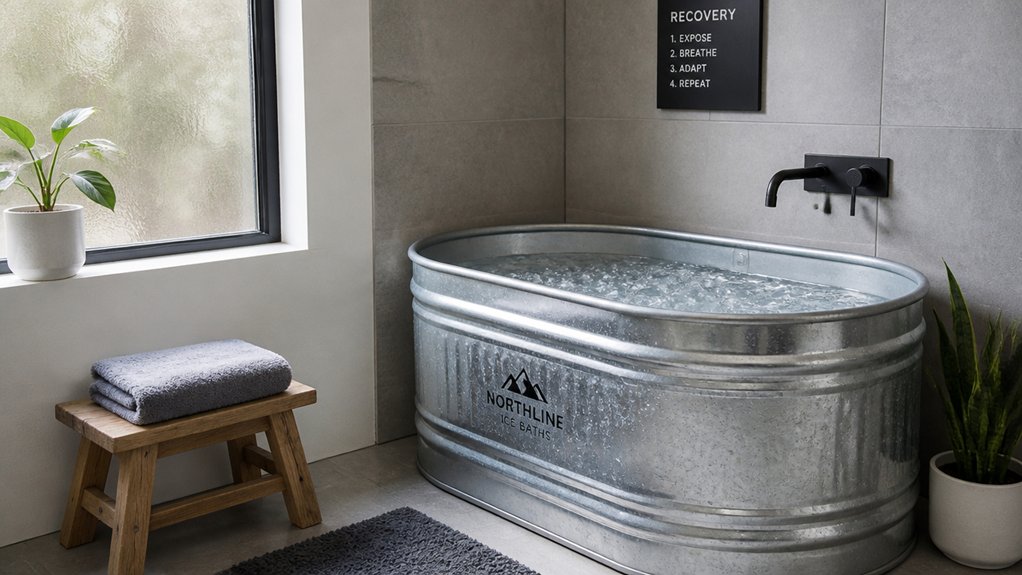
If you live in a small space or have a limited area for recovery setups, a small-space ice bath is an excellent solution. Portable ice baths, like inflatable tubs or compact designs, fit into tight spaces such as bathroom corners, balconies, or small indoor nooks. They allow you to practice cold water therapy without needing large, permanent installations.
These compact cold plunge pools support effective recovery by reducing muscle soreness and inflammation, helping you bounce back faster. They also boost your immune system and elevate your mood. Weighing under 40 pounds when empty, they’re easy to deflate or store when not in use, making them ideal for urban living and rental environments.
A small-space ice bath offers powerful benefits without compromising your space, especially when designed with compact dimensions and foldability in mind.
Features to Look for in a Compact Cold Plunge Tub
When choosing a compact cold plunge tub, focusing on key features can guarantee you get a setup that’s both effective and convenient for small spaces. Look for portable cold plunge tubs made from durable, military-grade waterproof PVC and UV-resistant nylon to prevent leaks and secure long-term use.
Prioritize models with efficient insulation that maintain water temperatures below 60°F for up to 24 hours, eliminating the need for chillers and saving space. Choose lightweight tubs — often under 40 pounds empty — that are deflatable or foldable for quick storage.
Additionally, selecting tubs with a high-quality insulation system can ensure optimal cold retention, reducing energy and maintenance costs. For added convenience, select tubs with sizes around 27 to 34 inches in diameter and capacities near 70 to 120 gallons. Features like quick setup, drainage plugs, and app-controlled chillers further enhance usability in compact environments.
DIY Ideas for Small-Space Ice Baths: Build Your Own
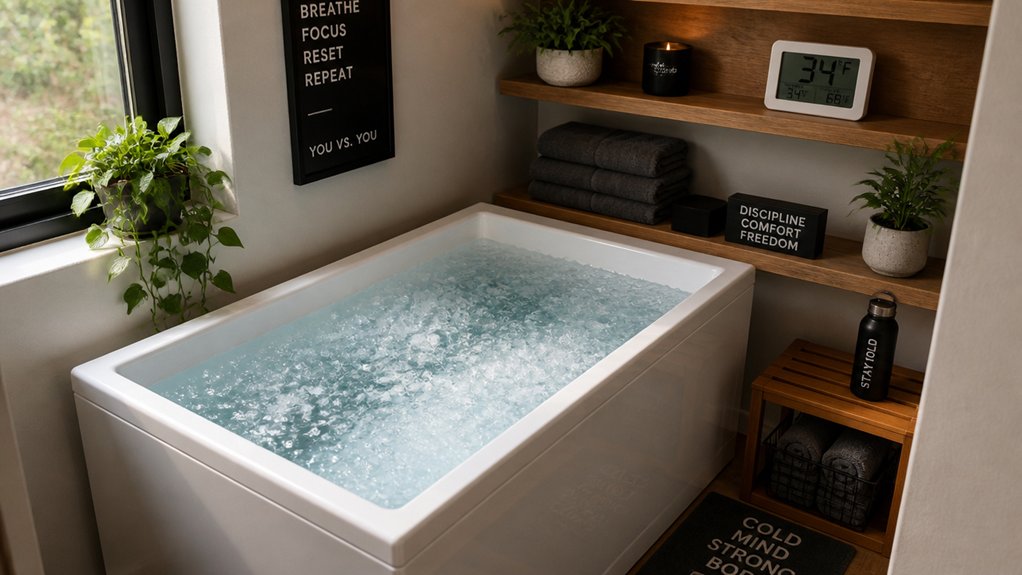
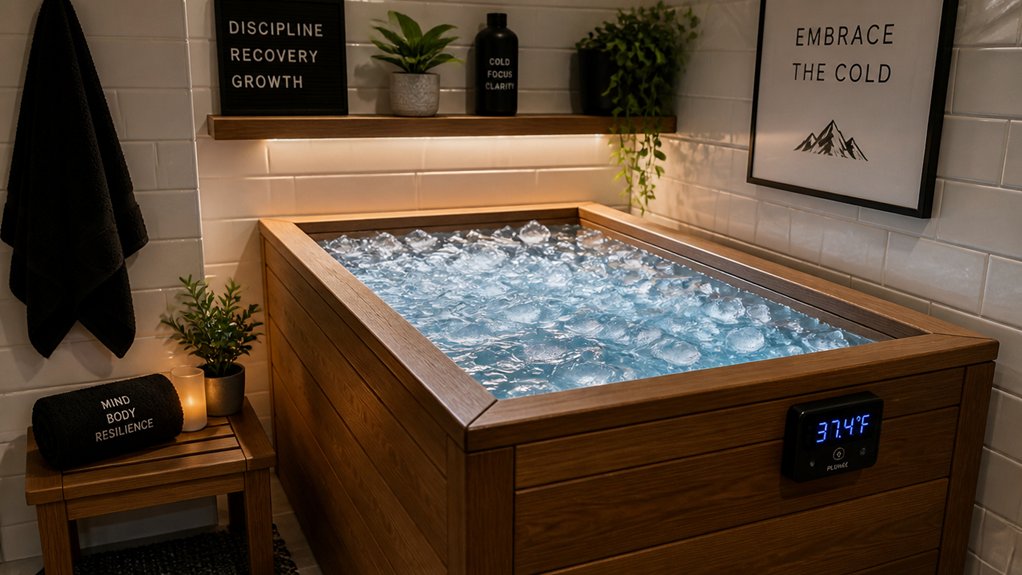
Creating your own small-space ice bath is a practical way to enjoy cold therapy without dedicating a large area. Select a compact container like a plastic storage bin, chest freezer, stainless steel tank, or rain barrel to fit limited spaces while providing enough water for cold water immersion. Place it on a water-resistant floor, ensuring stability and safety. Fill with tap water and add ice gradually to reach the ideal temperature of 50–59°F (10–15°C). Use reusable ice packs or frozen water jugs to maintain consistent coldness and reduce mess. Monitor temperature with an instant-read thermometer and adjust ice as needed. Keep essential accessories nearby, like towels, warm clothes, and non-slip mats.
| Element | Tip |
|---|---|
| Container | Large plastic bin or chest freezer |
| Temperature | Use reusable ice packs for maintenance |
| Placement | Stable, water-resistant surface |
Best Portable Cold Plunge Tubs for Small Areas
When choosing a portable cold plunge tub for small spaces, look for models with a compact footprint and simple setup. You want something lightweight enough for easy storage and transportation, with minimal fuss to get it ready. Prioritizing these points guarantees you have an effective ice bath without sacrificing valuable space. Additionally, selecting a model with leak-proof construction ensures mess-free use and reliable durability in tight environments.
Compact Size and Design
If space is limited, choosing a cold plunge that fits seamlessly into your environment becomes essential. Small tubs like the PlungeBox Portable Cold Plunge, with its compact size of 27 inches in diameter and 79-gallon capacity, are perfect for tight spaces. An inflatable cold tub such as the Chilly GOAT GO! offers portability and easy setup, ideal for apartments or rentals. These tubs often lack built-in chillers, relying instead on ice packs and regular cleaning to maintain water temperature. Lightweight designs under 40 pounds, with foldable features, enable easy storage—often fitting under beds or in closets. Considering the insulation features helps ensure the water stays cold longer without excessive ice use. Whether used indoors or outdoors, their design maximizes convenience while providing effective cold therapy in small areas.
Easy Set-Up and Storage
Setting up a portable cold plunge in a small space is straightforward and hassle-free. Most small plunge tubs, like the PlungeBox or inflatable models like the Chilly GOAT GO!, are designed for easy assembly without tools or complicated steps.
They often feature built-in covers and drain plugs, making water removal simple and cleanup quick. Their lightweight, inflatable, or PVC construction allows you to deflate or fold them when not in use, saving space in closets or under beds.
These tubs don’t need permanent installation or bulky equipment, relying instead on ice packs or minimal ice to cool water effectively. Whether placed in a bathroom corner, balcony, or storage closet, these portable ice water tubs make cold immersion effortless and convenient in even the smallest living spaces. Additionally, choosing models with effective insulation helps maintain water temperature longer and reduces the frequency of ice replacements.
Tips to Keep Your Ice Bath Safe and Comfortable
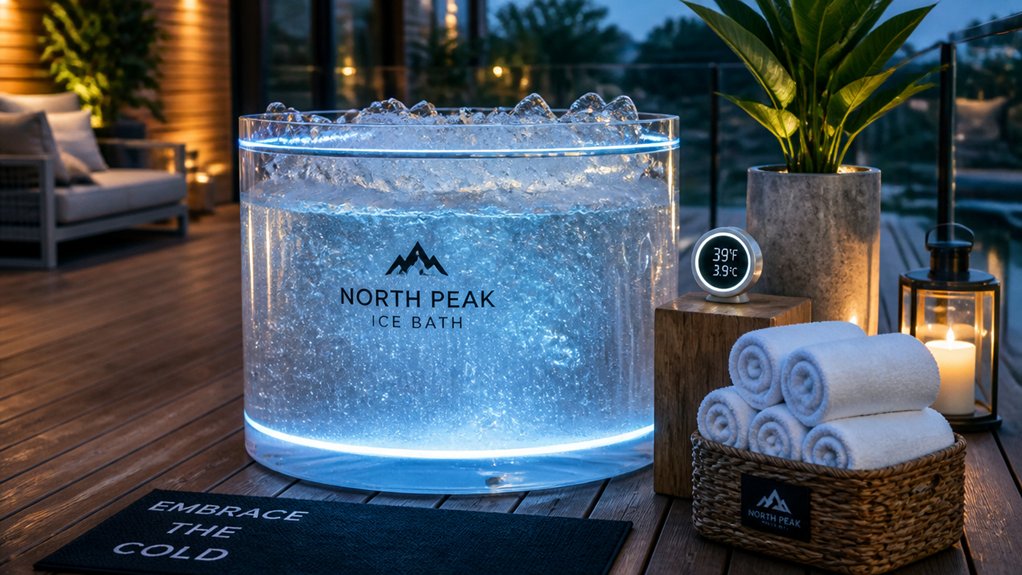
Guaranteeing your ice bath is safe and comfortable starts with paying attention to key details. Choose a sturdy, slip-resistant container, ideally 27–35 inches in diameter, to keep the water at a safe temperature of 50–59°F (10–15°C). Use a reliable thermometer to monitor and adjust degrees Fahrenheit regularly.
A well-insulated cold plunge tub materials and appropriate water volume help maintain consistent temperatures, enhancing safety and comfort.
Limit initial immersion to 30–60 seconds, gradually extending as your tolerance grows, but avoid exceeding 15 minutes weekly to prevent hypothermia. Practice slow, controlled breathing techniques before and during immersion to help lessen cold shock.
Secure a safe exit area and warm-up plan with dry towels and light movement afterward. Avoid hot showers immediately after.
Keeping these tips in mind will help make your Cold Plunge Tubs session both safe and comfortable.
How to Maintain Temperature and Cleanliness in Your Ice Bath
To keep your ice bath at the ideal temperature and free from contaminants, regularly monitor the water’s temperature with a reliable thermometer or built-in digital controls. Maintain a cold tubs environment below 60°F (15°C) by using a 1:3 ice-to-water ratio and adding reusable ice packs to extend cooling. Incorporate filtration and sanitation systems like ozone or UV purifiers, or change water every 7–10 days, to prevent cloudiness and microbial growth. Drain and clean your tub weekly using easy-drain plugs or small pumps, wiping surfaces to inhibit mold. Cover with insulated lids when not in use to retain cold and block debris. Keeping the water chemistry pH stability within recommended ranges is also essential to prevent corrosion and bacterial buildup. Keep these practices consistent for safe, effective cold exposure.
Integrating Your Small-Space Ice Bath Into Your Recovery Routine
You should place your ice bath where it’s easily accessible, like near your workout space or bathroom, to make integration seamless. Incorporate cold plunges shortly after exercising for maximum benefit, and use breathing techniques to handle the shock and stay relaxed. Keep your temperature consistent by monitoring temps and warming up naturally afterward, ensuring your recovery routine remains effective and comfortable. Additionally, choosing a durable, insulated tub with appropriate capacity can make maintenance easier and enhance your overall experience.
Ideal Placement Options
Choosing the right spot for your small-space ice bath is key to seamlessly incorporating recovery into your routine. Look for locations like reinforced balconies, bathroom corners, or spacious living rooms that support the Cold Plunge or portable tubs without disrupting daily life.
These small-space options, often inflatable or compact, fit easily in apartments, requiring minimal floor space—about 34″ by 13″. Make certain the area can support the tub’s weight when filled, and reinforce floors if needed for indoor use.
Position your ice bath near water sources such as sinks or bathtubs with faucet adapters, and select spots with easy drainage options to simplify filling and emptying. Adding mood lighting, plants, and waterproof floor mats enhances ambiance, making your recovery space more relaxing and efficient.
Incorporating Pre- and Post-Session
Integrating your small-space ice bath into your recovery routine involves strategic timing and preparation to maximize benefits. Begin with 2-5 minutes of slow nasal breathing as pre-session preparation, calming your nervous system before the cold plunge.
Schedule your cold-water immersion within 30 minutes to 2 hours after exercise to optimize inflammation reduction and muscle recovery.
After exiting, warm up naturally with light movement or a warm drink rather than immediately jumping into hot showers or saunas, promoting effective metabolic rewarming.
Use insulating lids and comfortable seating in your small-space ice bath to enhance consistency and comfort.
Start with short cold-water immersion bouts of 30-60 seconds, gradually increasing duration over sessions to safely adapt your body in the small-space setup.
Maintaining Temperature Consistency
Maintaining the water temperature consistently below 60°F is essential for effective cold-water therapy, especially in small-space setups where temperature fluctuations are common.
To guarantee temperature consistency in your ice baths, consider these strategies:
- Use an external chiller designed for small, portable tubs to keep water cold without constant ice addition.
- Incorporate insulated covers to lock in cold temperature and reduce the need for frequent ice replenishment during multiple short cold plunges.
- Monitor the water with a digital thermometer, adjusting the ice-to-water ratio—about 1:3—and using reusable ice packs for precision and convenience.
Frequently Asked Questions
What Is the Best Cold Plunge for Small Spaces?
The best cold plunge for small spaces is the PlungeBox Portable Cold Plunge, thanks to its compact design, easy setup, and capacity, making it perfect for indoor use without permanent installation, and fits comfortably in bathrooms, balconies, or living rooms.
Can Ice Baths Help With Lipedema?
Ice baths can help with lipedema by reducing inflammation, easing pain, and improving mobility. However, you should consult your healthcare provider first, as cold therapy’s effects vary and safety precautions are essential.
How to Arrange an Ice Bath at Home?
You set up an ice bath at home by choosing a portable tub, inflating or folding it, placing it on a waterproof surface near water, adding ice, and creating a relaxing environment with minimal clutter and natural light for comfort.
Which Ice Bath Tub Is Best?
The PlungeBox Portable Cold Plunge is your best choice, offering a compact, foldable design, affordability, and easy setup. For portability, inflatable tubs like the Chilly GOAT GO! are perfect, while IcePod models suit taller users for extended cold retention.