To control your DIY ice bath temperature, start by choosing a large, sturdy container like a plastic stock tank or chest freezer. Use a reliable water chiller and a pump to circulate the water efficiently, ensuring proper placement of hoses and good insulation. Regularly monitor and adjust the temperature with a thermometer or controller, gradually lowering it over time for safe cold therapy. Keep the water clean with regular filtration, and if you keep everything well-maintained, you’ll find that maintaining your desired temperature becomes easier.
How to Choose the Right Container for Your DIY Cold Plunge
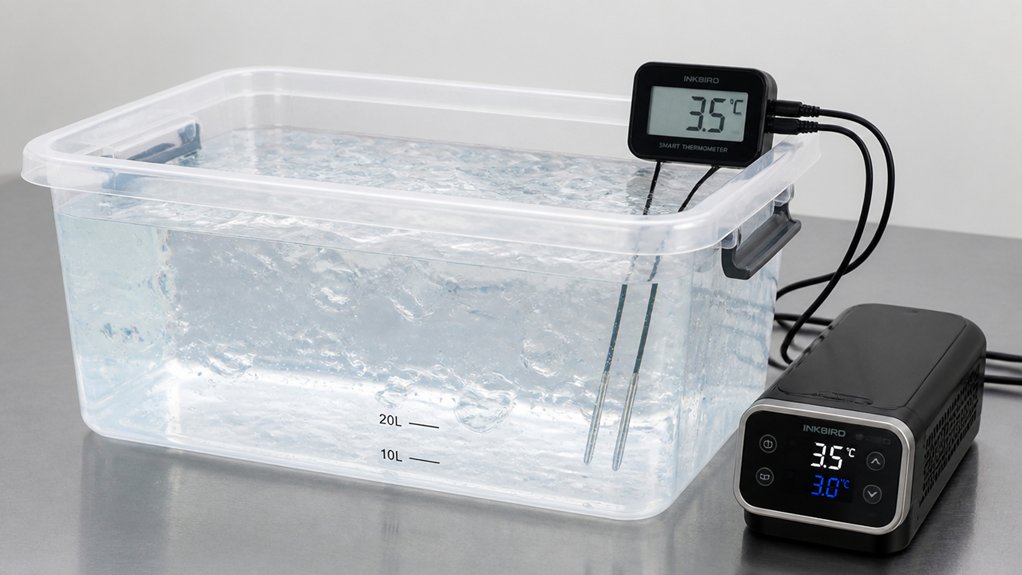
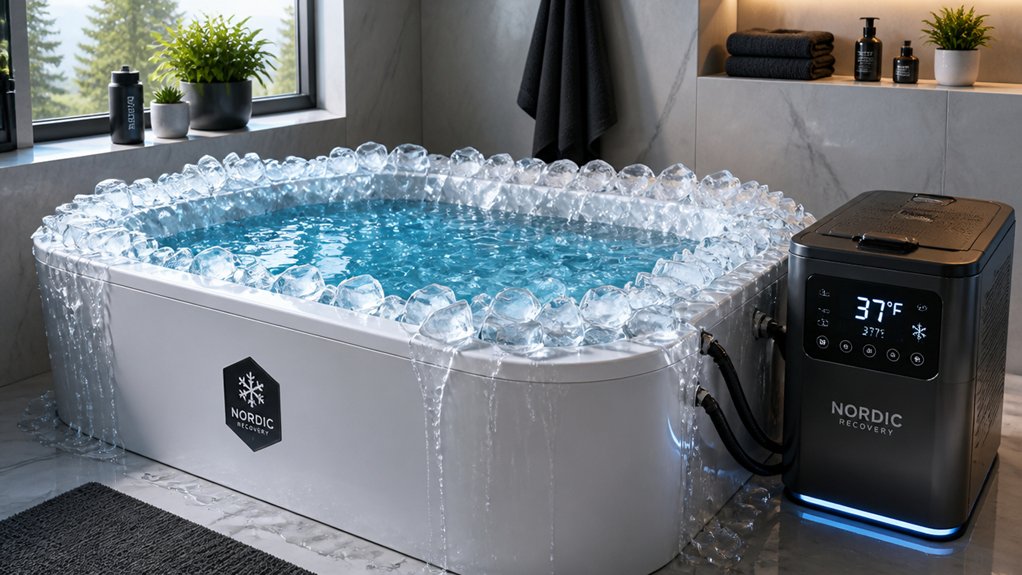
How do you pick the best container for your DIY cold plunge? Start by considering a Cold Plunge Tub that’s large enough to fully submerge your body comfortably.
Choose a spacious, durable tub with easy drainage for your comfortable DIY cold plunge.
Popular options include sturdy plastic stock tanks, insulated coolers like the Grizzly 400-quart, galvanized steel tanks, or even converted chest freezers. Container size is essential—aim for 50 to over 100 gallons, ensuring enough space for your immersion needs.
Prioritize water-tightness and durability, especially if placed outdoors, with sealable lids and corrosion-resistant materials. Insulated coolers retain cold longer, reducing energy use, while a sturdy Galvanized steel tank offers durability. Additionally, selecting containers with multi-layer insulation can improve temperature retention and efficiency.
Setting Up Your Cooling System and Pump
Setting up your cooling system and pump is essential for maintaining consistent temperatures in your DIY ice bath.
First, choose a reliable chiller like the Active Aqua 1/4 HP model, capable of cooling water to 45-55°F. Next, connect a 250–500 GPH submersible water pump using 3/4-inch PVC vinyl tubing, secured with hose clamps and bulkhead fittings to guarantee a leak-proof circuit.
Install the pump inlet near the tub’s bottom (about 18 inches deep) and position the chiller return outlet around 9 inches from the bottom for peak water circulation.
Finally, power the system through a GFCI outlet, and use waterproof timers or smart plugs to schedule operation, ensuring consistent water temperature while conserving energy. Proper setup maximizes cooling efficiency and protects your equipment.
How to Keep the Water Clean and Safe
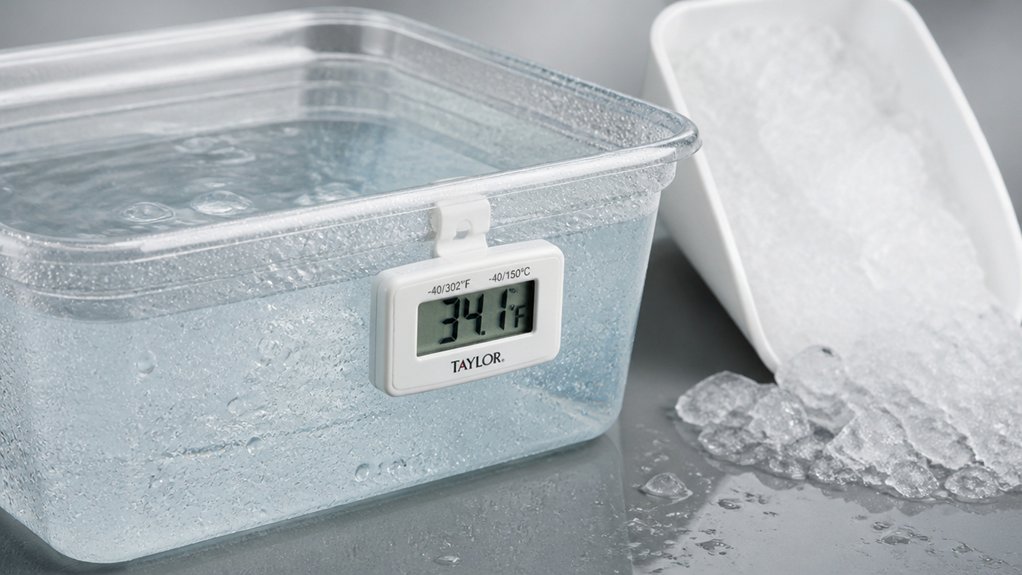
Keeping your ice bath water clean and safe requires a combination of effective filtration, sanitation, and regular maintenance. Cold plunge tubs benefit from a reliable water pump and pre-filtration system, like sponge or cartridge filters, to keep debris out and water circulating.
To guarantee sanitation, dose 1-2 teaspoons of chlorine granules weekly and change the water every 1-2 weeks, depending on filtration performance. Clean filters regularly to prevent clogging and biological buildup, which can promote algae and bacteria growth.
Maintain a balanced pH between 7.2 and 7.8 to optimize sanitizer effectiveness. Always cover the cold plunge when not in use to minimize debris entry, stabilize temperature, and reduce evaporation, helping maintain clean, safe water for your cold therapy sessions. Additionally, using appropriate water sanitizers ensures bacteria-free water without damaging tub materials or filters.
Adjusting Temperatures for Safe and Effective Cold Therapy
To guarantee safe and effective cold therapy, you need to carefully control the water temperature, starting at around 60-65°F (15-18°C) and gradually lowering it by 3-5°F every 1–2 weeks as your body adapts.
Use a reliable thermometer or a temperature controller to monitor and adjust the water temperature during your cold plunge setup.
Here are key steps to optimize your cold water immersion:
- Insulate your tub and employ chillers with appropriate BTU capacity for stable water temperature.
- Limit initial immersion to avoid dropping below 40°F (4°C), reducing risk.
- Set timers or smart plugs to cycle chillers, balancing cold temperatures with energy efficiency.
- Focus on gradual tolerance building by adjusting the temperature incrementally, ensuring safe cold therapy.
Troubleshooting Common Temperature and Equipment Issues
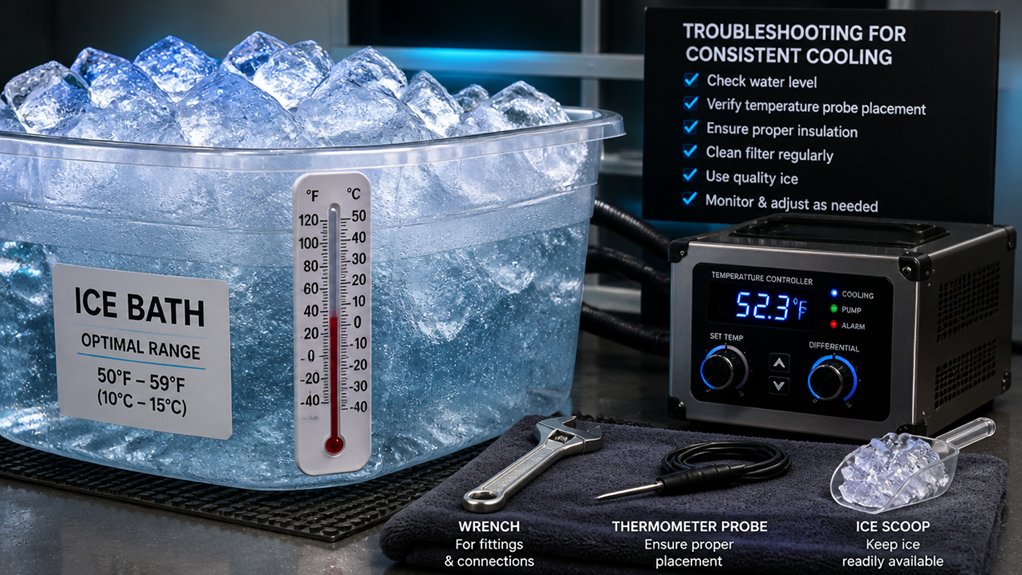
When your ice bath isn’t reaching or maintaining the desired temperature, the issue often stems from equipment mismatches or connection problems. Check that your water chiller is adequately sized for your tub—undersized units struggle to cool below 45°F. Inspect hose connections and bulkhead fittings for leaks or loose clamps, as these reduce circulation efficiency. Make sure the pump flow rate (250–500 GPH) isn’t hindered by clogged filtration or weak pumps. Use a waterproof thermometer away from the chiller outlet to get accurate readings, avoiding false cold spots. If the chiller runs excessively without cooling enough, examine insulation quality and tub covers, which help prevent heat gain. Properly maintained setup guarantees consistent, effective temperature control. Additionally, ensuring your filtration system utilizes metal filters that trap debris can improve water quality and cooling efficiency.
Frequently Asked Questions
How Cold Should a DIY Ice Bath Be?
Your DIY ice bath should ideally be between 50°F and 59°F for effective recovery. Start warmer if you’re a beginner, then gradually lower the temperature to this range, ensuring safe, comfortable immersion for 6-8 minutes.
Can Ice Baths Help With Lipedema?
Yes, ice baths can help with lipedema by reducing inflammation, easing swelling, and improving circulation. You should consult your healthcare provider before trying cold therapy, guarantee proper temperature, and use it regularly for potential symptom relief.
Can Cold Plunge Lower Cortisol?
Yes, cold plunges can lower cortisol by activating your parasympathetic nervous system, reducing stress hormones quickly. Regular cold exposure helps sustain this effect, promoting relaxation, mental clarity, and resilience against daily stresses.
How to Manage an Ice Bath at Home?
You manage an ice bath at home by using a waterproof thermometer to keep the water between 50-59°F, controlling ice addition, entering slowly, practicing controlled breathing, and gradually adjusting temperature and duration for safe, effective cold therapy.