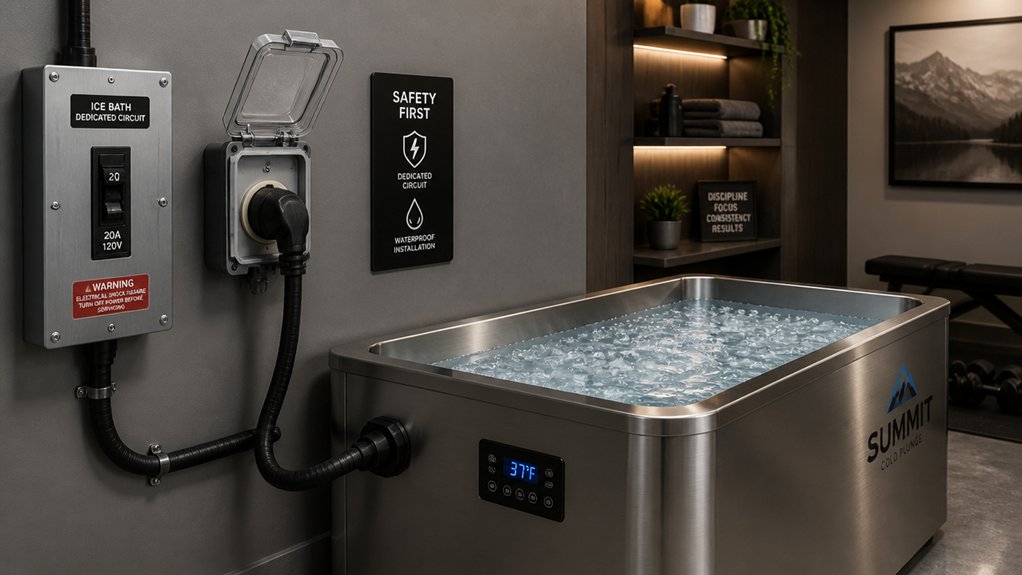
For your ice bath installation, you’ll need dedicated electrical circuits—120V for indoor setups and 240V for outdoor, commercial units. Use GFCI protection near water sources to prevent shocks, and guarantee wiring matches the amperage—14-gauge for 15 amps, heavier for higher loads. Outdoor setups require weatherproof conduit and proper grounding. If your system draws high current or if you notice frequent breaker trips, upgrading your electrical panel might be necessary. Stay with us to learn more about safe and efficient installation tips.
What Are the Key Electrical Components in an Ice Bath System?
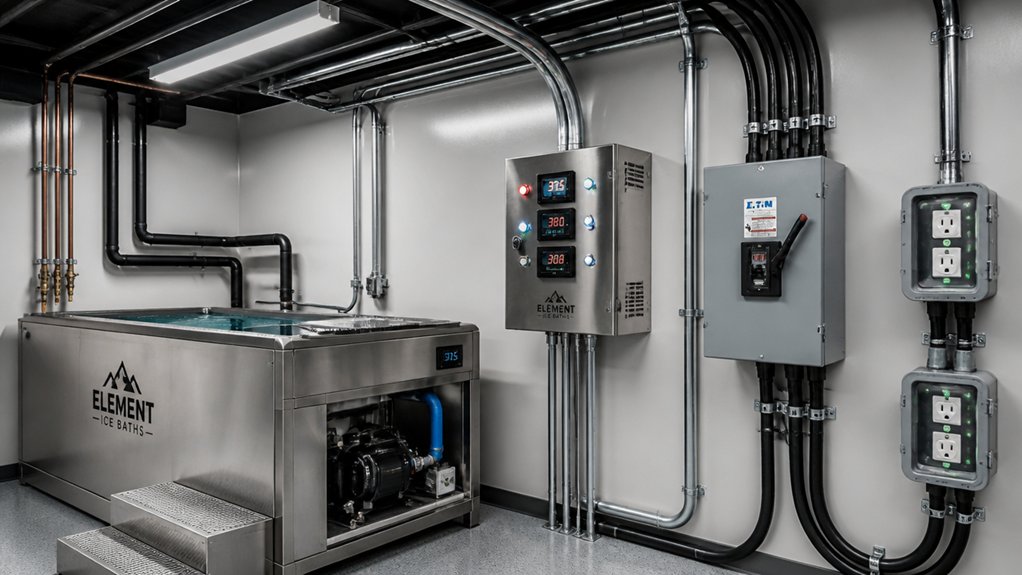
Have you ever wondered which electrical components are essential for an ice bath system? The chiller unit is key for cooling, and it often requires a dedicated circuit to handle its amperage requirements—either 120V for small units or 240V for larger, commercial ones. The circulation pump distributes cold water evenly, also needing a dedicated circuit to guarantee efficient flow. The digital control system allows precise temperature adjustments and may need stable power and low-voltage wiring for smart features like Wi-Fi connectivity. All these components should have GFCI protection to prevent electrical shock hazards near water, often integrated into outlets or breaker panels. Additionally, selecting high-quality chillers that include features such as Wi-Fi control, UV sanitation, and ozone filtration can contribute to energy efficiency and reliable operation—ensuring your setup remains safe and effective. Make sure your power cord is suitable for your system’s voltage and amperage needs for safe, reliable operation.
What Power Requirements Do My Ice Bath Need?
When setting up an ice bath system, guaranteeing the correct power supply is essential for safe and reliable operation. Most residential units need a dedicated 110-120V circuit with a 15-20 amp capacity, drawing 350-1,150 watts depending on size. Larger, commercial-grade chillers require 220-240V circuits with 20-60 amps, often needing a licensed electrician for proper installation and potential electrical panel upgrades. Always include GFCI protection to prevent shock hazards near water. Use the correct wire gauge—14-gauge for 15 amps, 12-gauge or heavier for higher amps—to match the ampacity. Proper electrical code compliance and a dedicated circuit guarantee stability and safety. Additionally, ensure your electrical setup meets the 200+ best cold plunge(https://example.com/cold-plunge-models) standards for optimal performance.
Why Is a Dedicated Circuit Critical for Safe Installation?
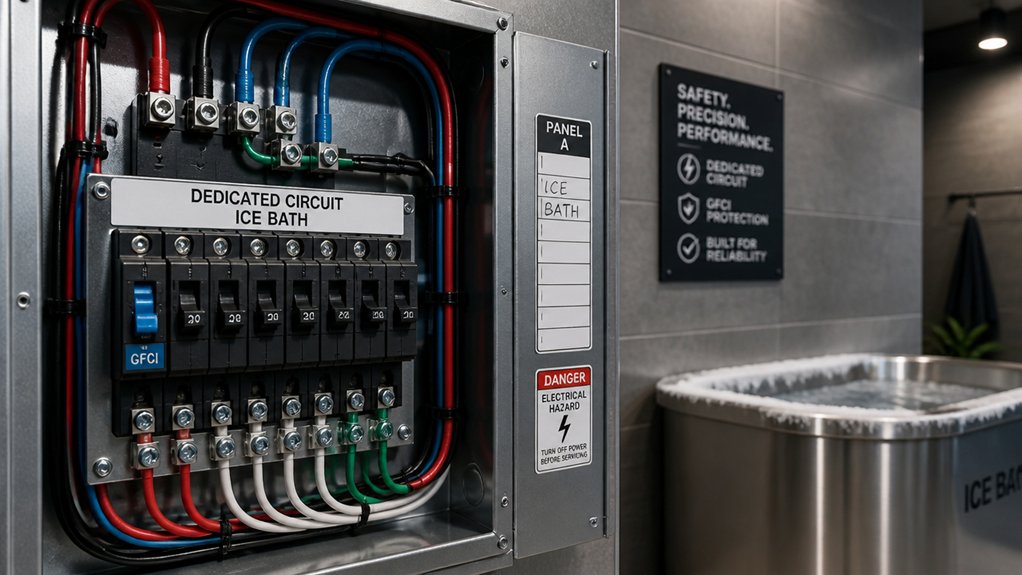
A dedicated circuit is essential for guaranteeing the safety and reliability of your ice bath installation because it provides a stable, uninterrupted power supply tailored to the specific demands of your equipment. Without it, your chillers, pumps, and heating elements may draw excessive current, causing frequent breaker trips or motor damage. Proper load calculations guarantee your circuit meets the electrical capacity needed, following manufacturer specifications and local electrical codes. A licensed electrician should handle wiring and connections, guaranteeing the correct breaker and amperage capacity are used. Incorporating GFCI protection near water sources further minimizes shock hazards. Additionally, ensuring your system uses energy-efficient components can significantly reduce operational costs and prevent overloads.
- Guarantees compliance with safety standards
- Prevents overloading and fire hazards
- Supports peak system performance
How Does GFCI Protection Keep Water-Based Cold Plunges Safe?
GFCI protection helps prevent electric shocks by detecting ground faults and shutting off power immediately. Proper placement of GFCI devices, within 6 to 8 feet of the water source, is essential for effective safety. Regular testing guarantees these devices function correctly, keeping your cold plunge safe to use. Additionally, ensuring compatibility with the electrical requirements of water filtration systems and chillers helps maintain safe and efficient operation.
Shock Prevention Measures
Electric shocks in water-based cold plunge setups are a serious safety concern, but GFCI protection acts as a vital safeguard. It continuously monitors electrical current and instantly cuts power if a ground fault or leak as small as 5 milliamps occurs, preventing shock incidents.
All circuits supplying the cold plunge tub must incorporate GFCI devices—either circuit breakers or receptacles—within 6 to 8 feet of the water source, complying with the National Electrical Code. This setup guarantees electrical safety and reliable operation of chillers and pumps designed for GFCI compatibility. Utilizing waterproof extension cords with suitable safety features further enhances protection against moisture and electrical faults.
Regular testing of GFCI outlets or breakers is essential to maintain shock prevention. To confirm proper installation and adherence to safety standards, always consult a licensed electrician.
- Guarantees reliable shock prevention
- Meets NEC safety standards
- Promotes ongoing electrical safety
Proper GFCI Placement
Proper placement of GFCI devices is essential for guaranteeing safe water-based cold plunge setups. GFCI protection must be installed as a dedicated circuit breaker or ground-fault receptacle within 6 to 8 feet of your cold plunge tubs to provide effective shock prevention. These devices continuously monitor electrical current flow, quickly disconnecting power if they detect an imbalance as small as 4-6 mA, preventing electrical hazards. According to NEC Article 680, all electrical circuits connected to cold plunge tubs require GFCI protection for electrical safety. Ensuring the proper waterproof rating of devices prevents moisture ingress and maintains safety standards. Regular monthly GFCI testing guarantees reliability, as faulty or disabled GFCIs compromise safety. Proper placement and maintenance of GFCI devices greatly reduce the risk of water-related electrical incidents, keeping your ice bath experience safe and secure.
How Do I Choose the Right Wiring and Gages for My Setup?
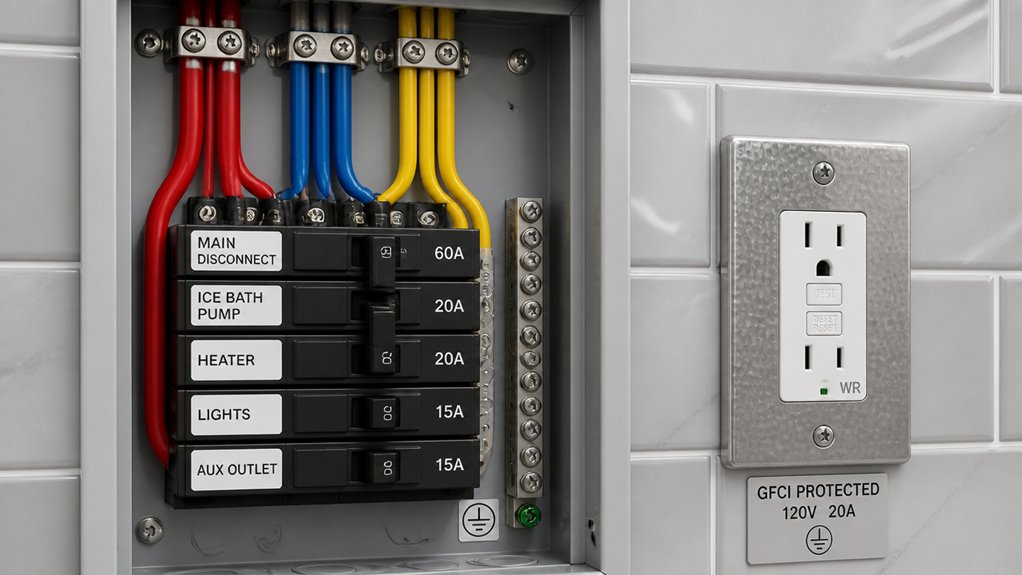
Choosing the right wiring gauge for your ice bath setup is essential to guarantee safety and efficiency. You need to match the wire gauge to the amperage load; use 14-gauge for 15-amp circuits and at least 12-gauge for 20-amp circuits to prevent overheating and fire hazards. For longer wire runs, increase the gauge size to counteract voltage drop and maintain system stability. Outdoor installations require wet-rated THWN-2 conductors within PVC or metal conduit, trenched at least 18 inches deep. Always confirm wiring connections are secure and protected with GFCI devices installed at the breaker or outlet level. Consult manufacturer specifications and hire a licensed electrician to determine the appropriate circuit breaker size, guaranteeing compatibility and safety. Additionally, factoring in the market features and system requirements of commercial-grade cold plunge tubs can help ensure your setup is both effective and compliant with safety standards.
Do Indoor and Outdoor Ice Baths Need Different Electrical Considerations?
Indoor and outdoor ice baths have different electrical safety and waterproofing requirements due to their environments. Outdoor setups need weatherproof wiring, corrosion-resistant materials, and protective enclosures, while indoor units typically have fewer environmental restrictions. Understanding these differences guarantees safe, code-compliant installations for both locations. Additionally, selecting appropriate insulation and ensuring proper ventilation can prevent moisture buildup and electrical issues in indoor setups.
Environmental Safety Requirements
Outdoor ice baths demand different electrical considerations than indoor setups due to their exposure to weather and environmental conditions. You must guarantee weather-resistant wiring, such as wet-rated THWN-2 conductors in PVC conduit trenched at least 18 inches deep, is used for outdoor installations.
Dedicated circuits with GFCI protection should be installed within 6 to 8 feet of the water source, enhancing electrical safety. Outdoor setups also require continuous grounding with an 8 AWG solid copper bonding grid for added safety, which isn’t normally needed indoors.
Additionally, outdoor electrical outlets should be housed in weatherproof enclosures (NEMA 3R or higher), and panel capacity must accommodate environmental challenges like moisture and temperature fluctuations. Strict code compliance guarantees safety across all installations.
Wiring and Waterproofing Needs
While both indoor and outdoor ice baths require reliable wiring and waterproofing, their needs differ greatly due to environment.
Indoor setups typically use 120V dedicated circuits with 15-20 amps and standard 14- or 12-gauge wiring. Outdoor cold plunge installations demand 240V circuits with heavier gauge wiring, like THWN-2 conductors, trenched at least 18 inches deep to prevent moisture and corrosion.
Waterproofing is critical outdoors, requiring weatherproof conduit and waterproof electrical connections. GFCI protection is essential near water, with outdoor units needing weatherproof GFCI breakers or receptacles to guarantee shock safety.
Proper waterproof disconnect switches (NEMA 3R rated) should be placed 5 to 50 feet from the tub. Grounding and equipotential bonding grids are also necessary to prevent electrical shock hazards outdoors.
When Do I Need to Upgrade My Electrical Panel for My Cold Plunge?
Have you considered whether your current electrical panel can handle the demands of a cold plunge system? If your existing service is 60 or 100 amps, it likely can’t support the high load demanded by a 240V, high-amperage setup without a panel upgrade.
Ensure your electrical panel can support high-demand cold plunge systems to prevent hazards and ensure safe operation.
Cold plunge systems with chillers drawing 30-50 amps or heating elements needing up to 60 amps require dedicated circuits and thorough load calculations by a licensed electrician. An upgrade becomes necessary if your current service can’t accommodate the additional load, risking breaker trips or hazards.
According to NEC Article 220, a panel upgrade guarantees safety, code compliance, and reliable operation. Look out for signs like frequent breaker trips or inadequate capacity, which indicate it’s time for an assessment and potential panel upgrade.
- Capacity matching for high-demand systems
- Dedicated circuit installation requirements
- Guaranteeing compliance with NEC Article 220
Frequently Asked Questions
What Are the Electrical Requirements for an Ice Bath?
You need a dedicated circuit, often 120V or 240V depending on the unit, with the right amperage, GFCI protection, weatherproof wiring outdoors, and proper grounding. Always check your electrical panel capacity before installation.
What Are the Guidelines for Ice Baths?
You should follow safety guidelines, like installing dedicated circuits with GFCI protection, using proper wire gauges, ensuring weatherproof setups outdoors, and having a licensed electrician handle permits, load calculations, and proper wiring to keep your ice bath safe and compliant.
How Many Amps Does a Cold Plunge Use?
A cold plunge typically uses 15 to 20 amps on a dedicated 110-120V circuit, drawing about 350-500 watts. Larger commercial units or heated models may require up to 60 amps on higher voltage circuits.
What Are the Electrical Requirements for a Plunge All In?
You need a dedicated 120V, 20-amp circuit with GFCI protection for your Plunge All In. Make certain an electrician installs it per local codes, using 12-gauge wiring, a grounded outlet, and regular safety checks for reliable, safe operation.