Using plunge safety gear is essential because it helps protect your extremities from frostbite, keeps you warm, and reduces the risk of cold shock and slips. Proper accessories like neoprene gloves, booties, and hats insulate your body, improve circulation, and prevent accidents. Wearing the right gear also boosts your confidence and comfort during cold dips. If you want to discover how to make your cold plunges safer and more enjoyable, keep exploring the benefits it offers.
Why Safety Gear Matters for Cold Plunging
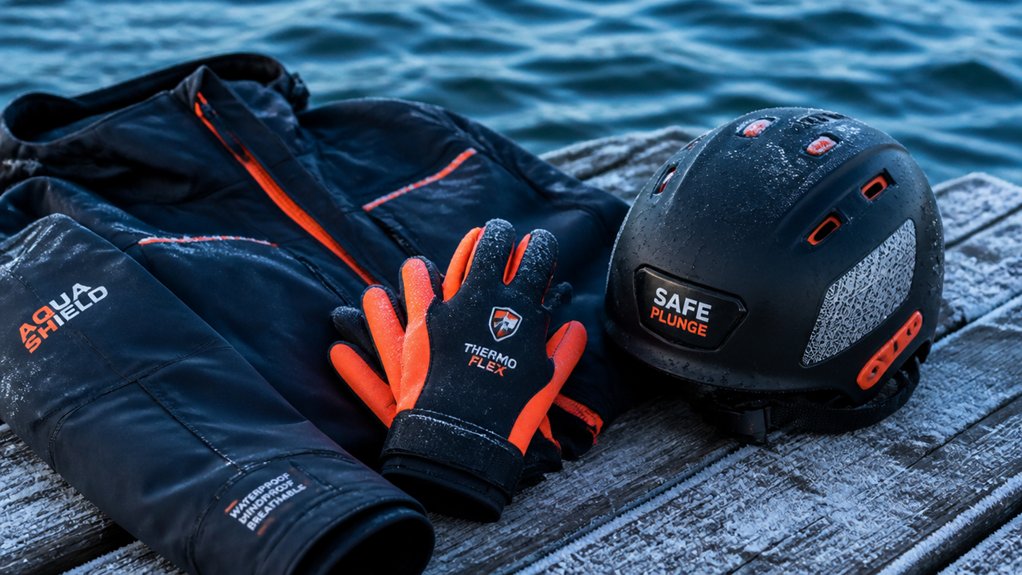
Wearing the right safety gear is essential because it helps you stay warm and protected during cold plunges. The right gear, like neoprene booties, keeps your feet insulated from icy water and potential hazards like sharp rocks or submerged objects. These booties prevent cold-induced numbness and reduce injury risk. Additionally, choosing gear with anti-slip features enhances safety on wet or uneven surfaces, minimizing slip-and-fall accidents during entry or exit. Likewise, gloves and snug, quick-drying suits help retain body heat, minimizing water retention and drag, so you can stay focused and comfortable longer. Proper gear also supports safer entry and exit, reducing slipping hazards and ensuring quick, efficient movement.
How Proper Equipment Protects Your Extremities From Frostbite
Wearing neoprene gloves and booties keeps your hands and feet warm by trapping heat, reducing the risk of frostbite. This insulation helps maintain blood flow and prevents numbness, which signals early frostbite signs. Additionally, selecting gloves with proper thermal insulation ensures maximum warmth retention during cold water exposure. Proper gear minimizes cold shock and protects your extremities during extended cold water exposure.
Insulate Hands and Feet
Since extremities cool faster than other body parts, insulating your hands and feet with proper gear is necessary for preventing frostbite during cold water plunges. Neoprene gloves and booties are key, as they retain heat during water immersion and reduce rapid heat loss.
Extremities have more surface area exposure and less muscle mass, making them more vulnerable to cold damage. Proper insulation minimizes numbness and pain caused by cold shock, helping you stay comfortable and prolong your plunge safely.
These gloves and booties also reduce vasoconstriction, preserving circulation and sensation in fingers and toes, which is essential for maintaining dexterity and balance. When water temperatures drop below 45°F, using specialized neoprene gear becomes even more important to prevent frostbite and guarantee a safe, enjoyable cold plunge.
Minimize Cold Shock
Proper equipment acts as a crucial barrier against the rapid heat loss that triggers cold shock and risks frostbite. Wearing proper attire, like neoprene gloves and booties, insulates your extremities, preventing sudden temperature drops that could cause numbness and pain. This insulation helps maintain better body awareness, allowing safer movement in icy water, which reduces injury risk. The right cold therapy materials can also improve cold retention, helping your extremities stay protected longer during immersion. Thermal gear designed for cold immersion minimizes rapid heat loss from fingers and toes, areas most vulnerable to frostbite due to their small blood vessels and limited fat insulation. Using plunge footwear also prevents direct contact with icy surfaces, further lowering frostbite hazards. Protecting your extremities with appropriate gear supports circulation, maintains core temperature, and reduces the severity of cold shock, keeping you safer during cold water plunges.
Keeping Warm With Neoprene Accessories During Cold Water Submersion

Wearing neoprene accessories helps keep your extremities warm by trapping heat and reducing heat loss during cold water immersion. These items also support better circulation, allowing you to tolerate the cold longer and more safely. Additionally, the thermal insulation properties of neoprene help maintain scalp warmth, which is essential for preventing cold shock during extended cold plunges. Plus, their water-resistant, quick-drying nature prevents excessive cooling and keeps you more comfortable throughout your experience.
Insulation and Heat Retention
Maintaining warmth during cold water plunges depends heavily on effective insulation, and neoprene accessories are a key tool in this endeavor.
When you wear neoprene gloves and booties, you protect your extremities from rapid heat loss, helping you avoid numbness and retain dexterity during your cold plunge in the tub. A lightweight neoprene cap reduces heat loss from your head, lowering the risk of headaches and hypothermia.
These accessories trap a thin layer of water warmed by your body, enhancing insulation and supporting your core temperature, even in near-freezing water. Wearing neoprene gear helps slow down the cooling rate of your extremities and minimizes vasoconstriction, allowing you to stay in the cold plunge tub longer and stay warmer overall. Additionally, material thickness plays a crucial role in trapping heat and providing effective water-blocking insulation.
Enhancing Cold Tolerance
Neoprene accessories play an essential role in increasing your cold water tolerance by helping you stay warmer longer. They serve as the right equipment for cold therapy by insulating key areas like your hands, feet, and head, preventing heat loss. Wearing neoprene gloves and booties reduces the cold sting and keeps circulation safer, which extends your ability to withstand colder water. A snug neoprene cap minimizes heat loss from your head, a major site of body heat dissipation. These accessories also maintain water resistance and quick-drying properties, lowering hypothermia risk. The waterproof material ensures continuous warmth even during prolonged submersion.
How the Right Gear Reduces Cold Shock Risks
Choosing the right plunge safety gear can greatly lower your chances of experiencing cold shock. When you step into cold plunge tubs, wearing appropriate gear helps retain heat in your extremities, reducing numbness and loss of dexterity.
A snug, quick-dry swimsuit and swim cap minimize heat loss and prevent cold water from pooling, which can intensify cold shock responses. Protecting your feet with water shoes or neoprene booties shields you from cold surfaces and unseen hazards, helping you prevent injuries or panic during immersion.
Compression tops and socks boost circulation, allowing your body to adjust more safely to the rapid vasoconstriction caused by cold water. Utilizing insulated and waterproof materials in your gear can further enhance thermal protection and reduce rapid heat loss during cold immersion. Streamlined, minimal gear lessens distractions and shivering, supporting better breath control and calmer nervous system responses during cold shock onset.
Enhancing Comfort and Endurance With Effective Cold Plunge Clothing
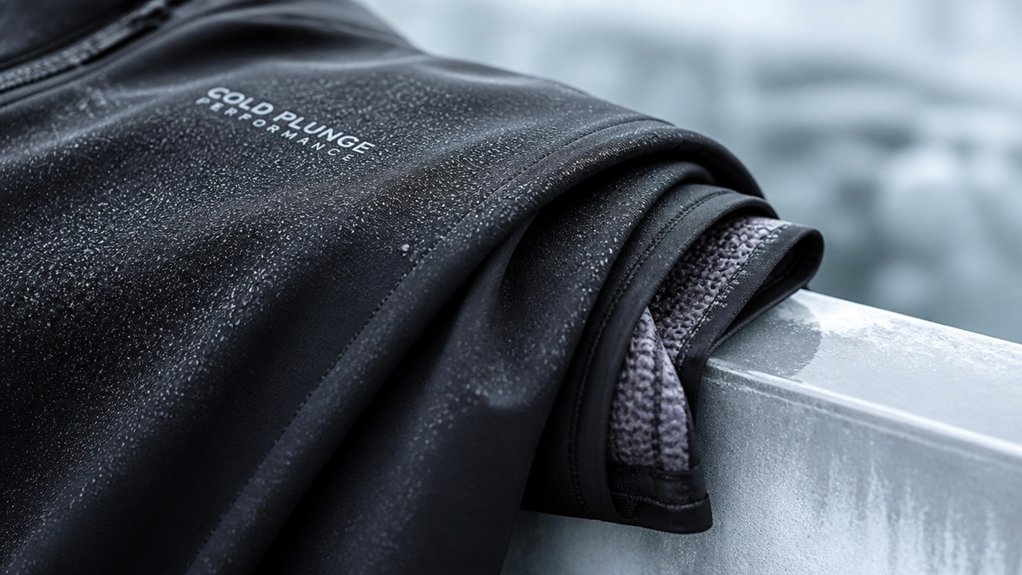
Wearing the right cold plunge clothing can greatly boost your comfort and endurance during immersion. Proper cold plunge clothing, like snug nylon or spandex swimsuits, minimizes water retention and drag, making movement easier and more comfortable.
Neoprene gloves and booties help keep heat in your hands and feet, reducing cold sting and numbness, which allows you to stay in the water longer. Quick-dry, tightly fitting garments cut down on fabric water absorption, helping you maintain core temperature and mental focus.
Additionally, compression tops and rash guards support circulation and add insulation, enhancing cold exposure tolerability. Streamlined, minimal fabric gear reduces distractions and physical resistance, ensuring safer and more controlled entries and exits—boosting endurance and making your cold plunge experience more effective. For optimal safety and comfort, choosing apparel with temperature regulation properties can make a significant difference in cold endurance.
Protecting Sensitive Areas With Hats, Gloves, and Booties
To effectively preserve your body’s warmth during a cold plunge, protecting your head, hands, and feet is essential. Wearing a neoprene hat helps reduce heat loss from your head, preventing cold-induced headaches and helping keep your core temperature stable.
Neoprene gloves shield your hands from numbness caused by cold water, improving grip and sensory awareness during the plunge. Meanwhile, neoprene booties insulate your feet from cold sand and icy water, reducing cold shock risk and increasing comfort on slippery surfaces.
Protecting these sensitive areas helps maintain circulation, preventing excessive vasoconstriction and minimizing cold exposure effects. Using hats, gloves, and booties correctly allows you to stay immersed longer and experience the benefits of cold exposure safely and comfortably.
How Safety Gear Supports Safe Rewarming After Your Cold Plunge
After your cold plunge, having the right safety gear ready can make a big difference in how quickly and safely you warm up. Post-plunge gear like warm robes, quick-dry towels, and moisture-wicking layers help minimize heat loss during rewarming, preventing after-drop situations. Insulated gloves and neoprene booties keep peripheral warmth, reducing numbness and supporting circulation recovery. Having these items within reach guarantees a swift suit change, limiting prolonged cold air exposure and lowering hypothermia risk. Using waterproof bags and dry friends to hold valuables keeps you focused on rewarming without distractions or discomfort.
| Safety Gear Item | Rewarming Benefit |
|---|---|
| Warm robes, towels | Minimize heat loss, support warming |
| Insulated gloves, booties | Maintain peripheral warmth |
| Moisture-wicking layers | Stabilize core temperature |
| Waterproof bags | Keep gear dry, prevent distractions |
| Dry friends, helpers | Enable efficient rewarming |
Why Waterproof and Quick-Dry Clothing Is Essential for Cold Exposure
Wearing waterproof and quick-dry clothing helps keep you dry and insulates your body during cold exposure, preventing rapid heat loss. These materials shed water fast, keeping you warmer and more comfortable.
They also support quicker warming after immersion, making your cold plunge safer and less exhausting.
Insulates and Keeps Dry
When exposed to cold water, staying dry and well-insulated is essential to prevent rapid heat loss. Waterproof and quick-dry clothing stop water from soaking in, helping you maintain core temperature longer.
Using water shoes and a swim cap provides crucial insulation for your extremities, reducing cold shock and numbness. Materials like nylon and polyester-spandex blends dry quickly, minimizing dampness that can worsen hypothermia after-drop.
Insulating gear, such as neoprene gloves and booties, lock in heat, allowing you to focus on breathing and cold adaptation. Keeping dry and insulated reduces the mental and physical energy needed to combat cold stress, supporting safer immersion times.
Proper gear not only insulates but also keeps you dry, making your cold plunge safer and more manageable.
Promotes Rapid Warm-Up
Waterproof and quick-dry clothing are essential for promoting a swift warm-up after a cold plunge because they prevent water from lingering on your skin and clothing, which can continue to draw heat away from your body. Quick-dry clothing made from fabrics like nylon or polyester-spandex blends accelerates moisture evaporation, helping you regain body temperature faster.
Waterproof gear stops additional cold exposure by keeping water from clinging to your skin and clothes, facilitating quicker post-plunge recovery. By using appropriate plunge attire, you support efficient heat retention, allowing you to focus on controlled breathing and gradual rewarming rather than shivering in wet clothes. Removing wet gear and switching to dry, moisture-wicking layers expedites circulation restoration, lowering the risk of hypothermia and promoting rapid warm-up.
Choosing Quality Materials for Cold Plunge Safety Equipment
Choosing the right materials for cold plunge safety gear is essential to guarantee comfort, warmth, and protection during immersion. Knowing what to wear with quality cold plunge safety gear makes a difference in how well you stay safe and comfortable.
Opt for quick-dry, tight-fitting materials like nylon, polyester-spandex blends, or neoprene, which minimize water retention and heat loss. Neoprene gloves and booties are particularly effective for retaining heat in extremities without dulling sensation, improving safety in water below 55°F.
Choose quick-drying, snug materials like neoprene and spandex to retain heat and enhance safety in cold water.
Select snug, streamlined swimwear made from compression fabrics to support circulation and prevent cold sting, avoiding cotton that traps water and accelerates cooling.
Durable, water-resistant footwear like water shoes or neoprene booties protects your feet from cold surfaces and hazards, ensuring a safe, enjoyable plunge.
What Gear Do You Need for Indoor Versus Outdoor Cold Plunges?
Ever wondered how your gear needs change between indoor and outdoor cold plunges? Indoor plunges usually require minimal gear, like a snug swimsuit and a quick-dry towel, thanks to the controlled environment and shelter.
Outdoor plunges, however, demand more gear to protect against harsh conditions. Neoprene booties keep your feet warm and dry while providing traction on cold, wet surfaces like rocks or concrete. Gloves and caps help prevent heat loss from extremities, maintaining comfort and safety.
After your plunge, layering moisture-wicking clothing and wearing a quick-dry robe help avoid after-drop and keep you warm as you recover. The right gear not only enhances comfort but also extends your plunge duration safely, especially outdoors where environmental exposure is greater.
How Safety Equipment Builds Confidence for Beginners
Wearing safety gear helps you tolerate cold water better by keeping your body warm and reducing shock. It also lowers the chance of injuries from slips or accidental contact with rough surfaces, making you feel safer.
When you’re protected and confident, you can relax your mind and focus on enjoying the experience.
Enhances Cold Tolerance
Safety gear like neoprene booties, gloves, and caps play an essential role in helping beginners build cold tolerance by keeping your limbs warm. This warmth reduces cold shock, allowing you to adapt gradually.
When your body stays warm, you can better calm the nervous system and maintain mental readiness for exposure. Proper gear minimizes distractions caused by numbness or pain, helping you focus on controlled breathing and mental resilience.
Over time, consistent use of insulated equipment helps your body acclimate to cold water, promoting psychological reinforcement and increased confidence. This gradual process supports longer immersion periods, enabling safer and more enjoyable cold-water experiences.
- Keeps limbs warm to reduce cold shock
- Promotes calmness and mental readiness
- Minimizes cold-induced numbness or pain
- Supports gradual cold water acclimatization
- Enhances confidence through positive reinforcement
Prevents Injury Risks
Building confidence in cold water begins with protecting your body from common injury risks. Safety gear like water shoes, neoprene booties, and gloves helps prevent cuts, bruises, or falls caused by cold surfaces or hidden hazards. Wearing snug, quick-dry swimwear and headgear like neoprene caps minimizes heat loss and reduces cold shock symptoms. Proper safety equipment supports controlled immersion and safe entry or exit, avoiding panic or injury from overcrowding or sudden plunges. Using the right gear reduces discomfort and cold-induced distractions, allowing you to focus on breathing and body awareness.
| Safety Gear | Purpose | Benefit |
|---|---|---|
| Water shoes | Protect feet from hazards | Prevents cuts and slips |
| Neoprene gloves | Keep hands warm | Offers grip and warmth |
| Headwear | Minimize heat loss | Reduces cold shock |
| Swimwear | Maintain circulation | Prevents numbness |
Promotes Calm Mindset
When you have the right safety equipment, it becomes easier to stay calm and focused during your cold water plunge. Proper gear, like snug swimsuits, booties, and gloves, helps maintain body warmth, reducing shock and anxiety.
Wearing appropriate safety gear minimizes distractions caused by cold pain or numbness, enabling better breath control and mental clarity. Knowing your gear offers protection against slips, cold shock, and heat loss builds confidence, fostering a positive, composed mindset.
It also provides a sense of security with quick, safe entry and exit, lowering fear. Additionally, tactile reassurance from safety gear offers physical stability and sensory feedback that supports mental preparedness, helping you stay calm and centered throughout your plunge.
- Maintains body warmth and comfort
- Reduces cold-related distractions
- Boosts confidence with safety assurances
- Provides quick, secure water access
- Enhances mental focus and breath control
Prevent Slips and Accidents With Proper Footwear and Grip Gear
Proper footwear and grip gear are essential for preventing slips and accidents during a cold plunge. Wearing water shoes or neoprene booties provides vital traction, helping you avoid slipping on wet, icy, or uneven surfaces.
These shoes trap cold water to keep your feet warm while offering stability when entering and exiting the plunge area. They also protect against sharp objects, cold sand, and rough concrete, minimizing foot injuries and discomfort.
Good grip gear supports confident movements, so you can focus on your breathing and safety rather than worrying about falling. Safety standards for cold plunge events emphasize proper foot protection to reduce accidents.
The Psychological Benefits of Wearing Safety Gear During Cold Exposure
Wearing safety gear during cold exposure can greatly boost your mental state by providing a sense of warmth and physical comfort. This reassurance helps stabilize your focus and breathing, reducing anxiety.
Wearing safety gear provides warmth and reassurance, helping to reduce anxiety and maintain focus during cold exposure.
When you wear neoprene gloves, booties, and caps, you feel more confident in managing the cold shock, which lowers psychological stress. Proper safety attire helps help prevent numbness and pain, encouraging a positive mindset and resilience. Knowing you’re protected promotes mental readiness and mindfulness during your plunge.
When discomfort is minimized, you can better embrace the mental health benefits of controlled cold exposure. Feeling secure with your gear diminishes distractions related to fear or discomfort, allowing you to stay present and gain maximum psychological benefit from your cold immersion.
- Provides physical warmth and comfort
- Boosts confidence in managing cold shock
- Helps prevent numbness and pain
- Promotes mental readiness and mindfulness
- Lowers psychological stress
Investing in Reliable Safety Gear for Better and Safer Cold Plunges
Investing in reliable safety gear greatly enhances both the safety and comfort of your cold plunges. Quality gear like neoprene booties, gloves, and swim caps helps retain heat in your extremities, reducing the risk of hypothermia and supporting longer, more effective plunges.
Water shoes improve foot protection and traction, preventing slips on icy or wet surfaces. Proper safety gear also boosts body awareness and balance, lowering the chance of falls or sudden cold shock.
Snug-fitting, quick-dry swimwear and insulation accessories minimize water retention and heat loss, enabling safer, extended immersions. Using the right safety equipment encourages controlled breathing and steadier immersion, which improves your health benefits by making cold plunges more manageable and effective.
Ultimately, investing in trustworthy gear makes your cold plunge experience safer, more comfortable, and more beneficial.
Frequently Asked Questions
What Should You Wear in a Cold Plunge?
You should wear a tight-fitting, quick-dry swimsuit, neoprene booties, gloves, and a swim cap to retain heat and prevent numbness, while avoiding cotton fabrics; instead, opt for rash guards and water shoes for safety and comfort.
Are Polar Plunges Safe?
Polar plunges can be risky, but you improve safety by limiting immersion time, following water temperature guidelines, avoiding diving, and always having a buddy or supervision. Always consult your doctor if you have health concerns before participating.
What to Wear for a Polar Bear Plunge?
For a polar bear plunge, wear a tight, quick-drying swimsuit made from nylon or spandex, neoprene booties and gloves for warmth, a neoprene or silicone swim cap, and avoid cotton or loose clothes to prevent water trapping.
Where Did the Polar Bear Plunge Come From?
You might wonder where the Polar Bear Plunge came from. It originated over a century ago in 1903 with the Coney Island Polar Bear Club, starting as a New Year’s tradition to test courage and celebrate community bonds.