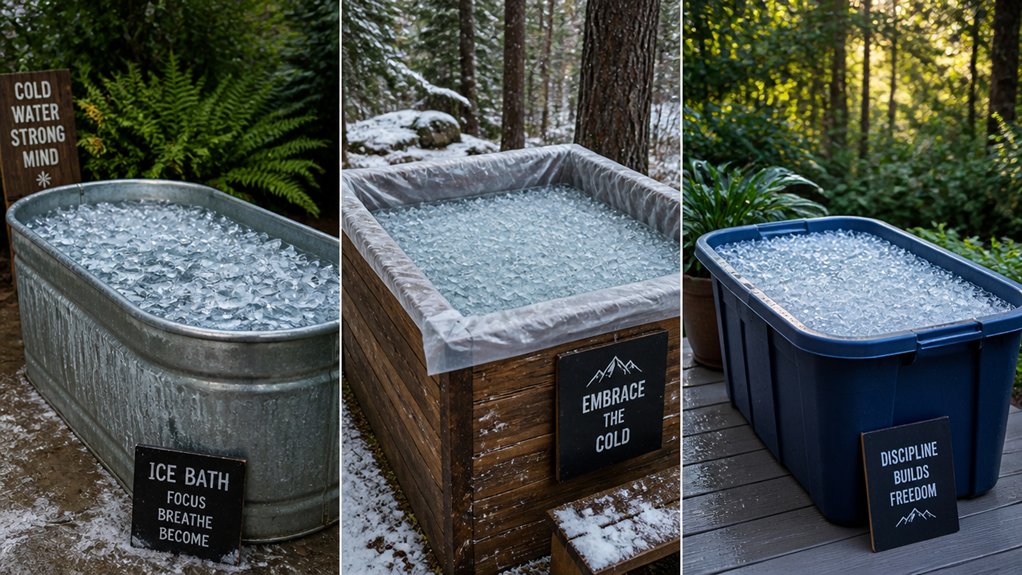
You can build a DIY ice bath using three simple options: a basic cooler or tub for affordability, a custom outdoor frame with insulated materials for better temperature control, or a chilled water system with a small chiller for precise cooling. Each setup varies in complexity and cost but can be tailored to your needs. Keep in mind proper insulation and safety. If you want detailed tips on each method, there’s plenty more to discover below.
How to Choose the Best Cold Plunge Solution for Your Needs
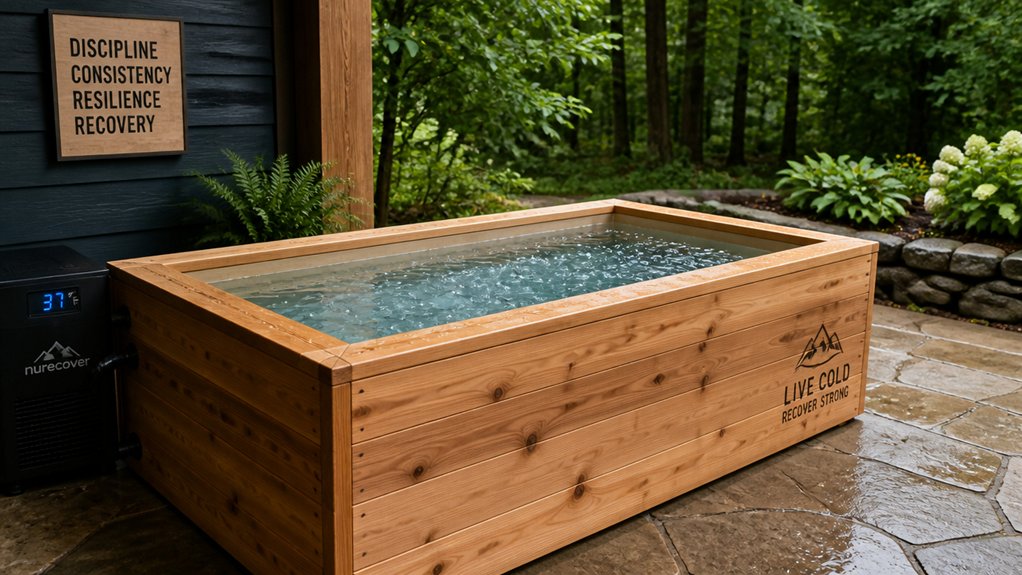
How do you determine the best cold plunge solution for your needs? Start by considering your budget—filling a tub with bags of ice is cheap but less efficient, while a water chiller or chiller unit costs more upfront but provides active cooling and precise temperature control.
Think about the ideal temperature in degrees Fahrenheit; a good cold plunge typically sits around 50°F to 59°F. If you want consistent cold water, investing in a water chiller guarantees continuous cooling without constantly adding ice. On the other hand, using bags of ice can be a quick fix but requires frequent replenishing.
Additionally, consider the latest chiller features, such as Wi-Fi control, ozone filtration, and quiet operation, which can improve your experience and ease of maintenance. Also, plan for circulation methods to prevent warm water layers. The right solution balances cost, convenience, and your specific needs for recovery or therapy.
Picking the Right Materials and Insulation for Your Cold Plunge
Selecting the right materials and insulation is essential for building a durable, efficient cold plunge that withstands moisture and temperature fluctuations. For water-tight construction, pressure-treated 2×4 lumber is ideal for outdoor framing due to its resistance to splashes and rot. Cedar tongue and groove lumber give a refined finish, especially for lids and edges, with added durability. To keep cold water chilled efficiently, use thick 2-inch styrofoam insulation with reflective backing, fitting tightly around the structure. Make sure to wrap the entire plunge with a moisture barrier like Tyvek waterproof sheeting to prevent mold and rot. Additionally, incorporating reflective insulation can enhance thermal retention, maintaining lower water temperatures more effectively.
Tips for Safe Use and Maintaining Cold Water Temperatures
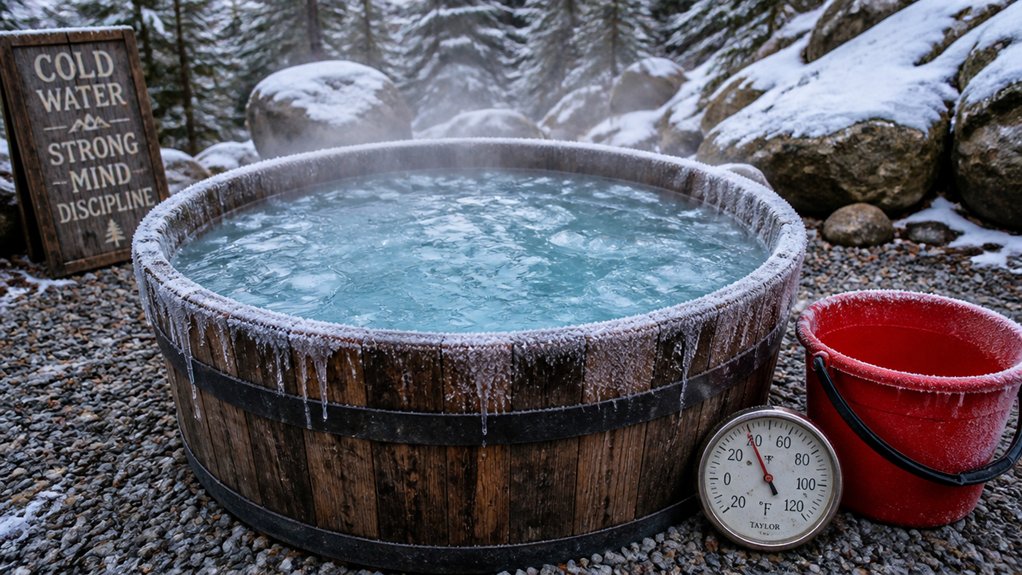
Maintaining safe and effective cold water temperatures requires consistent monitoring and proper handling. To stay cold enough, aim for a temperature between 35°F and 50°F—39°F is often ideal. It’s a good idea to regularly check the water temperature with a thermometer. If temperatures rise above the top cold, such as in warmer weather, supplement with ice, as water chillers may struggle above 95°F. When adjusting, drilling a hole in your setup can help with better water circulation. Additionally, choosing a chiller with a suitable temperature control system can help maintain consistent water temperatures. Always unplug the water pump before you get in to prevent electrical hazards. Finding a ventilation spot around the chilling unit makes cooling much easier and more efficient.
Frequently Asked Questions
What Is the Cheapest Way to Build a Cold Plunge?
The cheapest way is to fill your bathtub with ice cubes, providing an effective ice bath without extra cost. This method is simple, immediate, and requires no special equipment, making it the most budget-friendly option.
How to Build a DIY Ice Bath?
You fill a sturdy tub with ice and cold water, add insulation like styrofoam and a barrier, and use an external chiller and pump to keep the water cold. Cover it with an insulated lid for efficiency.
What Can I Make an Ice Bath Out Of?
You can make an ice bath out of a standard bathtub, a wooden frame with a plastic or metal tub, or a large plastic container. Just make certain it’s insulated, waterproofed, and large enough to submerge your body comfortably.
Can Ice Baths Help With Lipedema?
Ice baths might help with lipedema by reducing inflammation and swelling temporarily, easing pain through nerve numbing, but results vary. Always consult a healthcare professional before trying cold therapy to guarantee safety and suitability for your condition.