To boost performance with ice baths and heat therapy, alternate between 10–20 minutes of heat (sauna or infrared) and 1–3 minutes of cold (ice bath at 50–59°F). Enter gradually, breathe deeply to prevent shock, and repeat for 2–4 cycles. Use cold after intense workouts to reduce soreness, and heat to promote recovery. Stick with proper timing, hydration, and gradual buildup to maximize benefits—and if you keep going, you’ll discover how to tailor this routine for your goals.
What Is Contrast Therapy and How Does It Work?
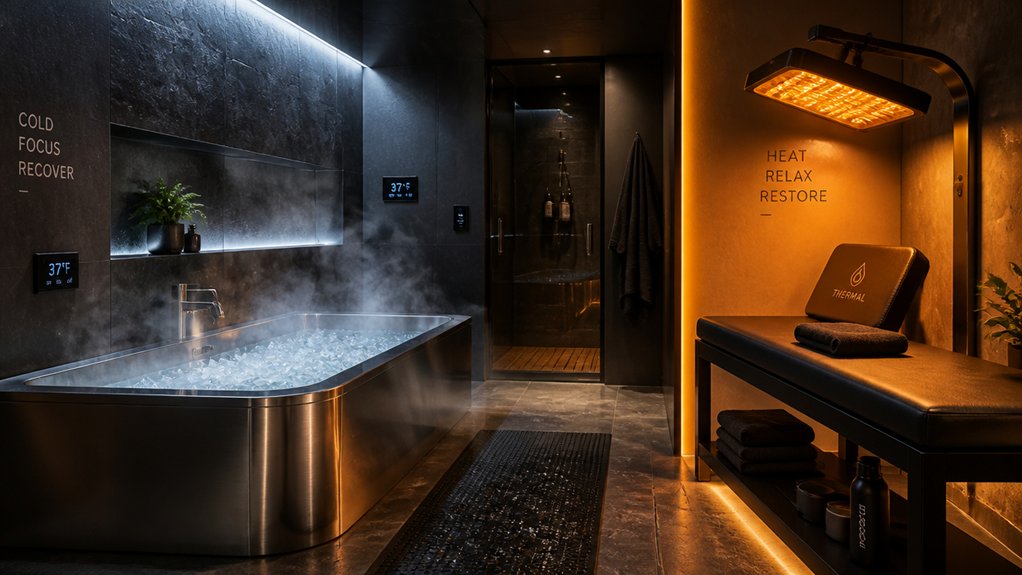
Have you ever wondered how alternating hot and cold therapies can boost recovery? That’s where contrast therapy comes in. It involves switching between heat—like a sauna—and cold, such as an ice bath, to stimulate vascular pumping.
This process relies on vasodilation during heat exposure, which widens blood vessels, and vasoconstriction during cold, narrowing them. Repeated cycles create a pumping effect, improving circulation. This enhanced blood flow helps deliver nutrients, remove metabolic waste, and control inflammation.
Additionally, using infrared heat, which penetrates deeper into tissues, can enhance the relaxation and detoxification benefits of contrast therapy.
Standard protocols usually include 10-20 minutes of heat, followed by 1-3 minutes of cold, repeated across a few cycles. By balancing inflammatory responses and promoting vascular dynamics, contrast therapy effectively reduces soreness and supports recovery.
How Contrast Therapy Boosts Recovery and Performance
Contrast therapy enhances recovery and performance by actively stimulating your body’s circulatory system through alternating heat and cold exposures. By switching between vasodilation from heat and vasoconstriction from cold, contrast therapy creates a vascular pump that boosts circulation, nutrient delivery, and waste removal. Incorporating the use of percussion massagers with deep-tissue strokes, often delivering amplitudes around 10–12 mm, can further enhance the effectiveness of this process. This temperature therapy accelerates muscle recovery and reduces inflammation, making it highly effective after exercise. Studies show contrast therapy reduces pain, improves joint mobility, and alleviates muscle soreness better than heat or cold alone. Typically, it involves 2 to 4 cycles of 10-20 minutes of heat followed by 1-3 minutes in cold water or ice baths, ending on cold to promote alertness and cardiovascular benefits. Using contrast therapy within 1-2 hours post-exercise supports recovery, while delaying cold exposure can prevent blunting muscle growth.
When and How Often Should You Use Cold and Heat Treatments?
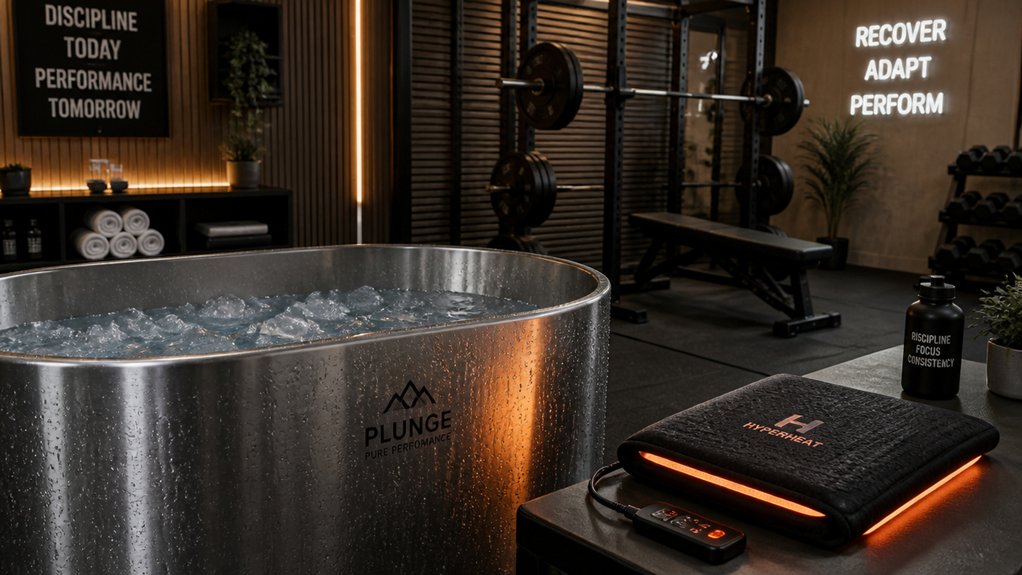
Deciding when and how often to use cold and heat treatments depends on your training goals and recovery needs. Cold exposure triggers, like ice bath cold, are ideal immediately after high-volume or back-to-back sessions to reduce muscle soreness, inflammation, and speed recovery.
A chiller power rating compatible with your water volume ensures consistent plunge temperatures, maximizing the benefits of cold therapy. Conversely, avoid immediate post-strength training ice baths if muscle growth is your goal; wait at least 4-6 hours. A post-exercise sauna enhances cardiovascular fitness and promotes growth hormone release but should be used at least 24 hours before your next intense session.
Contrast therapy sessions, alternating hot sauna and cold ice baths, work best within 1-2 hours after exercise, typically lasting 30-60 minutes, 2-4 times weekly, depending on your training demands.
Step-by-Step: How to Do Cold Plunges and Ice Baths at Home
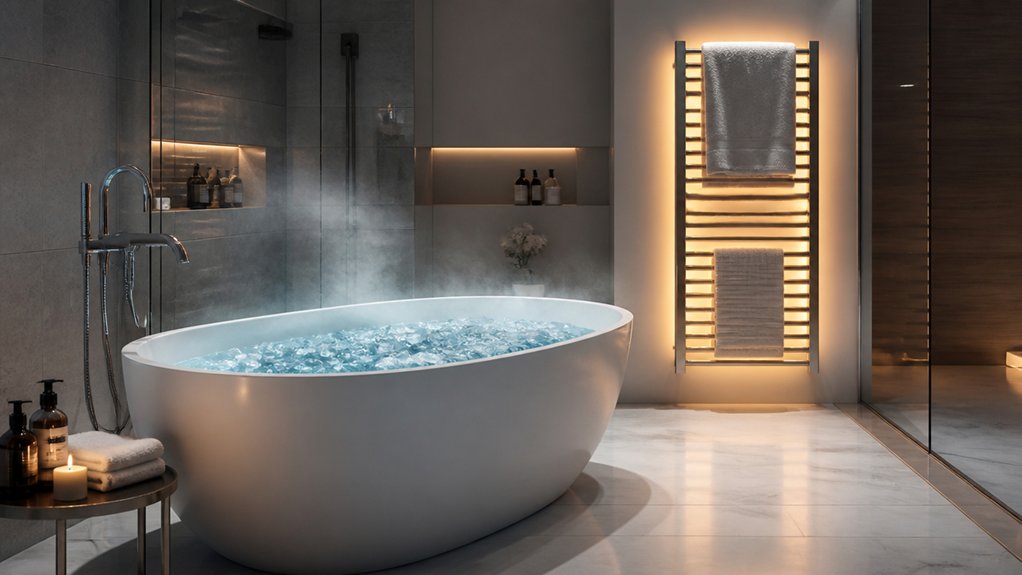
Transform your recovery routine by following a systematic approach to cold plunges and ice baths at home. Start by filling a tub with water at 50°F to 59°F (10°C to 15°C), gradually adding ice to reach your target temperature based on your comfort level.
Before immersion, perform pre-plunge breath control with deep, slow breaths to prepare mentally and reduce shock. Enter the ice bath slowly, submerging as much of your body as possible, and aim to stay immersed for 2 to 10 minutes, depending on your experience.
To ensure safety and effectiveness, consider using a durable and temperature-controlled tub, which can help maintain consistent cold temperatures throughout your session. After exiting, dry off thoroughly and warm up naturally through gentle movement like stretching or walking. Begin with shorter sessions, such as 30 seconds to a minute, gradually increasing duration while monitoring your body’s response.
How to Safely Incorporate Sauna Sessions Into Your Recovery
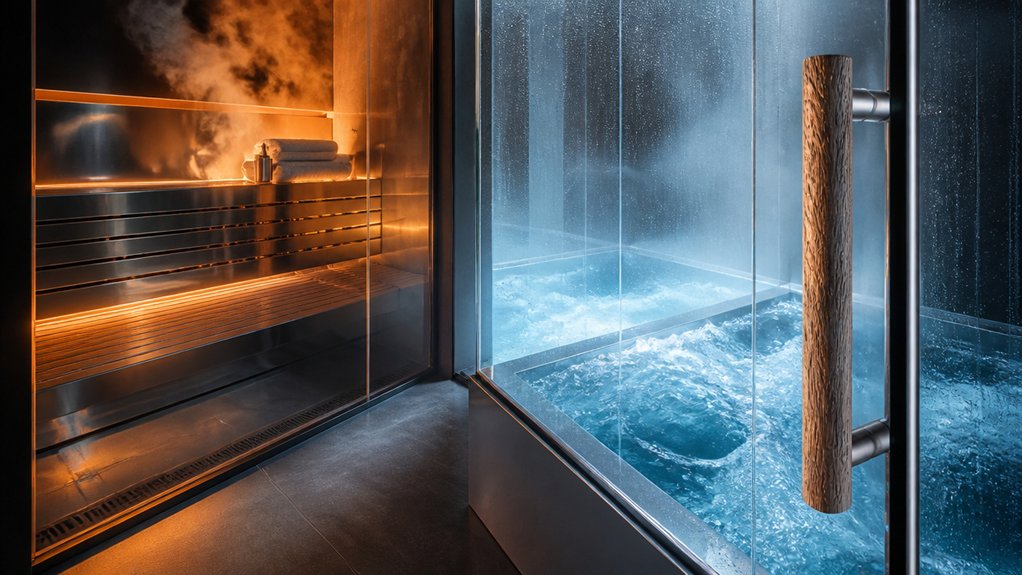
Incorporating sauna sessions into your recovery routine can amplify the benefits of cold plunges and ice baths, supporting muscle repair and enhancing cardiovascular health. Use the sauna for 10-15 minutes at a temperature that makes you sweat and raises your heart rate without causing excessive strain. This boosts cardiovascular conditioning, improves heart health, and promotes recovery. Compact, foldable design allows for easier storage and setup, making it ideal for small spaces.
Avoid using the sauna immediately before or during exercise, as heat stress can impair performance. Hydrate thoroughly before, during, and after each session to offset fluid loss of up to a liter from sweating. Finish with a gradual cool-down to maintain cardiovascular benefits and prepare your body for rest.
Proper hydration and controlled exposure maximize recovery and guarantee safe, effective sauna use.
What Temperatures and Durations Maximize Benefits?
To maximize recovery with ice baths, keep the water between 50°F and 59°F and stay submerged for about 10-15 minutes.
If you’re new to cold immersion, start with shorter sessions around 30 seconds to 2 minutes at slightly warmer temperatures, then increase gradually.
Timing also matters—immerse right after endurance workouts but wait at least 4 hours after strength training to avoid hindering muscle growth.
For optimal joint recovery, choose tubs with joint-friendly design features like spacious, deep sidewalls and soft cushioning to reduce pressure points.
Optimal Cold Water Temperature
Finding the right cold water temperature is essential for maximizing ice bath benefits without risking harm. The ideal temperature for cold therapy baths generally falls between 50°F and 59°F (10°C to 15°C). Staying within this range balances effective cooling with safety, guaranteeing vasoconstriction without causing excessive discomfort or health risks. Proper temperature control guarantees you gain the full benefits of your ice bath safely. Incorporating high-powered chillers, like those available in 2026 models with smart controls and rapid cooling capabilities, can help maintain a consistent and safe temperature throughout your session.
Ideal Immersion Duration
Choosing the right immersion duration is key to maximizing the benefits of cold therapy without risking adverse effects. For an ice bath, aim for immersion durations of 10-15 minutes at temperatures between 50°F to 59°F (10°C to 15°C). This range promotes effective vasoconstriction, reducing inflammation and aiding muscle recovery.
Beginners should start with shorter times of 30 seconds to 2 minutes at slightly higher temperatures (~60°F), gradually increasing as tolerance improves. Shorter dips are also ideal after endurance sessions to control inflammation, while longer durations avoid risks like hypothermia or cardiovascular stress.
In addition, ensuring the water is properly insulated and maintained with appropriate water treatment solutions helps sustain water quality and temperature consistency during longer sessions. Contrast therapy involves alternating cold immersion periods of 1-3 minutes with heat, repeated 2-4 times for peak vascular benefits. Proper immersion durations maximize recovery, soreness reduction, and performance gains.
Timing for Maximum Effect
Maximizing the benefits of ice baths depends on selecting the right temperatures and durations. To optimize recovery without hindering muscle growth, avoid cold exposure immediately after strength training—wait 4-6 hours. An ice bath at 50°F to 59°F (10°C to 15°C) for 10-15 minutes reduces inflammation and soreness within the first two hours post-exercise. Pre-cooling before training or competition can lower core temperature and enhance performance. Incorporate sauna sessions (12-15 minutes) after workouts to boost cardiovascular health and muscle repair, but not right after strength training, as it might blunt adaptations.
| Purpose | Timing |
|---|---|
| Post-exercise | Within 2 hours for inflammation relief |
| Pre-training | Before competition for performance boost |
| Sauna sessions | After workouts, not immediately post- strength |
| Cold exposure | 4-6 hours after strength training |
What’s the Best Way to Sequence Cold and Heat for Recovery?
To maximize recovery, timing is key when sequencing cold and heat therapy. You should typically use an ice bath immediately after workout to reduce soreness, but avoid cold treatments right after strength training if muscle growth is your goal.
Ending your sessions with heat in the evening or cold in the morning can further support relaxation or alertness, depending on your needs.
Optimal Sequence Timing
Timing plays a crucial role in optimizing recovery when combining cold and heat therapies. To maximize benefits, plan your contrast therapy and cold immersion strategically.
First, use an ice bath before high-volume or competitive efforts to pre-cool your muscles. After training, take an ice bath immediately to reduce inflammation, but avoid cold immersion right after strength workouts meant for hypertrophy—wait 4-6 hours to prevent blunting muscle growth.
For heat exposure, like sauna sessions, schedule at least 24 hours before your next session to support recovery without impairing performance.
Consider these key strategies:
- Pre-cool with an ice bath before effort.
- Use post-exercise cold immersion promptly to reduce inflammation.
- Conduct heat exposure (contrast therapy or sauna) well in advance for best benefits.
Cold Before or After
Deciding whether to apply cold or heat first depends on your recovery goals and the timing of your workout. Cold therapy, like an ice bath, immediately after strength training can blunt muscle protein synthesis, potentially hindering muscle growth, so it’s best to delay cold exposure at least four hours post-workout if muscle gain is your goal.
For high-volume training or competition, pre-cooling before exercise can enhance performance and delay fatigue. Contrast therapy, which alternates heat (sauna) and cold immersion, boosts circulation and reduces soreness without impairing hypertrophy when timed properly.
Ending recovery sessions on cold promotes alertness and vascular benefits, while finishing with heat encourages relaxation. The sequence is flexible but should suit your specific recovery and performance objectives.
Heat for Recovery Benefits
Incorporating heat therapy into your recovery routine can greatly enhance muscle repair and overall well-being when timed correctly. To optimize benefits, consider these points:
- Use heat therapy, such as a sauna, at least 24 hours after intense exercise to promote muscle repair and gain cardiovascular benefits, since blood vessels dilate, improving circulation.
- Post-exercise heat exposure boosts growth hormone levels by 200-500x, supporting muscle growth and blood volume expansion; avoid immediately after strength training to prevent blunting muscle protein synthesis.
- For faster circulation, try contrast therapy: 2-4 cycles of hot and cold immersion. Ending on heat promotes relaxation and better sleep, while ending on cold keeps you alert. Adjust based on your recovery goals.
Top Mistakes to Avoid With Contrast Therapy
Contrast therapy can be highly effective when done correctly, but rushing into it or making common mistakes can undermine its benefits.
To contrast therapy better, avoid starting with cold or hot water immersion too aggressively. Build your heat and cold tolerance slowly over several weeks. Never skip a warm-up phase before heat exposure, as safely raising your core temperature is key for effective vascular pumping.
During cold exposure, practice slow, controlled breathing to avoid hyperventilation, dizziness, or discomfort. Don’t perform intense contrast sessions too late in the day; ending on cold exposure can cause alertness and disrupt sleep.
Also, prioritize hydration before, during, and after your session because sweat loss can impact your cardiovascular response and recovery.
Does Scientific Research Back Contrast Therapy? Here’s What the Evidence Shows
Research shows that contrast therapy can effectively reduce pain, improve circulation, and speed up recovery, especially in conditions like sprains and arthritis.
The physiological mechanisms involve alternating vasodilation and vasoconstriction, which enhance nutrient delivery and waste removal. However, while many studies support its benefits, there are limitations and variations in individual responses that you should consider.
Evidence Supporting Contrast Therapy
Scientific studies increasingly support the benefits of contrast therapy for recovery and overall health. Research shows that using cold water immersion combined with heat enhances vascular pumping, promoting circulation, waste removal, and inflammation reduction.
For example, Leonardi et al. (2025) found contrast therapy reduces pain, improves joint range of motion, and alleviates muscle soreness after injury. Cain et al. (2025) highlighted that alternating cold and heat boosts sleep quality and stress resilience. Additionally, contrast therapy helps optimize the autonomic nervous system and cardiovascular efficiency, simulating aerobic adaptations.
- It markedly decreases swelling and manages injury-related inflammation.
- It improves vascular pumping by alternating vasodilation and vasoconstriction.
- It enhances autonomic nervous system flexibility for better stress response.
Physiological Mechanisms Explained
The ways in which alternating heat and cold influence your body lie at the core of contrast therapy’s benefits. This process triggers vasodilation from heat, expanding blood vessels, and vasoconstriction from cold, narrowing them—a cycle that creates a vascular pump boosting circulation, nutrient delivery, and waste removal (Leonardi et al., 2025).
Contrast therapy also stimulates your autonomic nervous system, reinforcing its flexibility and improving heart rate variability. Cold exposure prompts a neurochemical surge of norepinephrine and dopamine, supporting stress reduction and alertness, while heat promotes growth hormone release and aids muscle repair by mimicking hypoxic conditions.
With proper timing, these thermal cycles help manage inflammation and enhance recovery without impairing muscle adaptation, leveraging your body’s natural vascular and nervous responses to optimize performance.
Practical Effectiveness and Limitations
Numerous studies demonstrate that contrast therapy offers tangible benefits for recovery and pain reduction, making it a popular choice among athletes and fitness enthusiasts. This approach, involving cold plunges and heat exposure, enhances physiological responses like increased blood flow and waste removal.
However, practical effectiveness depends on timing and individual response.
- Contrast therapy reduces pain and alleviates muscle soreness more effectively than heat or cold alone, aiding quicker recovery.
- Combining cold plunges with heat exposure amplifies benefits like stress reduction, improved sleep, and cardiovascular efficiency.
- Limitations exist: cold phases post-strength training can blunt muscle damage repair and hypertrophy, so delaying cold exposure by 4–6 hours maximizes muscle growth. The evidence supports contrast therapy’s benefits but highlights the importance of strategic timing.
How to Tailor Contrast Therapy for Muscle Growth, Endurance, or Recovery
To effectively tailor contrast therapy for muscle growth, endurance, or recovery, it’s essential to adjust timing and session structure based on your training goals.
For muscle growth, avoid immediate post-strength sessions with cold exposure, as it blunts muscle protein synthesis; instead, delay contrast therapy by 4-6 hours or use it on rest days to allow inflammation, which is crucial for hypertrophy.
Endurance athletes should perform contrast therapy within 1-2 hours post-exercise, using 2-4 cycles of 10-20 minutes heat followed by 1-3 minutes cold to reduce inflammation, boost circulation, and speed recovery without hindering adaptation.
Adjust the timing—cold sessions can enhance alertness for morning workouts, while heat in the evening promotes relaxation and better sleep.
Monitor your responses and tailor the frequency to optimize results.
How to Troubleshoot Common Issues During Contrast Therapy
When you encounter issues during contrast therapy, quickly addressing them can prevent setbacks and guarantee you get the benefits safely.
Discomfort such as dizziness or excessive shivering during cold exposure signals it’s time to exit the ice bath and warm up gradually to avoid hypothermia or cardiovascular strain. To improve cold tolerance and reduce discomfort, practice slow, controlled breathing instead of hyperventilating.
Delaying cold exposure at least 4-6 hours after strength training prevents blunting muscle protein synthesis essential for muscle soreness and hypertrophy.
Problems with slipping during shifts indicate rushing between heat and cold phases—always take your time to maintain the vascular pumping effect, ensuring proper circulation and recovery.
Integrating Contrast Therapy Into Your Overall Athletic Recovery Plan
Integrating contrast therapy into your overall athletic recovery plan involves strategic timing and consistent use to maximize its benefits. Alternating heat and cold exposure stimulates vascular pumping, boosting circulation, and aiding recovery.
Using contrast therapy within 1-2 hours post-exercise effectively reduces inflammation and muscle soreness, speeding up recovery. Be mindful that delaying sessions 4-6 hours after hypertrophy training prevents blunting muscle growth.
Cycling between vasodilation from heat and vasoconstriction from cold enhances nutrient delivery, waste removal, and cardiovascular efficiency. Ending with cold promotes vasoconstriction and alertness, while ending with heat encourages relaxation and sleep.
Consistent use, 2-4 times weekly, combined with proper hydration and safe shifts, helps you optimize recovery and enhance autonomic nervous system flexibility for improved stress resilience.
Frequently Asked Questions
Do Ice Baths Improve Performance?
Yes, ice baths can improve your performance by speeding recovery, reducing soreness, delaying fatigue, and boosting endurance. They also build mental toughness and resilience, which helps you stay focused and push through tough workouts or competitions.
Do Cold Plunges Help Neuropathy?
Cold plunges might temporarily reduce neuropathy symptoms by decreasing inflammation, but they can risk cold injury, especially for those with impaired circulation. Always consult your healthcare provider before trying cold therapy for neuropathy management.
Does Cold Plunge Help With Cortisol?
Yes, cold plunges help with cortisol by activating your nervous system, boosting norepinephrine, and improving stress resilience. Regular immersion balances cortisol levels, reduces perceived stress, enhances mood, and supports recovery when combined with mindful breathing and timing.
Can Ice Baths Lower Blood Pressure?
Yes, ice baths can help lower blood pressure over time through repeated cold exposure that improves autonomic nervous system regulation. However, you should consult a healthcare professional first, especially if you have hypertension or cardiovascular concerns.