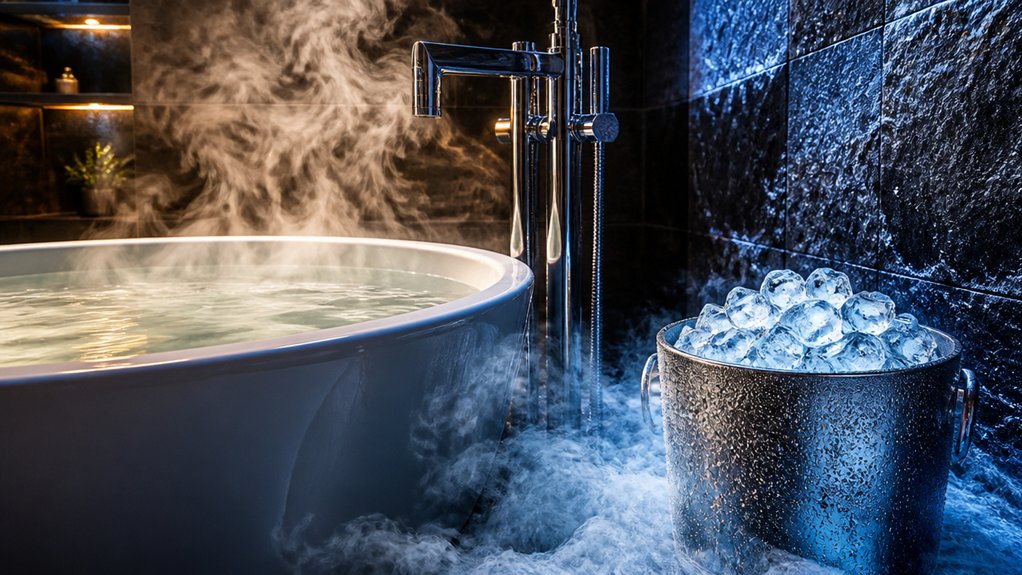
Alternating hot and ice baths boost circulation by causing your blood vessels to repeatedly expand and contract, creating a natural pumping action. When you switch between heat and cold, it stimulates both your parasympathetic and sympathetic nervous systems, improving vessel flexibility and blood flow. This cycle helps deliver oxygen and nutrients more efficiently while reducing inflammation and swelling. If you want to learn how this process works and how to do it safely, keep exploring further.
How Do Hot and Cold Baths Improve Your Circulation?
Have you ever wondered how hot and cold baths boost your circulation? Alternating hot and cold immersions stimulates vasodilation and vasoconstriction, creating a natural “pump” that enhances blood flow.
When you soak in hot water, it relaxes muscles and widens blood vessels, improving oxygen and nutrient delivery to tissues. Switching to cold causes blood vessels to constrict, reducing inflammation and directing blood toward essential organs.
This cycle of vessel opening and closing effectively improves circulation, supports lymphatic drainage, and speeds up waste removal from muscles. As a result, your body benefits from faster recovery, reduced swelling, and better cardiovascular function.
The use of properly designed chillers with consistent temperature control enhances the effectiveness of this process, ensuring safe and optimal temperature fluctuations. This natural process of vessel dilation and constriction makes alternating baths a powerful method to boost circulation and overall health.
The Science Behind Blood Vessel Expansion and Constriction
When you alternate between hot and cold baths, your blood vessels repeatedly expand and contract, creating a pumping action. This cycle regulates blood flow by opening and tightening vessels, which boosts circulation and promotes healing. A built-in filtration system ensures the water remains clean and safe, supporting optimal circulation during therapy. Understanding this process explains how temperature swings can optimize your vascular health and recovery.
Vasodilation and Vasoconstriction Cycles
Alternating hot and ice baths stimulate a cycle of vasodilation and vasoconstriction, which directly impacts blood flow and tissue health.
When you dip into hot water, your blood vessels expand (vasodilation), increasing blood flow and delivering more oxygen to your tissues. Conversely, cold immersion causes vasoconstriction, tightening your vessels and reducing blood flow, which helps limit inflammation and swelling.
This repeated cycle acts like a natural pump, improving circulation and helping remove metabolic waste more efficiently. To deepen your understanding:
- Vasodilation increases nutrient and oxygen delivery, aiding recovery.
- Vasoconstriction minimizes inflammation and swelling in injured areas.
- The cycle boosts overall circulation and tissue health, promoting faster healing.
- Using the appropriate heat settings ensures safe and effective therapy during these cycles.
Blood Flow Regulation Mechanisms
The process of blood flow regulation hinges on mechanisms that adjust the size of blood vessels in response to temperature changes. When you’re in a hot bath, heat causes vasodilation — blood vessels relax, expanding to boost blood flow and deliver oxygen and nutrients. Conversely, cold exposure triggers vasoconstriction, narrowing blood vessels to conserve heat and reduce inflammation. Alternating hot and cold baths prompts a “pump” effect through repeated vessel expansion and contraction, enhancing circulation and flushing out metabolic waste. Your nervous system controls these changes via sympathetic vasoconstrictor nerves, which respond swiftly to temperature shifts, maintaining blood pressure and flow balance. Many devices used for recovery incorporate temperature therapy features that facilitate these beneficial vasomotor responses.
How Contrast Therapy Creates a Pumping Effect in Your Blood Vessels
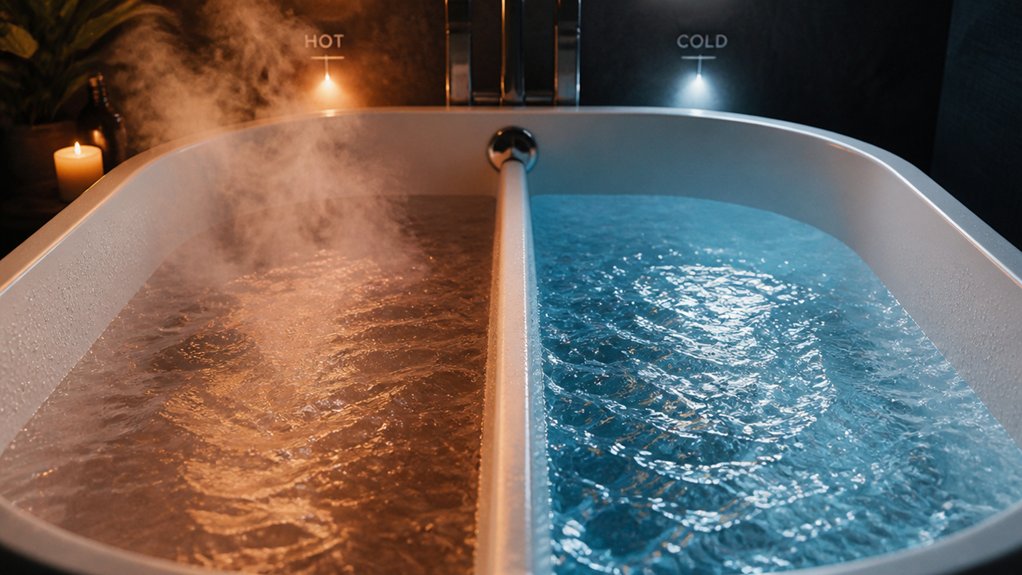
When you switch between hot and cold baths, your blood vessels rhythmically open and close, creating a natural pumping action. This process improves circulation by forcing blood through constricted and dilated vessels, boosting flow to your muscles and tissues. A multi-layer insulation system helps maintain optimal water temperatures, ensuring consistent therapeutic effects during contrast therapy. As a result, your body efficiently flushes out waste and delivers essential nutrients where they’re needed most.
Vessel Constriction and Dilation
Engaging in hot and cold baths triggers your blood vessels to alternately expand and contract, creating a natural pumping action that boosts circulation. This process involves vessel constriction and dilation, which enhances blood flow and oxygen delivery. Low EMF infrared saunas can be particularly beneficial during contrast therapy, as their safer electromagnetic profiles allow for more frequent and comfortable sessions.
During hot water immersion, your vessels dilate, increasing blood flow to relax muscles and promote healing. Conversely, cold exposure causes vasoconstriction, reducing blood flow to limit inflammation and swelling. This cyclical dilation and constriction improve circulation by moving blood more effectively through your vessels.
Here are three key points:
- Hot water causes vasodilation, increasing blood flow.
- Cold water prompts vasoconstriction, reducing inflammation.
- The switching cycle creates a pumping effect, enhancing recovery.
Enhanced Circulatory Pumping
Alternating between hot and cold water immersions actively stimulates your blood vessels to expand and contract in quick succession, creating a powerful pumping action. This contrast causes vasodilation during hot baths, increasing blood flow and delivering nutrients to muscles and tissues.
When you switch to cold immersion, vasoconstriction occurs, temporarily reducing blood flow and helping flush out metabolic waste as vessels reopen. The repeating cycle of vasodilation and vasoconstriction improves vascular tone and enhances circulation efficiency.
This contrast therapy mimics the benefits of aerobic exercise by stimulating your heart and promoting quicker muscle recovery. The continuous alternating process works like a natural pump, encouraging better oxygen and nutrient transport throughout your body, ultimately boosting overall circulatory health. Additionally, the process can be optimized by using infrared heat lamps that penetrate deep tissues, aiding in faster core rewarming and circulation revitalization.
Why Alternating Hot and Cold Enhances Blood Flow Efficiency
Switching between hot and cold baths creates a powerful “pump” effect that enhances blood flow efficiency. When you alternate heat and cold, you trigger the vascular pump by repeatedly dilating and constricting blood vessels. This cycle boosts overall circulation by improving vessel responsiveness and tone. Incorporating larger, spacious designs in your cold plunge can further enhance comfort and safety during these transitions. This process flushes out metabolic waste, reduces swelling, and accelerates oxygen and nutrient delivery, making your circulation more efficient and responsive.
What Happens to Your Nerves and Blood Vessels During Contrast Therapy?
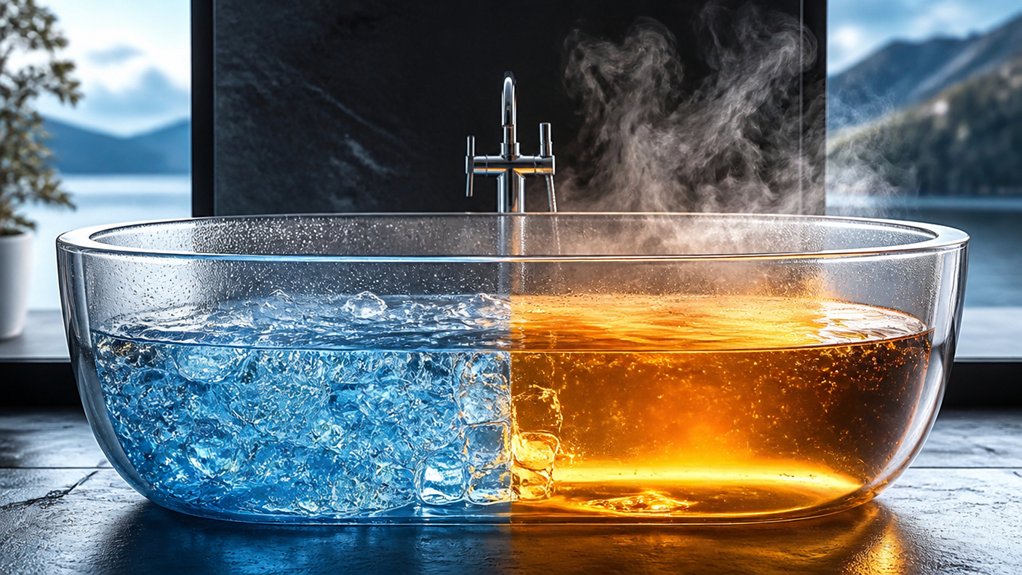
During contrast therapy, your blood vessels repeatedly expand and contract, boosting circulation and helping remove waste.
Cold exposure activates your nervous system, numbing muscles and reducing pain signals, while heat relaxes nerves and eases stiffness. This cycle improves nerve sensitivity and overall vascular function, speeding up recovery.
Nerve Signal Modulation Effects
When you experience hot and cold contrast therapy, your nervous system and blood vessels respond dynamically to each temperature change. This process modulates nerve signaling by repeatedly triggering vasodilation and vasoconstriction, creating a “pump” effect that boosts circulation.
During heat exposure, your nerves promote vasodilation by relaxing smooth muscle, increasing blood flow and reducing stiffness. Cold exposure, on the other hand, stimulates sympathetic nerve activity, leading to vasoconstriction that limits blood flow and reduces inflammation.
This repeated thermal shifting also increases norepinephrine release, heightening alertness and tightening blood vessels. As a result, your sensory nerves and autonomic nervous system work together to improve vascular tone, optimize nutrient delivery, and promote efficient oxygen flow.
Key effects:
- Enhances nerve signaling flexibility
- Stimulates vasodilation and vasoconstriction cycles
- Regulates vascular tone for better circulation
Blood Vessel Constriction and Dilation
As your body responds to contrast therapy, your blood vessels undergo a rhythmic cycle of constriction and dilation that influences both vascular and nerve activity.
When exposed to heat, blood vessels dilate (vasodilation), increasing blood flow and oxygen delivery to tissues. Cold exposure triggers blood vessel constriction (vasoconstriction), reducing blood flow to limit swelling and inflammation. This alternating process creates a “pump” effect, helping flush out metabolic waste and deliver nutrient-rich blood.
Nerve responses to temperature changes also play a role—cold stimulates sympathetic nerves, tightening vessels, while heat activates parasympathetic pathways, relaxing them. This cyclical pattern enhances circulation efficiency, minimizes muscle stiffness, and improves nerve signaling for pain relief.
Sensory Response Adjustments
Contrast therapy triggers a dynamic response in your nerves and blood vessels, constantly shifting between relaxation and alertness.
During heat, your sensory nerve endings become more active, promoting vasodilation and a warm sensation. Cold immersion temporarily numbs sensory nerves, slowing nerve signal transmission and reducing discomfort. This throttling of nerve activity also triggers vasoconstriction, which tightens blood vessels quickly.
The alternating cycle enhances vascular tone by modulating your autonomic nervous system, improving responsiveness.
Here’s what happens:
- Cold shock activates cold-sensitive receptors, triggering vasoconstriction and alertness.
- Hot phases increase nerve activity, promoting vasodilation and temperature perception.
- The cycle sharpens nerve and vessel responsiveness, boosting circulation and recovery.
Benefits of Better Circulation for Muscle Recovery and Injury Healing
Better circulation plays an essential role in accelerating muscle recovery and healing injuries. Contrast therapy, with alternating hot and ice baths, creates a “pump” effect by dilating blood vessels with heat and constricting them with cold, boosting blood flow to muscles and injured tissues.
This improved circulation delivers more oxygen and nutrients while flushing out metabolic waste and inflammatory chemicals, speeding up recovery. The heat relaxes tissues and reduces joint stiffness, helping restore muscle function quickly.
Cold exposure temporarily restricts blood flow, reducing swelling and inflammation—key in managing pain and limiting tissue damage early on. This enhanced circulation from contrast therapy also eases delayed onset muscle soreness (DOMS) and promotes faster oxygenation, supporting tissue repair and quicker return to peak performance.
How Hot Baths Help Your Blood Vessels Relax and Promote Calm
When you soak in a hot bath, your blood vessels expand, boosting blood flow and delivering more oxygen to your muscles. This vasodilation not only relaxes your body but also promotes a calming sensation by reducing nervous system activity related to pain.
As a result, your circulatory system works more efficiently, helping you feel more relaxed and centered.
Vasodilation and Relaxation
Hot baths work by causing your blood vessels to dilate, which means they widen and allow increased blood flow. This vasodilation has multiple benefits:
- It relaxes your muscle fibers and connective tissues, easing stiffness and tension.
- The heat reduces vascular resistance, making it easier for your heart to pump blood efficiently.
- Enhanced blood circulation delivers more oxygen and nutrients to tissues, aiding recovery and removing metabolic waste.
As the blood vessels relax, the warmth stimulates your parasympathetic nervous system, promoting calm and lowering stress levels. The increased blood flow from heat treatment doesn’t just ease muscle discomfort—it helps your whole body relax by supporting better circulation and reducing tension.
Improved Circulatory Flow
By relaxing your blood vessel walls through heat, hot baths directly enhance circulatory flow. This vasodilation allows blood to move more freely, delivering oxygen and nutrients efficiently to tissues.
When you alternate between hot and cold, known as contrast therapy, it stimulates your cardiovascular system, improving overall efficiency. The warmth from hot water (100-104°F) relaxes smooth muscle in vessel walls, reducing vascular resistance and encouraging calm.
This process not only supports recovery and healing but also helps lower heart rate and blood pressure by activating the parasympathetic nervous system. Consequently, alternating hot and ice baths can boost circulation, mimicking mild aerobic exercise benefits, and optimize your cardiovascular health through this effective method of improved blood flow.
How Cold Baths Reduce Inflammation and Swelling Safely
Cold baths reduce inflammation and swelling safely by causing vasoconstriction, which narrows blood vessels and limits blood flow to affected areas. This process helps decrease swelling and tissue fluid overload.
Cold therapy also slows cellular metabolism, reducing tissue damage around joints and tendons, effectively controlling inflammation. Additionally, cold exposure numbs nerve endings, slowing pain signal transmission to the brain, offering quick pain relief in injured muscles.
To maximize safety and benefits:
- Use water temperatures between 50°F and 60°F.
- Limit immersion to 30 seconds to a few minutes.
- Avoid prolonged icing to prevent impairing tissue healing.
This targeted water exposure reduces pain and inflammation, making cold baths a safe, effective method for managing acute injuries and swelling.
What Is the Best Timing for Hot and Cold Contrast Baths?
Determining the ideal timing for contrast baths is essential to maximize their benefits while minimizing risks. For best results, immerse yourself in hot water for 3-5 minutes at around 100°F to 104°F. Follow with a cold water dip of about 30-60 seconds in 50°F to 60°F water to induce vasoconstriction. Repeat this cycle 3 to 4 times, ending on a cold phase to enhance circulation. Consistency is key, so keeping the water within the recommended temperature ranges matters. Proper timing helps promote vessel dilation and constriction safely. To better understand this, consider the following:
| Phase | Duration | Temperature |
|---|---|---|
| Hot water | 3-5 minutes | 100°F to 104°F |
| Cold water | 30-60 seconds | 50°F to 60°F |
Temperature Guidelines for Safe and Effective Contrast Therapy
Maintaining proper water temperatures during contrast therapy is essential for safety and effectiveness. If the hot water is too hot or the cold water too cold, you risk burns or hypothermia.
To optimize circulation benefits, keep the hot water between 100°F and 104°F (38°C to 40°C). Cold water should range from 46°F to 60°F (8°C to 15.5°C) to promote vasoconstriction without undue risk.
Key points to guarantee safe contrast therapy:
- Regularly monitor and adjust water temperatures during each cycle to maintain target ranges.
- Limit hot water immersion to 3–5 minutes and cold water to 30 seconds–1 minute.
- Gradually increase cold immersion times as your body adapts, starting from short durations.
Following these guidelines guarantees you safely maximize circulation benefits in contrast therapy.
How to Perform Contrast Therapy at Home: Step-by-Step
Wondering how to safely perform contrast therapy at home? Start by preparing two tubs—one with hot water (100-104°F, 38-40°C) and the other with cold water (46-50°F, 8-10°C), using a thermometer to guarantee accuracy.
Immerse the targeted area or full body in hot water for 3-4 minutes, gently moving to relax muscles. Then switch immediately to cold water for 30 seconds to 1 minute, allowing blood vessels to constrict and inflammation to decrease.
Repeat the cycle 3-4 times, ending on cold water to maximize vasoconstriction. Afterward, rest quietly for a few minutes to let circulation stabilize.
Contrast therapy can reduce muscle soreness, especially delayed-onset muscle soreness (DOMS), by promoting better circulation and recovery.
Safety Tips and Precautions When Using Hot and Cold Baths
While hot and cold baths can provide significant health benefits, it’s essential to prioritize safety to prevent injury.
To practice contrast bath therapy safely, keep these tips in mind:
- Start with moderate temperatures—hot water between 100°F and 104°F and cold water between 50°F and 60°F—to avoid burns or shock.
- Limit initial cold immersion to 30 seconds to 1 minute, gradually increasing as your tolerance improves, to reduce cold shock and hypothermia risks.
- Always have safety support or supervision nearby, especially if you have cardiovascular conditions, to prevent dizziness, fainting, or heart strain. Avoid fully submerging your head in cold water to reduce drowning risks. Consult a healthcare professional before beginning, especially if you have heart or vascular issues.
How Contrast Therapy Supports Overall Circulatory Health Beyond Recovery
Contrast therapy actively stimulates your vascular system by repeatedly switching between hot and cold temperatures, causing vasodilation and vasoconstriction. This process creates a natural “pump,” boosting blood flow and enhancing the delivery of oxygen and nutrients throughout your body.
It also promotes better lymphatic drainage, helping remove metabolic waste and reducing systemic inflammation, which benefits overall circulatory wellness. Regular contrast hydrotherapy can improve endothelial function, keeping your blood vessels flexible and responsive, reducing the risk of circulatory diseases.
Additionally, the thermal shifts increase norepinephrine release and encourage deep breathing, both of which further support circulation and cardiovascular health. These effects extend beyond just muscle recovery, actively contributing to your overall circulatory system regulation and long-term heart health.
Who Should Try Contrast Therapy and When Should You Avoid It?
Contrast therapy is particularly beneficial for athletes, active older adults, and wellness enthusiasts aiming to reduce muscle soreness, improve circulation, and sharpen mental clarity.
However, you should be cautious if you have certain health conditions. Consult your doctor before trying contrast therapy if you have heart conditions, high blood pressure, pregnancy, peripheral neuropathy, or peripheral vascular disease. It’s also advisable to avoid contrast therapy during acute injuries that require extended icing.
Beginners should start with mild temperature differences and shorter sessions, gradually increasing as tolerated under supervision. If you experience dizziness, numbness, or adverse reactions during hot and cold cycles, discontinue immediately and seek medical advice.
Knowing when to try or avoid contrast therapy guarantees safety and peak benefits.
Integrating Contrast Therapy Into Your Wellness Routine
Incorporating contrast therapy into your wellness routine is simple and highly adaptable, making it a practical addition to your self-care practices. By alternating 3-5 minutes in hot baths (100-104°F) with 30-60 seconds in ice baths (50-60°F) for 3-4 cycles, you can effectively stimulate blood vessel dilation and constriction.
This sequence boosts circulation, helping to reduce muscle soreness and accelerate recovery through a vascular “pump” effect that enhances oxygen and nutrient delivery. You can start at home with basic setups like bathtubs or showers, gradually increasing cold immersion as your tolerance builds.
Contrast therapy complements other practices like stretching or mindfulness, promoting both physical and mental well-being. Remember to prioritize safety by avoiding extreme temperatures and consulting a healthcare provider if needed.
Frequently Asked Questions
What Does Alternate Hot and Cold Baths Improve?
Alternating hot and cold baths improve your blood circulation by causing vessel dilation and constriction, which pumps blood more efficiently, delivering oxygen and nutrients faster, reducing swelling, easing soreness, and supporting quicker healing and pain relief.
Do Ice Baths Help With Poor Circulation?
Ice baths can temporarily improve poor circulation by constricting and then dilating blood vessels, creating a pump effect. However, use them cautiously, as long-term benefits are limited, and heat therapy might be more effective for sustained circulation issues.
Can a Hot Bath Help With DOMS?
Yes, a hot bath helps with DOMS by dilating blood vessels, increasing blood flow, relaxing muscles, and reducing stiffness. It also promotes lactic acid removal, speeding up recovery and easing soreness, especially when combined with cold therapy.
Can Ice Baths Help With Lipedema?
Ice baths may help with lipedema by temporarily reducing swelling and inflammation through vasoconstriction, and alternating with heat can promote circulation and lymphatic drainage, which might alleviate symptoms. Always consult your doctor before trying cold therapy.