Using sauna and ice bath contrast therapy can boost your recovery, reduce inflammation, and improve circulation. Alternating heat and cold helps relax muscles, lowers soreness, and speeds up healing after workouts. It also enhances blood flow, stimulates stress resilience, and promotes mental clarity. If you keep exploring, you’ll discover effective ways to incorporate this powerful routine safely and maximize its health benefits for your body and mind.
What Is Sauna and Ice Bath Contrast Therapy: And How Does It Work?
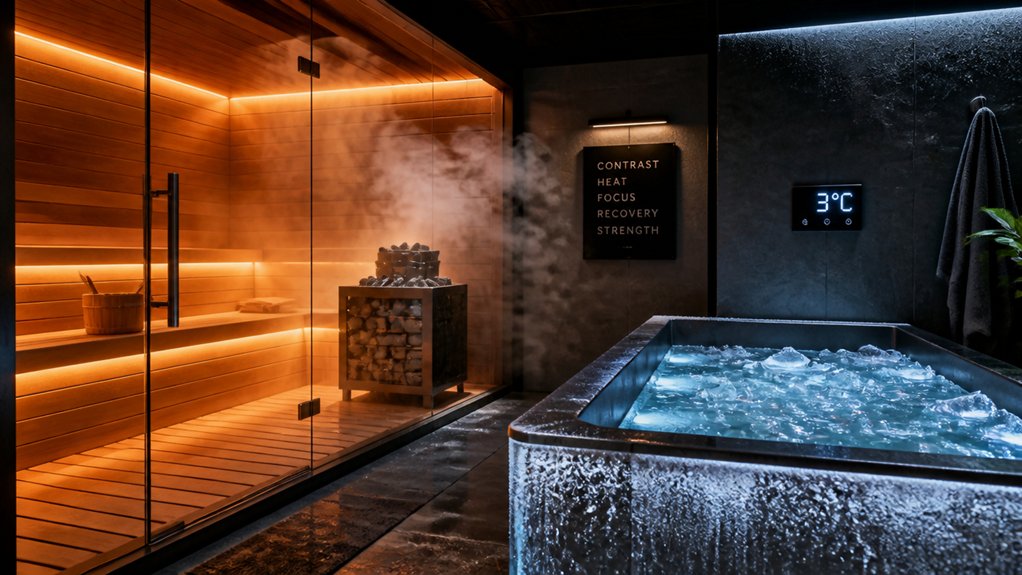
Have you ever wondered how alternating between intense heat and extreme cold can boost your recovery and well-being? That’s where the sauna and ice bath contrast therapy routine comes in.
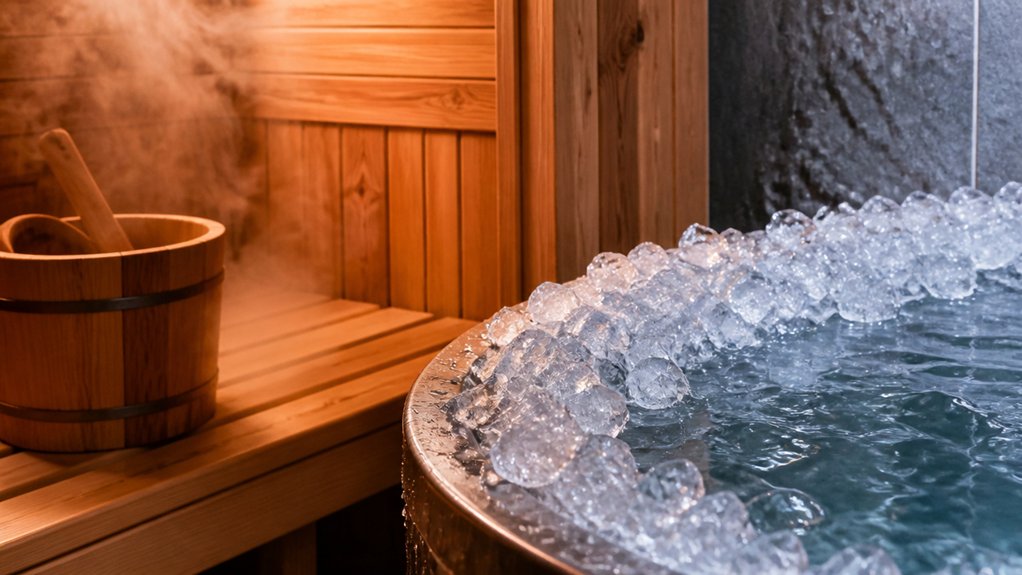
During this therapy, you spend 10-15 minutes in a sauna at 120–175°F, which causes vasodilation, increases blood flow, and relaxes your muscles. Then, you submerge in an ice bath or cold plunge for 1-3 minutes at near-freezing temperatures, leading to vasoconstriction, reduced inflammation, and enhanced circulation.
This cycle trains your autonomic nervous system to switch efficiently between activation and recovery states. Cold immersion triggers norepinephrine release, while heat exposure helps produce heat shock proteins. When practiced correctly, this contrast therapy routine refreshes you, eases soreness, and supports your overall mental and physical recovery, especially when paired with appropriate ice bath chillers.
What Are the Physical and Mental Benefits of Contrast Therapy?
Curious about why contrast therapy offers such powerful physical and mental benefits? It works by alternating heat from saunas with cold ice baths, improving blood circulation and vascular responsiveness.
Physically, contrast therapy reduces inflammation and soreness by boosting lymphatic drainage and clearing metabolic waste after exercise. It also enhances recovery and helps prevent injuries.
Mentally, this practice releases endorphins and norepinephrine, which relax your mind, lower stress, and clear mental fog. By training your nervous system to shift between sympathetic activation and parasympathetic recovery, contrast therapy strengthens overall resilience. Additionally, using infrared heat can penetrate deeper into tissues, providing more effective relief and healing.
Regular use can improve sleep, increase energy levels, and bolster immune function. In this way, contrast therapy offers both profound physical recovery and mental clarity, making it a valuable addition to your wellness routine.
How Does Alternating Hot and Cold Improve Recovery and Circulation?
How does alternating hot and cold therapy boost recovery and circulation? The contrast from sauna heat and cold immersion creates a natural pumping effect that enhances blood flow and speeds up muscle recovery after intense activity.
During the heat phase, blood vessels dilate, relaxing muscles and delivering oxygen and nutrients. When you shift to cold, vasoconstriction redirects blood to essential organs and reduces inflammation. This rapid shift stimulates anti-inflammatory markers and heat/cold shock proteins that help reduce soreness.
Alternating temperature not only improves circulation but also trains your autonomic nervous system to switch efficiently between stress and recovery. These effects support faster healing, better lymphatic drainage, and overall circulatory health, making contrast therapy a powerful tool for recovery. Additionally, combining these therapies with percussion massagers further accelerates recovery by delivering deep tissue strokes with adjustable heat or cold, promoting optimal muscle relaxation and inflammation reduction.
How to Practice Contrast Therapy Safely and Effectively
Practicing contrast therapy safely involves starting with short sessions—around 5–10 minutes in the sauna and 1–2 minutes in cold immersion—and gradually increasing exposure as your body adapts. Move slowly between hot and cold to prevent dizziness or fainting, and always watch for signs of discomfort or lightheadedness, stopping immediately if they occur.
Using a sauna with efficient heat retention ensures steady, comfortable temperatures, reducing the risk of overheating. Maintaining hydration before, during, and after your sessions is essential to avoid dehydration caused by sweating in the sauna. Repeat the hot-cold cycle 1 to 3 times per session, with the final phase being cold immersion to help reduce inflammation and promote recovery.
If you have any pre-existing health conditions, consult a healthcare professional beforehand to confirm your contrast therapy is a safe practice.
Common Mistakes When Starting Contrast Therapy: And How to Avoid Them
Starting contrast therapy with common mistakes can lead to discomfort or even health risks. To do it safely, avoid these pitfalls:
- Spending too long in the sauna or ice bath, like over 15 minutes or 3 minutes respectively, increases dizziness; start with shorter sessions, about 5–10 minutes heat and 1–2 minutes cold.
- Shifting too quickly between hot and cold without gradual adjustment can cause sudden blood pressure drops—pace your changes carefully.
- Neglecting hydration makes dehydration symptoms worse; drink water before and during sessions to stay properly hydrated.
- Using equipment with reliable thermal insulation can help maintain the desired water temperature and prevent rapid temperature fluctuations.
Always consider pre-existing health conditions, like heart issues, and consult a healthcare professional before starting contrast therapy.
Building tolerance gradually and listening to your body helps you enjoy the benefits safely.
Does Scientific Research Support the Benefits of Contrast Therapy?
Scientific research clearly supports the health benefits of contrast therapy, with numerous studies highlighting its effectiveness in improving muscle recovery, circulation, and stress regulation. When you alternate sauna sessions with ice baths, it helps reduce inflammation and muscle soreness, as shown by research from Susanna Søberg. Utilizing dual-wavelength therapy devices, which target both surface and deep tissues, can enhance these recovery benefits by penetrating more effectively into the muscles and joints. Contrast therapy enhances vascular function by training blood vessels to dilate and constrict more efficiently, improving overall circulation. Cold exposure after heat treatment also decreases pro-inflammatory cytokines, supporting faster muscle recovery. Additionally, this thermal contrast can help regulate your autonomic nervous system, making it easier to manage stress. Clinical data links regular sauna use and contrast therapy to lower cardiovascular risk and improved immune function, confirming the broad health benefits supported by scientific evidence.
Who Should Try Contrast Therapy: And Who Should Beware?
Contrast therapy can be great if you’re active and looking to boost recovery, circulation, and reduce inflammation.
However, if you have heart issues or are pregnant, it’s best to consult your healthcare provider before trying it. Beginners and those with health conditions should start slow and approach cautiously to stay safe. Incorporating proper insulation efficiency into your cold plunge routine can help maintain consistent temperatures and maximize benefits.
Suitable for Active Individuals
Active individuals, especially athletes and fitness enthusiasts, often find contrast therapy beneficial for faster muscle recovery, reducing inflammation, and boosting circulation after intense workouts. It helps your muscles recover quicker and improves blood flow, enhancing overall athletic performance.
However, it’s important to customize your routine: start with shorter sessions (sauna 5-10 minutes, cold plunge 1-2 minutes) to guarantee safety.
Consider these points:
- Contrast therapy can optimize recovery and circulation if used correctly
- It’s ideal for those seeking mental clarity, relaxation, or post-exercise recovery
- Be cautious if you have pre-existing health conditions or are pregnant
Always listen to your body and adapt the protocol to your goals and comfort level.
Not for Heart Patients
While contrast therapy offers benefits for many, it’s not suitable for everyone, especially those with heart conditions. If you have heart disease, hypertension, or arrhythmias, you should consult a healthcare professional before trying hot saunas and ice baths.
A sudden change in water temperature can also affect water chemistry and might impact individuals with sensitive skin or allergies, so caution is essential.
Rapid changes in temperature can cause blood pressure fluctuations, which may lead to dizziness, fainting, or worse, cardiac events. For individuals with compromised circulation or weakened heart function, these shifts can worsen symptoms or strain the heart unnecessarily.
Pregnant Women Should Avoid
Pregnant women should steer clear of sauna and ice bath contrast therapy because rapid changes in body temperature can disrupt circulation and pose risks to both mother and baby. The intense heat and cold exposure may lead to dehydration, overheating, or hypothermia—all dangerous during pregnancy.
Medical guidelines strongly advise against contrast therapy during pregnancy since blood pressure and circulation can fluctuate unpredictably, potentially affecting fetal well-being.
If you have pre-existing health issues like heart conditions or circulation disorders, consult a healthcare professional before attempting contrast therapy, as these increase risks similar to pregnancy.
You should seek alternative recovery methods that are safer during pregnancy until you get medical clearance.
- Rapid temperature shifts can impact fetal health
- Overheating risks can cause complications
- Consult a healthcare professional before trying contrast therapy
Tips for Incorporating Contrast Therapy Into Your Wellness Routine
Incorporating contrast therapy into your wellness routine can boost circulation, reduce muscle soreness, and enhance recovery when done correctly. To do this safely, start with 10-15 minutes in a sauna at 150–175°F (or 120–130°F for infrared), then dip into a cold plunge or ice bath around 37°F for 1–3 minutes. Repeat this cycle 1 to 3 times based on your tolerance. Always stay well-hydrated before, during, and after sessions to prevent dehydration and support temperature regulation. Gradually build your cold immersion time and intensity—beginning with shorter, cooler dips—to avoid adverse reactions. Keep the sauna and cold plunge close together to maximize contrast benefits.
| Step | Action | Tips |
|---|---|---|
| 1 | Start with brief cold dips | Shorter times initially |
| 2 | Hydrate thoroughly | Drink water regularly |
| 3 | Gradually increase cold exposure | Add time and coolness |
| 4 | Keep sessions near each other | Minimize delay |
| 5 | Listen to your body | Stop if uncomfortable |
Expert Tips for Getting the Most From Your Contrast Sessions
To maximize the benefits of your contrast therapy sessions, focus on proper timing and gradual progression. Start with 10-15 minutes in the sauna to relax muscles and boost blood flow, then quickly shift to a 1-3 minute cold plunge to reduce inflammation and enhance circulation.
Repeat the hot-cold cycles 1 to 3 times, increasing duration and intensity as your body adapts. Always end with a cold immersion to support recovery and reduce swelling.
Stay thoroughly hydrated before, during, and after sessions to prevent dehydration and maintain cardiovascular stability. Pay close attention to your body’s signals—dizziness, lightheadedness, or discomfort mean it’s time to pause or modify.
Minimize shift time for circulatory benefits, but pace temperature changes to protect your autonomic nervous system.
Frequently Asked Questions About Sauna and Ice Bath Contrast Therapy
Curious about how sauna and ice bath contrast therapy can benefit you? Contrast therapy, involving alternating between sauna heat and cold immersion, offers notable benefits. Using a sauna at 120-175°F followed by brief cold baths at near-freezing temps enhances circulation and reduces muscle inflammation.
This process promotes faster muscle recovery, eases soreness, and boosts blood flow—helping your body eliminate toxins. Beginners should start with shorter sessions—5-10 minutes in the sauna and 1-2 minutes in the ice bath—and listen to their bodies to prevent dizziness or discomfort. Typically, you’ll cycle through these phases 1-3 times, finishing cold to amplify anti-inflammatory effects.
Regular contrast therapy can also improve your nervous system, stress resilience, sleep quality, and immune function, all contributing to overall well-being.
Frequently Asked Questions
How Long Do You Stay in the Sauna for Contrast Therapy?
You should stay in the sauna for 10 to 15 minutes during contrast therapy, but start with shorter durations like 5 to 10 minutes if you’re a beginner. Listen to your body and exit if uncomfortable.
Are Saunas Ok for People With MS?
Saunas can be okay for people with MS if you’re cautious. Limit your sessions, stay hydrated, and monitor symptoms closely. Always consult your healthcare provider before trying sauna therapy to guarantee it’s safe and suitable for your condition.
Does Contrast Therapy Actually Work?
Yes, contrast therapy works by reducing muscle soreness, improving circulation, and boosting recovery. You activate your nervous system, helping your body switch between stress and relaxation modes, which enhances overall stress resilience and promotes faster healing.
Is Contrast Therapy Better Than Ice Bath?
Yes, contrast therapy is better than ice baths alone because it combines heat and cold, enhancing circulation, speeding recovery, promoting relaxation, and supporting nervous system regulation—offering broader benefits for your physical and mental well-being.