After an ice bath, gently dry your skin with a soft towel to reduce moisture loss and wrap in warm, breathable clothes like fleece or merino wool. Perform light stretches and easy movements to get circulation going, then hydrate with warm fluids and eat balanced snacks. Avoid hot showers immediately and monitor your skin for reactions. Keep track of your sessions and progress—if you want to learn more about optimizing your recovery routine, continue exploring the best techniques.
The Best Ways to Dry Off and Warm Up After Your Ice Bath
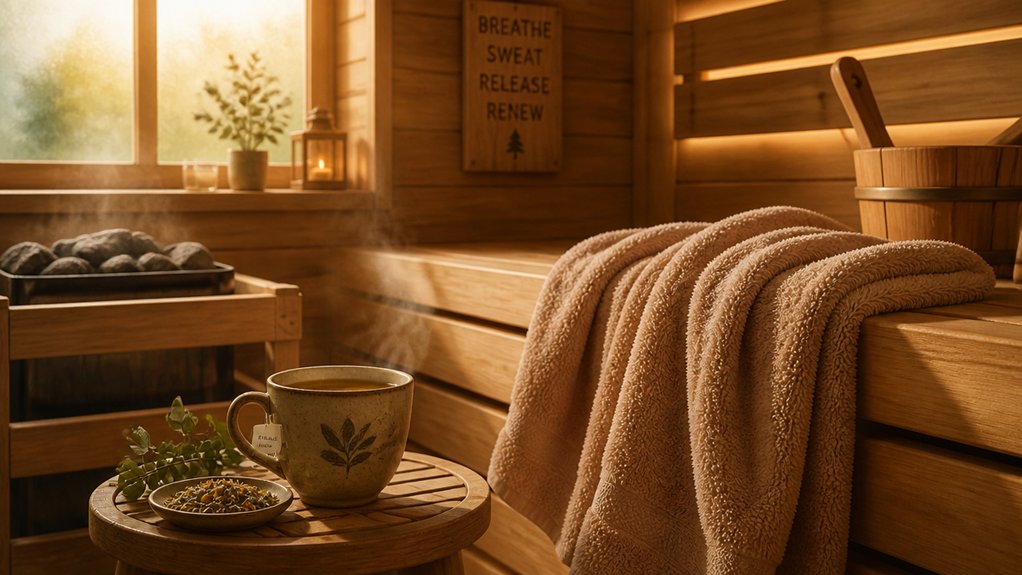
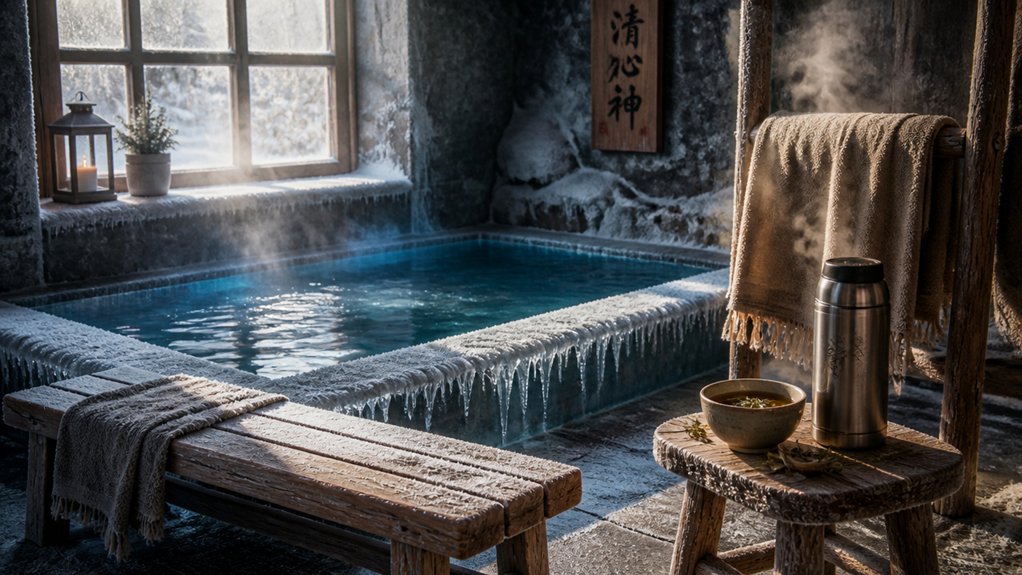
Wondering how to warm up safely after an ice bath? First, gently dry off with a soft towel to remove moisture and reduce heat loss.
Once dry, wrap yourself in warm, breathable clothing like fleece or merino wool, and wear dry socks to help retain heat. Avoid jumping straight into a hot shower; instead, wait 5 to 10 minutes to allow your body temperature to rise gradually, preventing thermal shock.
During this time, sip warm beverages like herbal tea or broth, which support internal rehydration and comfort. Incorporate gentle movements such as light stretching or walking to stimulate blood flow and promote natural warming. For added comfort, applying a muscle recovery cream after drying can help soothe muscles and joints as your body warms up.
These steps help your body shift smoothly from cold to warm without risking sudden temperature changes or discomfort.
Gentle Exercises to Get Your Blood Circulating Post-Cold Therapy
After an ice bath, incorporating gentle exercises can help restore healthy blood flow without putting too much strain on your muscles. Gentle stretching, like shoulder rolls, neck rotations, and ankle circles, promotes blood flow and encourages muscle relaxation.
Adding light mobility movements, such as walking lunges, leg swings, and torso twists, gradually increases circulation and warms muscles post-cold therapy. Low-intensity yoga poses like child’s pose and forward fold support relaxation and gentle muscle activation.
Start with short, controlled movements to prevent stiffness and help your nervous system shift from cold-induced vasoconstriction to normal circulation. Avoid intense exercise for several hours after the ice bath. Utilizing percussion massagers with temperature therapy features can further enhance recovery by promoting deep tissue relaxation and reducing soreness.
These recovery techniques support gradual blood vessel dilation and reduce muscle soreness without risking overstress.
How to Rehydrate and Eat for Optimal Recovery
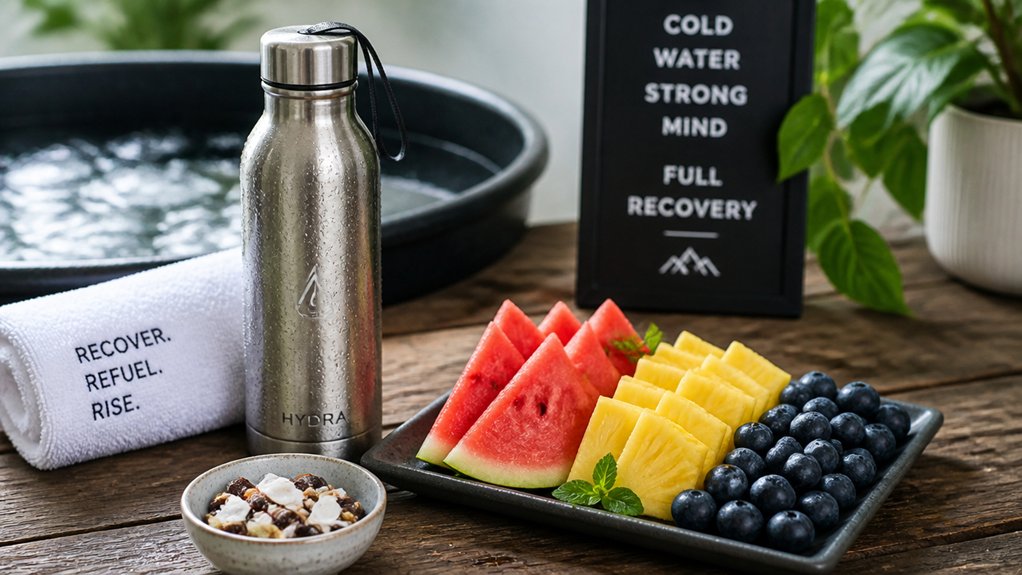
After an ice bath, sip warm beverages like herbal tea or lemon water to start rehydrating gently. Focus on drinking electrolyte-rich fluids and eating balanced meals with carbs and proteins within an hour to support muscle repair. Avoid caffeine and alcohol, and choose easily digestible, nutrient-dense foods to optimize your recovery. Incorporating electrolyte drinks with a balanced sodium-potassium-magnesium ratio can further enhance your hydration and recovery process.
Hydrate With Warm Liquids
To optimize your recovery after an ice bath session, sipping warm beverages like herbal tea or warm water with lemon can be highly effective. These warm drinks help you hydrate and manage shivering while supporting rehydration.
Drinking electrolyte-rich fluids guarantees you replace nutrients and electrolytes lost through cold immersion, aiding recovery. Opt for herbal tea or warm water with lemon, as they’re gentle on your stomach and promote hydration. Avoid caffeine and alcohol to maintain proper hydration levels.
Afterward, consider consuming a balanced snack or meal with carbs and proteins within an hour to support muscle repair. Choose easily digestible foods like fruits, lean proteins, and healthy fats to replenish energy without taxing digestion, enhancing your overall recovery process.
Nourish With Balance Meals
Rehydrating with the right foods and fluids complements your efforts to recover from an ice bath, helping restore energy levels and support muscle repair.
Aim for a balanced snack or meal that includes carbohydrates and proteins to fuel recovery and promote muscle repair. Incorporate electrolytes through drinks or foods like fruits and vegetables to aid rehydration and replenish lost nutrients.
Choose easily digestible options such as lean proteins, healthy fats, fruits, and vegetables to avoid taxing your digestive system. Avoid heavy, greasy, or processed foods, which can cause sluggishness and hinder recovery.
Proper nourishment guarantees your body rehydrates efficiently, replenishes essential nutrients, and supports overall recovery, so you’re ready for your next session or activity.
Relaxation Techniques to Calm Your Body After Cold Exposure
After ice bath sessions, focusing on deep, controlled breaths helps your body stabilize and relax your mind.
Try gentle yoga poses like child’s pose or forward fold to release muscle tension and promote calmness.
Incorporate light stretching or muscle relaxation techniques to ease your nervous system and support recovery.
Using guided meditation devices with breathing modes such as 4-7-8 or box breathing can further enhance your relaxation process.
Deep Breathing Exercises
Deep breathing exercises serve as a powerful tool to calm your body after an ice bath. By practicing controlled deep breathing, you help your body gradually shift from stress to relaxation, reducing inflammation and restoring energy levels.
To optimize recovery, consider these steps:
- Slowly begin with deep, diaphragmatic breaths—inhale through your nose for four seconds.
- Exhale fully through your mouth for six seconds to promote relaxation.
- Combine your breathwork with mindfulness to deepen mental benefits and quiet your mind.
- Track your responses over time to see how this technique supports your body’s natural healing after cold exposure.
- Incorporate adjustable resistance tools to tailor your breathing practice and enhance effectiveness during recovery.
This method helps your body recover by regulating your nervous system and enhancing circulation. Consistent practice can improve your mood and contribute to healthier post-ice bath recovery.
Gentle Posture Relaxation
Gentle posture relaxation helps your body settle and recover after an ice bath by encouraging relaxed muscles and a calm mind.
Start with deep breathing, inhaling slowly through your nose and exhaling through your mouth to support natural thermoregulation and mental grounding. Engage in gentle yoga poses like child’s pose or forward fold to promote relaxation and facilitate gradual warming.
Incorporate mindfulness techniques, such as meditation or focused breathing in a quiet space, to reduce stress and calm your nervous system. Perform light stretching movements—shoulder rolls, neck rotations, or hip circles—to ease muscle stiffness without strain.
These practices shift your nervous system into a parasympathetic state, helping you feel more relaxed and supporting efficient recovery. Consider recovery tracking apps to monitor your post-cold plunge progress and optimize your recovery process.
Monitoring Your Skin and Recovery Reaction Safely
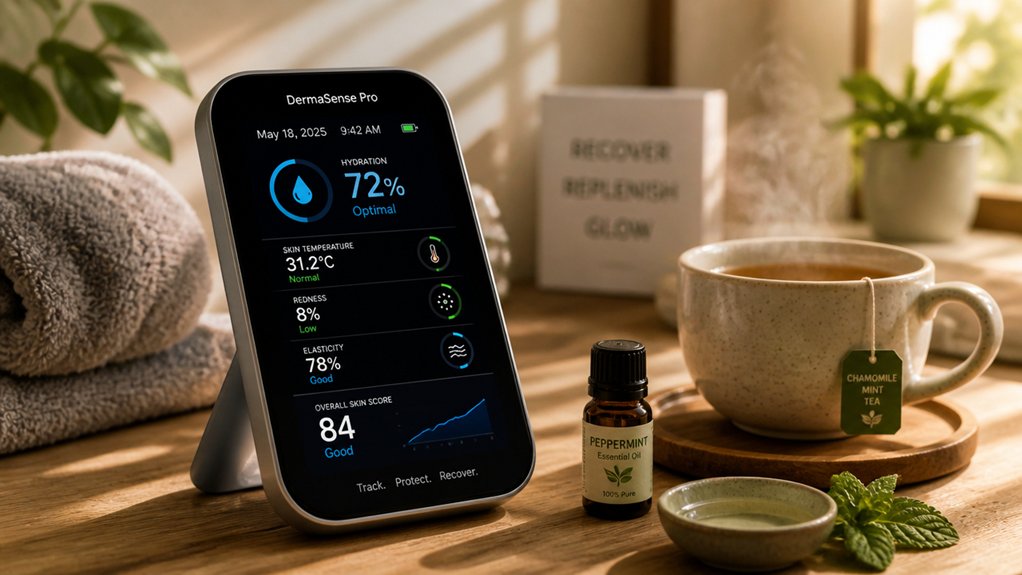
Keeping a close eye on your skin and how your body responds during recovery is essential for safe ice bath practices. To monitor effectively, consider these key points:
- Check for redness, swelling, or irritation, and document any persistent skin reactions.
- Avoid scratching itchy or irritated skin to prevent further damage.
- Manage numbness or tingling by gently rubbing fingers and toes, avoiding immediate heat exposure.
- After the cold, thoroughly apply a hypoallergenic moisturizer to soothe skin and prevent dryness.
Tracking Your Progress to Improve Cold Therapy Results
Tracking your progress is essential for refining your cold therapy routine and maximizing its benefits. By tracking progress, you can better understand how your body responds to ice baths and identify patterns.
Record details like water temperature, immersion time, and session frequency, alongside recovery markers such as muscle soreness and energy levels. Pay attention to skin reactions, shivering, and numbness to guarantee safety.
Monitoring performance and mental resilience over weeks helps highlight the cumulative effects of cold therapy on your physical and psychological well-being. Use this data to gradually adjust session durations, water temperature, and recovery practices, creating a personalized routine.
Consistent tracking helps optimize your ice baths, improve results, and secure safe, effective recovery. Incorporating sensor accuracy under cold stress insights can enhance the reliability of your monitoring devices.
Frequently Asked Questions
How Long Does It Take to Recover From an Ice Bath?
You typically recover from an ice bath within a few hours, but it varies depending on factors like session duration, temperature, and your body response. Gentle movement, hydration, and monitoring help guarantee a smooth, personalized recovery process.
What Should You Do Immediately After an Ice Bath?
Immediately after an ice bath, you should dry off thoroughly, dress in warm, breathable layers, and sip a warm beverage. Keep moving gently, rehydrate, and wait at least 5-10 minutes before hot showers or saunas.
Does Cold Plunge Help With Cortisol?
Yes, cold plunges help with cortisol by activating your stress response, then promoting relaxation. Regular exposure can lower overall cortisol levels over time, and controlled breathing during the plunge further supports stress regulation and mood improvement.
Do Ice Baths Reduce DOMS?
Yes, ice baths reduce DOMS by decreasing inflammation and muscle swelling, which helps alleviate soreness. You’ll likely experience quicker recovery and less discomfort after intense workouts, especially when you immerse in cold water for 5-10 minutes post-exercise.