After a cold plunge, it’s crucial to spend enough time resting to support safe rewarming and recovery. Generally, rest duration varies based on plunge temperature and length, ranging from a few minutes to an hour. Use passive rest or gentle movement, avoid hot showers, and breathe deeply to activate your parasympathetic system. Watch for signs like chills or fatigue, and gradually adapt your rest times as you become more experienced. Keep exploring to learn more about optimizing your recovery process.
Why Rest Intervals Matter After a Cold Plunge
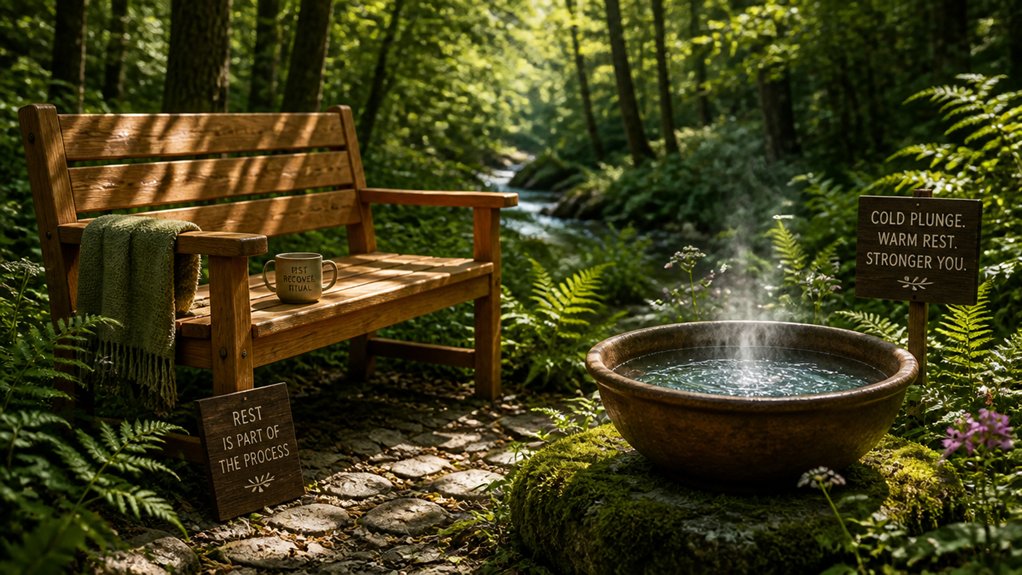
Rest intervals after a cold plunge are essential because they allow your body to rewarm gradually and stabilize vital functions. Taking adequate rest days guarantees your sympathetic nervous system recovers, preventing overstimulation and supporting long-term adaptation. During this time, your heart rate variability improves as your parasympathetic nerve activity increases, helping you relax and recover from cold stress. Short, controlled breathing during rest enhances parasympathetic activation, reducing stress and promoting heart rate stability. Proper rest guarantees your energy levels stay balanced and mental clarity improves, all while maintaining effective thermoregulation. Incorporating proper insulation and water treatment ensures your recovery process is as efficient as possible. This mindful pause maximizes the benefits and minimizes potential stress on your body.
How Long Should You Rest After a Cold Plunge?
How long you should wait after a cold plunge depends on the duration and temperature of the immersion, as well as your individual response.
For a typical cold plunge at 50-55°F lasting 2-5 minutes, a rest interval of at least 10-15 minutes is recommended for full rewarming and thermoregulation. Shorter plunges of 1-2 minutes usually need about 5-10 minutes for heart rate and breathing normalization.
Athletes who stay submerged longer (8-10 minutes at 45-50°F) should rest 30-60 minutes to optimize muscle recovery and prevent blunted adaptation. Avoid intense activity immediately post-plunge; instead, engage in gentle movement or warm-up after 10-15 minutes to promote circulation.
- Cold plunge temperature influences rest interval length
- Shorter plunges require less recovery time
- Longer immersions demand more extended rest periods
- Resting supports muscle recovery and thermoregulation
- Gentle activity post-rest enhances circulation
- Using a percussion massager can further accelerate recovery and reduce soreness after a cold plunge.
How Rest Affects Recovery and Nervous System Balance
When you take a proper rest after a cold plunge, your nervous system shifts from stress response to recovery mode, improving heart rate variability. This break helps restore nerve function and prevents overload, supporting overall balance. A well-timed rest also allows your body to accurately monitor and respond to temperature changes, which can be facilitated by the use of high-quality cold plunge thermometers.
Consistent rest periods also boost your body’s ability to adapt over time, reducing cold shock and promoting better nervous system resilience.
Rest Promotes Parasympathetic Activation
After a cold plunge, taking deliberate rest periods activates your parasympathetic nervous system, which promotes relaxation and recovery. This post-plunge rest supports parasympathetic activation by increasing vagal tone and enhancing blood flow, helping your body shift from stress response to calm.
During this time, heart rate variability (HRV) improves, indicating better nervous system balance. Resting also allows core temperature to stabilize and triggers the beneficial “temperature rebound,” which enhances sleep onset and further boosts parasympathetic activity.
Controlled breathing during post-plunge rest, reducing your breath rate to under 5 cycles per minute, deepens calmness and resilience. Harnessing infrared therapy during this period can further promote tissue recovery and reduce inflammation. Over time, consistent rest intervals improve autonomic balance, supporting recovery, reducing inflammation, and strengthening mental health.
- Activates vagal tone and enhances blood flow
- Promotes calmness and resilience
- Supports temperature stabilization
- Improves heart rate variability (HRV)
- Contributes to long-term nervous system balance
Nerve Balance Restores Function
Rest is essential for restoring nerve balance following a cold plunge, as it allows your autonomic nervous system to recover from sympathetic stimulation and re-establish equilibrium. During post-plunge rest intervals, your nervous system shifts from heightened alertness to parasympathetic dominance, enhancing vagal tone and improving heart rate variability (HRV). Resting for at least 15-30 minutes facilitates physiological recovery by reducing sympathetic overactivation and supporting nervous system homeostasis. Incorporating adaptogens such as ashwagandha and rhodiola during these rest periods can further promote stress resilience and balance adaptogen synergy. Short rests between cold sessions (2–3 minutes) help prevent overstimulation and moderate nerve excitability, while also maintaining the recovery benefits of norepinephrine. Consistent rest periods over time promote reduced shivering and faster rewarming, indicating better thermoregulatory nervous system adaptation. Proper rest is key to preventing fatigue and maximizing the cumulative recovery effects.
Adequate Break Enhances Adaptation
Maintaining adequate break periods between cold plunge sessions is essential because it allows your nervous system to recover and adapt effectively. Post-plunge rest intervals of at least 10-15 minutes promote parasympathetic activation and enhance vagal tone, helping rebalance your autonomic nervous system.
Proper rest reduces excessive sympathetic overactivation, preventing nervous system fatigue and supporting sustainable adaptation. Short breaks enable you to manage cold-induced shivering and facilitate gradual rewarming, aiding metabolic recovery. Incorporating water treatment maintenance during rest periods can also help sustain water quality and hygiene, indirectly supporting overall recovery.
Additionally, rest periods between plunges optimize cumulative benefits, avoiding overstimulation and improving heart rate variability. Skipping or shortening these rest intervals can blunt recovery effects, increase cold stress risks, and diminish your adaptive response.
By prioritizing adequate rest, you maximize recovery, resilience, and overall benefits from cold exposure.
Signs You Need More Rest Before Moving On
How can you tell if you need more rest before tackling another cold plunge? If you experience prolonged shivering or a persistent cold sensation after your cold exposure, your recovery time isn’t enough. Difficulties warming up or feeling mentally foggy an hour post-plunge also suggest your rest intervals are too short. Elevated resting heart rate or declining HRV indicate nervous system fatigue, meaning your body needs more recovery before the next session. Repeated fatigue, sleep issues, or mood disturbances across multiple plunge days further signal you should extend your recovery time. Recognizing these signs helps you avoid overexposure and maximizes your cold exposure benefits. Additionally, monitoring your sensor accuracy under cold stress can ensure your heart rate data remains reliable during these recovery periods.
Best Practices for Rewarming After Cold Exposure
After cold exposure, effective rewarming involves passive methods like dry clothes and warm ambient temperatures to safely restore your core temperature within 10-15 minutes. This approach minimizes shivering and prevents rapid vasodilation.
During rewarming, use controlled breathing techniques—slow, deep breaths—to reduce discomfort and activate your parasympathetic nervous system. A gradual return to normal temperature is essential; avoid hot showers or saunas that could cause cardiovascular stress.
Light movements, such as stretching, help boost blood flow without excessive energy use. Wearing insulating layers further supports passive rewarming.
Additionally, ensuring your insulation efficiency is maintained during rewarming can help sustain the increased blood flow and temperature stabilization. Monitor how you feel, aiming for reduced cold shock and shivering within 4-6 weeks. This process promotes safer, more effective recovery from cold exposure.
Passive or Active Rest : Which Is Better?
Choosing between passive and active rest after cold plunging depends on your goals and how your body responds. Passive rest, like sitting or lying down for 5–10 minutes, allows your body to naturally rewarm and promotes parasympathetic activation, boosting relaxation and heart rate variability. This method is ideal if you focus on mental recovery and mood improvements.
On the other hand, active rest involving light movement or stretching can enhance circulation and help clear metabolic waste without negating cold benefits. Gentle activity encourages blood flow, aiding recovery and endurance.
However, avoid strenuous exercise immediately after plunging, as it may blunt muscle adaptation. The best choice hinges on your aims—passive rest for mental sharpness and recovery, or active rest to support circulation and physical performance.
Using Light Movement to Speed Up Rewarming
Engaging in light movement such as walking or gentle stretching immediately after a cold plunge can effectively speed up rewarming by boosting blood flow and circulation. This helps your body restore its core temperature more efficiently.
Light activity promotes peripheral vasodilation, which enhances heat distribution without overtaxing your system. Keep the movement moderate—about 3-5 minutes—to avoid shivering and prevent stress on your nervous system. Vigorous exercise right after a cold plunge can cause excessive thermal stress, so stick to gentle motions.
Combining light movement with controlled breathing techniques can further optimize rewarming and activate your parasympathetic nervous system.
- Boosts blood flow and circulation
- Promotes peripheral vasodilation
- Reduces shivering duration
- Prevents excessive thermal stress
- Supports gradual temperature recovery
Breathwork Techniques for Relaxation and Faster Rewarming
Breathwork techniques can greatly enhance relaxation and speed up rewarming after a cold plunge by actively engaging your nervous system. Controlled breathwork, such as 4-6 inhales followed by 6-8 slow exhales, promotes parasympathetic activation, helping you relax and warm up faster.
Incorporating brief breath holds of 15-30 seconds during rest intervals builds resilience and reduces cold shock effects. Rapid nasal breathing immediately after exiting the immersion spikes norepinephrine, boosting alertness while aiding controlled rewarming.
As you progress, aim for fewer than five breath cycles per minute within 4-6 weeks, demonstrating improved breath control that supports calmer recovery. Guided mindful breathing during rest phases also lowers shivering responses and increases heart rate variability, further speeding physiological rewarming after your post-plunge rest.
Timing Your Rest for Mental Clarity, Athletic Recovery, and Immunity
Timing your rest intervals after a cold plunge critically influences various physiological and mental benefits.
For enhanced mental clarity, aim for a post-plunge rest of 60-90 minutes, especially after evening plunges at 58-62°F, to support sleep onset.
To maximize athletic recovery, rest for 30-60 minutes following a 45-52°F cold plunge, promoting inflammation reduction and muscle perfusion without hindering adaptation.
During competitive events, brief 2-3 minute breaks between 2-3 minute cold plunges help nervous system recovery and alertness.
For mood regulation, pair short cold plunges of 2-4 minutes with focused breathing to sustain norepinephrine and vagal tone.
Finally, for immunity, a 3-4 minute plunge at 54-58°F followed by moderate activity boosts circulation and vascular health.
How Rest Duration Impacts Mood, Norepinephrine, and Vagal Tone
The duration of your rest after a cold plunge directly influences your mood and autonomic nervous system balance. A post-plunge rest of around 5 to 15 minutes helps maintain elevated norepinephrine levels, boosting your mood and focus shortly afterward.
During this time, parasympathetic activation and increased vagal tone improve heart rate variability (HRV), promoting relaxation and recovery. Brief, controlled breathing during your rest maximizes autonomic balance, reduces shivering, and primes your nervous system for mood stabilization.
Too short a post-plunge rest may dampen norepinephrine benefits, while overly long breaks can delay vagal tone advantages. Consistent cold routines with moderate rest intervals create cumulative improvements in mood and nervous system regulation after just a few weeks, optimizing your post-plunge experience.
Managing Rest Intervals to Stay Consistent in Your Routine
Maintaining consistent rest intervals between cold plunges is essential for sustaining your routine’s benefits. Properly managing rest intervals helps prevent muscle blunting and nervous system fatigue, ensuring you stay on track.
Consistent rest intervals between cold plunges preserve benefits and prevent fatigue.
To maintain consistency, aim for at least 4 hours between cold plunges and strength training. During sessions lasting 3-5 minutes, take short 1-2 minute rest breaks to optimize cold tolerance. On busy days, follow the “never miss twice” rule by doing brief 90-second plunges to preserve your routine.
After each plunge, spend 10-15 minutes on warm-up or light activity to aid recovery. Planning rest days with fewer sessions prevents overtraining and keeps your cold plunge routines effective long-term.
- Maintain rest intervals of 4+ hours between sessions
- Use 1-2 minute breaks during plunge sets
- Do 90-second minimal dips when busy
- Include warm-up or light activity afterward
- Schedule rest days or deload weeks
Common Mistakes to Avoid During Post-Plunge Rest
Many people make the mistake of staying too long in a cold state after their plunge, which can lead to prolonged vasoconstriction and difficulty warming up. During post-plunge rest, avoid lingering in cold environments or rushing into rapid rewarming methods, like hot showers, as these can blunt cold therapy’s benefits and hinder your body’s ability to adapt.
Remember, engaging in intense physical activity immediately after cold exposure is counterproductive because cold can temporarily reduce muscle microvascular perfusion, increasing injury risk. Also, neglecting controlled breathing can heighten stress, making recovery less effective.
Keep your rest area warm—ideally between 72-75°F—to support proper thermoregulation and guarantee your body adapts smoothly. Staying mindful of these mistakes helps optimize your cold therapy benefits.
Adjusting Rest Times as You Build Tolerance
As your tolerance to cold exposure increases, it’s important to adjust your rest times accordingly to maximize benefits and prevent overstressing your body. Initially, stick to rest intervals of 2-3 minutes after your cold plunge to allow controlled rewarming and practice breath control.
As you build tolerance over weeks 5-6, shorten these intervals to 60-90 seconds, encouraging faster recovery and habituation. Maintaining 3-5 minute rest periods after longer plunges helps balance recovery with continued autonomic stimulation.
Incorporate active warm-up or gentle movement during rest periods to reduce shivering and normalize core temperature efficiently.
- Shorten rest intervals gradually as tolerance develops
- Use active movement to enhance recovery
- Keep longer rests after intense sessions
- Adjust rest times based on plunge duration
- Prioritize recovery to prevent overstress
Combining Rest With Sauna or Movement for Better Recovery
After a cold plunge, taking a brief rest allows your body to rewarm naturally before adding heat or movement, maximizing circulation benefits.
Incorporating gentle stretches or light activity during rest helps boost blood flow and clears metabolites without overstressing your nervous system. Balancing cold, heat, and movement in this way supports better recovery and overall adaptation.
Enhancing Circulatory Benefits
Combining rest with sauna exposure or gentle movement after a cold plunge greatly amplifies circulatory benefits and accelerates recovery.
During post-plunge rest, vasodilation increases, boosting blood flow and improving vascular compliance. Controlled breathing (4-6 inhales, 6-8 exhales) enhances parasympathetic activation, further maximizing circulation.
Light movement, such as stretching or walking, helps rewarm muscles and facilitates waste removal, supporting faster recovery.
Alternating cold plunges and sauna sessions in cycles maximizes circulatory effects and reduces inflammation. Consistent timing of post-plunge rest intervals promotes better thermoregulation and reinforces cardiovascular adaptations over time.
By strategically combining passive rest with heat or movement, you effectively enhance circulation and accelerate the healing process.
- Promote vasodilation for better blood flow
- Use controlled breathing techniques
- Incorporate gentle stretching or walking
- Alternating cold and heat cycles for peak benefit
- Maintain consistent rest timing
Balancing Cold and Heat
Balancing cold and heat during recovery involves strategically alternating cold plunges and sauna sessions to optimize circulation and promote healing. After a cold plunge at around 50°F, take a rest interval of 5-10 minutes to allow your core temperature to rebound.
Then, engage in a sauna session at 160-180°F to induce vasodilation, removing metabolic waste and enhancing blood flow. Incorporating gentle movement or stretching during these rest phases boosts circulation, reduces stiffness, and complements the thermal changes.
Keep these contrast therapy sessions to 30-60 minutes for maximum benefit. Effective balancing also involves mindful timing of rest intervals, supporting thermoregulation and parasympathetic activation. This approach guarantees your body recovers efficiently, with enhanced metabolic and cardiovascular benefits.
Incorporating Gentle Movement
Incorporating gentle movement during rest intervals can greatly enhance your recovery process. After a post-plunge session, light activities like stretching or slow walking promote better circulation and quicken muscle rewarming.
Alternating cold plunges with sauna sessions during rest boosts vascular compliance and recovery benefits. Controlled breathing exercises between cold exposure and movement support autonomic balance by increasing parasympathetic activation and vagal tone.
Keeping rest intervals brief (2-5 minutes) with gentle movement prevents excessive cooling and helps you return to baseline core temperature faster. Additionally, using movement or sauna during rest reduces fatigue risks and complements cold-induced norepinephrine release, sustaining energy and mental clarity.
- Light stretching or walking during rest
- Alternating cold plunge and sauna sessions
- Breathing exercises to boost balance
- Short rest intervals (2-5 minutes)
- Gentle movement to reduce fatigue
Tracking Your Rest and Rewarming Progress for Better Results
Tracking your rest and rewarming progress after each cold plunge is essential for improving your adaptation and recovery. Pay attention to your rewarming time, aiming to recover faster and reduce shivering, which indicates better cold adaptation within 4–6 weeks.
Track rewarming times to enhance cold adaptation and recovery within 4–6 weeks.
Use controlled breathing techniques during rest intervals to boost vagal tone and heart rate variability (HRV), supporting relaxation. Monitor your subjective energy ratings about an hour post-immersion, targeting scores of 7+/10 to guarantee you’re balancing rest and recovery effectively.
Log your rest intervals alongside cold plunge duration and temperature to tailor protocols based on your rewarming speed and tolerance. Avoid plunges within four hours of resistance training to prevent interference with muscle microvascular perfusion and optimize recovery.
These steps help fine-tune your rest intervals for better cold adaptation.
Frequently Asked Questions
Is 20 Minutes in an Ice Bath Too Long?
Yes, 20 minutes in an ice bath is too long. It can increase risks and impair muscle recovery, especially after strength training. Stick to 2-5 minute durations at recommended temperatures for safe, effective recovery benefits.
How Long Should You Wait to Workout After a Cold Plunge?
You should wait at least 4 to 6 hours after a cold plunge before working out to avoid impairing muscle growth and microinflammation. For endurance or light training, wait 30-60 minutes; for strength, wait 6-8 hours.
How Long Should You Rest Between Training Sessions?
You should rest 48 hours between intense training sessions, incorporating cold plunges within this period. This allows recovery, prevents overtraining, and helps your nervous system adapt, especially if you track your HRV and listen to your body’s signals.
Should I Cold Plunge on Rest Days?
Yes, you should cold plunge on rest days. Keep sessions brief—around 2-3 minutes at 50-55°F—to boost mood, circulation, and recovery without interfering with muscle growth. Regular plunges build habituation and sustained benefits over time.