Boosting circulation after a plunge helps your body recover faster, reduces soreness, and improves muscle repair. Cold water causes vasoconstriction, limiting blood flow, but warming up or using contrast therapy quickly restores circulation, delivers oxygen, and flushes out waste. This process supports heart health, reduces inflammation, and strengthens your immune system over time. If you want to release the full benefits and maintain peak performance, keep exploring how to enhance circulation effectively.
What Happens to Your Blood Vessels During Cold Water Immersion
When you immerse yourself in cold water, your blood vessels immediately respond by constricting, known as vasoconstriction. This narrowing reduces blood flow to your extremities like fingers, toes, and skin surface to help preserve your core body temperature.
Immersing in cold water causes vasoconstriction, narrowing blood vessels to preserve core temperature and protect vital organs.
Vasoconstriction is your body’s quick response to cold exposure, directing blood towards your essential organs. As you stay submerged, this process continues, limiting surface circulation.
When you exit the water, your blood vessels rapidly dilate, or undergo vasodilation, increasing blood flow. This rush of blood flushes tissues with oxygen and nutrients, enhancing circulation.
The cold water immersion also triggers adrenaline release, which raises your heart rate and pumps blood more efficiently. Together, these responses prepare your cardiovascular system for improved circulation and overall responsiveness. Measurement parameters and display features in blood oxygen monitors help verify stable readings during these rapid changes.
Why Vasoconstriction Isn’t the Whole Story for Circulation
While vasoconstriction temporarily reduces blood flow to your extremities during cold-water immersion, it isn’t the whole story for circulation. Once you exit the cold, vasodilation kicks in, rapidly increasing blood flow and pushing circulation beyond baseline. This cycle helps flush out metabolic waste and delivers oxygen and nutrients more efficiently. Blood vessel constriction alone doesn’t improve circulation; it’s the rebound effect that makes a difference. Additionally, adrenaline release from cold exposure raises your heart rate, further boosting blood flow. The use of temperature therapy features in percussion massagers can enhance this process by supporting faster recovery and improved circulation. Here’s a quick comparison:
| Phase | Effect |
|---|---|
| Vasoconstriction | Conserves core temperature, reduces blood flow to extremities |
| Vasodilation | Enhances blood flow, improves circulation, flushes toxins |
| Hormonal Response | Adrenaline increases heart rate, supports improved circulation |
| Overall | Guarantees nutrients reach tissues efficiently and metabolic waste is removed |
How Warming Up Boosts Blood Flow and Promotes Recovery
Warming up after cold water immersion triggers vasodilation, which greatly boosts blood flow to your muscles. This process delivers oxygen and nutrients essential for muscle recovery while flushing out metabolic waste.
By increasing circulation, warming raises tissue temperature, improving muscle elasticity and reducing stiffness caused by cold exposure. Proper warming also stabilizes your core temperature, preventing hypothermia and supporting healthy cardiovascular function.
Gentle movement, warm clothing, or towels help gradually raise circulation and counteract cold shock, activating your parasympathetic nervous system for recovery and relaxation. This increase in blood flow reduces inflammation and accelerates the repair of exercise-induced muscle damage.
Effective Techniques to Improve Circulation After Cold Plunging
To effectively boost circulation after a cold plunge, incorporating specific techniques can make a significant difference. Gradual warming through light exercise or stretching promotes vasodilation, increasing blood flow and aiding in efficient circulation recovery.
Immediately using warm towels or clothing helps support rewarming and encourages vasodilation, ensuring tissues receive essential nutrients and oxygen.
Contrast therapy—alternating cold plunges with sauna sessions—stimulates repeated vasoconstriction and vasodilation cycles, enhancing overall circulation and vascular health.
Deep, controlled breathing after the plunge activates your parasympathetic nervous system, reducing stress and supporting stable heart rate and circulation.
Finally, hydrating with warm fluids restores blood volume and maintains steady circulation and core temperature, optimizing the benefits of your cold plunge experience.
Using Contrast Therapy to Enhance Blood Flow and Speed Up Healing
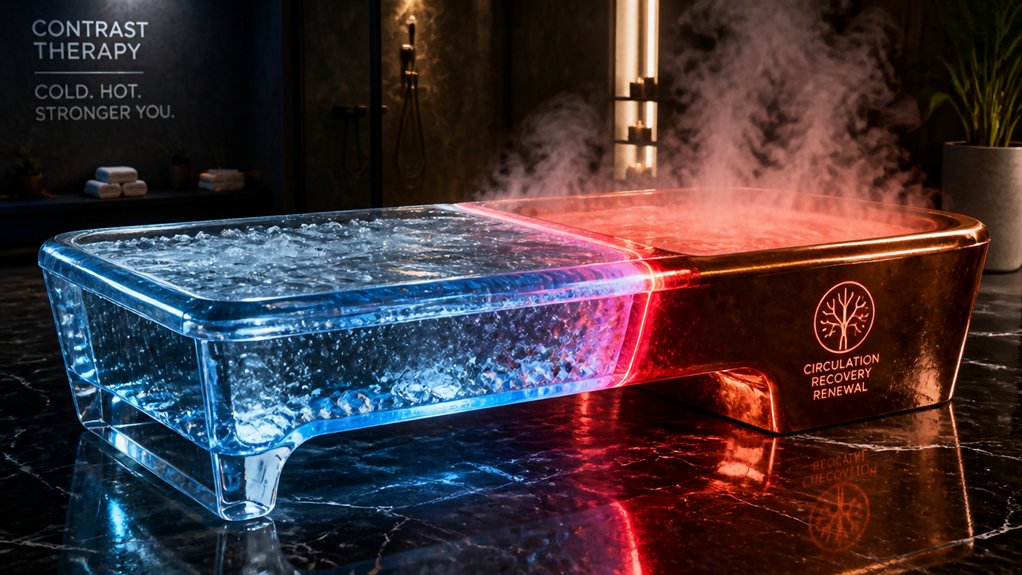
Contrast therapy swings between cold and heat to trigger vasoconstriction and vasodilation, which boosts blood flow. This rapid change helps flush out waste and delivers oxygen and nutrients faster, speeding up recovery. Using this method can reduce inflammation and promote quicker healing more effectively than using cold or heat alone, especially when employing infrared heat lamps, which provide rapid and deep tissue warming.
Enhances Vasodilation and Constriction
After cold-water immersion causes blood vessels to tighten, intentionally increasing blood flow through subsequent warming prompts the vessels to relax and expand. This process, known as vasodilation, enhances circulation and delivers oxygen and nutrients more efficiently to tissues. A variety of infrared sauna features, such as full-spectrum red light therapy and low EMF heating panels, can optimize this vasodilation process further. During a cold plunge, vasoconstriction restricts blood flow, but contrast therapy—alternating cold plunges with heat exposure like saunas—amplifies the natural cycle of constriction and dilation. This rapid switching improves circulation efficiency and helps remove waste products.
The enhanced vasodilation following a plunge accelerates recovery by supporting tissue repair and reducing inflammation. By intentionally promoting vasoconstriction and vasodilation, contrast therapy supports circulation health, making your recovery faster and more effective.
Promotes Rapid Recovery Processes
Utilizing contrast therapy enhances your recovery by repeatedly constricting and dilating blood vessels, which speeds up healing processes. This cyclic pattern boosts blood flow, promoting faster muscle repair and reducing soreness. When you alternate between cold water and warmth, vasoconstriction limits inflammation, while vasodilation delivers oxygen and nutrients essential for healing. This improved circulation helps clear metabolic waste and inflammatory agents, accelerating recovery. Studies show that increased blood flow during contrast therapy reduces delayed onset muscle soreness (DOMS) and supports immune responses at damaged tissues. By optimizing circulation, you enable quicker tissue repair, allowing you to return to activity sooner. Innovative cold plunge thermometers with timer features help ensure precise temperature control and optimal session timing for effective contrast therapy.
Long-Term Benefits of Consistent Circulation-Boosting Practices
By maintaining regular circulation-boosting practices, you enhance oxygen and nutrients delivered to your tissues, supporting faster recovery and better cellular health.
Over time, this habit can lower your risk of heart issues by keeping your blood vessels flexible and blood pressure in check.
Consistent circulation improvements also strengthen immune function and reduce chronic inflammation, promoting overall long-term health.
Additionally, incorporating high-quality, rapidly absorbed protein powders post-exposure can further optimize muscle repair and recovery processes.
Enhanced Tissue Oxygenation
Consistent circulation-boosting practices, such as regular cold plunges, enhance tissue oxygenation by dilating blood vessels and increasing blood flow. This process improves oxygen delivery to muscles and tissues, supporting essential functions like muscle repair and regeneration.
As blood flow increases, indispensable nutrients move more efficiently into cells, aiding recovery after physical activity.
- Oxygen reaches tissues faster, fueling cellular activities.
- Waste and carbon dioxide are removed more effectively, reducing soreness.
- Immune cells are transported efficiently, strengthening your body’s defenses.
These improvements foster long-term benefits like reduced inflammation and healthier microvascular function. By prioritizing circulation boosts, you optimize tissue oxygenation and support your body’s natural healing and resilience processes.
Reduced Cardiovascular Risks
Regularly boosting circulation through practices like cold plunges can greatly lower your risk of cardiovascular disease over time. Cold plunge benefits include improved blood flow, which supports better oxygen and nutrient delivery to the heart muscle, reducing ischemic risks.
Enhanced circulation helps lower blood pressure by increasing vascular responsiveness and decreasing peripheral resistance. It also promotes healthier blood vessel function, reducing arterial stiffness linked to cardiovascular disease.
Additionally, cold exposure stimulates the production of nitric oxide, a molecule that prevents plaque buildup and thrombosis. Over the long term, these circulation improvements can decrease inflammation levels, further reducing cardiovascular risk factors.
Consistent cold plunge practices cultivate healthier arteries and a stronger cardiovascular system, empowering you to lower disease risk naturally and maintain heart health.
Common Mistakes That Can Reduce Your Circulation Gains
One common mistake that can lessen your circulation benefits is rushing out of the cold plunge without taking time to warm up. Exiting prematurely limits vasodilation and reduces blood flow improvements.
To maximize gains, avoid:
- Jumping straight into more extreme cold water, causing vasoconstriction that hampers circulation.
- Skipping the warming-up phase post-immersion, preventing natural vasodilation from boosting blood flow.
- Neglecting controlled breathing, which disrupts autonomic regulation and impairs circulation enhancement.
- Using inadequate or low-quality filtration systems, which can compromise water hygiene and circulation efficiency.
Additionally, staying submerged in water below 40°F can cause excessive vasoconstriction. Failing to allow adequate recovery time between plunges diminishes the cumulative boost in blood flow and vascular responsiveness.
Proper recovery and mindful breathing optimize circulation benefits after each immersion.
How Better Circulation Supports Muscle Repair and Overall Health
Better circulation after a cold plunge directly supports muscle repair and overall health by ensuring oxygen and nutrients reach tissues more efficiently. The enhanced blood flow speeds up recovery from exercise-induced damage and helps remove metabolic waste, reducing inflammation and soreness. It also boosts your immune system by transporting immune cells to where they’re needed most, supporting healing and wellness. Vasodilation following cold-induced vasoconstriction releases hormones like adrenaline, further promoting recovery processes. Additionally, engaging in routine cold plunge protocols and proper post-exposure care can optimize circulation benefits over time, contributing to sustained muscle recovery. Sustained circulation benefits heart health and systemic resilience, strengthening long-term physical performance.
Frequently Asked Questions
Do Cold Plunges Improve Circulation?
Cold plunges definitely improve your circulation. They cause blood vessels to constrict then dilate upon exit, boosting blood flow, oxygen, and nutrients to tissues while stimulating your heart, ultimately enhancing overall cardiovascular health and vessel function.
Why Do I Feel so Good After a Cold Plunge?
You feel so good after a cold plunge because the surge of endorphins, adrenaline, and improved circulation boosts your mood, reduces soreness, and makes you feel energized, relaxed, and refreshed due to enhanced oxygen and nutrient delivery throughout your body.
Do Cold Plunges Help Neuropathy?
Cold plunges may help neuropathy by promoting vasodilation, increasing blood flow, and reducing inflammation around nerves. This can deliver essential nutrients and oxygen, potentially aiding nerve repair and alleviating pain, but consult your healthcare provider first.
How Many Minutes a Week Should I Cold Plunge?
You should aim for 6 to 8 minutes of cold plunging per week, spread over 2 to 4 sessions. Start with shorter durations, gradually increase, and listen to your body to stay safe and gain benefits.