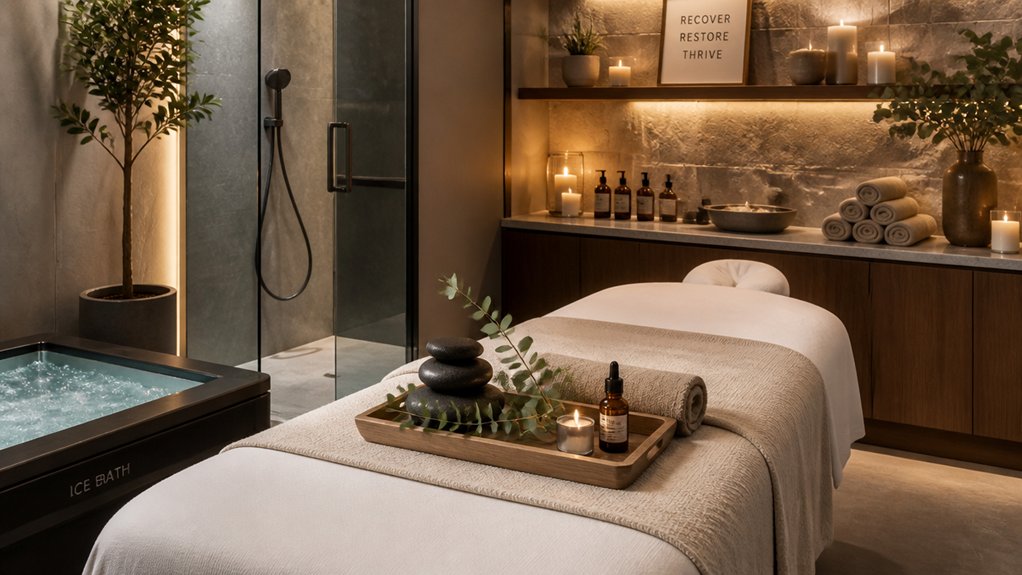
Massage after an ice bath boosts circulation, helping to flush out metabolic waste and reduce muscle soreness. It promotes vasodilation, which supports better oxygen and nutrient delivery, speeding up recovery. Massage also relaxes tight muscles, improves flexibility, and reduces inflammation, preventing injuries. Plus, it activates your parasympathetic nervous system for deep relaxation and stress relief. Keep exploring to discover how choosing the right timing and techniques can maximize these recovery benefits.
Why Combining Cold Plunge and Massage Accelerates Recovery
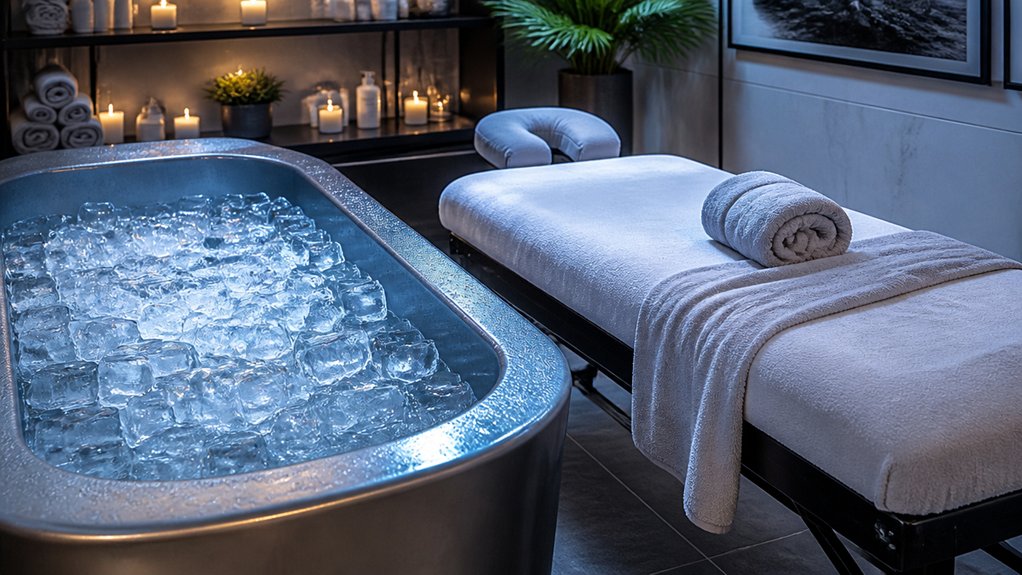
Combining cold plunges with massage speeds up recovery by working together to reduce muscle inflammation and soreness more effectively than either alone. Cold therapy reduces inflammation through vasoconstriction, tightening muscles and slowing blood flow temporarily.
When you follow this with massage, blood flow increases, enhancing circulation and nutrient delivery that promotes muscle recovery. This sequence also boosts lymphatic drainage, helping to remove inflammatory byproducts and metabolic waste from tissues.
Additionally, cold immersion lowers markers of muscle damage, while massage relaxes and lengthens muscles to prevent tightness. The synergy activates your parasympathetic nervous system, supporting mental relaxation.
How Cold Therapy Prepares Your Muscles for Deep Massage
Cold therapy causes your blood vessels to constrict, reducing inflammation and tightness, which helps your muscles become more receptive to deep massage. A non-greasy, fast-absorbing cream applied afterwards can further support recovery without irritating sensitive skin. This temporary tightening makes it easier for therapists to target and release tense or injured fibers effectively. Once your muscles warm up again, improved circulation boosts healing and enhances the overall massage benefits.
Vasoconstriction and Vasodilation
When you immerse yourself in an ice bath, your blood vessels respond by narrowing in a process called vasoconstriction, which reduces blood flow and inflammation in your muscles. This initial reaction limits swelling and prevents additional muscle inflammation.
After vasoconstriction, your body triggers vasodilation, where blood vessels widen to increase circulation and flood muscles with oxygen-rich blood. Cold therapy helps regulate this cycle of vessel constriction and dilation, a process known as “vascular gymnastics,” which boosts circulation efficiency.
This rapid change prepares your muscles for deep massage by flushing out metabolic waste and delivering nutrients essential for recovery. As a result, your muscles become more receptive to massage, enabling deeper, more effective treatment with less discomfort. The temperature regulation capabilities of cold therapy devices also enhance this process by allowing for quick transitions between hot and cold, further optimizing recovery readiness.
Reduced Muscle Tension
After an ice bath triggers vasoconstriction and then reopens blood vessels through vasodilation, your muscles become less tense and more pliable. This process reduces inflammation and muscle tension, preparing your muscles for a more effective deep tissue massage.
Here are four ways cold therapy enhances muscle readiness:
- It eases muscle tension, making muscles more flexible.
- Improved blood circulation helps remove waste and deliver nutrients.
- Reduced inflammation lowers soreness, allowing deeper massage work.
- Looser muscles enable therapists to target knots and adhesions effectively.
This priming process creates an ideal state for muscle recovery, allowing massage techniques to penetrate deeper with less discomfort. Additionally, foam rollers and other supportive tools can optimize muscle release and recovery post-ice bath. Ultimately, reduced muscle tension post-ice bath enhances the benefits of deep tissue massage and speeds up healing.
Enhanced Circulatory Response
Implementing cold therapy sets off a dynamic circulatory response that effectively primes your muscles for deep massage. Initially, cold therapy causes vasoconstriction, narrowing blood vessels to reduce inflammation and swelling. Rapid vasodilation then follows, flushing oxygen-rich blood back into the muscles, boosting blood flow. This surge enhances nutrient delivery and supports muscle recovery, making tissues more receptive to massage therapy. The alternating phases of vascular tightening and increased circulation create a “vascular gymnastics” effect, improving lymphatic drainage. Additionally, cold plunges lower muscle temperature and stiffness, increasing their responsiveness to the increased blood flow and stretch during massage. Utilizing specific magnesium forms can also support muscle relaxation and recovery post-therapy. This enhanced circulatory response guarantees your muscles are better prepared, relax more deeply, and recover more efficiently after ice bath therapy.
Reducing Soreness: How Massage Supports Cold Plunge Benefits
After an ice bath, massaging your muscles boosts blood flow and helps clear out waste, reducing soreness faster. It also relaxes tense muscles and eases stiffness, improving flexibility and comfort. This combined approach accelerates recovery and minimizes post-exercise discomfort. Incorporating muscle scraping tools can further enhance these benefits by supporting myofascial release and lymphatic drainage.
Enhances Circulation Recovery
Massage promotes blood vessel dilation following an ice bath’s cold-induced constriction, considerably boosting circulation. This process helps deliver oxygen and nutrients to your muscles, accelerating recovery.
As blood flow increases, metabolic waste and lactic acid are more effectively flushed out, reducing soreness. Combining massage with an ice bath supports vascular gymnastics, where blood vessels alternate between constriction and dilation, optimizing muscle healing.
Through this enhanced circulation, blood oxygen monitoring can help assess recovery progress more accurately:
- Your muscles receive vital nutrients faster.
- Inflammation markers diminish more quickly.
- Recovery time shortens markedly.
- Stiffness is prevented, keeping your muscles flexible.
This improved circulation not only speeds recovery but also enhances the overall efficacy of your cold plunge routine. By promoting sustained blood flow, massage guarantees your muscles recover efficiently and stay healthy.
Reduces Muscle Tension
Cold immersion causes your muscles to tighten as blood vessels constrict, leading to increased muscle tension and stiffness. Massage after an ice bath helps relax these muscles, effectively reducing muscle tension and preventing prolonged stiffness. It boosts circulation, promoting blood flow that helps flush out metabolic waste and relieves soreness. Gentle massage techniques prevent muscles from remaining contracted, easing muscle stiffness and supporting faster recovery. This process not only relieves tension but also improves flexibility by elongating muscle fibers. Additionally, using multichamber compression boots can enhance these benefits by providing targeted, adjustable pressure to optimize recovery.
When’s the Best Time to Schedule Your Massage After an Ice Bath?
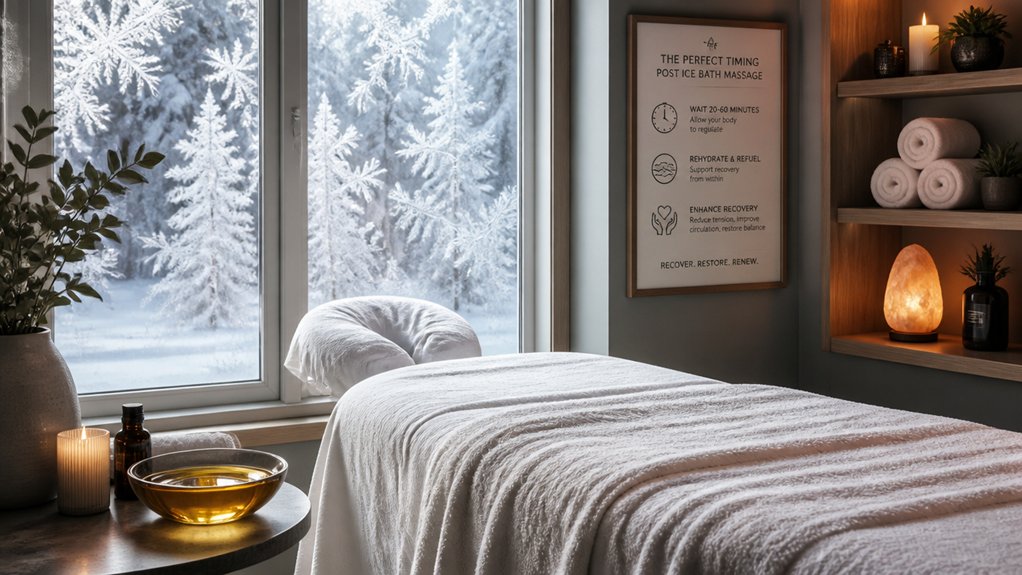
Wondering when to schedule your massage following an ice bath? The ideal timing is typically 1 to 2 hours afterward or the next day, allowing inflammation from the cold plunge to subside.
If you’re combining therapies the same day, wait 10–15 minutes between the cold plunge and massage to normalize muscle temperature and promote relaxation. Scheduling too soon can diminish the anti-inflammatory benefits and increase muscle sensitivity to deep tissue techniques. Instead, opt for gentle massage methods like Swedish or lymphatic drainage to avoid discomfort caused by cold-induced muscle contraction.
Best timing tips:
- Wait at least 1–2 hours or until the next day.
- Include a 10–15 minute break if timing within the same day.
- Use gentle massage techniques post-cold plunge.
- Prioritize ideal timing to maximize benefits and reduce soreness.
- Consider insulation efficiency when planning post-ice bath recovery to maintain optimal muscle and joint conditions.
Massage Techniques That Maximize Cold Therapy Recovery
To maximize recovery after an ice bath, selecting the right massage techniques is essential. A skilled massage therapist can use gentle Swedish massage to boost circulation by promoting blood vessel dilation after cold-induced vasoconstriction. This helps deliver nutrients and clear toxins efficiently.
Incorporating lymphatic drainage massage stimulates lymph flow, supporting immune function and flushing out metabolic waste released during cold therapy. Using light to moderate pressure avoids aggravating muscle tension caused by cold exposure, effectively easing contracted muscles without discomfort.
Additionally, combining massage with aromatherapy can activate your parasympathetic nervous system, reducing muscle tension and uplifting your mood. Timing the massage 10–15 minutes post-ice bath guarantees your muscles warm sufficiently for effective relaxation and recovery.
How Cold Plunge and Massage Boost Circulation and Detoxification
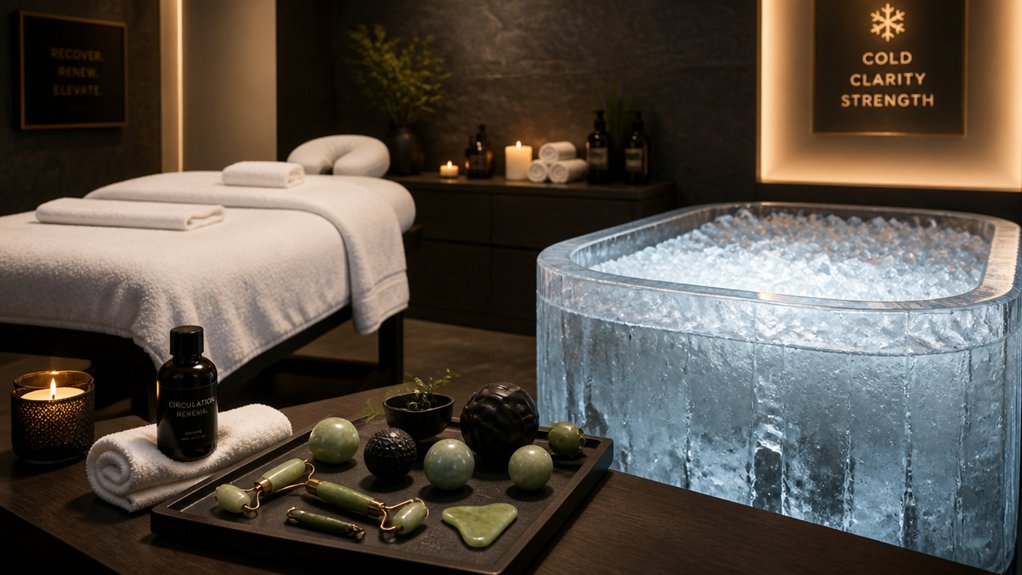
When you start with a cold plunge, your blood vessels tighten, reducing inflammation.
Following it up with a massage prompts vasodilation, boosting blood flow and oxygen delivery. This combo also activates your lymphatic system, helping clear waste and speed up muscle recovery.
Vasoconstriction and Vasodilation
After an ice bath, your blood vessels tighten through vasoconstriction, which slows blood flow to reduce inflammation and muscle swelling. This process helps minimize tissue damage and soreness.
Once you get massage, vasodilation occurs as muscles relax and blood vessels widen, boosting circulation. This increased flow delivers oxygen and nutrients, supporting muscle recovery. Here are key points:
- Vasoconstriction reduces inflammation and swelling immediately after exercise.
- Vasodilation, triggered by massage, enhances circulation and speeds up healing.
- The cycle of vasoconstriction and vasodilation creates “vascular gymnastics,” improving overall blood flow.
- Improved circulation helps flush out metabolic waste, reducing soreness and supporting quicker recovery.
This alternating action maximizes the benefits of cold plunge and massage for muscle health and faster recovery.
Lymphatic System Activation
Engaging in a cold plunge followed by massage activates your lymphatic system, greatly boosting circulation and promoting detoxification.
During your massage session, gentle strokes stimulate lymphatic drainage, helping your body efficiently remove metabolic waste and reduce fluid retention. Cold exposure initially constricts blood vessels, but the subsequent massage promotes vasodilation, enhancing lymphatic flow.
This process accelerates the clearance of toxins and supports immune defenses, while improved circulation facilitates nutrient and oxygen delivery to muscles. The combined effect of cold plunge-induced vascular gymnastics and massage-induced lymphatic stimulation creates a synergistic boost to overall detoxification.
As a result, your body not only detoxifies more effectively but also recovers faster, leaving you feeling refreshed and revitalized.
Enhanced Blood Flow
The combination of a cold plunge followed by massage creates a powerful boost in blood flow that enhances your body’s natural recovery processes. Cold immersion initially constricts blood vessels, but massage promotes vasodilation, encouraging enhanced circulation. This process helps deliver oxygen-rich blood to muscles, supporting you to recover faster.
Additionally, massage aids in reducing inflammation by flushing out metabolic waste and lactic acid through improved lymphatic drainage. The vascular gymnastics—constriction from cold, dilation from massage—accelerate tissue healing and restore muscle temperature and elasticity.
This increased blood flow not only reduces stiffness but also boosts immune function by mobilizing immune cells and facilitating detoxification through better blood and lymph flow.
- Promotes vasodilation
- Improves lymphatic drainage
- Fights inflammation
- Speeds tissue recovery
Improve Flexibility and Mobility After Cold Therapy With Massage
Massaging your muscles following an ice bath can greatly enhance flexibility and mobility by loosening tight fibers and increasing circulation. Cold therapy causes muscles to stiffen and fibers to tighten, but massage helps lengthen these fibers and promote tissue elasticity, improving your overall flexibility by up to 16%.
The increased circulation from massage counteracts cold-induced vasoconstriction, boosting blood flow and easing joint stiffness. Gentle massage techniques also support muscle relaxation, preventing excessive tightness and expanding your range of motion.
Additionally, massage raises muscle temperature and blood flow for up to 60 minutes post-treatment, which keeps tissues pliable and mobile after cold water immersion. Combining cold therapy with massage aids in maintaining muscle agility and reduces movement restrictions caused by cold stiffening.
How Post-Cold Therapy Massage Enhances Relaxation and Stress Relief
Following an ice bath, a gentle massage can greatly enhance feelings of relaxation and reduce stress by activating your parasympathetic nervous system. Cold therapy tightens muscles through vasoconstriction, but massage soothes this tension and promotes calming effects.
The combined approach boosts mood via endorphin release and lowers cortisol levels, amplifying stress relief.
Boosts mood with endorphins and reduces stress by lowering cortisol levels for enhanced relaxation.
Consider these benefits:
- Activates your parasympathetic nervous system for deep relaxation.
- Eases muscle tension and stiffness caused by cold therapy.
- Enhances mental calmness through rhythmic, gentle strokes.
- Supports sustained relaxation by balancing sympathetic and parasympathetic responses.
This synergy helps you unwind after cold plunges, reducing stress and improving overall well-being.
Which Massage Types Work Best After Cold Plunges?
Wondering which massage types are most effective after a cold plunge? The best options are Swedish massage and lymphatic drainage, as they use gentle pressure that boosts circulation and promotes detoxification without overstimulating cold-sensitive muscles. These techniques support improved circulation while easing muscle tension from cold immersion.
Avoid deep tissue massage immediately after cold plunges, since firm pressure might cause discomfort due to heightened sensitivity and vessel constriction. Timing is key—waiting 10–15 minutes allows muscles to warm slightly, making gentle massage more effective.
Aromatherapy massage can also enhance relaxation, combining muscle soothing effects with mental calmness. Overall, light to moderate pressure massage techniques are ideal after a cold plunge, helping you recover efficiently without compromising the benefits of cold therapy.
Safety Tips for Combining Cold Therapy and Massage
To safely combine cold therapy and massage, it’s important to give your muscles time to adjust after an ice bath; waiting 10 to 15 minutes allows sensitivity to subside and reduces the risk of discomfort.
During this adjustment period, practice controlled breathing and mindfulness to promote relaxation. When you start massage, use gentle techniques like Swedish or lymphatic drainage, avoiding deep tissue work on cold, contracted muscles.
Here are some safety tips:
- Wait 10–15 minutes before massaging to prevent discomfort from cold sensitivity.
- Gradually rewarm muscles with warm towels or blankets, not hot showers or saunas.
- Keep hydration high to support circulation and recovery.
- Focus on gentle massage for relaxation without overstimulating muscles.
Incorporate Cold Plunge and Massage Into Your Regular Recovery Routine
Incorporating cold plunges and massage into your regular recovery routine can greatly enhance your muscle healing and overall well-being. Cold water immersion helps reduce inflammation and tightness, while massage promotes enhanced circulation by increasing blood flow after cold-induced vasoconstriction.
Scheduling massage 1–2 hours post-ice bath allows your muscles to warm and relax, optimizing benefits like inflammation reduction and tension relief. Regularly combining cold plunges with massage improves flexibility by loosening muscles tightened by cold exposure, supporting injury prevention and athletic performance.
The synergy of these therapies also boosts mental wellbeing by reducing stress hormones and activating relaxation responses. Overall, integrating cold water immersion and massage into your routine helps speed muscle recovery, strengthen immunity, and promote better sleep.
Frequently Asked Questions
Should You Massage After an Ice Bath?
Yes, you should massage after an ice bath. It helps boost blood flow, relax muscles, and remove waste. Wait 10–15 minutes first, then use gentle techniques like Swedish or lymphatic drainage for ideal recovery.
Does Massage Help Sjögren’s Syndrome?
Massage can help manage symptoms of Sjögren’s syndrome by reducing muscle tension, improving circulation, and decreasing stress. You should use gentle techniques to avoid irritation, potentially enhancing comfort and mobility without addressing the autoimmune aspects.
Is It Okay to Have a Massage if You Have Scoliosis?
Yes, you can have a massage if you have scoliosis. Just make sure your therapist knows your condition, uses gentle techniques, and customizes pressure to avoid strain, helping relax muscles, reduce pain, and improve posture safely.
What Is the Best Massage for Lupus?
You should choose gentle, lymphatic drainage or Swedish massage for lupus, as they promote relaxation and circulation without causing inflammation. Avoid deep techniques, and guarantee your therapist customizes the session to your current symptoms for safety.