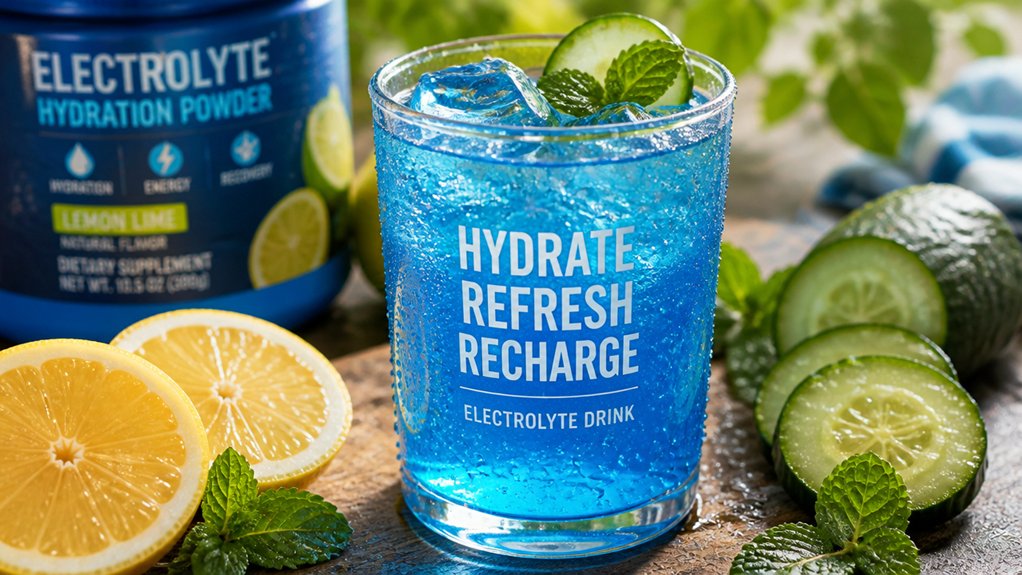
After a plunge, replenish electrolytes by drinking electrolyte-rich fluids like coconut water or low-sugar electrolyte powders within 30 minutes to rehydrate and restore minerals like sodium, potassium, magnesium, and calcium. Eat foods such as bananas, leafy greens, or bone broth for sustained recovery. Avoid plain water alone, as it can dilute minerals. For best results, monitor your symptoms and hydration levels—if you want to find out more, keep exploring how to optimize your recovery.
Why Do You Need Electrolytes After a Cold Plunge?

Why do you need electrolytes after a cold plunge? When you immerse yourself in cold water, your body uses its fluid reserves to stay warm, leading to dehydration and electrolyte loss.
Electrolytes like sodium, potassium, magnesium, and calcium are vital because they support muscle function, nerve signaling, and heart regulation. Without replenishing these minerals, you risk muscle cramps, dizziness, brain fog, and fatigue.
Consuming electrolyte-rich fluids such as coconut water, herbal teas, or specialized drinks helps restore these essential minerals. Proper rehydration guarantees better circulation and speeds up your overall recovery. Balanced electrolyte ratios are essential for effective rehydration and optimal recovery after cold-water immersion.
How Does Cold Exposure Affect Your Electrolyte Levels?
Cold exposure causes your body to lose fluids rapidly, leading to dehydration that depletes important electrolytes. The narrowing of blood vessels reduces circulation and can disrupt the balance of minerals like sodium, potassium, and magnesium. This electrolyte shift can impair muscle function, increase fatigue, and raise your risk of cramps and dizziness. Magnesium plays a key role in supporting nerve and muscle recovery post-plunge, especially when supplemented with chelated forms like glycinate or citrate for better absorption.
Electrolyte Shifts in Cold
When you’re exposed to cold temperatures, your body responds with vasoconstriction and fluid shifts that can temporarily concentrate electrolytes in your bloodstream. However, these shifts often lead to increased urine production (cold diuresis), which depletes your overall electrolyte reserves. A rapid intake of quality electrolyte supplements can help restore balance more effectively during recovery. Cold-induced stress releases adrenaline, altering how your kidneys handle electrolytes—causing sodium loss while retaining potassium to support cellular function. Rapid cooling and shivering boost metabolic demand, affecting magnesium and calcium levels, both essential for muscle contractions and energy use. Without proper replenishment, these electrolyte imbalances can cause muscle cramps, fatigue, dizziness, and nerve signaling issues. Cold exposure taxes hydration levels, making it imperative to restore electrolyte balance quickly to maintain overall physiological stability after a plunge.
Cold-Induced Dehydration Risks
Exposure to cold temperatures prompts your blood vessels to constrict, which shifts fluids out of your cells and increases water loss from your body. This process can disrupt your electrolyte balance, leading to dehydration and depletion of essential minerals like sodium, potassium, magnesium, and calcium.
As your body uses fluid reserves to maintain core temperature, overall hydration and electrolyte concentration decrease. These changes can impair muscle recovery, causing cramps, fatigue, and weakness.
Dehydration from cold exposure also compromises circulation and cognitive function, raising the risk of dizziness and foggy thinking. If you don’t replenish lost electrolytes after cold plunges, the imbalance can hinder recovery efforts and elevate health risks.
Staying properly hydrated with electrolytes helps restore balance and supports your body’s resilience to cold-induced dehydration stresses.
Impact on Mineral Balance
Cold exposure activates your body’s natural response to conserve heat, prompting blood vessels to constrict. This narrowing limits blood flow to extremities and causes fluid shifts, which can deplete key electrolytes like sodium, potassium, and magnesium.
As your body uses fluid reserves to maintain core temperature, water and minerals essential for muscle and nerve function are lost. Incorporating adaptogenic herbs can help support stress response and recovery, ensuring electrolyte balance during cold plunges adaptogen blends. Prolonged or repeated cold plunges increase electrolyte depletion due to heightened stress responses and continued fluid shifts.
This imbalance can impair muscle function, cause cramps, and lead to dizziness or fatigue. Restoring your electrolyte levels is vital to support proper muscle and nerve activity, cardiovascular stability, and overall recovery after cold exposure.
Proper replenishment helps prevent muscle weakness and promotes faster recovery.
How Can You Tell If You’re Low on Electrolytes After a Cold Dip?
Ever wonder how to tell if your body’s running low on electrolytes after a cold dip? If you experience muscle cramps or dizziness, these could be signs of electrolyte depletion. Feeling lightheaded or unsteady on your feet might also indicate mineral loss, especially if combined with excessive thirst, weakness, or shakiness.
Cold exposure can lead to dehydration and electrolyte imbalance, which may cause brain fog, irritability, or headaches afterward. Monitoring how you feel—like sluggishness or muscle weakness—can help you spot the early signs before they worsen.
Paying attention to electrolyte balance and maintaining proper hydration can support recovery and prevent further deficiencies. Keep an eye on irregular heartbeat or unusual fatigue, as these can signal significant drops in sodium, potassium, or magnesium levels. Recognizing these symptoms quickly lets you respond and replenish electrolytes effectively.
What Are the Best Ways to Hydrate Before and During Your Cold Plunge?

Proper hydration plays a key role in maintaining electrolyte balance during your cold plunge. To optimize hydration, sip electrolyte-rich fluids like coconut water or use clean electrolyte powders about 30-60 minutes beforehand.
Pick drinks low in sugar that contain sodium, potassium, magnesium, and calcium to support muscle function and prevent imbalances during cold exposure.
During longer or repeated sessions, take small sips of electrolyte drinks to maintain fluid and mineral levels without overwhelming your system.
Avoid drinking large amounts of plain water before or during your plunge, as it can dilute electrolytes and cause imbalances. Instead, incorporate naturally hydrating options like herbal teas or water infused with sea salt and lemon for gentle, sustained hydration.
Additionally, using pH testing kits to monitor and adjust water chemistry ensures a safe and balanced environment for your plunge.
Which Foods Help Replenish Electrolytes After a Cold Plunge?
After a cold plunge, eating foods high in electrolytes can help your body recover faster.
Reach for potassium-rich fruits like bananas and leafy greens, and incorporate dairy or bone broth for calcium and magnesium. These options support muscle function, nerve signaling, and proper hydration.
Fruits Rich in Potassium
Fruits rich in potassium are excellent choices for replenishing electrolytes after a cold plunge, as they help restore nutrient balance and support muscle function. Incorporating these fruits can improve electrolyte replacement and boost hydration.
Bananas are a top choice, packed with potassium that’s essential for muscle recovery. Avocados also provide high potassium along with healthy fats, giving sustained energy. Oranges and orange juice promote hydration while delivering potassium to replenish lost electrolytes effectively.
Cantaloupe melon offers significant potassium and water content, aiding in rehydration. Dried fruits like apricots and raisins are concentrated sources of potassium, perfect for quick electrolyte replacement.
To recover smoothly from a cold plunge, include these fruits in your post-exposure routine to help restore your body’s electrolyte balance efficiently. Additionally, choosing insulated tumblers to keep your drinks at optimal temperatures can help maintain hydration levels during recovery.
Leafy Green Vegetables
Loaded with essential electrolytes, leafy green vegetables like spinach, kale, and Swiss chard are powerful allies in replenishing your body’s nutrient balance after a cold plunge. These greens are rich sources of magnesium, calcium, and potassium, which help restore muscle and nerve function and maintain fluid balance. Their high water content also boosts hydration, counteracting fluid loss from cold exposure. Incorporating leafy greens into your recovery meals guarantees you get a natural, nutrient-dense source of electrolytes without added sugars or artificial ingredients. Additionally, their hydration benefits support quicker recovery by replenishing lost fluids and nutrients.
Dairy and Bone Broth
Dairy products like milk and yogurt are excellent choices for quickly replenishing electrolytes lost during a cold plunge. They supply calcium and potassium, essential for muscle function and nerve signaling.
Bone broth is also highly effective, packed with sodium, magnesium, calcium, and potassium, providing a natural electrolyte boost. Consuming these foods helps restore minerals vital for hydration, muscle contractions, and cardiovascular health.
Including dairy and bone broth in your post-plunge routine guarantees fast recovery and sustained hydration.
Consider adding:
- Milk or yogurt to boost calcium and potassium levels
- Bone broth for a rich source of natural electrolytes
- Soups or smoothies that combine both for peak recovery
These foods deliver bioavailable electrolytes without added sugars or artificial ingredients, supporting your full-body recovery.
What Are the Top Electrolyte Drinks for Recovery?
Wondering which electrolyte drinks can best support your recovery after cold exposure? Look for electrolyte-rich drinks that contain balanced essential minerals like sodium, potassium, magnesium, and calcium to replace what you lose during a plunge.
Zero-sugar formulas such as Salty Hydrate by Brianna Cope provide full-body recovery, featuring 72+ ionic trace minerals without causing energy crashes. Natural options like coconut water deliver high potassium and magnesium levels, making them excellent for replenishing electrolytes naturally.
Clean electrolyte powders or tablets like LMNT and Nuun are also effective, offering precise doses of essential minerals minus artificial ingredients or excess sugars. These drinks help restore hydration and crucial mineral balance, ensuring you bounce back faster after cold exposure.
How Can You Make Homemade Electrolyte Drinks for Post-Plunge Hydration?

You can create effective homemade electrolyte drinks using natural ingredients like coconut water, which supplies potassium and magnesium, and a pinch of sea salt for sodium.
Adding fresh lemon or lime boosts flavor and provides antioxidants, while a small amount of honey or maple water offers a gentle carbohydrate source.
Balancing these components guarantees your drink restores essential minerals and supports quick recovery after cold exposure.
Natural Ingredients for Hydration
Creating homemade electrolyte drinks is an easy way to replenish essential minerals after cold exposure, especially when you combine natural ingredients known for their hydrating properties. Coconut water is a top choice because it’s packed with potassium and magnesium, vital for rehydration. Adding a pinch of sea salt supplies sodium and chloride, balancing electrolyte levels effectively.
To boost absorption and flavor naturally, squeeze fresh lemon or lime juice into your drink—these citrus fruits provide vitamin C and help your body absorb minerals better. You can also include:
- A drizzle of raw honey or maple water for gentle, natural carbs,
- Fresh ginger or turmeric for anti-inflammatory benefits,
- Extra water or herbs for enhanced flavor and hydration.
Using these ingredients creates a balanced, hydrating beverage that supports recovery and replenishment.
Balancing Electrolyte Ratios
Once you’ve identified natural ingredients for hydration, the next step is to guarantee these components combine to restore your electrolyte balance effectively. To do this, focus on balancing fluids and electrolytes like sodium, potassium, and magnesium.
Aim for about 300-500 mg of sodium per liter of your homemade drink using sea salt. Add half a cup of coconut water for potassium and magnesium, securing proper mineral replenishment. Incorporate magnesium-rich ingredients, such as a pinch of magnesium citrate powder, to support muscle relaxation.
Combining these elements helps optimize hydration and recover lost minerals after a plunge. Maintaining the right electrolyte ratios guarantees your body rehydrates efficiently without excess sugar or unbalanced mineral levels, helping you recover faster and restore your fluid and electrolyte balance effectively.
Tips for Homemade Recipes
Making homemade electrolyte drinks is simple and customizable, allowing you to tailor hydration solutions to your preferences and needs. For effective post-plunge recovery, you can craft drinks that restore key minerals with natural ingredients.
For example, combine coconut water with a pinch of sea salt and fresh lemon juice to boost potassium, sodium, and vitamin C. Alternatively, mix water with magnesium citrate powder, a touch of raw honey, and orange juice for a low-sugar, magnesium-rich beverage.
You can also dissolve a quarter teaspoon of baking soda and Himalayan pink salt in filtered water with lime to replenish bicarbonate and trace minerals. Feel free to experiment with flavors by blending watermelon juice with sea salt and chia seeds or stirring maple water with lemon and salt for a revitalizing hydration boost.
When Should You Use Electrolyte Supplements or Tablets?
You should consider using electrolyte supplements or tablets after a plunge if you notice symptoms of dehydration like muscle cramps, dizziness, or headaches. These signs indicate fluid and mineral loss that can impair your body’s functions.
Electrolyte supplements are especially helpful if your plunge involved prolonged sweating or intense physical effort, which expels essential minerals. Cold exposure alone can also trigger dehydration by taxing your fluid reserves.
Taking electrolyte tablets promptly helps replenish sodium, potassium, magnesium, and calcium — all imperative for muscle function and nerve signaling. Use supplements when natural food or beverage sources aren’t available or for quick mineral rebalancing.
Limit intake to one or two servings daily, adjusting based on your sweat loss and hydration needs, to avoid overconsumption.
How Much Electrolyte Replenishment Do You Need?
After a cold plunge that causes sweating or dehydration symptoms, it’s important to match your electrolyte intake to your body’s needs. The amount of electrolyte replenishment varies depending on fluid and mineral loss.
Typically, consuming about 16 to 24 ounces of a low-sugar electrolyte beverage within 30 minutes helps restore fluid balance and muscle function. If you sweat heavily during the plunge, you might need a little more, but avoid exceeding two drinks per day to prevent imbalance.
You can also help with natural foods rich in electrolytes, like bananas or a pinch of sea salt. Pay attention to symptoms like dizziness or cramps; they can indicate if you need to increase intake. Proper electrolyte replenishment guarantees peak recovery without overwhelming your system.
How Can You Safely Monitor Your Hydration and Balance?
Maintaining proper hydration and electrolyte balance requires attentive monitoring through simple but effective methods. One of the easiest ways is to monitor urine color; aim for a light yellow shade, which indicates adequate hydration and electrolytes.
Watch for symptoms like dizziness, muscle cramps, or brain fog after a plunge, as these may signal imbalances needing correction. Using a hydration scale or smart bottle helps track fluid intake versus sweat loss, ensuring you’re replenishing what’s lost accurately.
Weigh yourself before and after the plunge to gauge fluid loss, guiding your rehydration. Keep a log of electrolyte drinks consumed and any physical symptoms to identify patterns.
Regular monitoring helps you stay on top of your hydration needs, promoting safe and effective electrolyte balance recovery.
What Common Mistakes Should You Avoid After a Cold Dip?
After a cold dip, avoid ignoring electrolyte replenishment, as it’s essential for recovery. Don’t rely on sugary drinks, which can cause energy crashes and won’t restore electrolytes effectively.
Also, steer clear of neglecting proper nutrition or engaging in intense activity too soon, as these mistakes can prolong recovery and increase discomfort.
Ignoring Electrolyte Replenishment
Failing to replenish electrolytes after a cold plunge can lead to dehydration symptoms like muscle cramps, fatigue, and dizziness.
When you skip electrolyte replenishment, you risk disrupting your mineral balance, which is essential for proper muscle and nerve function. Drinking only plain water may dilute your blood minerals, worsening dehydration symptoms.
To prevent this, don’t overlook key minerals like sodium, potassium, magnesium, and calcium.
Be sure to:
- Consume electrolyte-rich beverages or mineral-dense snacks promptly.
- Avoid ignoring the importance of sodium and potassium for fluid balance.
- Don’t delay replenishing magnesium and calcium to speed muscle recovery.
Neglecting electrolyte replenishment hampers your recovery and leaves you vulnerable to dehydration symptoms.
Prioritize mineral intake immediately after your plunge for peak hydration and recovery.
Excessive Sugar Consumption
Consuming high-sugar drinks after a cold plunge can hinder your hydration and recovery efforts. Excessive sugar consumption can interfere with ideal electrolyte absorption and delay rehydration, making it harder for your body to bounce back.
Many commercial sports drinks contain over 20 grams of sugar per bottle, which can cause energy crashes and worsen dehydration. These high sugar levels also lead to fluctuations in blood glucose, potentially intensifying dizziness, brain fog, and feelings of fatigue caused by electrolyte imbalance.
Instead, opt for low- or zero-sugar electrolyte solutions like Salty Hydrate or LMNT, which restore essential minerals without added sugars. Alternatively, homemade electrolyte drinks using natural ingredients like coconut water and sea salt offer better hydration benefits with minimal sugar, supporting your recovery process more effectively.
Additional Tips to Accelerate Your Recovery After a Cold Plunge
To speed up your recovery following a cold plunge, focus on replenishing lost electrolytes and supporting your body’s natural healing processes. Proper hydration is key—drink electrolyte-rich beverages like coconut water, herbal tea, or zero-sugar electrolyte drinks containing sodium, potassium, and magnesium to restore fluid and mineral balance.
Eating nutrient-dense snacks such as bananas with sea salt or almonds helps replenish potassium and sodium, supporting sustained energy and muscle repair. Gentle activities like light stretching or short walks enhance circulation, aiding electrolyte distribution throughout your body.
Additionally, practicing controlled breathing exercises like box breathing or deep belly breaths helps regulate your heart rate and promotes autonomic nervous system recovery. Together, these tips accelerate your recovery and enhance overall well-being after a cold plunge.
How Can You Incorporate Electrolyte Replenishment Into Your Routine?
Wondering how to seamlessly incorporate electrolyte replenishment into your routine? The key is to make hydration and mineral intake a habit, especially after cold plunges. Start by sipping electrolyte-rich beverages like coconut water, herbal tea, or zero-sugar solutions such as Salty Hydrate within 30 minutes to quickly boost sodium, potassium, and magnesium levels.
Pair this with hydrating snacks like bananas sprinkled with sea salt or almonds, which support recovery by balancing electrolytes. Schedule gentle rehydration breaks, sipping fluids slowly to maximize absorption and avoid stomach discomfort.
Also, consider making homemade electrolyte drinks using water, sea salt, lemon juice, and magnesium powder to customize mineral intake. Combining these practices with light activity and nutritious meals will help maintain hydration, support recovery, and optimize your overall electrolyte balance.
How Do Electrolytes Help Prevent Dizziness and Fatigue After a Cold Plunge?
Ever realize how essential electrolytes are in preventing dizziness and fatigue after a cold plunge? These minerals—like sodium, potassium, magnesium, and calcium—regulate fluid balance and nerve signals, which are crucial after fluid loss.
Cold exposure increases dehydration risk, taxing your fluid reserves to maintain core temperature. Replenishing electrolytes helps restore cellular hydration, supports nerve and muscle recovery, and reduces brain fog.
Proper electrolyte levels also help regulate your blood pressure and heart rate, preventing symptoms like lightheadedness and exhaustion.
To keep your body balanced, consider:
- Drinking electrolyte-rich beverages like coconut water
- Eating foods high in potassium and sodium
- Incorporating electrolyte supplements if needed
Maintaining this balance guarantees you recover quickly and stay steady after your cold plunge.
When Should You Consult a Healthcare Provider About Electrolyte Balance?
You should consult a healthcare provider if symptoms of electrolyte imbalance persist after your cold plunge, especially if you experience muscle cramps, dizziness, irregular heartbeat, or severe fatigue. These signs indicate that your electrolyte levels may still be off and require professional assessment.
If you have chronic conditions like kidney disease, heart problems, or hormonal disorders, seek advice before and after cold exposure to prevent complications. Immediate medical attention is vital if you notice confusion, fainting, or seizure-like symptoms, as these may signal severe electrolyte disturbances.
Additionally, if you’re on medications like diuretics or have a history of electrolyte-related arrhythmias, consult your healthcare provider to monitor your electrolyte balance. Persistent symptoms despite hydration and replenishment also warrant professional evaluation.
Frequently Asked Questions
Do I Need Extra Electrolytes on Zepbound?
Yes, you might need extra electrolytes after Zepbound if you sweat heavily or stay exposed to cold for a long time. Drinking electrolyte drinks or eating mineral-rich foods helps restore balance and supports your recovery efficiently.
What Is the Quickest Way to Restore Electrolytes?
The quickest way to restore electrolytes is by drinking electrolyte-rich fluids like water mixed with electrolyte powder or natural sources such as coconut or maple water. Snack on bananas or almonds, and sip small amounts steadily for rapid recovery.
What Are Four Signs of an Electrolyte Imbalance?
You notice muscle cramps, headaches, dizziness, and irregular heartbeat, which are signs of electrolyte imbalance. These symptoms indicate your body’s electrical signals are disrupted, and addressing them promptly helps restore your mineral balance and overall well-being.
Do Electrolytes Help With Dysautonomia?
Electrolytes help with dysautonomia by regulating your nervous system and maintaining blood pressure and heart rate stability. Proper balance can reduce symptoms like dizziness, fatigue, and cramps, supporting your overall cardiovascular and nervous system health during episodes.