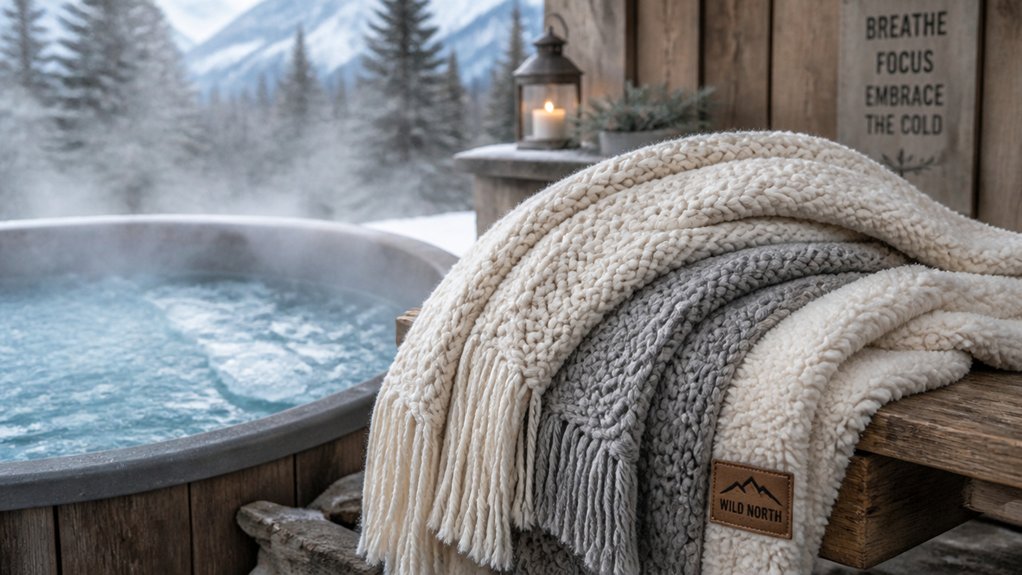
Wearing warm layers after an ice bath helps prevent significant heat loss and supports safe rewarming. By choosing moisture-wicking base layers, insulating mid-layers, and wind-resistant outerwear, you keep your skin dry and trap heat close to your body. Covering your extremities like hands, feet, and head further maintains core temperature. Proper clothing reduces the risk of hypothermia and afterdrop, ensuring a safer, more comfortable recovery. Keep going to discover more essential tips for post-ice bath care.
Why Wearing Warm Layers After an Ice Bath Is Key to Recovery
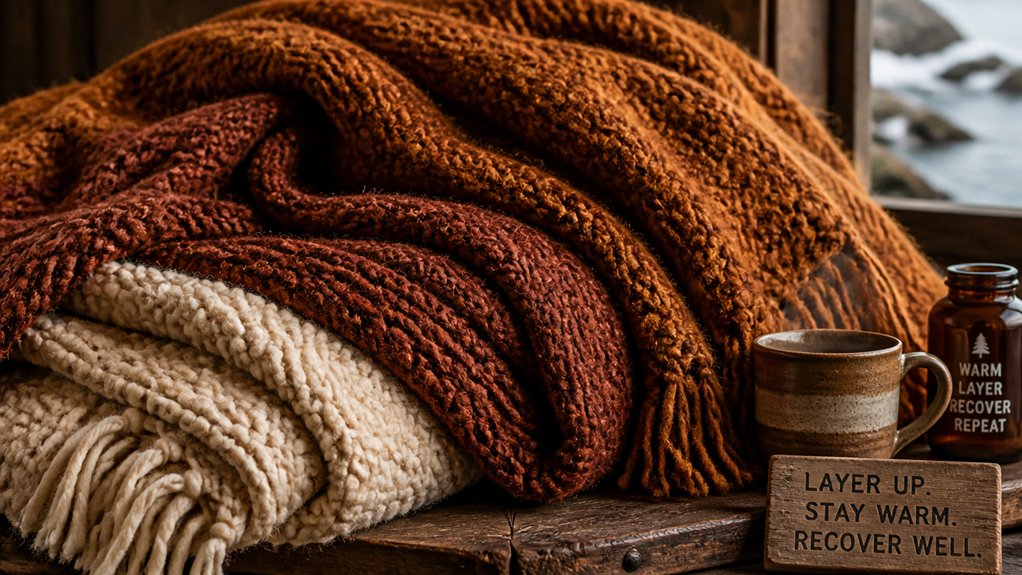
Wearing warm layers after an ice bath is essential for effective recovery because it prevents further heat loss and helps your body return to its normal temperature safely. When you wear warm, dry clothing, you stop evaporative cooling, which can cause additional body heat to escape. Layering with insulated clothing like wool or synthetic fibers creates a barrier that maintains your core temperature during recovery. Warm socks, hats, and gloves protect your extremities, which lose heat quickly after cold exposure. Proper layering supports gradual and safe rewarming, reducing the risk of afterdrop—when your core temperature drops further after leaving the water. Staying warm boosts comfort and muscle relaxation, ultimately helping your body recover more efficiently after an ice bath. Additionally, using thermal socks with active or passive insulation can significantly enhance heat retention in your extremities, accelerating your warmth restoration.
Understanding Afterdrop: The Hidden Danger of Cold Immersion
When you exit an ice bath, your core temperature can still drop as cold blood from your skin flows back inside, a process known as afterdrop. This happens because your body shuts down skin circulation to conserve heat, which can cause severe cooling once normal blood flow resumes. Wearing warm layers immediately helps slow this heat loss and reduces the risk of dangerous afterdrop effects. Proper temperature regulation facilitated by advanced heating technology can further ensure safe recovery after cold immersion.
Cold-Induced Core Drop
Afterdrop occurs when your core body temperature drops even after you exit an ice bath, primarily because cooled blood from the skin and muscles returns to your internal organs. This process causes your core to continue cooling, which can be dangerous if not managed properly.
The body’s initial vasoconstriction during immersion slows blood flow, trapping cold blood closer to the surface, but after leaving the water, this cold blood re-enters your core, worsening the temperature decline.
To prevent this, it’s vital to wear warm layers immediately after cold water immersion. Visualize the cold water soaking your skin, the blood rushing from your limbs, and your body fighting to maintain warmth. Layering helps trap heat, minimizing afterdrop and protecting your core temperature.
Using highly energy-efficient water chillers, like the 1/2 HP Cold Plunge Chillers, can also help control cold exposure duration and temperature consistency, reducing the risk of afterdrop.
Skin Circulation Shutdown
During cold immersion, your body responds by shutting down skin circulation to conserve heat, directing blood flow away from the surface and toward essential internal organs. This reduction in skin circulation causes blood to pool deeper in your muscles and tissues, leaving your extremities cooler. A properly functioning circulation system helps distribute heat more evenly, reducing the risk of excessive cooling post-immersion. When you exit the cold-water immersion, this cooler blood is pushed back toward your core, leading to an afterdrop—a continued drop in your core temperature. Without proper management, afterdrop can cause shivering, hypothermia, and feelings of unwellness.
Wearing warm layers immediately after an ice bath helps counteract this process by insulating your body and supporting gradual rewarming. Layers reduce heat loss, keep blood circulation steady, and prevent dangerous drops in core temperature caused by skin circulation shutdown.
Heat Loss Upon Exit
Exiting an ice bath introduces a sudden challenge to your body’s temperature regulation. As you step out, cold blood from your skin and muscles returns to the core, triggering afterdrop—a continued dip in core body temperature.
To combat heat loss, wearing warm layers immediately helps insulate your body and prevent evaporative and convective cooling of wet skin. Without external insulation, your circulation remains constricted, making rewarming difficult.
Imagine this: icy water clinging to your skin, shivering uncontrollably, numbness spreading, and the risk of hypothermia rising. Carefully layered clothing traps warmth, reduces heat loss, and supports gradual rewarming. This simple step minimizes the dangers associated with afterdrop, ensuring your core temperature stays safer as your body recovers. A well-designed heated towel warmer can help maintain optimal warmth during recovery.
How Wearing the Right Clothes Prevent Hypothermia and Keep You Safe
Have you ever wondered how the right clothing can make a difference in staying safe after an ice bath? Wearing warm layers is essential during cold exposure because it stops evaporative cooling by drying your skin and preventing further heat loss.
Layering with insulating materials like wool or synthetic fleece traps body heat, helping to prevent hypothermia. Covering extremities with warm socks, hats, and gloves is crucial since hands, feet, and the head lose heat quickly and greatly impact your overall body temperature.
Wind-resistant outer layers keep cold air out, supporting gradual rewarming. Proper clothing immediately after an ice bath stabilizes your core body temperature, reduces afterdrop symptoms, and keeps you safe from dangerous hypothermia. Utilizing waterproof and thermally insulated gloves can also help maintain hand warmth, especially if these gloves feature anti-slip grip for added safety during rewarming.
What Are the Best Clothing Materials to Stay Warm After an Ice Bath?
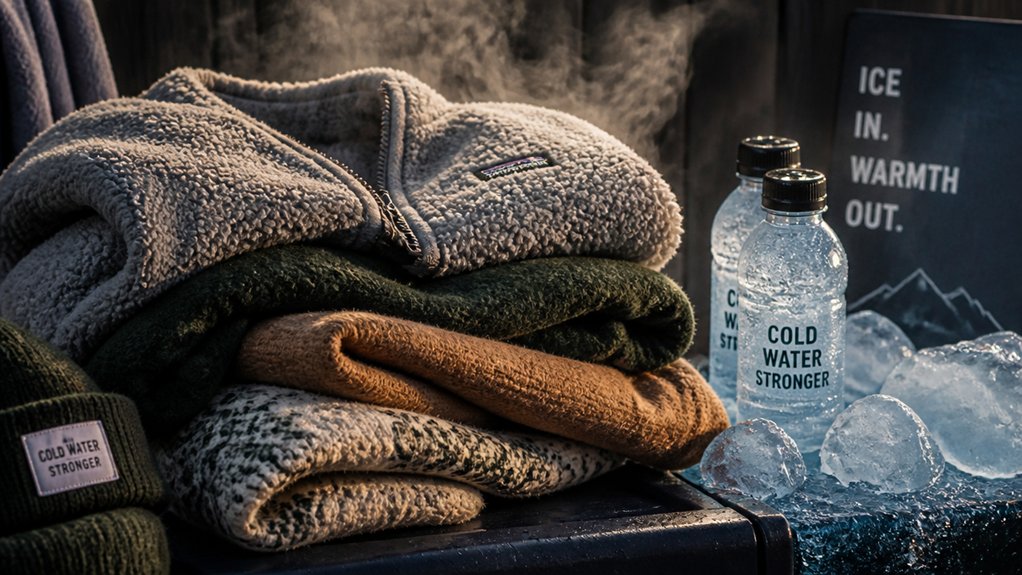
What materials are best for staying warm after an ice bath? Wool and synthetic fabrics like fleece or polyester are ideal because they insulate well and wick moisture away.
After a cold plunge in your ice bath, your skin may still be damp, so choosing the right layers matters. Base layers made of merino wool or high-quality synthetics create a warm, breathable foundation that reduces heat loss without trapping wetness. Water-resistant neoprene headbands can also help protect your head from further heat loss during recovery. Insulating layers such as fleece or down trap warm air close to your body, boosting rewarming. Outer layers should be wind-resistant to prevent additional heat loss during your wellness routine.
To visualize:
- Soft fleece lining hugging your skin, trapping warm air
- Lightweight down jacket sealing in heat
- Moisture-wicking merino wool on your chest
- Windproof shell blocking cold air
Why You Should Avoid Cotton and Loose Clothing Post-Cold Exposure
After choosing breathable, moisture-wicking layers like wool or synthetic fabrics to help your body warm up post-ice bath, wearing the wrong clothing can undo those efforts. Avoid anything made of cotton or loose garments that trap cold, wet air against your skin.
Cotton retains moisture and dries slowly, increasing heat loss and prolonging the chill after an ice bath. Loose clothing creates a barrier of cold, wet air, preventing effective insulation and making it harder to recover from the cold water temperature. Wearing such materials can contribute to evaporative cooling, lowering your body temperature further. To help your body stay warm and prevent afterdrop, choose tight-fitting, moisture-wicking fabrics that insulate without trapping cold water or dampness around your skin. Additionally, selecting fragrance-free, sensitive-skin friendly clothing can prevent skin irritation in sensitive post-plunge conditions.
What Gear Should You Use to Keep Extremities Warm and Protect Your Body?
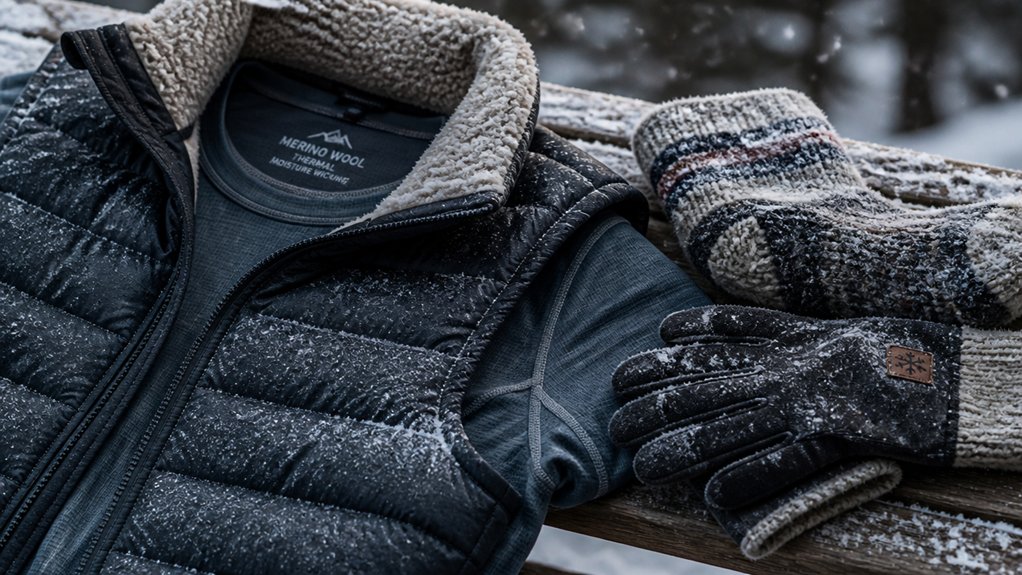
To keep your extremities warm and protect your body after an ice bath, it’s essential to gear up properly. Wear warm wool or synthetic socks, a hat, and insulated gloves to prevent heat loss and numbness.
Layer your clothing with moisture-wicking, insulating, and wind-resistant pieces for maximum warmth.
Best Clothing for Cold
Wearing the right clothing after an ice bath is essential for retaining heat and preventing further cooling. To stay warm, you should wear warm layers that help reduce heat loss, especially around your extremities.
A good layering system includes a moisture-wicking base made from wool or synthetic fibers, an insulating mid-layer like fleece or down, and a wind-resistant outer shell. This combo keeps your skin dry and traps heat effectively.
Picture yourself donning:
- Thick, moisture-wicking socks to keep your feet dry and warm
- Insulated gloves to protect your hands
- A snug hat to prevent heat from escaping through your head
- An outer layer that blocks wind and retains warmth
These clothing choices optimize comfort and warmth after cold exposure, helping you recover faster.
Protecting Extremities Effectively
Protecting your extremities is key to maintaining overall warmth and preventing cold-related injuries after an ice bath. Since extremities like hands, feet, and ears are prone to rapid heat loss, you should wear warm socks made of wool or synthetic materials to insulate your feet.
A warm hat protects your head, which is a major site of body heat loss, helping keep your core temperature stable. Gloves or mittens made from insulating fabrics prevent heat from escaping from your hands, reducing numbness and discomfort.
Layering with fleece or down mittens and socks enhances insulation by trapping body heat. Additionally, using wind-resistant outer layers over insulation blocks cold air, preventing further temperature drops and protecting your extremities during recovery.
How Covering Your Hands, Feet, and Head Helps Maintain Body Heat
Since the hands, feet, and head have a high surface area and numerous blood vessels close to the skin, covering them after an ice bath is essential for maintaining your body heat. These areas are major points of heat loss because they lose heat quickly when exposed to cold water temperature.
Covering your hands, feet, and head after an ice bath helps retain body heat and prevent excessive cooling.
Insulating extremities with warm clothing helps prevent excessive cooling, which can drop your core body temperature further. Covering your extremities encourages healthy blood flow, preventing numbness and prolonged cold exposure effects. It also supports your body’s natural thermoregulation by reducing afterdrop, the continued decrease in core temperature.
You can picture:
- Wool gloves trapping warmth around your fingers
- Thick socks preventing cold from penetrating your toes
- A hat trapping heat at your scalp
- Layers keeping moisture away from your skin
How to Rewarm Gradually With the Right Clothing After Your Cold Plunge
After your ice bath, the key to rewarming safely is to layer your clothing carefully. Wearing warm layers, such as moisture-wicking base layers, fleece insulations, and wind-resistant outerwear, traps your body’s natural heat and prevents further heat loss. Covering extremities with warm socks, hats, and gloves helps reduce rapid heat dissipation and afterdrop. Make sure to dry off completely to stop evaporative cooling. Gradual rewarming in a comfortable 68-72°F environment allows for a steady return to normal body temperature while avoiding shock. Select breathable fabrics to stay comfortable and prevent dampness from chilling you. Use this approach to support your body’s natural recovery process and warm up safely after your icy plunge.
| Layer Type | Purpose | Material Suggestions |
|---|---|---|
| Base layers | Moisture-wicking, keeps skin dry | Wool, synthetic fibers |
| Insulation layers | Retain body heat | Fleece, thermal wear |
| Outer layers | Wind and water resistance | Windbreaker, waterproof jacket |
| Extremity coverings | Protect hands, feet, head | Socks, hats, gloves |
Tips for Moving and Active Warming After Completing Your Ice Bath
After your ice bath, start with gentle movements like walking or light stretching to boost circulation and generate body heat.
Focus on strategic active warming by keeping your extremities covered and moving smoothly, avoiding sudden bursts of activity. These steps help warm your body gradually and safely, preparing you for the next phase of recovery.
Gentle Movement Techniques
Engaging in gentle movements immediately following your ice bath can greatly aid the rewarming process. A simple cold plunge helps activate blood circulation, and gentle movement helps you feel warmer gradually.
To help with this, try slow walking or marching in place—these activities support natural rewarming without overexertion. Light stretching of major muscle groups for 10-15 seconds helps relax muscles without strain. Remember, strenuous exercise right after the cold can cause fatigue, so keep movements light. Monitor how you feel—if you experience dizziness or discomfort, slow down or pause.
Gentle physical activity helps activate your metabolism and boost heat production, working with your body’s natural rewarming process after cold immersion.
- Visualize yourself taking calming, steady steps.
- Feel your muscles gently stretch and loosen.
- Imagine blood flowing smoothly through your limbs.
- Sense your core temperature slowly rising.
Strategic Active Warming
Wearing warm layers immediately after your ice bath plays a crucial role in actively restoring your core temperature. Insulating the body with clothing made from wool or fleece traps heat, preventing further core temperature drops and reducing afterdrop.
To enhance active warming, combine wearing warm layers with gentle movements like light stretching or slow walking to boost blood circulation. These activities help distribute internal heat more efficiently and speed recovery. Sipping a warm drink alongside this process further supports internal warming and comfort.
Active warming minimizes prolonged shivering, which can drain energy and cause fatigue. Having warm layers ready right after your ice bath guarantees you stay comfortable, lessen heat loss through evaporation, and promote a safer, more effective recovery period.
Common Mistakes to Avoid When Dressing After Cold Exposure
Have you ever rushed into loose, damp clothes right after an ice bath? Doing so promotes evaporative cooling, which can lower your core temperature and increase hypothermia risk. Avoid wearing wet clothing, especially cotton garments, since they trap moisture and dry slowly, intensifying cold sensations.
Loose or baggy clothes can trap moisture and air, reducing insulation and hindering safe warming. Don’t layer with too many heavy clothes at once; over-bundling can restrict circulation and slow rewarming.
Remember to wear insulating accessories like hats, gloves, and warm socks, which protect extremities prone to heat loss. Skipping these essentials hampers your ability to reduce inflammation and recover safely. Focus on proper clothing choices to stay warm and avoid common mistakes after cold exposure.
Frequently Asked Questions
What Not to Do After an Ice Bath?
After an ice bath, don’t take hot showers immediately, stay damp, or exert yourself with intense activity. Avoid alcohol, ignore hypothermia signs, or remain in cold environments. Instead, warm gradually and prioritize safe recovery.
Are You Supposed to Warm up After an Ice Bath?
Yes, you should warm up after an ice bath. You do this by drying off thoroughly and putting on warm layers, which help your body gradually return to normal temperature, prevent hypothermia, and support faster recovery and muscle relaxation.
Can Ice Baths Help With Lipedema?
Ice baths can help with lipedema by reducing inflammation, easing fluid retention, and stimulating lymphatic flow. While promising for symptom relief, you should use them cautiously and as part of your overall medical treatment plan.
Can You Cold Plunge if You Have Raynaud’s?
You shouldn’t cold plunge if you have Raynaud’s without medical approval. If approved, start with mild temperatures, limit exposure, and monitor symptoms closely. Always warm up gradually afterward to prevent vasospasm and tissue damage.