After a cold plunge, focus on warming up gradually by drying off, layering warm clothes, and sipping warm drinks to prevent shock. Stay active with gentle stretches and light movements to boost circulation. Hydrate within 30 minutes and eat balanced snacks to support muscle repair. Use contrast therapy or compression gear if possible, and prioritize good sleep. Monitor your body’s signals to adjust your routine and maximize recovery—if you want to master the best practices, keep exploring more strategies ahead.
Why Recovery Matters After a Cold Plunge
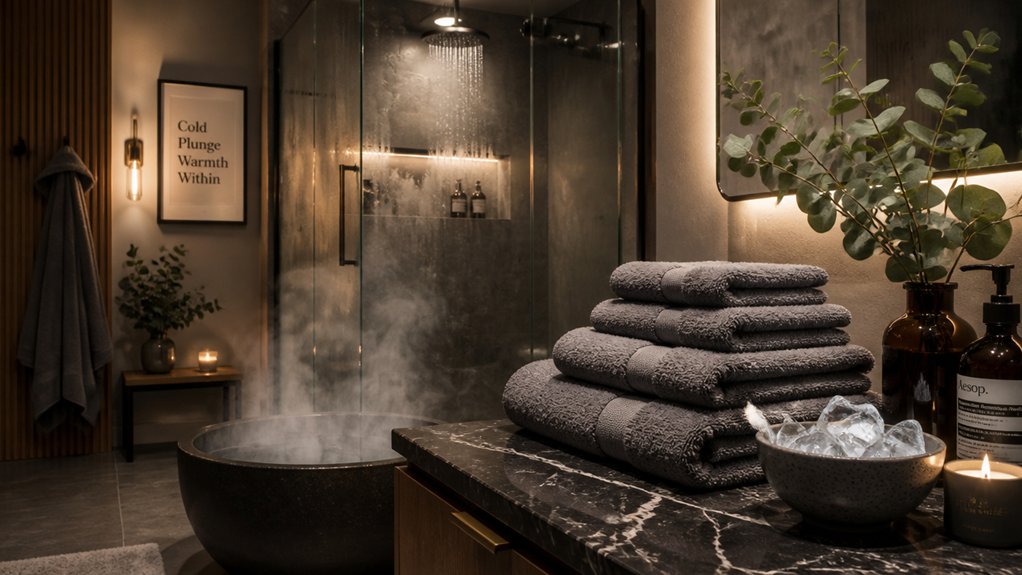
Recovery matters after a cold plunge because it helps your body adjust gradually rather than forcing it to adapt abruptly. When you take time to warm up slowly and avoid sudden hot showers, you prevent thermal shock and support your nervous system. Incorporating fast-absorbing creams into your recovery routine can further enhance muscle and joint relief, supporting a smoother transition back to normal temperature. Proper recovery encourages better blood circulation and muscle recovery, reducing soreness and fatigue. Post-plunge, staying hydrated replenishes fluids lost through cold exposure, aiding cellular repair. Wearing warm clothing helps maintain a stable body temperature and prevents dizziness or numbness. Incorporating gentle stretching and consuming warm beverages further facilitates gradual warming. A deliberate recovery process guarantees your nervous system stabilizes, minimizing adverse effects like fainting, and enables you to experience the full benefits of cold immersion therapy safely and effectively.
How to Warm Up Gradually and Safely Post-Plunge
After your cold plunge, dry off thoroughly and put on warm, breathable layers like fleece or merino wool to trap heat. Sip warm, non-caffeinated drinks such as herbal tea to support internal warming. Gentle movements or stretching can help boost circulation without overexerting yourself. Utilizing recovery oils or serums that promote muscle relaxation and skin healing can further enhance your post-plunge recovery routine.
Use Warm, Breathable Layers
When warming up from a cold plunge, it’s essential to start with the right layers. After drying off thoroughly, wear warm, breathable layers like fleece or merino wool to trap body heat without causing overheating. Use multiple light layers to aid gradual warming and allow easy adjustments as your body temperature rises. Avoid heavy, non-breathable fabrics; they traps moisture and increase heat loss. Cover extremities with dry socks and gloves to prevent rapid heat loss in your hands and feet. Maintain a warm ambient environment to support steady rewarming and reduce chills or vasoconstriction issues. Here’s a quick guide:
| Layer Type | Purpose |
|---|---|
| Moisture-wicking | Keep skin dry, prevent overheating |
| Insulating | Trap body heat |
| Outer shell | Protect from drafts |
| Cover extremities | Retain warmth in hands and feet |
| Breathable fabrics | Guarantee airflow, avoid moisture buildup |
Ensure that the clothing chosen effectively blocks cold air and drafts, as thermal insulation plays a critical role in maintaining core warmth during the recovery process.
Sip Gentle Warm Drinks
Once you’ve dried off and started to warm up with the right layers, sipping warm, non-caffeinated drinks can further support a gentle recovery. Warm beverages like herbal tea or warm water with lemon help gradually increase your core temperature without thermal shock.
Staying hydrated is essential after a cold plunge, and warm fluids promote rehydration while supporting recovery. These drinks also aid vasodilation, boosting circulation to help flush out metabolic waste and reduce muscle stiffness.
It’s best to drink within 5 to 15 minutes post-plunge, allowing your body heat to rise gradually and stabilize your core temperature. Avoid caffeinated or alcoholic beverages during this time, as they can interfere with hydration and delay your recovery process.
Perform Light, Slow Movements
Engaging in light, slow movements helps your body warm up gradually and safely after a cold plunge. Start with gentle stretches, like shoulder rolls, hip circles, or ankle rotations, to promote mobility and improve circulation without shocking your muscles.
Incorporate slow, controlled movements such as torso twists or cat-cow to encourage blood flow and reduce stiffness. These mobility exercises help gently increase muscle temperature and support muscle relaxation while maintaining a calm nervous system.
Avoid high-impact or intense workouts immediately afterward to prevent strain and allow natural recovery to occur. Adding light self-massage or foam rolling can further aid circulation and relax sore muscles. Incorporating firm foam rollers can provide targeted pressure to help enhance blood flow and muscle recovery.
Hydration Tips for Cold Water Recovery
After a cold plunge, properly rehydrating your body is essential for a smooth recovery. You should aim to hydrate consistently by drinking water or electrolyte-enhanced beverages within 30 minutes post-plunge. Incorporate hydration and nutrition by replenishing lost electrolytes with drinks like coconut water or herbal tea. Avoid alcohol and caffeine, as they can dehydrate you and hinder recovery. Warm liquids such as herbal tea or lemon water promote gentle rehydration and support cardiovascular stability. Using digestive enzymes, which are often included in recovery protein powders, can further enhance nutrient absorption and recovery efficiency.
Best Nutrition Strategies to Support Muscle Repair
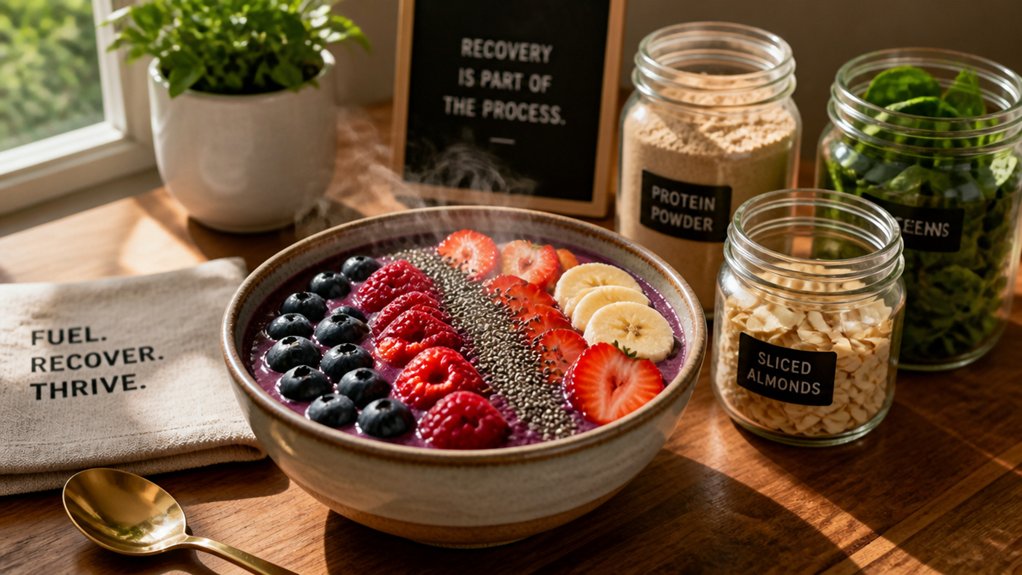
Proper nutrition plays a key role in supporting muscle repair following a cold plunge. After your post-plunge session, it’s crucial to eat something within an hour to replenish energy and promote recovery.
Focus on balanced snacks or meals that combine carbohydrates and protein sources like Greek yogurt, lean meats, or protein shakes, which aid in muscle repair without burdening digestion. Incorporate anti-inflammatory foods such as berries, leafy greens, and turmeric to reduce inflammation and accelerate healing. Including healthy fats from nuts or avocado supports cellular repair and overall recovery. Additionally, choosing omega-3 sources like fish oil can further combat inflammation and support tissue healing sustainability practices.
Avoid heavy, greasy, or processed foods post-plunge, as they can hinder digestion and delay muscle recovery. By adopting these nutrition strategies, you’ll optimize your recovery process and prepare your body for future cold immersion sessions.
Gentle Stretching and Movements to Boost Circulation
Incorporating gentle stretching and light movements immediately after a cold plunge can greatly enhance circulation and reduce muscle stiffness. Gentle stretching, like shoulder rolls and hip circles, promotes blood flow without overtaxing your body. Light mobility exercises such as cat-cow stretches and walking lunges help flush out metabolic waste, supporting blood circulation. Engaging in light cardio or yoga encourages gradual rewarming and improves overall recovery. Avoid intense workouts during this period to prevent additional stress. Consistent gentle movement aids in reducing delayed-onset muscle soreness (DOMS). Incorporate the following for best results: Temperature therapy features, such as alternating heat and cold, can optimize recovery and reduce inflammation.
Using Self-Massage and Foam Rolling to Relieve Muscle Tension
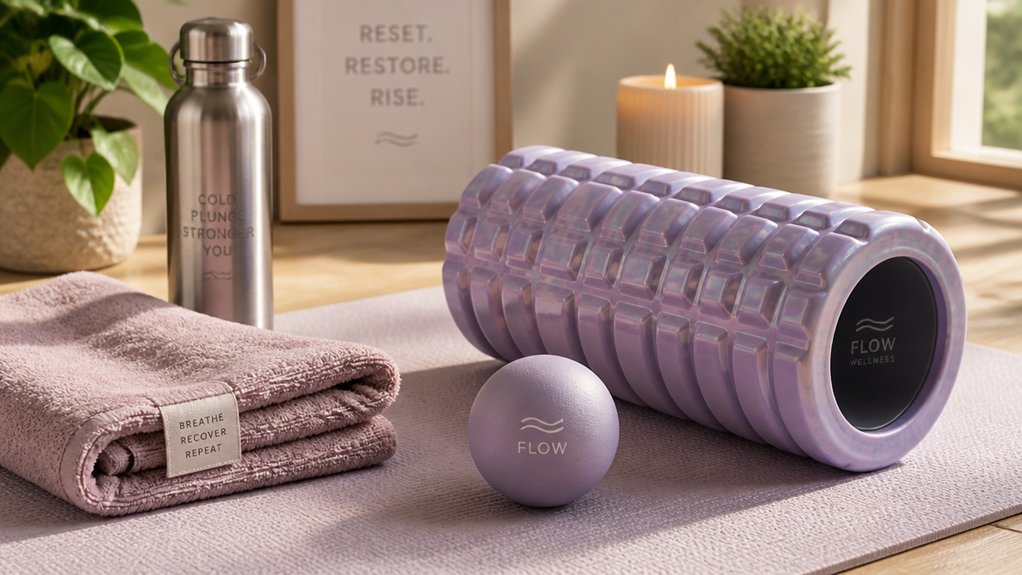
After your cold plunge, try gently massaging tight muscles with slow, circular motions to boost blood flow and reduce stiffness.
Foam rolling over sore areas helps improve flexibility and speeds up recovery without causing sharp pain.
Both techniques help clear out metabolic waste, supporting quicker muscle repair and less DOMS.
Techniques for Effective Self-Massage
Wondering how to effectively release muscle tension after a plunge? Self-massage is a great technique to help you relax and recover. Use gentle pressure and slow, circular motions with your hands on large muscle groups like quads, hamstrings, calves, and shoulders. This improves circulation and reduces soreness while preventing discomfort or bruising.
For deeper relief, incorporate foam rolling by slowly rolling back and forth over sore areas, spending about 30-60 seconds on each muscle, being careful around bony prominences or joints. Pair your self-massage with deep breaths to relax muscles further and activate your parasympathetic nervous system.
This gentle routine not only relieves stiffness but also supports better mobility and quicker recovery after your plunge.
Benefits of Foam Rolling
Building on effective self-massage techniques, foam rolling offers additional benefits for relieving muscle tension after a cold plunge. Foam rolling applies gentle pressure to tight muscles, breaking up adhesions and improving tissue flexibility.
Using slow, controlled movements on sore areas for 1-2 minutes enhances blood flow, helping to reduce muscle soreness and accelerate recovery. It also promotes lymphatic drainage, which aids in reducing muscle swelling and flushing out metabolic waste from intense exercise.
Combining foam rolling with massage helps improve mobility by loosening fascia and relieving trigger points without causing pain or bruising. Remember to focus on muscle bellies, avoiding bones and joints, to safely and effectively alleviate post-plunge tension and foster quicker muscle recovery.
Relaxation Techniques to Speed Up Recovery
Engaging in relaxation techniques can greatly accelerate your recovery following a post-plunge dip. You’ll want to focus on calming your nervous system to reduce stress and support healing.
Controlled breathing exercises, such as slow inhales through the nose and gentle exhales through the mouth, help relax your mind and body. Incorporate gentle movements like child’s pose or forward fold to improve circulation and ease muscle tension.
Practicing mindfulness meditation or guided relaxation techniques can lower cortisol levels and boost mental clarity. Additionally, combining these practices with a warm, cozy environment and soft music creates a calming atmosphere.
- Controlled breathing to calm your nervous system
- Gentle yoga poses to improve circulation
- Mindfulness meditation to reduce stress
When and How to Reintroduce Hot Showers or Saunas Safely
You should wait at least 30 to 60 minutes after cold immersion before reintroducing hot showers or saunas to allow your body to rewarm gradually.
Start with moderate temperatures and slowly increase the heat, keeping sessions brief to avoid stressing your cardiovascular system. Monitoring your body’s response is key to safely regaining comfort and benefiting from the heat.
Optimal Timing For Rewarming
So, when is the right time to reintroduce hot showers or saunas after a cold plunge? Generally, you should wait at least 30 to 60 minutes to promote gradual rewarming. This window helps prevent thermal shock and allows your blood vessels to dilate naturally, minimizing risks like dizziness or blood pressure spikes.
To rewarm safely, start by drying off thoroughly and wrapping yourself in warm towels or layering with breathable fabrics. Once your body has stabilized, you can introduce warm water or a hot shower gradually, avoiding sudden exposure. This controlled approach guarantees a safe, effective shift from cold to warmth and maximizes recovery benefits.
- Wait at least 30-60 minutes before hot exposure
- Rewarm slowly with warm towels or breathably layered clothing
- Gradually introduce warm water or a hot shower after stabilization
Gradual Heat Adjustment
After a cold plunge, it’s essential to reintroduce heat gradually to prevent undue stress on your cardiovascular system. Wait 1 to 2 hours before taking warm showers or using a sauna, allowing your body to rewarm slowly.
Start with a warm (not hot) shower for 5 to 10 minutes, then gradually increase the heat to prevent thermal shock and sudden blood pressure changes. During this phase, layer warm clothing and sip warm beverages to stabilize your body temperature.
Avoid hot showers immediately after cold exposure, as rapid temperature shifts can strain your heart. Monitor your responses closely—if you feel dizzy or uncomfortable, pause heat exposure and focus on gentle warming methods until you feel ready to proceed.
Safety Precautions To Follow
Reintroducing heat too soon after a cold plunge can lead to sudden temperature shifts that may strain your cardiovascular system and cause thermal shock. To avoid risks, wait 30 to 60 minutes before using hot showers or saunas.
During this time, wear warm, dry clothing and move gently to warm up slowly. Always monitor your body’s responses, paying attention to symptoms like dizziness, shivering, or numbness.
When you begin heat re-exposure, start gradually increasing the temperature, avoiding rapid changes. Keep in mind, rushing this process can lead to dizziness, low blood pressure, or fainting.
Ensuring a slow, controlled rewarm helps you safely reintroduce heat while reducing the risk of adverse reactions.
Common Mistakes to Avoid During Cold Plunge Recovery
What’re some common mistakes to avoid during cold plunge recovery?
First, avoid immediate hot showers after a cold plunge, as sudden temperature changes can cause thermal shock and diminish recovery benefits. Don’t neglect hydration—avoid caffeine and alcohol, which can dehydrate you and prolong recovery.
Refrain from exercising intensely right after the plunge, as your muscles need time to recover naturally. Always listen to your body; if you experience dizziness, numbness, or excessive shivering, exit the post-plunge routine immediately.
Stick to a regular cold plunge schedule, ideally 2-3 times weekly, rather than irregular sessions. Following these guidelines guarantees you get the full benefits of cold plunge recovery, keeping your body safe and optimized for health improvements.
Enhancing Recovery With Contrast Therapy and Compression Gear
Incorporating contrast therapy and compression gear into your recovery routine can substantially enhance the benefits gained from cold plunges.
During your post-plunge session, alternate 1-2 minutes of cold exposure with 2-3 minutes of heat, like a sauna, to boost circulation and metabolic waste removal. Starting and ending with cold immersion maximizes blood vessel contraction and expansion, improving muscle oxygenation and reducing inflammation.
Using compression boots after gradually rewarming from the cold plunge for 20-30 minutes helps improve blood flow and waste removal, especially in the lower extremities. The combination of contrast therapy and compression gear aids in reducing swelling, preventing delayed onset muscle soreness (DOMS), and speeding up muscle recovery.
This method is particularly effective for athletes involved in running, CrossFit, or functional training.
How Sleep Supports Your Cold Water Therapy Benefits
Ever wonder how sleep enhances the benefits of cold water therapy? Proper sleep helps you improve recovery and overall well-being, especially after evening sessions. Cold plunges lower your core body temperature and calm your nervous system, making it ideal to schedule sessions at least one hour before bedtime. This supports better sleep quality, which in turn boosts growth hormone and testosterone production essential for muscle repair. To visualize the effects:
| Sleep Duration | Benefits | Timing Tips |
|---|---|---|
| 7-9 hours | Enhances recovery, mental clarity | Avoid plunges close to bedtime |
| Sleep quality | Improves mood and reduces stress | Perform evening sessions earlier |
Consistent cold plunges paired with good sleep hygiene amplify recovery, mental clarity, and overall health.
Listening to Your Body: Monitoring Recovery Signals
After completing a cold plunge, tuning into how your body responds can greatly improve your recovery process. Listening closely to your body feedback helps you recognize whether you’re celebrating improvements or experiencing signs to adjust your routine.
Monitor signs such as lingering muscle pain, fatigue, dizziness, or numbness to decide whether to shorten or pause sessions. Positive indicators include a gradual reduction in soreness and improved mobility. If fatigue or weakness persists beyond normal recovery, it signals you need more rest or less frequent cold exposure.
Track your mood, energy, and sleep afterward to get a full picture of your nervous system’s response. Adjust your post-plunge activities—like stretching or walking—based on what your body tells you.
Tips for Building Cold Tolerance and Staying Consistent
Building cold tolerance requires a deliberate approach, gradually increasing your exposure to the cold to prevent shock and injury. Start with a cold plunge routine of 1–2 minutes and gradually increase the duration to 5–7 minutes over several weeks.
Remember, consistency is key—stick to 2–3 sessions per week to safely build cold tolerance and maximize recovery benefits. Use controlled breathing techniques, such as slow deep inhales through your nose and exhales through your mouth, to manage cold shock and improve your resilience.
Always monitor your body’s signals and avoid pushing beyond your comfort zone to prevent adverse effects. Keeping a recovery journal helps track your progress, refine your routine, and stay motivated on your journey to better cold exposure resilience.
Frequently Asked Questions
What Should You Do Immediately After a Cold Plunge?
Immediately after a cold plunge, dry off thoroughly with a warm towel, especially your hands and feet, then put on dry, cozy clothes. Stay in a warm environment, do light activity, sip warm drinks, and rehydrate to support recovery.
What Are the 4 R’s of Recovery?
The 4 R’s of recovery are Rest, Rehydrate, Refuel, and Restore. You rest your body, drink fluids, eat balanced meals, and engage in gentle activities to promote efficient healing, energy, and overall well-being after a cold plunge.
What Happens After 30 Days of Ice Baths?
After 30 days of ice baths, you experience reduced soreness, improved mood, stronger immunity, and faster recovery. You develop better cold tolerance, allowing longer dips, and notice enhanced performance, mental clarity, and overall well-being from consistent cold plunge routines.
Can Cold Plunge Lower Cortisol?
Yes, cold plunges lower cortisol by stimulating your nervous system to release mood-enhancing neurotransmitters like norepinephrine, which counteracts stress hormones. Regular sessions help your body manage stress better, reducing overall cortisol and promoting relaxation.