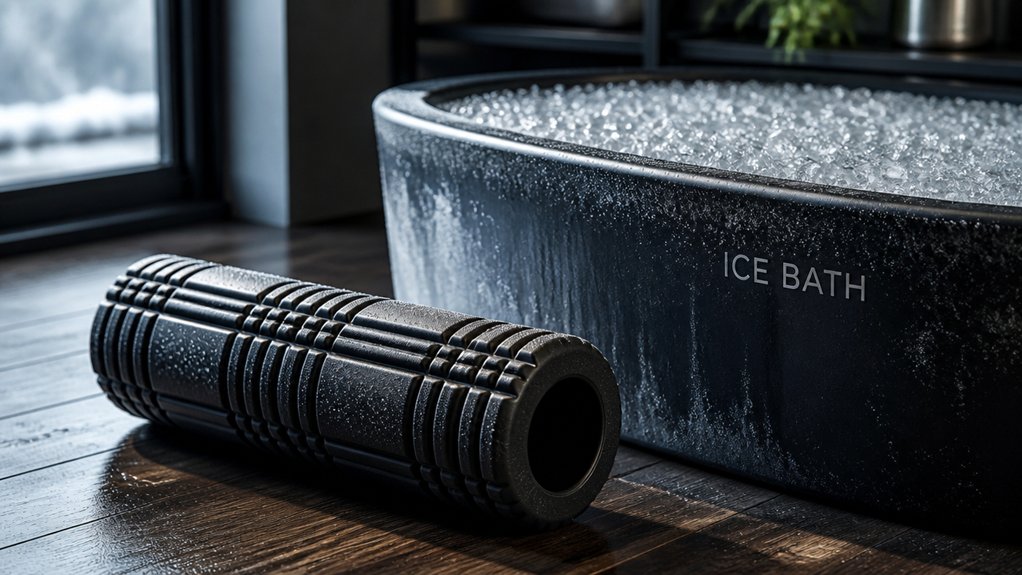
After an ice bath, wait 10-15 minutes to let your muscles warm up naturally before foam rolling. Focus on large muscle groups like quads, hamstrings, and calves with slow, controlled motions for 1-2 minutes each, pausing on tight spots. Use gentle pressure and avoid rolling on cold muscles or joints. Combining foam rolling with massage tools and tracking your progress helps optimize recovery. Keep exploring to uncover all the key steps for effective muscle relief.
Why Foam Rolling Boosts Recovery After an Ice Bath
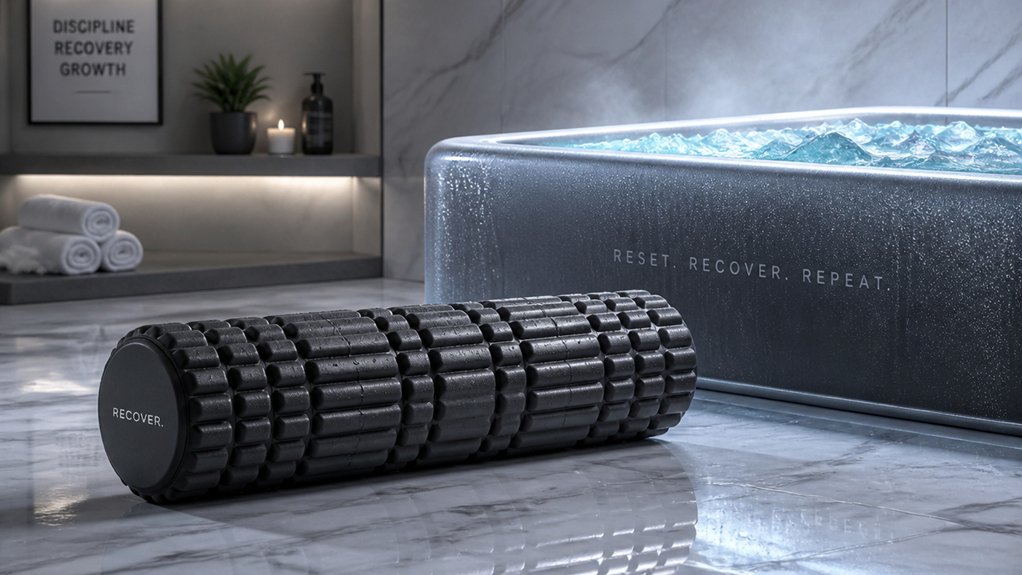
Foam rolling after an ice bath can greatly enhance recovery by improving blood flow and oxygen delivery to your muscles. Once vasodilation occurs post-ice bath, foam rolling amplifies this effect by targeting fascia tightness and breaking down adhesions. This combination helps flush out metabolic waste and reduces muscle stiffness.
Foam rolling also promotes muscle relaxation, which ice baths alone may not fully achieve. By gently mobilizing your muscles, it prepares them for subsequent recovery activities and prevents damage. The process helps dissolve muscle knots and smoothens fascia, improving flexibility and range of motion.
When Is the Best Time to Foam Roll Post-Cold Therapy
The best time to foam roll after an ice bath is once your body has begun to warm up with light movement, typically after 10-15 minutes. Using a foam roller with the appropriate firm support can help alleviate muscle tightness and improve circulation during recovery. Avoid foam rolling immediately during or right after cold therapy, as cold muscles are too stiff and may increase injury risk. By waiting until you’re gently rewarming, you maximize the effectiveness of foam rolling and support faster recovery.
Optimal Foam Rolling Timing
When is the ideal moment to foam roll after an ice bath? Wait until your muscles have warmed naturally, usually 15 to 30 minutes post-ice bath. This timing guarantees blood circulation improves, reducing the risk of stiffness or injury when using foam rollers.
Before rolling, do gentle mobility exercises like light stretching or walking to prepare your muscles for recovery. Once your muscles feel less numb and circulation increases, foam rolling will be more effective and comfortable. Incorporating muscle scraping tools into your recovery routine can further enhance lymphatic drainage and tissue flexibility.
Remember, delaying foam rolling until after rehydration and nutrient intake helps muscles relax and absorb nutrients better. Avoid rolling immediately during skin numbness or in the ice bath to prevent discomfort and damage.
Timing it right maximizes recovery benefits and keeps your muscles safe.
Effectiveness of Post-Cold Therapy
After completing an ice bath, the timing of foam rolling greatly impacts its effectiveness. Foam rolling cold muscles immediately after an ice bath can reduce muscle temperature and limit joint mobility improvements.
To maximize benefits, wait approximately 20-30 minutes to allow blood flow to restore through vasodilation, promoting muscle relaxation and flexibility. This waiting period enhances recovery techniques by enabling your muscles to rewarm and respond better to foam rolling.
Additionally, using reliable temperature monitoring can help you determine the optimal rewarming window, ensuring your muscles are no longer too cold for effective foam rolling. Combining foam rolling with gentle mobility exercises during rewarming creates ideal conditions for improving range of motion and removing metabolic waste. Scheduling foam rolling within an hour post-ice bath guarantees circulation is promoted without interfering with cold-induced inflammation reduction.
Proper timing helps your body better absorb the recovery benefits of foam, foam, and blood flow.
How to Foam Roll Safely After an Ice Bath
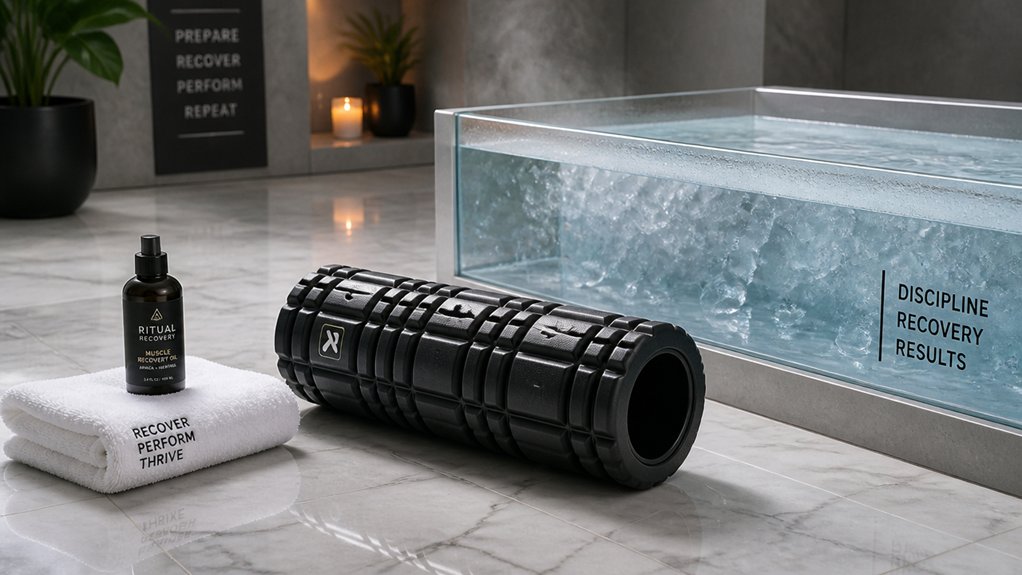
Once you’ve exited the ice bath and dried off thoroughly, it’s important to let your body warm up naturally before foam rolling. This prevents muscle stiffness and injury from rolling on cold, numb muscles.
When you start foam rolling, apply gentle pressure and focus on large muscle groups for 1-2 minutes each. Avoid rolling directly on cold muscles until sensation returns, reducing risk of bruising or damage. Pause on tender spots for 30-60 seconds to enhance myofascial release and boost blood flow.
Furthermore, incorporating gradual temperature changes with temperature therapy features can help prepare your muscles for effective foam rolling.
Follow these recovery steps:
- Start with gentle, controlled movements on warm muscles.
- Target key muscle groups to promote circulation.
- Avoid cold muscles until sensations return.
- Incorporate slow rolls and pause on tender spots.
These steps guarantee safe foam rolling after an ice bath, helping your muscles recover at their best.
Effective Foam Rolling Techniques for Max Recovery
Focus on applying steady, moderate pressure to large muscle groups for 1-2 minutes each, ensuring you target areas that feel tight or sore. Keep your movements slow and controlled to effectively release fascia without risking injury. Remember to avoid joints and bones, and incorporate gentle mobility exercises afterward to boost recovery. Utilizing non-greasy, fast-absorbing recovery creams post-foam rolling can further support muscle relaxation and reduce soreness.
Proper Technique and Pressure
To maximize recovery, it’s essential to use gentle to moderate pressure when foam rolling, especially after an ice bath. Apply pressure gradually to prevent irritating cold-stiffened muscles and focus on large muscle groups for 1-2 minutes. When foam rolling, follow these key steps:
- Roll slowly over tight or sore areas for 30–60 seconds, pausing on tender spots to release fascia adhesions.
- Maintain steady pressure to enhance blood flow and avoid overstimulation.
- Steer clear of rolling directly on joints or bones to prevent discomfort.
- Begin foam rolling once your body temperature stabilizes to promote muscle relaxation and flexibility.
- Incorporate resistance bands in your warm-up to prepare muscles effectively and enhance overall recovery.
This technique helps reduce muscle tension, relax muscles and soft tissues, and supports the recovery process effectively.
Targeting Key Muscle Groups
Targeting key muscle groups like the quadriceps, hamstrings, calves, and glutes after an ice bath helps optimize recovery by promoting blood flow and breaking up muscle adhesions.
Use foam rolling for 1-2 minutes on each area with steady, controlled pressure to engage muscle fibers effectively. Focus on spots with lingering tightness by slowly rolling back and forth for 30–60 seconds to loosen fascia and improve mobility. Avoid rolling directly over joints or bones to prevent discomfort.
Incorporating foam rolling after your body’s in cold water enhances circulation, supporting vasodilation and aiding metabolic waste removal. This step, combined with a solid recovery plan, helps reduce muscle stiffness, speeds up healing, and prepares your muscles for the next workout session. Optimizing your recovery can also be supported by utilizing rapid-absorbing protein powders, which deliver amino acids quickly to jumpstart muscle repair.
Common Mistakes to Avoid When Foam Rolling After Cold Exposure
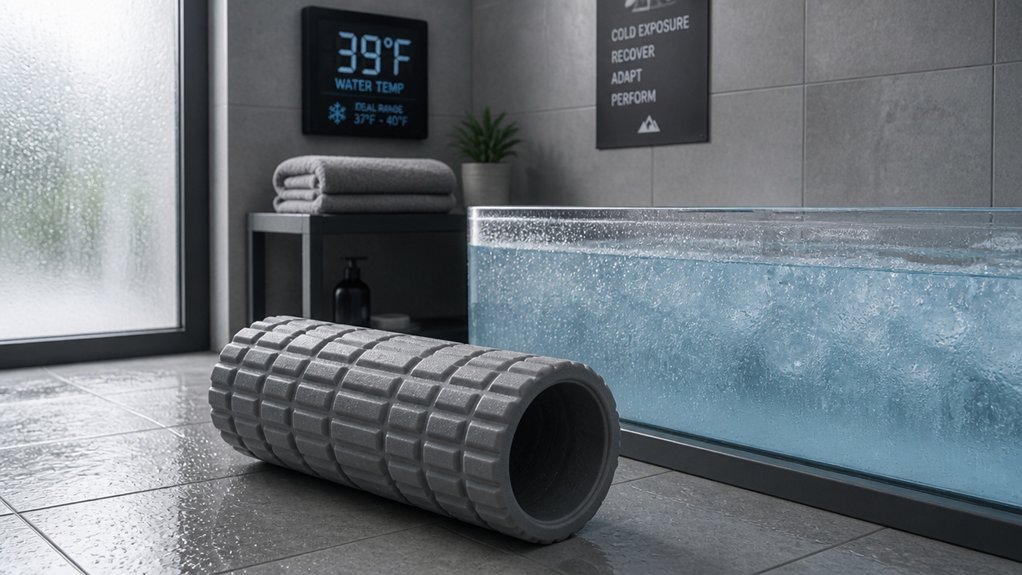
After taking an ice bath, it’s crucial to avoid foam rolling immediately while your muscles are still cold, as this can lead to muscle damage from increased stiffness. Foam rolling cold muscles can cause unnecessary pain and hinder recovery.
Avoid foam rolling immediately after an ice bath to prevent muscle damage from stiffness and pain.
To prevent this, avoid these common mistakes:
- Applying excessive pressure, since cold muscles are less pliable and more sensitive to pain.
- Rolling over joints or bones, which can cause injury.
- Rushing into aggressive or rapid manipulation of muscles, risking strain.
- Skipping gentle warming and mobility exercises, leaving muscles unprepared for foam rolling.
- Be mindful of timer accuracy and cooling durations to ensure muscles are adequately warmed before foam rolling.
Using Massage Tools Alongside Foam Rolling for Better Results
Incorporating massage tools alongside foam rolling can greatly boost your recovery efforts, especially after an ice bath. Using massage balls or percussion guns targets deeper muscle layers and specific trigger points more effectively than foam rolling alone. This combination enhances the removal of metabolic waste, which helps reduce delayed onset muscle soreness and accelerates recovery.
Alternating foam rolling with massage gun use on large muscle groups promotes increased blood flow and nutrient delivery, supporting tissue repair. Massage tools also help tackle tight or tender spots that foam rollers might miss, leading to thorough muscle relaxation. When integrated within 30–60 minutes after an ice bath, this approach maximizes circulation, speeds up recovery, and prepares your muscles for the next workout.
Track Your Recovery Progress and Adjust Your Routine
Tracking your recovery progress is essential to optimize your post-ice bath routine. By monitoring techniques, you’ll better understand how reducing muscle soreness levels and alleviating muscle tightness benefits your body.
Keep a log of the duration, temperature, and sensations experienced during and after each ice bath, then see how these variables influence your recovery. Note changes in muscle soreness, mobility, and how foam rolling post-ice bath helps relax tight muscles.
Watch for safety signs like dizziness or numbness so you can adjust session length or cooling intensity accordingly.
To improve your routine:
- Record recovery details after each session
- Track soreness levels and mobility improvements
- Adjust rest days and techniques based on progress
- Review logs regularly to fine-tune your recovery plan
Frequently Asked Questions
Should You Foam Roll After an Ice Bath?
Yes, you should foam roll after an ice bath, but wait until your muscles warm up and dry off. Use gentle pressure for 1-2 minutes to improve blood flow, reduce tightness, and support your recovery process.
What to Do After an Ice Bath for Recovery?
After an ice bath, you should dry off thoroughly, do gentle mobility exercises, foam roll major muscles with steady pressure, warm up gradually, stay hydrated, and have a light snack to support muscle recovery and circulation.
Do Foam Rollers Help With Scoliosis?
Yes, foam rollers can help with scoliosis by relieving muscle tightness and improving fascia mobility around your spine. Use them carefully on soft tissues, avoid bony areas, and include foam rolling as part of your overall therapy.
Should I Foam Roll or Ice First?
You should ice first to reduce inflammation, then wait about 10-15 minutes for your body to shift. After that, foam roll to improve flexibility and release fascia, enhancing recovery while minimizing the risk of muscle damage.