After a cold plunge, practice slow diaphragmatic breaths with inhale for about 4 seconds and exhale for 6 to 8 seconds to activate your parasympathetic nervous system and promote recovery. Focus on gentle pursed-lip exhalations, extend your exhale, and stay relaxed. Combine this with light movement or shivering to boost internal heat. Avoid rushing or shallow breathing. Keep practicing these techniques, and you’ll discover how to optimize your cold recovery process in greater detail.
Why Post-Plunge Breathing Accelerates Cold Recovery
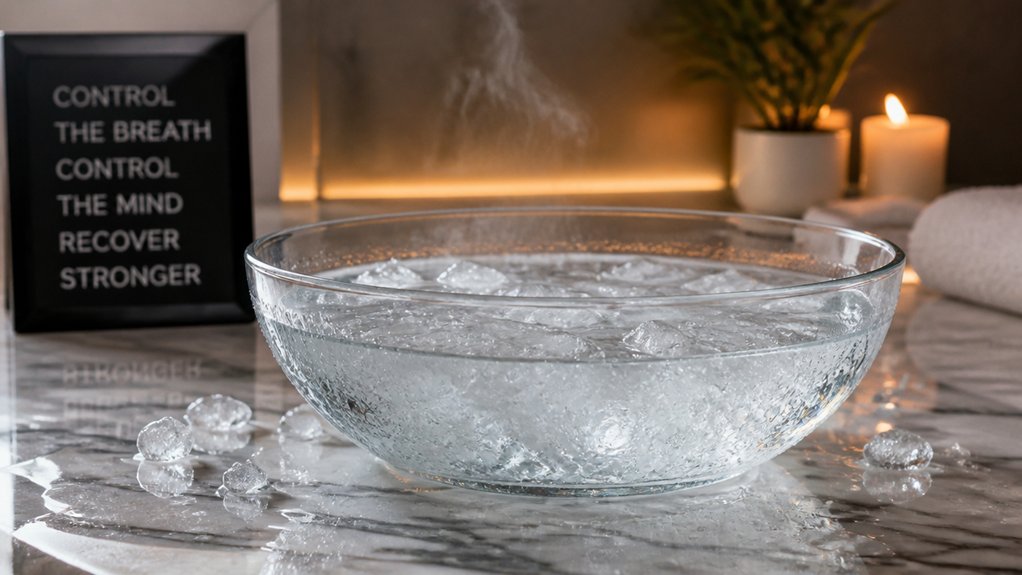
Post-plunge breathing accelerates cold recovery by activating your parasympathetic nervous system through slow, diaphragmatic breaths. This deep, controlled post-plunge breathing signals your body to relax, counteracting the stress caused by cold immersion.
When you breathe slowly in a pattern—inhale for about 4 seconds, then exhale for 6 to 8 seconds—you enhance your body’s ability to restore temperature and reduce cortisol spikes. Continuing this breathing while delaying bundling up for 2-3 minutes allows internal reheating and promotes thermogenic adaptation.
Additionally, relaxed breathing improves circulation and sharpens mental clarity, helping your body shift back to homeostasis more efficiently. With consistent post-plunge breathing, you support both physical recovery and overall stress reduction after cold immersion.
Preparing Your Body for Calm, Effective Recovery Breathing
To set yourself up for effective recovery breathing, focus on cultivating a relaxed breathing structure that feels natural and unforced. Engage your diaphragm fully with slow, deliberate breaths, emphasizing longer exhalations to activate your parasympathetic system. Incorporating respiratory stamina training can further enhance your ability to recover quietly and efficiently after each plunge. Establishing a consistent routine helps your body recognize these patterns, making calm, restorative breathing more automatic after each plunge.
Cultivate Relaxed Breathing Structure
Establishing a relaxed breathing pattern is essential for supporting your body’s recovery after cold immersion. Focus on post-plunge recovery breathing by slowing your breaths and engaging your diaphragm. Aim for about four seconds on inhales and six to eight seconds on exhales to activate your parasympathetic nervous system, promoting calm and relaxation.
Allow natural shivering to occur for roughly 30 seconds before moving into controlled, diaphragmatic breathing. This pause supports internal reheating and thermogenic adaptation. Keep your body relaxed by avoiding rushing or forcing breaths.
Sitting or lying down in a comfortable position helps you maintain a steady, relaxed diaphragmatic rhythm. This structured approach guarantees your recovery process is safe, effective, and conducive to mental clarity and physical balance. Additionally, practicing cold-weather-optimized breathing strategies can help mitigate the challenges posed by low temperatures on your body’s recovery process.
Focus on Full Diaphragm Engagement
Engaging your full diaphragm during recovery breathing enhances oxygen intake and promotes relaxation after cold immersion. Focus on diaphragmatic breathing by inhaling slowly through the nose for about four seconds, deliberately expanding your belly like a balloon to maximize lung capacity.
Gently exhale through pursed lips for six to eight seconds, stimulating the parasympathetic nervous system to activate relaxation responses. Sit or lie down in a relaxed posture, keeping your shoulders and neck loose so the diaphragm can move freely without engaging accessory muscles.
Practice lengthening your exhalations, making them 1.5 to 2 times longer than inhalations, to help remove stale air and reduce residual CO₂. Consistently engaging your full diaphragm fosters internal reheating, reduces cortisol, and restores autonomic balance.
Establish Consistent Practice Routine
Creating a consistent routine for your post-plunge breathing helps your body smoothly shift from cold exposure to recovery. Incorporate post-plunge breathing exercises with slow diaphragmatic breaths, aiming for about 4 seconds on inhale and 6–8 seconds on exhale. This promotes parasympathetic activation, encouraging relaxation and internal balance. Integrating guided breathing devices with visual cues can further enhance focus and rhythm during your practice.
Practice seated or lying down immediately after cold immersion, but delay bundling up for 2–3 minutes to support natural internal reheating. Consistent practice over days or weeks enhances mental clarity, lowers cortisol, and boosts recovery efficiency.
Use breath counting or mental anchors during your routine to maintain a steady rhythm and avoid panic. Integrating this into your wellness routine with hydration and reflection maximizes overall resilience through reliable, deliberate post-plunge breathing.
Step-by-Step: How to Calm Your Breathing After Cold Immersion
After emerging from cold immersion, focus on gentle breath control by slowly exhaling through pursed lips to promote relaxation. Prioritize lengthened, controlled exhales to help you calm your nervous system and reduce stress hormones. Stay upright or seated, and use mental anchors to stay centered as you recenter and restore your calm. Incorporating a digital thermometer with timer, for example, can help you monitor your exposure duration precisely and practice safe recovery protocols.
Gentle Breath Control
Once you’ve finished your cold immersion, focus on calming your breathing with gentle, diaphragmatic breaths. Use slow diaphragmatic breathing, inhaling for about 4 seconds and extending your exhale to 6–8 seconds. This gentle breath control encourages parasympathetic activity, helping you relax and recover.
Allow natural shivering for around 30 seconds to support internal reheating and thermogenic adaptation before beginning. Avoid breath holding or rapid breathing; instead, concentrate on lengthening your exhalations through pursed lips to reduce cortisol and promote calmness.
Keep your breathing slow and controlled for 2–3 minutes while delaying bundling up. This practice helps regulate heart rate variability, shifts your nervous system towards parasympathetic dominance, and maximizes circulation and internal heat generation during recovery. Stress response modulation is essential for optimal recovery and resilience after cold plunges.
Focus on Exhalation
Focusing on your exhalation helps calm your nervous system and supports recovery after cold immersion. To do this, exhale slowly and gently for 6 to 8 seconds, using pursed lips to control airflow and prevent panic.
Lengthening your exhalation stimulates the vagus nerve, encouraging parasympathetic activation, which induces a state of relaxation and reduces cortisol levels. Keep your breath smooth and controlled, avoiding breath holds, and consider counting each exhalation to maintain rhythm.
Resist the urge to rush your breathing; instead, emphasize a relaxed release to help shift your body from cold shock to recovery. Performing controlled exhalations during this time encourages natural internal reheating and supports your body’s effort to restore balance after cold immersion. Adding awareness of your temperature regulation can further enhance your recovery process.
Relax and Recenter
To effectively calm your breathing and recenter your mind following a cold immersion, start by allowing your body to naturally shiver for about 30 seconds. This fosters internal reheating and prepares your body for controlled breathing.
Next, practice slow diaphragmatic breathing:
- Inhale deeply through your nose for 4 seconds.
- Exhale gently through pursed lips for 6 to 8 seconds.
- Focus on prolonging your exhalation to activate the parasympathetic nervous system.
This controlled breathing helps reduce cortisol levels, promotes relaxation, and restores nervous and cardiovascular balance.
Engaging in durable, waterproof finishes during your recovery can also help maintain a comfortable environment by reducing moisture damage and ensuring longevity of your surroundings.
Wait 2 to 3 minutes before bundling up, as maintaining calm, controlled breath patterns during this time enhances parasympathetic activation and supports mental clarity.
Extend Your Exhale With Pursed Lip Breathing to Relax Faster
Extending your exhale with pursed lip breathing immediately after a cold plunge can greatly speed up relaxation. By exhaling slowly through pursed lips for 6-8 seconds, you activate your parasympathetic nervous system, signaling your body to relax. This controlled exhalation helps counteract the stress response, lowering cortisol levels and calming your breath. A focus on breathing techniques can further enhance your recovery process. Pursed lip breathing not only stabilizes diaphragm function but also enhances oxygen exchange, supporting internal reheating. Delaying bundling up for 2-3 minutes while practicing this technique allows your body to better adapt thermogenically and prolongs recovery benefits. Using pursed lip breathing after immersion makes it easier to manage residual cold shock effects, promoting mental clarity and muscle recovery for faster overall relaxation.
Using Shivering and Breathing to Boost Internal Heat
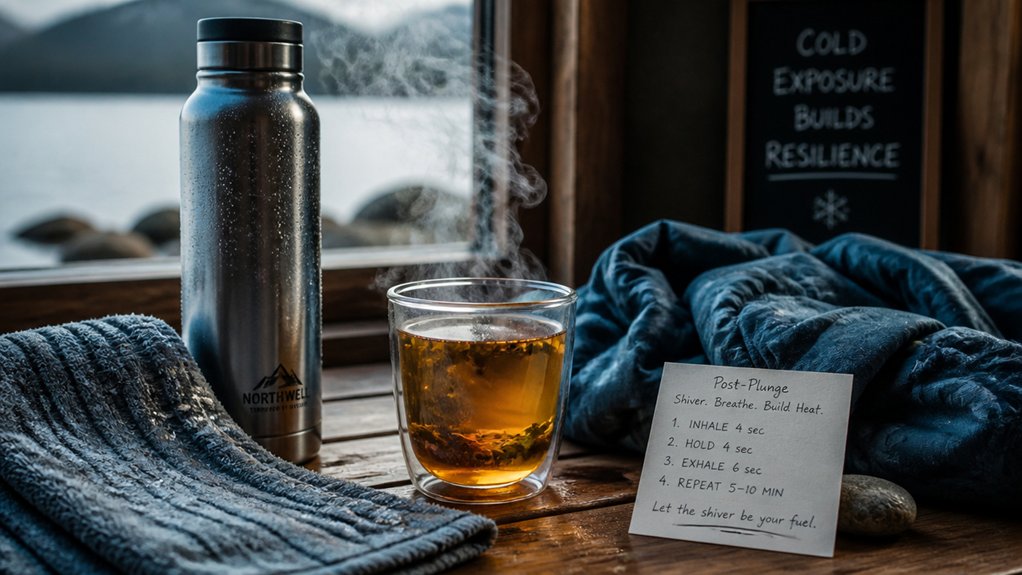
After your cold plunge, let your body shiver naturally for about 30 seconds to activate heat production through muscle activity.
As shivering subsides, switch to slow diaphragmatic breathing with longer exhalations to help regulate your nervous system and maintain warmth. Delaying bundling up right away keeps your internal heat generation functioning most effectively, boosting your thermogenic recovery.
Shivering as Heat Generation
Once you’ve immersed in a cold plunge, allowing your body to shiver naturally for about 30 seconds activates involuntary muscle contractions that produce internal heat. This shivering process helps your body generate warmth during cold exposure, supporting thermogenic adaptation.
To amplify this effect:
- Practice slow diaphragmatic breathing—inhale over 4 seconds, exhale over 6-8 seconds—to enhance heat production.
- Avoid immediate bundling or external warming for 2-3 minutes post-immersion, letting shivering and breathing work together.
- Focus on controlled breathwork during shivering to boost circulation and promote faster metabolic recovery.
This combination of shivering and mindful breathing naturally increases your core temperature, strengthening your resilience against cold stress and aiding your body’s internal heat regulation without relying on external heat sources.
Breathing Enhances Warmth
Breathing plays a crucial role in boosting internal warmth following a cold plunge, especially when combined with shivering.
By engaging in breathwork, such as slow diaphragmatic breathing with a 4-second inhale and a 6-8 second exhale, you activate your parasympathetic nervous system. This promotes relaxation while supporting thermogenesis, helping your body produce heat more efficiently.
Allowing shivering to occur naturally for about 30 seconds kickstarts muscle activity that enhances heat generation.
After the initial shivering, pause 2-3 minutes before bundling up, maintaining your recovery breathwork. This sustained practice improves circulation and helps regulate cortisol levels, further aiding in the normalization of core temperature.
Combining shivering with controlled breathing optimizes thermogenic response, making your post-plunge recovery more effective and comfortable.
Controlled Exhalation Effects
Engaging in controlled exhalation during your recovery breathwork can greatly enhance internal heat production following a cold plunge. Lengthening your exhale stimulates parasympathetic activation, calming your nervous system and supporting thermoregulation.
By delaying bundling up for 2-3 minutes, you allow your body to use controlled exhalation and shivering for better internal reheating. Here’s how to optimize this process:
- Use slow diaphragmatic breaths—inhale for 4 seconds, exhale for 6-8 seconds—to promote parasympathetic activation.
- Focus on lengthening your exhale to calm your nervous system and reduce cortisol spikes.
- Maintain controlled exhalation during recovery to improve oxygen delivery and reinforce heat retention.
This combination maximizes internal heat, resilience, and recovery after cold immersion.
Guided Belly Breathing to Reduce Stress and Warm Up Quickly
Start by taking slow, deliberate belly breaths to activate your relaxation response after a cold plunge. Focus on diaphragmatic breathing, allowing your belly to rise like a balloon as you inhale through your nose for 4 seconds.
Exhale slowly through pursed lips for 6 to 8 seconds, which helps stimulate your parasympathetic nervous system, promoting calmness and reducing stress hormones. Keeping your attention on diaphragmatic expansion increases oxygen intake and boosts internal warmth, aiding your recovery.
Hold off on bundling up for 2–3 minutes, practicing relaxed breathing to support natural thermogenic processes. Remaining seated or standing in a warm environment helps regulate circulation and relax muscles, speeding up physical recovery while calming your mind.
This gentle breathing prepares you for deeper recovery steps ahead.
Combine Gentle Movement and Deep Breathing to Improve Circulation
After a cold plunge, combining gentle movement like walking or stretching with deep, deliberate breathing stimulates blood flow and accelerates your recovery.
Gentle movement and deep breathing boost circulation and speed recovery after cold immersion.
Diaphragmatic breathing (inhale 4 seconds, exhale 6-8 seconds) increases oxygen saturation and supports circulation. This combo activates your parasympathetic nervous system, helping reduce cortisol and enhancing vascular tone.
To maximize benefits:
- Engage in slow walking or gentle stretching to promote movement.
- Practice diaphragmatic breathing to deepen oxygen intake.
- Incorporate pursed-lip exhalations to maintain airway openness and prevent blood pooling.
This approach encourages internal reheating, stabilizes heart rate, and improves overall blood flow, supporting a quicker, more comfortable recovery after cold immersion.
Common Mistakes to Avoid During Recovery Breathing
Many common mistakes can undermine the effectiveness of your recovery breathing after a cold plunge. Covering up immediately prevents parasympathetic activation and hinders internal reheating. Using rapid, shallow breaths post-immersion increases cortisol and blocks calming effects. Failing to switch from intense pre-immersion breathwork to slow diaphragmatic breathing limits post-immersion relaxation. Holding your breath or performing breath retention exercises can cause dizziness or discomfort and should be avoided. Skipping post-immersion breathwork altogether delays parasympathetic activation, impairing muscle and mental recovery.
| Mistake | Negative Effect | Solution |
|---|---|---|
| Covering up immediately | Impairs thermogenic adaptation | Wait until body warms naturally |
| Shallow, rapid breathing | Raises cortisol, hampers parasympathetic activation | Breathe slowly and diaphragmatically |
| Not shifting to calming breath patterns | Limits recovery benefits | Practice slow, deep diaphragmatic breaths |
| Breath holding or retention during post-immersion | Causes discomfort, dizziness | Focus on gentle exhalations and relaxation |
Track Your Progress: How to Know When You’re Fully Recovered
Tracking your progress is key to understanding when you’ve fully recovered from cold plunges and post-immersion breathing exercises.
Over 2 to 4 weeks, you’ll notice improvements in mental clarity, energy levels, and stress resilience.
To gauge your recovery, consider these indicators:
- Monitor your heart rate variability (HRV); increases suggest better parasympathetic nervous system recovery.
- Notice your cold tolerance—if you can extend immersion times without shivering or panic, you’re progressing.
- Pay attention to subjective feelings: calmness, reduced muscle soreness, and restored breath control signal recovery.
If you don’t see these signs after four weeks, adjust your breathing technique, immersion duration, or water temperature.
Consistent tracking helps confirm you’re on the path to full recovery.
Incorporate Comfortably: Tips to Make Post-Plunge Breathing a Habit
How can you make post-plunge breathing feel natural and comfortable so it becomes a lasting habit? Start by practicing in your chill zone, a calm space where you can sit or lie down comfortably.
Begin with natural shivering for about 30 seconds, then shift to slow diaphragmatic breathwork—inhale for 4 seconds, then exhale for 6–8 seconds—to promote internal reheating and relaxation.
Delay bundling up for 2–3 minutes while maintaining controlled breathing to maximize recovery benefits. Incorporate journaling or mindful reflection during your breathwork sessions to boost mental clarity and motivation.
Consistency is key; schedule 5 to 10 minutes immediately after cold immersion. Over time, this routine will feel more natural, helping post-plunge breathing become a sustainable part of your recovery process.
Frequently Asked Questions
Is Deep Breathing Good for Atelectasis?
Yes, deep breathing is good for atelectasis because it helps fully expand your lungs, reopen collapsed alveoli, stimulate your diaphragm, and improve oxygen intake, which reduces infection risk and promotes quicker lung recovery.
What Is the 4 7 8 Rule for Breathing?
The 4 7 8 rule guides you to inhale quietly through your nose for 4 seconds, hold your breath for 7 seconds, then exhale slowly through your mouth for 8 seconds. This promotes relaxation and reduces stress effectively.
Can Breathing Exercises Lower BP?
Yes, breathing exercises can lower your blood pressure by activating your parasympathetic nervous system, reducing stress hormones like cortisol, and promoting relaxation, which helps improve your autonomic balance and overall cardiovascular health.
Should I Do Breathing Exercises After Pneumonia?
Yes, you should do breathing exercises after pneumonia. They help clear your lungs, improve oxygen intake, and restore diaphragm function. Practice when breathing is normal, avoid during shortness of breath, and consult your doctor if needed.