

To boost your cold water tolerance, start with a 5-10 minute dynamic warm-up that gets your blood flowing and muscles ready. Use gentle aerobic movements, foam rolling, and resistance exercises to increase circulation. Practice slow, deep breathing to calm your nervous system and prepare your lungs. Avoid rushing or static stretching to prevent injury and stiffness. Customizing your warm-up based on your fitness level helps you improve safely. Keep going to discover more proven tips that can make your cold plunges safer and more effective.
Why Warm Up Before Cold Plunges Is Essential

Warming up before a cold plunge is essential because it prepares your body to handle the sudden temperature change. A proper warm-up raises your muscle temperature, making muscles more flexible and less prone to cramps or stiffness during the immersion.
It also enhances blood flow, which dilates blood vessels and primes your circulatory system. This improves oxygen delivery throughout your body and reduces cardiovascular stress in cold water. Increasing your body temperature gradually helps you avoid shock and eases the shift into cold immersion.
Additionally, a dynamic warm-up for 5 to 10 minutes stimulates your heart rate, supporting safer thermoregulation and lowering the risk of cold-induced injuries. Incorporating resistance band exercises can further activate your muscles and improve circulation before the plunge. Overall, warming up sets the foundation for a safer, more comfortable cold plunge experience.
How to Gradually Prepare Your Body for Cold Exposure
To prepare your body for cold exposure, start with light aerobic exercises like marching in place or slow jogging for 5 to 10 minutes. This warm-up routine gradually raises your muscles’ temperature, helping them stay flexible and less prone to injury.
Incorporate dynamic movements such as knee lifts and shoulder rolls to boost blood flow and improve flexibility, aiding muscles in adapting to cold conditions. It’s important to gradually increase the intensity of your warm-up to avoid sudden cardiovascular stress. Focus on warming large muscle groups first, as cold weather causes stiffening.
Additionally, using targeted foam rolling techniques with firm, high-density rollers can help release muscle tension and improve circulation muscle recovery, making your body more prepared for cold exposure. It’s important to closely monitor your body’s response and avoid overexertion during warm-up routines.
Top Dynamic Warm-Up Exercises to Boost Cold Tolerance
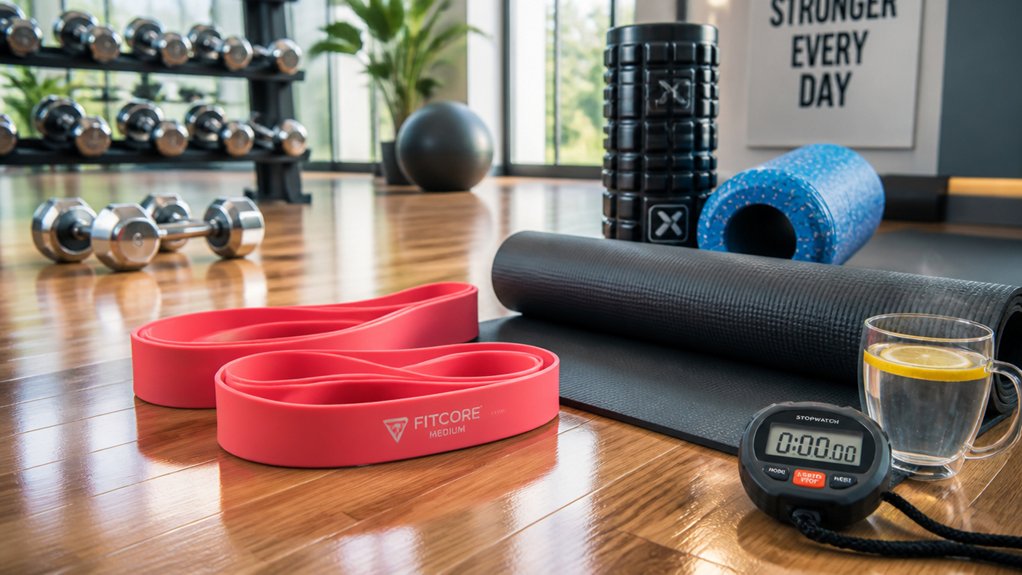
Incorporating dynamic exercises into your warm-up routine can greatly enhance your cold tolerance by increasing circulation and muscle warmth. These exercises prepare your muscles and get blood flowing, essential for cold environments.
For example, marching on the spot for 3 minutes with arm pumping energizes your entire body, boosting circulation. Performing 60 heel digs in 60 seconds activates lower leg muscles, imperative for maintaining warmth and stability. Completing 30 knee lifts in 30 seconds with abdominal engagement raises body heat and strengthens your core.
Shoulder rolls combined with light marching improve upper body blood flow and joint mobility. Knee bends with controlled depth (no more than 10 cm) warm large muscle groups efficiently, reducing injury risk. Incorporating breathing exercises like diaphragmatic breathing can further optimize your body’s response to cold by improving oxygen circulation and relaxing your nervous system. These active warmup moves, combined with mindful breathing, help maximize your cold tolerance before engaging in outdoor activities or cold-weather workouts.
How Long Should You Warm Up Before Immersing?
How long you should warm up before immersing depends on the activity’s intensity and environmental conditions. Typically, a warm-up lasting 5 to 10 minutes is effective for gradually raising your body temperature and preparing your muscles.
A 5 to 10-minute warm-up helps safely prepare muscles and raise body temperature before immersing.
During this time, perform low-intensity movements like slow walking or marching in place to safely elevate your heart rate. Your goal is to reach a point where your body temperature increases enough for mild sweating without causing fatigue.
If the immersion involves intense or prolonged activity, extend your warm-up beyond 10 minutes to guarantee your muscles are adequately prepared. Tailoring the warm-up duration helps prevent muscle stiffness and reduces injury risk, especially in colder environments. Incorporating controlled compression, such as using compression boots, can further enhance circulation and muscle readiness before immersion.
Always adjust based on how your body responds and the specific conditions you’ll face.
Breathing Techniques to Increase Your Cold Resilience

Deep, controlled breathing during your warm-up can greatly boost your resilience to cold conditions. Focusing on rhythmic inhalation through your nose and slow exhalation through your mouth helps steady your heart rate and promotes relaxation.
This breathing pattern enhances oxygen delivery to your body and supports improved circulation, which keeps your muscles warm and increases cold tolerance. Using diaphragmatic, or belly, breathing expands your lung capacity, enabling your body to efficiently supply blood with oxygen during cold exposure.
Combining these breathing drills with dynamic movements optimizes blood flow, preparing your respiratory muscles for the chill ahead. Avoid quick, shallow breaths, as they reduce heat retention and heighten cold vulnerability. Instead, stick to slow, deep breaths to strengthen your body’s ability to handle cold stress effectively.
Additionally, understanding how sensor accuracy can be affected by vasoconstriction during cold exposure helps you better interpret your body’s responses and ensure your monitoring equipment provides reliable data.
Movement Strategies to Improve Blood Flow and Flexibility
Starting your warm-up with gentle, low-intensity movements like marching in place or treadmill walking helps steadily boost blood flow and oxygen delivery to your muscles. This initial activity supports effective warming up and cooling, ensuring your muscles and joints loosen in a controlled way.
Incorporate dynamic stretches and joint mobilizations, such as leg swings and shoulder rolls, to enhance flexibility and prepare muscles for a full range of motion. Exercises like heel digs or knee lifts gradually raise muscle temperature, promoting pliability and reducing injury risk.
Use rhythmic arm pumping with elbows bent and soft fists, coordinating with leg movements, to boost circulation across your entire body. Progress from slow to moderate speeds, encouraging smooth blood vessel dilation and optimizing your muscles’ flexibility and range for the workout ahead.
Common Warm-Up Mistakes That Reduce Cold Tolerance
Skipping dynamic movements, rushing the warm-up, or overstretching cold muscles can all hinder your body’s ability to handle cold conditions. These mistakes prevent proper blood flow and muscle readiness, increasing injury risk and reducing cold tolerance.
To avoid this, take your warm-up slow, include full-body movements, and ease into stretching gradually.
Skipping Dynamic Movements
Neglecting dynamic movements in your warm-up can greatly reduce your body’s ability to tolerate cold conditions. Without dynamic exercises like arm circles or leg swings, your muscles and joints stay stiff, increasing the risk of injury when exposed to low temperatures.
Dynamic movements help boost blood flow, which warms muscles and raises muscle temperature, vital for cold tolerance. They also gradually increase your heart rate, preparing your body for the chill ahead. Skipping these movements hampers the full range-of-motion needed for effective flexibility and muscular efficiency, both essential for handling cold environments.
Additionally, bypassing dynamic warm-up steps slows metabolic warming, making it harder for your body to maintain core temperature. Incorporating dynamic movements optimizes blood flow and injury prevention, enhancing your cold resilience. Engaging in proper warm-up routines can significantly improve your ability to withstand colder conditions and reduce post-exercise soreness.
Overstretching Cold Muscles
Overstretching cold muscles can greatly increase your risk of injury during warm-up. When you overstretch cold muscles, micro-tears can occur, compromising muscle integrity and making injury more likely. Cold muscles have decreased blood flow and less pliability, so vigorous stretching before warming up can cause strain or damage. Additionally, using a pulse oximeter to monitor muscle oxygen levels during warm-up can help ensure your muscles are adequately prepared for stretching and activity. To prevent injury, avoid static stretching directly after waking up or during initial exercise, and instead focus on a 5–10 minute warm-up to raise muscle temperature. Incorporate dynamic movements designed to gradually prepare your muscles for activity, setting the stage for safe stretching later in your exercise routine. Properly warming up helps increase flexibility, reduces injury risk, and ultimately boosts your overall workout performance.
Rushing Warm-Up Pace
Rushing the warm-up pace can greatly reduce your cold tolerance because it forces your cardiovascular system to accelerate too quickly, preventing gradual adaptation. When you start with a fast, intense warm-up, your heart rate and blood flow spike sharply, limiting the body’s ability to slowly adjust to cold conditions.
A slow pace allows blood vessels to dilate gradually, improving circulation and muscle warmth. Jumping into vigorous activity too fast also hampers proper engagement of large muscle groups, reducing oxygen delivery and flexibility. This hurried approach can increase injury risk, as cold muscles are less elastic.
To build cold resilience, stick to a slow to moderate warm-up for 5–10 minutes, ensuring blood circulation and muscle temperature rise steadily, preparing your body for colder environments. Timer accuracy in extreme cold temperatures
Custom Warm-Up Routines for Different Tolerance Levels
When designing a warm-up routine, it’s important to tailor the duration and intensity to your individual tolerance and fitness level, ensuring you’re prepared without overexerting yourself.
For those with lower tolerance or just starting out, extend your warm-up to 10 minutes, focusing on gentle, controlled movements. Start with slow, full-body motions like marching in place or walking, gradually increasing intensity to match your comfort zone. Incorporate dynamic stretches and low-impact exercises, such as slow leg swings or modified push-ups, to promote a full range of motion while respecting your limits.
Monitor how your body responds—aim for mild sweating and muscle warmth without fatigue. Adjust the warm-up duration and intensity as needed to optimize readiness and prevent overstressing your muscles.
Mental Preparation to Help You Handle Cold Water Better
To better handle cold water, focus on controlled breathing techniques to stay calm and reduce shock. Visualize a gradual warm-up and successful immersion to mentally prepare your body.
Using mindfulness and positive self-talk will strengthen your resilience and lower stress.
Breathing Techniques Practice
Practicing controlled breathing during warm-up can greatly improve your ability to handle cold water by calming your nervous system and increasing oxygen flow. Focus on rhythmic breathing exercises, such as inhaling for four seconds and exhaling for six seconds, to enhance breath control and decrease panic responses.
Incorporate diaphragmatic breathing in your warm-up to strengthen your respiratory muscles and expand lung capacity, boosting your cold tolerance. By maintaining steady, deliberate breaths, you can lower your heart rate and mentally prepare for the shock of cold water.
Combining these breathing techniques with a gradual physical warm-up helps keep you calm and resilient. This approach reduces hyperventilation risk and primes your body to handle the cold more effectively.
Visualization Strategies Use
Have you ever wondered how mental imagery can help you withstand the shock of cold water? Using visualization strategies primes your body to react calmly and confidently.
By imagining the sensations of cold, you can reduce the initial shock response and build mental resilience. Rehearsing controlled breathing during visualization improves your respiratory control, helping you avoid hyperventilation and stay composed when immersed.
Visualizing a gradual adaptation to cold enhances your confidence, lowering anxiety and perceived discomfort. Combining these mental exercises with physical warm-ups energizes your nervous system, easing the shift into cold environments.
Regular practice strengthens your ability to manage stress and pain under cold stress conditions, making cold water exposure more manageable over time. Visualization strategies empower you to stay calm, controlled, and resilient.
How to Safely Transition From Warmup to Cold Plunge
As you prepare to move from your warmup to the cold plunge, it’s important to do so gradually to prevent sudden stress on your body. Start by slowly reducing the intensity of your warm-up over five to ten minutes, allowing your heart rate and temperature to lower safely.
Make certain your muscles are warm but not fatigued, as this reduces the risk of injury or shock when shifting to cold. Perform gentle movements like slow marching or arm circles right before entering the cold plunge to keep circulation active without overheating.
Instead of stopping abruptly, finish with light activity to stabilize your cardiovascular system. Carefully and gradually entering the cold water will help your body adapt smoothly, minimizing vasoconstriction and cardiovascular stress.
Frequently Asked Questions
What Is the 3-3-3 Rule for Workout?
The 3-3-3 Rule guides your warmup by doing 3 minutes of light cardio, 3 minutes of dynamic stretching, and 3 minutes of sport-specific movements. It helps prepare your body gradually, reducing injury risk and boosting performance.
What Is the 5 5 5 30 Rule?
The 5 5 5 30 rule guides you to warm up with 5 minutes of light activity, 5 minutes of dynamic movements, 5 minutes of sport-specific drills, then continue your main workout for 30 minutes, reducing injury risk and improving performance.
What Are the 5 Components of a Warm-Up?
You focus on five warm-up components: low-intensity cardio, dynamic movements, muscle activation exercises, stretching for flexibility, and gradual intensity increase. These steps prepare your muscles and joints, reduce injury risk, and boost overall workout readiness efficiently.
How to Potentiate in a Warm-Up?
To potentiate during a warm-up, you focus on dynamic movements that activate muscles and increase neural readiness, gradually intensify efforts, and incorporate sport-specific drills that prepare your body for the upcoming activity effectively.