Start with gentle marching to gradually wake your body and improve circulation. Focus on wrist and hand stretches to increase flexibility, and gently tilt your neck and shoulders to ease tension. Incorporate light leg lifts and ankle circles to boost mobility, and move your hips with slow, controlled motions. Maintain good posture throughout, keeping movements gentle and steady. Keep your warm-up between 5-10 minutes, avoiding overstretching or rushing. If you want to learn more tips, this guide will give you all the details.
Why Gentle Warm-Ups Are Important Before Icing
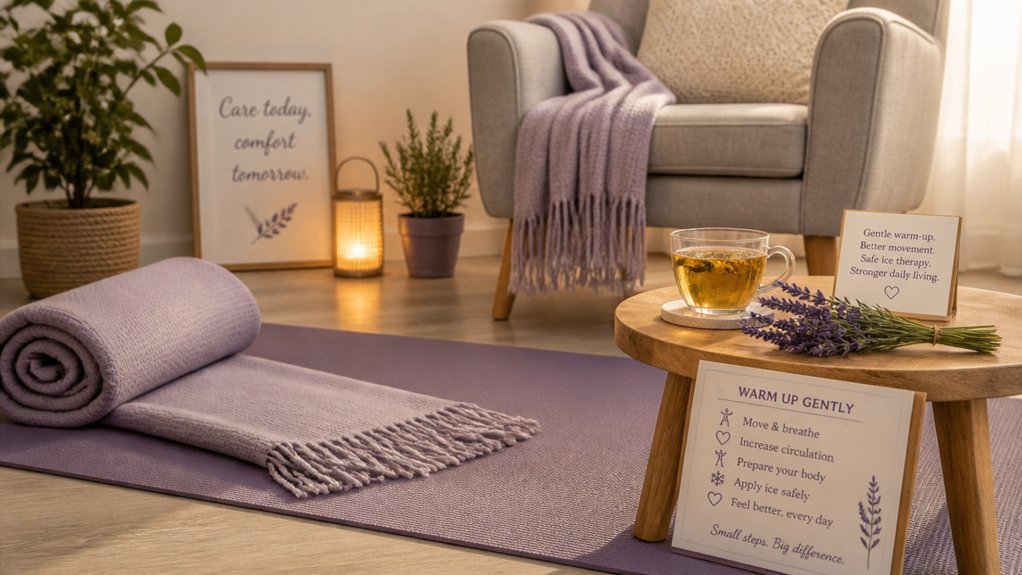
Before applying ice, it’s important to do a gentle warm-up because it prepares your muscles and joints for cold therapy. Warming up increases blood flow and gently raises your heart rate, making your tissues more receptive to treatment. A new gentle movement also helps activate your muscles, facilitating better circulation and enhancing overall recovery resistance bands. This process helps reduce stiffness by improving circulation, which can boost the effectiveness of cold therapy. A light warm-up also prevents muscle tightness and injuries that might happen if you apply ice directly to inactive, cold tissues. When you move gently, your joints become more mobile, and discomfort decreases, making the icing process more comfortable and safer. Additionally, warming up helps balance muscle temperature and reduces post-icing tension, supporting better recovery. It’s a small step that makes a significant difference for your comfort and safety.
Start With Gentle Marching to Wake up Your Body
Gentle marching is an easy and effective way to wake up your body before more movement or therapy. It helps increase circulation by gradually raising your heart rate in a low-impact way suitable for seniors.
As you march in place, you activate your leg muscles and joints gently, preparing your body for more activity while reducing the risk of injury. This movement warms up your lower body and promotes blood flow to your feet, which can improve your balance and mobility.
Starting with slow, controlled steps allows you to focus on maintaining good posture and proper movement quality. Adding arm swings with your march can also engage your upper body and enhance coordination, setting a solid foundation for subsequent exercises or icing. Incorporating joint-friendly design features into your warmup routine can further reduce strain and support comfortable movement during therapy.
Stay Flexible With Wrist and Hand Stretches

To keep your wrists and hands flexible, try simple stretches that promote movement and blood flow. Gentle wrist circles in both directions boost joint mobility and decrease stiffness. Repeatedly opening and closing your fists loosens muscles and encourages circulation. Slow, controlled finger stretches prevent cramping and prepare your hands for colder therapy. Remember to stay relaxed during each stretch—this guarantees better muscle engagement and reduces tension. Combining these movements with deep, mindful breathing enhances circulation and warms your hands before icing. Incorporating smooth muscle function awareness can help improve overall stretch effectiveness.
Relieve Tension With Neck and Shoulder Stretching
Start by gently tilting your neck side to side to loosen tight muscles, then slowly turn your head from left to right to improve mobility. Involve firm support by using supportive foam rollers to enhance stability and pressure during your stretches. Incorporate shoulder rolls forward and backward to ease tension and boost flexibility. Be sure to keep good posture and breathe mindfully to enhance relaxation and prevent strain.
Gentle Neck Stretches
Neck and shoulder stretches can help seniors relieve tension and improve flexibility safely. Gentle neck tilts from side to side gently stretch your neck muscles and release built-up tension. Move slowly and with control to avoid strain.
Doing slow, deliberate head turns left and right can increase your cervical range of motion and reduce stiffness. Remember to keep good posture during these stretches, which helps prevent extra stress on sensitive joints.
Shoulder rolls—both forward and backward—enhance shoulder flexibility and loosen tightness. Focus on smooth, controlled movements to engage your muscles properly and avoid discomfort.
Incorporating these gentle stretches into your routine supports mobility and eases chronic neck tension, setting a safe foundation before any more intense warmup or icing. Proper stretching techniques help maximize benefits and prevent injury during your recovery.
Shoulder Mobility Exercises
Gentle shoulder mobility exercises can greatly reduce tension and improve flexibility, especially when paired with neck and shoulder stretches. These exercises help loosen stiff muscles and prepare your shoulders for icing.
Start with slow, controlled shoulder rolls—both forward and backward—to increase joint mobility. Include gentle head tilts and neck stretches to target upper trapezius and cervical muscles, relieving tension. Maintaining good posture during these movements guarantees proper alignment and prevents strain.
Repeating slow neck turns combined with shoulder rolls encourages a full range of motion in your cervical spine and shoulders, reducing discomfort from inactivity. Incorporate deep, controlled breathing throughout to relax your nervous system and ease muscular tightness. Using breathing exercise tools can enhance your relaxation and ensure you get the full benefits of your warmup.
These simple steps can make a noticeable difference in your shoulder comfort and flexibility.
Improve Mobility With Light Leg Lifts and Ankle Circles
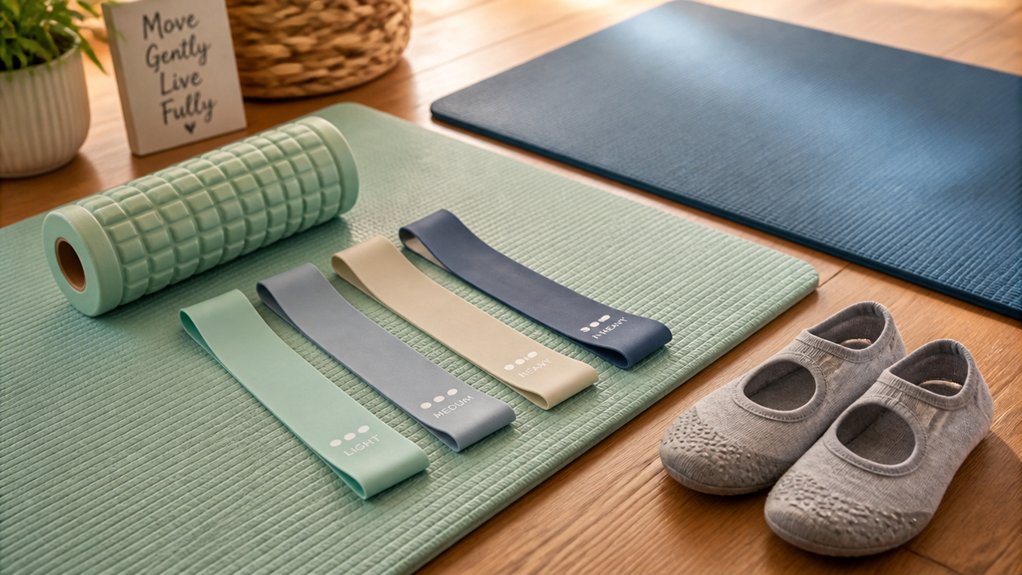
To enhance your mobility, incorporating light leg lifts and ankle circles into your warmup routine is highly effective. Light leg lifts activate your hip flexors and improve your range of motion, making daily tasks easier and reducing joint stiffness. Perform these lifts slowly, breathing controlled to support muscle engagement and stability. Ankle circles increase blood flow and lubricate your ankle joints, which enhances balance and lowers fall risk. Be sure to rotate ankles both clockwise and counterclockwise to ensure full joint mobility and flexibility. Regularly practicing these gentle movements before icing helps prepare your muscles and joints, minimizing discomfort and promoting better circulation. Ensuring proper compression level during recovery also prevents fluid buildup and supports effective healing.
Calm Your Mind and Body With Deep Breathing
Practicing deep breathing exercises can greatly calm your mind and body before icing. When you slow your breath, you activate the parasympathetic nervous system, promoting relaxation and easing stress. This simple practice helps you feel more at ease during treatment.
Deep breathing calms your mind and reduces stress before icing therapy.
Try these steps:
- Inhale slowly through your nose for a count of four, feeling your belly rise.
- Hold the breath for a count of four to settle your thoughts.
- Exhale gently through your mouth for a count of four, releasing tension.
- Repeat for 3-5 minutes, focusing on each breath to increase oxygen flow and mental clarity.
Incorporating mindful breathwork reduces muscle tension, lowers heart rate and blood pressure, and keeps you present — making the cooling process more comfortable and less stressful.
Deep breathing can also enhance your body’s resilience by supporting adrenal health and stress response regulation, especially beneficial during cold plunge routines.
Enhance Hip Flexibility With Gentle Movements
Improving hip flexibility can enhance mobility and reduce discomfort, especially as you age. Gentle movements, like slow hip circles in both directions, help increase joint lubrication and improve overall flexibility.
High knee marches with controlled movements activate your hip flexors while boosting balance and stability. Incorporating seated or standing heel touches forward can realign your hips and make your lower body more mobile safely.
Slow, deliberate leg lifts from a seated position gently stretch and strengthen your hip flexors without causing strain. Step-outs with arm movements encourage a wider stance, engaging your hip muscles to improve flexibility and coordination.
These gentle exercises prepare your hips for daily activities while minimizing risk, helping you maintain independence and comfort.
Keep Posture in Mind During All Movements
As you move through your warm-up, focus on keeping your spine neutral and shoulders aligned over your hips to prevent strain.
Engaging your core helps support proper posture, making each movement safer and more effective. Remember to use mirrors or cues to maintain good alignment throughout your routines.
Maintain Neutral Spine
Maintaining a neutral spine during warm-ups is essential for seniors to protect their back and enhance balance. When your spine is aligned properly, you reduce strain and support smooth joint movement.
Keep your head over your shoulders to prevent neck tension and promote easier breathing. Always be aware of your hip and shoulder alignment to distribute weight evenly and maintain stability.
Engaging your core muscles helps support your lower back and keeps your spine in a safe, neutral position. Avoid excessive arching or rounding during movements to protect your spine from unnecessary stress.
Staying mindful of your posture not only prevents injury but also improves overall mobility. Here’s what you should keep in mind:
- Keep your head aligned over your shoulders
- Engage core muscles for support
- Make certain hips and shoulders are level
- Avoid arching or rounding your back
Engage Core Muscles
Engaging your core muscles during warm-up is essential for supporting good posture and protecting your lower back. When you activate your deep abdominal muscles, you help stabilize your spine, reducing strain and preventing injury.
Gentle seated or standing pelvic tilts are effective exercises to engage your core and promote better alignment. Keep your chest upright and shoulders relaxed to improve breathing and balance during movements.
Focus on slow, controlled motions that brace your abdomen—this strengthens your core without causing fatigue. Maintaining consistent core engagement throughout your warm-up helps your body prepare for safer movement and decreased fall risk.
Align Shoulders Properly
To keep your shoulders properly aligned during warm-up, focus on maintaining a neutral spine with relaxed, slightly pulled-back shoulders. This helps prevent slouching and guarantees proper posture. Keep your shoulders directly above your hips to reduce tension on your neck and upper back.
Avoid lifting your shoulders toward your ears; instead, gently lower and spread them away from your neck to release tension. Use a mirror or a wall to check your alignment regularly, making sure your shoulders stay level.
Concentrate on slow, controlled shoulder rolls and movements, which improve mobility while maintaining correct posture. Staying mindful of your shoulder position will support safe, effective warm-up exercises and help prevent strain or discomfort later.
How Long Should Your Warm-Up Be? Tips for an Effective Routine
How long should your warm-up last to set the stage for your exercise without overexertion? Aim for about 5 to 10 minutes. This duration helps gradually raise your heart rate and increase blood flow to your muscles, preparing your body safely.
Warm-up should last 5 to 10 minutes to safely prepare your body for exercise.
Focus on low-impact movements like gentle marching, ankle circles, and shoulder rolls to boost joint mobility and minimize injury risk. Add slow, controlled stretches of your neck, shoulders, and hips, holding each for 10 to 15 seconds to gently improve flexibility.
Incorporate deep breathing exercises to promote relaxation and enhance oxygen flow. Keep the intensity light enough to stay comfortable, avoiding fatigue or overexertion.
A well-paced warm-up sets a safe foundation for your exercise without draining your energy early.
Common Mistakes to Avoid During Warm-Up
One common mistake is rushing through warm-up movements, which can lead to muscle strain or injuries. You should focus on slow, controlled motions to properly engage your muscles and protect your joints.
Remember to avoid overexerting yourself to keep your warm-up safe and effective.
Overexertion Risks
Avoiding overexertion during warm-up is essential for seniors because pushing too hard can quickly lead to muscle strain, joint discomfort, or even injury.
To keep your warm-up safe and effective, watch out for these common pitfalls:
- Skip rapid or high-intensity movements, which can put too much stress on aging joints and muscles.
- Don’t overextend your range of motion in neck and shoulder exercises—avoid forcing movements too far.
- Limit warm-up sessions to prevent fatigue that could impair your balance and increase fall risk.
- Never ignore pain signals—pushing through discomfort can worsen pre-existing conditions or cause new injuries.
Maintaining a gentle pace and listening to your body helps reduce overexertion risks, keeping your warm-up safe and beneficial.
Rushing Movements
Rushing through warm-up movements can greatly increase your risk of muscle strains or joint injuries, especially as you age and flexibility decreases. Fast, uncontrolled motions limit blood flow and prevent muscles and joints from fully warming up. This not only reduces effectiveness but also risks misalignment, causing tension in your neck, shoulders, and lower back. To stay safe, focus on slow, deliberate movements that activate muscles gradually. Taking your time increases blood circulation, enhances your mind-body connection, and prepares you better for icing or activity. Remember, quality beats speed when warming up.
| Mistake | Impact | Proper Approach |
|---|---|---|
| Rushing movements | Increased injury risk | Use slow, controlled motions |
| Poor posture | Tension, misalignment | Focus on proper form |
| Uncontrolled speed | Limited blood flow, less effectiveness | Move deliberately and steadily |
| Skipping muscle engagement | Insufficient warm-up | Engage muscles fully |
| Ignoring balance | Falls or instability | Incorporate balance exercises |
Frequently Asked Questions
What Are the Best Warm Ups for Seniors?
You should start with gentle marching, heel touches, neck tilts, shoulder rolls, ankle circles, hand stretches, and deep breathing. These warm-ups gradually increase circulation, loosen joints, reduce tension, and prepare your body for safe, effective activity.
What Should a 70 Year Old Be Doing Every Day at Home?
You should do gentle daily exercises like marching in place, neck tilts, shoulder rolls, ankle circles, hand stretches, and controlled breathing. These activities promote circulation, flexibility, balance, and relaxation, helping you stay healthy and prevent falls at home.
What Is the 3-3-3 Rule for Workout?
The 3-3-3 rule for workouts involves doing three types of warm-up activities—gentle cardio, dynamic stretching, and mobility exercises—for three minutes each, totaling nine minutes. It helps you warm up safely and effectively.
How to Warm-Up an Elderly Person?
You start by encouraging gentle movements like seated heel taps or marching, then guide them through slow neck tilts, shoulder rolls, ankle circles, and hand stretches, all while practicing deep breathing to guarantee a safe, gradual warm-up.