
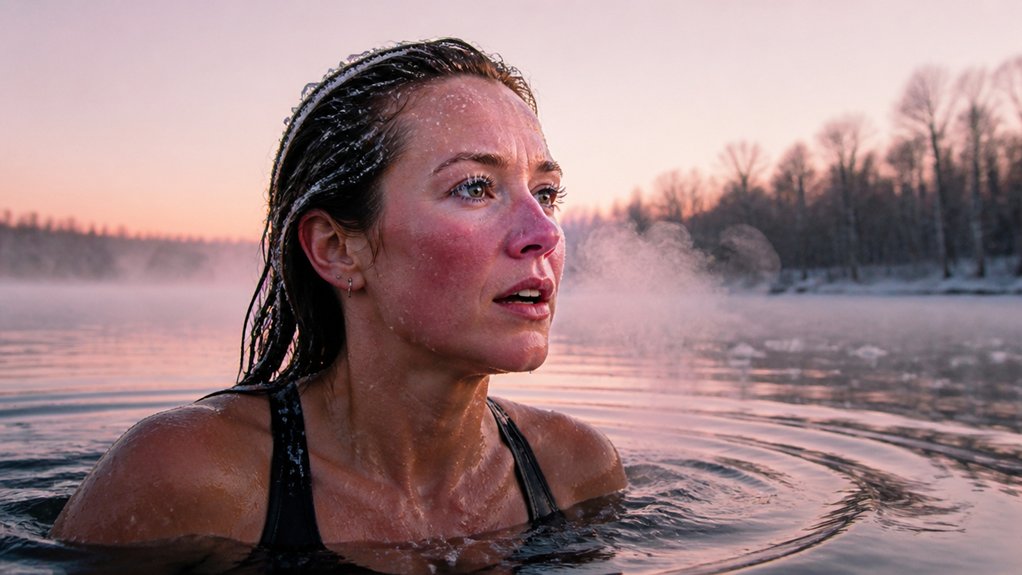
Cold plunges fire up brown fat, making it burn calories to keep you warm, while a surge of norepinephrine mobilizes fatty acids and triggers non‑shivering thermogenesis. The chill also releases irisin, which turns white fat into brown‑like cells, and boosts insulin sensitivity, cutting resistance by up to 43 %. Short, regular dips—2‑10 minutes at 39‑55°F a a few times a week—keep the metabolic engine humming, and the next section shows you how to fine‑tune the protocol.
Cold‑Plunge Activation of Brown Fat and Calorie Burn
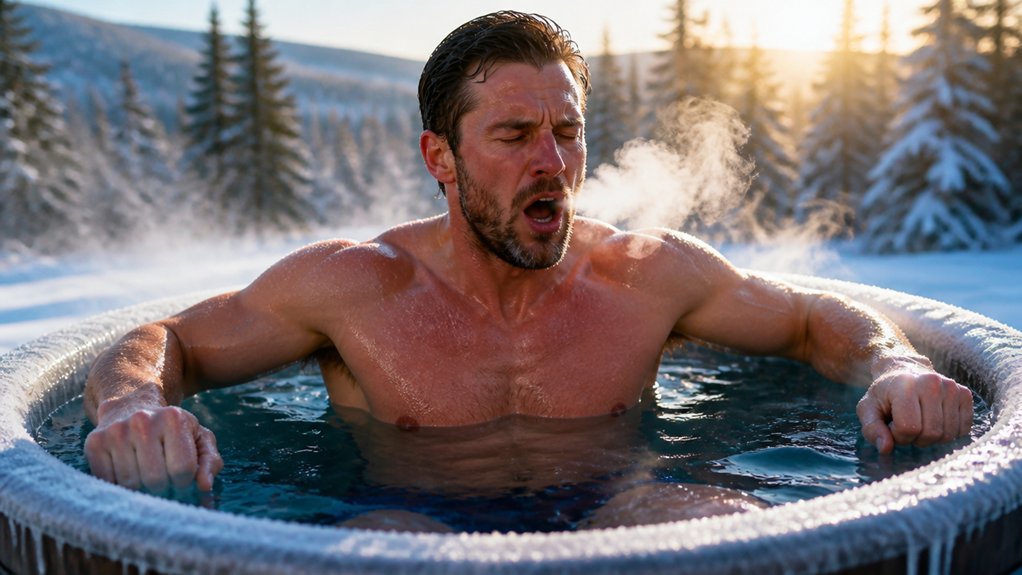
When you dip into a cold plunge, your body instantly fires up brown adipose tissue (BAT), the metabolically active fat that burns calories to produce heat. Cold water immersion triggers non‑shivering thermogenesis, and norepinephrine spikes, mobilizing fatty acids for rapid calorie burn. In an 8‑15‑minute session you can torch 100‑250 calories while also nudging your resting metabolic rate upward. Regular cold exposure increases BAT deposits in the neck and shoulders, turning them into powerful metabolic engines that keep your metabolism revved for hours after the dip. This sustained metabolic boost not only burns extra calories but also improves insulin sensitivity, making each plunge a double‑duty tool for metabolic health. Anti-static properties can be a useful consideration when selecting coatings for equipment used in cold environments and may influence how materials respond to rapid temperature changes in such contexts.
Cold‑Plunge Hormonal Cascade: Norepinephrine, Irisin, and Insulin Sensitivity
Diving into a cold plunge instantly spikes norepinephrine—up to five times your normal level—fueling rapid fatty‑acid mobilization and thermogenic fat burning. The surge ignites a hormone cascade that amplifies cold therapy benefits, turning shiver‑induced irisin into a catalyst for brown adipose tissue activation.
As brown adipose tissue revs up thermogenesis, your metabolic rate climbs, fat burning intensifies, and glucose uptake improves, sharpening insulin sensitivity.
- Norepinephrine surge – mobilizes fatty acids, boosts thermogenesis, and sharpens focus.
- Irisin release – converts white fat to brown‑like cells, elevating metabolic rate and fat burning.
- Insulin sensitivity boost – enhances glucose uptake, cutting insulin resistance by up to 43 %.
Together, these steps form a powerful hormone cascade that transforms cold exposure into a metabolic accelerator.
Cold‑Plunge Duration, Temperature, and Frequency for Maximum Metabolic Gain
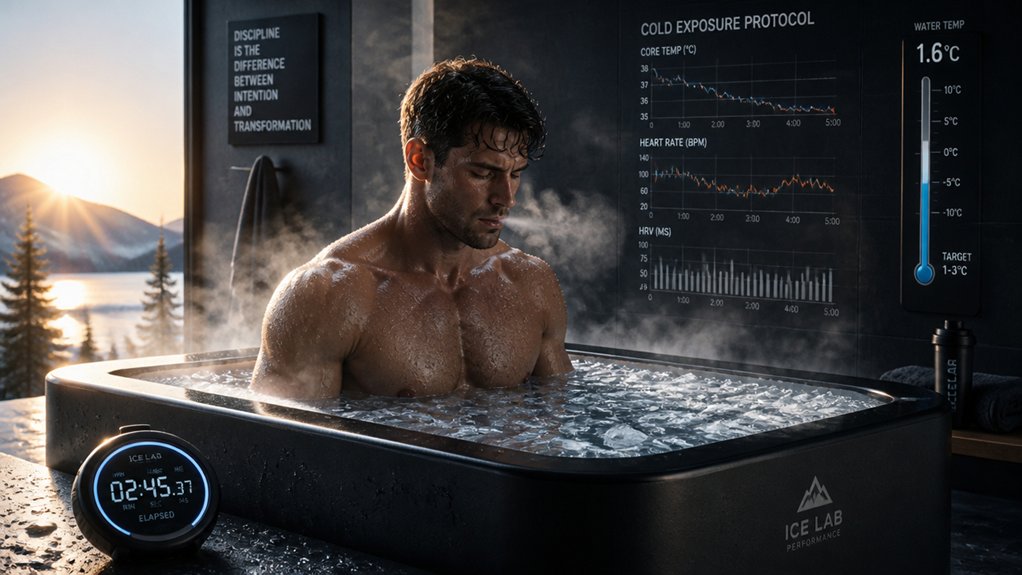
If you keep the water between 39 °F and 55 °F (4 °C–13 °C) and stay in for 2–10 minutes, you’ll hit the sweet spot for norepinephrine release and brown‑fat activation. Aim for 2–4 sessions weekly, totaling 11–15 minutes, to boost metabolic activation, insulin sensitivity, and metabolic rate without overtaxing your system. Shorter dips (<2 minutes) fall short, while longer ones (>10 minutes) trigger uncontrollable shivering and exhaustion. Light movement after immersion sustains non‑shivering thermogenesis and prolongs the benefits.
| Frequency | Temperature | Duration |
|---|---|---|
| 2×/wk | 39 °F (4 °C) | 2 min |
| 3×/wk | 45 °F (7 °C) | 5 min |
| 4×/wk | 55 °F (13 °C) | 8 min |
| 2×/wk | 50 °F (10 °C) | 10 min |
| 3×/wk | 42 °F (6 °C) | 6 min |
Safety & Troubleshooting for Chronic Pain and Raynaud’s Syndrome
Keeping the water between 39 °F and 55 °F works for most people, but for Raynaud’s syndrome or chronic‑pain sufferers you’ll need to dial back the intensity. Your body reacts sharply to cold, so prioritize safety and listen to pain signals. Additionally, consider the guidance on equipment safety and surge protection when setting up any powered components in a cold environment surge protection. Start with a lukewarm plunge, then gradually lower the temperature while monitoring vasoconstriction. Always check with a primary care provider before you begin, especially if you have vascular sensitivity.
Keep water 39‑55 °F; prioritize safety, listen to pain, especially with Raynaud’s or chronic pain.
- Start short – limit exposure to 30 seconds and increase only if pain stays mild.
- Control temperature – never drop below 50 °F; use a thermometer to stay within safe limits.
- Monitor symptoms – stop immediately if numbness or severe pain persists, and record reactions for future adjustments.
These steps protect your health while letting you enjoy cold plunging responsibly.
Frequently Asked Questions
Is a 2 Minute Cold Plunge Good for You?
Yes, a two‑minute cold plunge benefits you; it spikes norepinephrine, activates brown fat, and triggers shivering thermogenesis, boosting calorie burn, insulin sensitivity, and metabolic rate for hours afterward.
What Happens After 30 Days of Ice Baths?
After 30 days of ice baths you’ll notice a higher resting metabolic rate, improved insulin sensitivity, increased brown‑fat activity, reduced cortisol, and better vagal tone, all boosting energy expenditure and fat loss.
Can Ice Baths Help With Lipedema?
Yes, ice baths can help with lipedema by activating brown fat, boosting calorie burn, improving insulin sensitivity, and reducing inflammation, but you must monitor circulation and avoid excessive cold exposure.
Does Cold Plunging Reduce Cortisol?
Yes, cold plunging cuts cortisol. You’ll feel the stress hormone dip right after immersion, and repeated sessions train your nervous system to keep cortisol lower, boosting metabolism and reducing cravings.
In Summary
By stepping into a cold plunge, you fire up brown‑fat cells, torch calories, and trigger a hormonal cascade that sharpens insulin sensitivity. Consistent sessions—3‑5 minutes at 10‑15 °C, a few times a week—maximize these metabolic perks. If you have chronic pain or Raynaud’s, start slowly, monitor your body, and adjust temperature or duration to stay safe while still reaping the benefits.



Leave a Reply