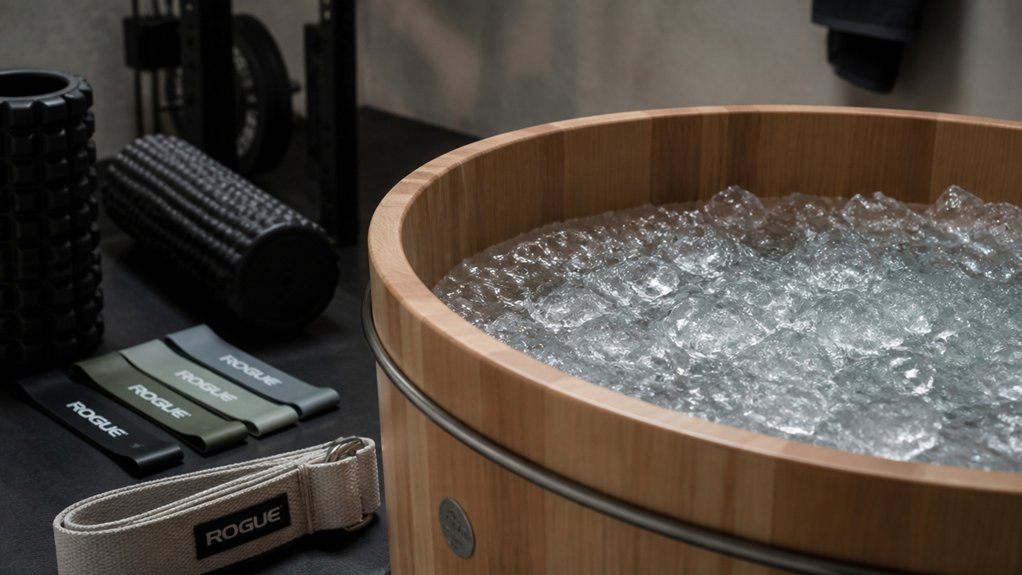
To prepare for an ice bath, start with 5-10 minutes of dynamic movements like leg swings, arm circles, and torso twists to loosen muscles and improve joint mobility. Incorporate gentle cardio and deep breathing to boost circulation and calm your nervous system. Target major muscles and avoid static stretching before immersion. If you continue exploring, you’ll discover how to optimize your pre-plunge routine for safety and maximum recovery benefits.
Why Pre-Plunge Mobility Is Essential Before Cold Water Immersion
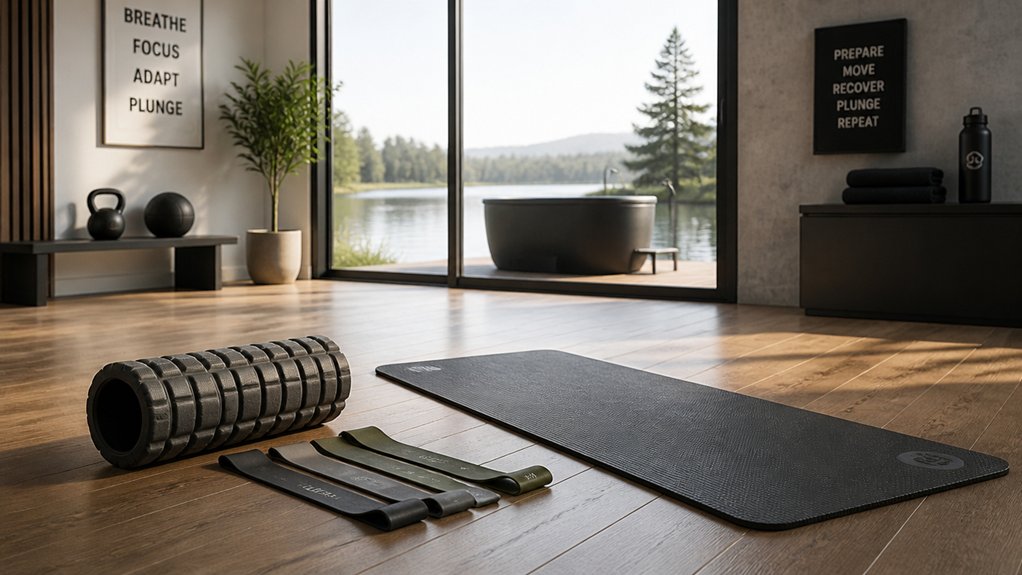
Pre-plunge mobility is essential because it helps prepare your muscles and joints for the icy stress of cold water immersion. Engaging in pre-plunge mobility routines, like mobility exercises and dynamic stretches, increases blood flow and raises your core temperature slightly, reducing muscle stiffness during ice baths.
These routines help mitigate the rapid vasoconstriction caused by cold water, which can impair muscle function and increase the risk of strain. By warming up beforehand, you enhance circulation and activate your nervous system, supporting quicker recovery benefits post-immersion.
Establishing a focused mobility flow decreases the chances of stiffness and reduced muscle contractility afterward. Ultimately, pre-plunge routines keep you safer, more comfortable, and better able to maintain strength and power during cold water immersion sessions.
Top Dynamic Stretches to Loosen Muscles for Cold Plunging
To effectively prepare your muscles for cold water immersion, incorporate dynamic stretches that boost blood flow and loosen joints. These movements help warm muscles, improve mobility, and support neuromuscular activation. For a safe cold plunge, focus on exercises like leg swings, arm circles, and torso twists. They enhance joint range of motion and prevent stiffness, aiding muscle contractility during cold water immersion. Dynamic hip openers such as walking lunges and hip circles specifically target lower limbs, while shoulder rolls and scapular retractions mobilize your upper body. Incorporate these moves into your routine to optimize muscle readiness and reduce injury risk. Additionally, using foam rollers can further loosen tight muscles and fascia prior to plunging.
Easy Movements to Boost Circulation and Prepare Your Joints
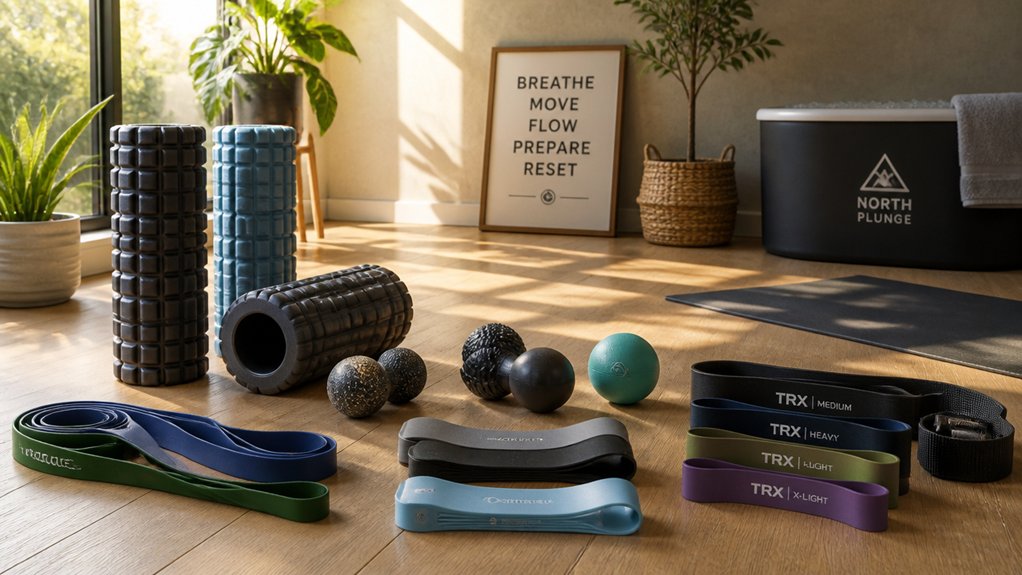
Engaging in gentle, low-impact movements like walking, cycling, or slow bodyweight exercises can effectively boost circulation and prepare your joints for cold water immersion. These easy movements help stimulate blood flow and promote joint lubrication, reducing stiffness before your cold plunge.
Incorporate gentle dynamic stretches such as arm circles, leg swings, and hip openers to further increase circulation and enhance joint range-of-motion. Mobilizing key joints with controlled exercises like ankle circles and shoulder rolls maintains flexibility and prevents tightness during cold water therapy.
Slow, deliberate bodyweight movements like lunges and torso twists activate your body’s circulation and stimulate connective tissues. Combining deep breathing with these mobility drills calms your nervous system, ensuring you’re physically and mentally prepared for the cold plunge ahead.
Targeted Exercises to Prevent Injury When Cold Water Immersion
Focusing on targeted exercises that enhance joint stability and muscle control can markedly reduce injury risk during cold water immersion. Incorporate dynamic stretches like leg swings and shoulder circles to maintain joint range of motion and ease muscle stiffness. Light aerobic movements, such as walking or gentle cycling, boost blood flow to prevent muscle strain when entering the cold plunge. Additionally, mobility drills for hips, knees, and ankles keep movement fluid, counteracting vasoconstriction and maintaining flexibility. Including controlled breathing techniques helps relax your nervous system, making cold water immersion more tolerable. Engaging in these breathing exercises can also support stress reduction and overall resilience during cold exposure.
How to Create an Effective Pre-Plunge Routine for Safe Cold Baths
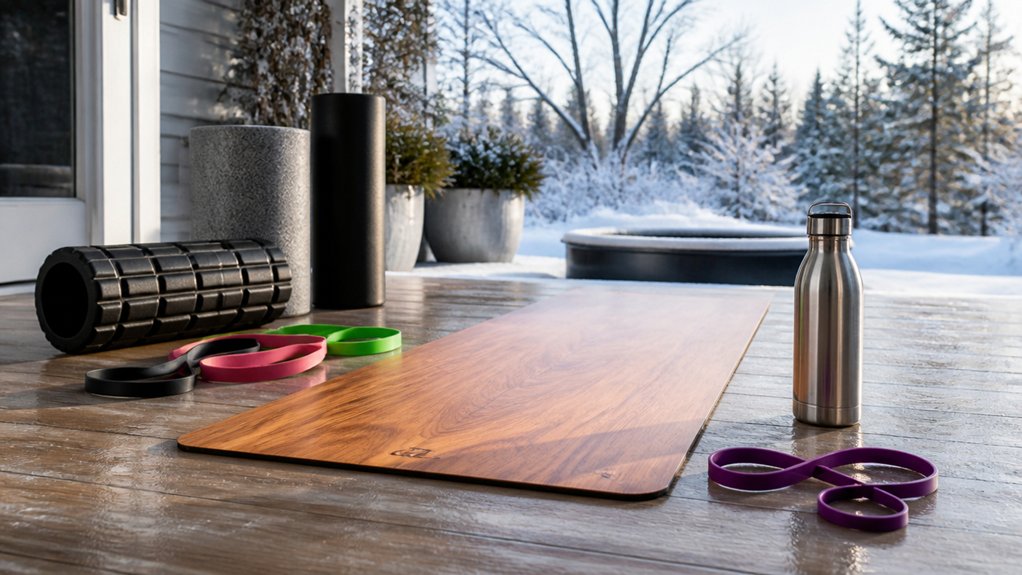
Creating an effective pre-plunge routine starts with preparing your body to handle the sudden cold exposure safely. Begin with a 5–10 minute dynamic warm-up that includes light cardio and joint mobility exercises to boost blood flow and reduce muscle stiffness.
Focus on targeted stretching for major muscle groups like hamstrings, quadriceps, calves, and shoulders; this improves flexibility while preventing tight muscles during cold water immersion. Avoid static stretching immediately before the plunge, as it lowers muscle temperature. Instead, perform movements that generate warmth without causing fatigue.
Incorporate controlled breathing exercises, such as deep diaphragmatic breaths for 3–5 minutes, to calm your nervous system and mitigate shock. Ending the routine 5–10 minutes before the ice bath helps maintain elevated muscle temperature for a safer, more comfortable experience. Additionally, selecting compression therapy devices with adjustable pressure levels can help optimize recovery and comfort before the cold immersion.
Frequently Asked Questions
What Should You Do Before a Cold Plunge?
Before a cold plunge, you should perform gentle dynamic stretches, limb movements, light aerobic activity, and controlled breathing to warm muscles, boost circulation, and calm your mind, helping you prepare safely and effectively for the cold immersion.
What Is the 3 3 3 Rule for Exercise?
The 3 3 3 rule involves doing three sets of three different dynamic mobility exercises for about three minutes each. It helps you warm up, increase flexibility, and boost circulation before cold immersion or intense workouts, reducing injury risk.
Can Ice Baths Help With Lipedema?
Ice baths can help with lipedema by reducing swelling, easing pain, and improving circulation through vasoconstriction and vasodilation. However, they shouldn’t replace medical treatments and you should consult your healthcare provider first.
What Is a Good Cold Plunge Routine?
A good cold plunge routine involves starting with dynamic stretches and mobility exercises, then gradually immersing yourself, focusing on deep, controlled breathing to ease shock, and ending with gentle movements to help your body adapt smoothly.