
To prepare for an ice bath, start with 3-5 minutes of brisk walking or light jogging to boost your blood flow and raise your core temperature. Incorporate dynamic movements like arm circles, leg swings, and air squats to loosen joints and activate major muscles. Practice slow, deep breathing to calm your nerves and enhance relaxation. Using these exercises helps your body adjust gradually, making your cold plunge safer and more comfortable—continue on to learn even more effective techniques.
Why Warming Up Properly Before an Ice Bath Prevents Discomfort
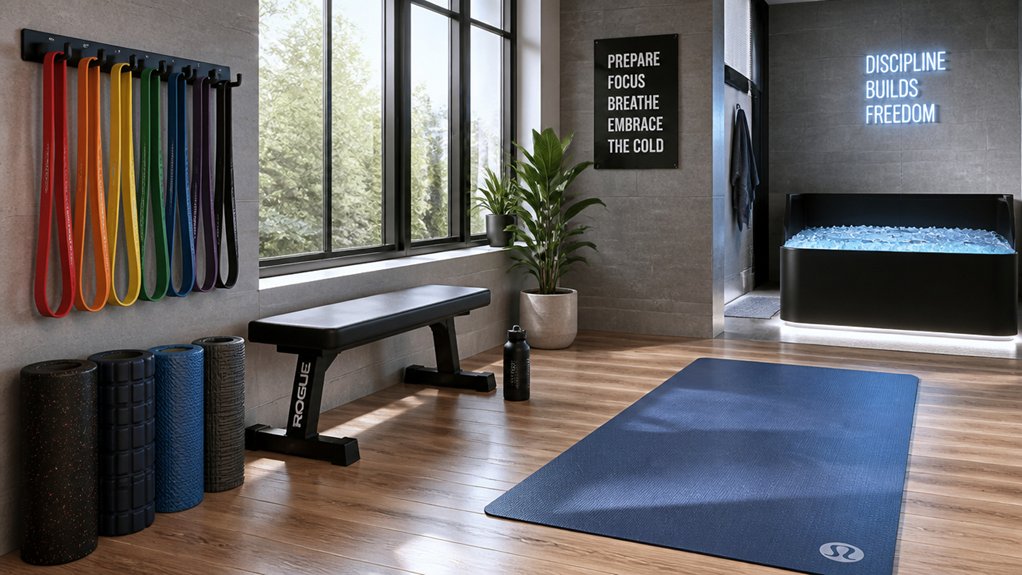
Warming up properly before an ice bath is essential because it prepares your muscles and circulatory system for the sudden cold exposure. Engaging in warmup exercises like light jogging, arm circles, and leg swings boosts blood flow and raises muscle temperature, reducing shock and discomfort.
These dynamic movements gradually increase your heart rate and activate your nervous system, making the adjustment into the cold less intense. Warming up also prompts vasodilation, which counters the initial vasoconstriction caused by cold water, promoting better circulation during immersion.
Additionally, deep breathing exercises help activate your parasympathetic nervous system, easing your body’s cold response. Overall, a proper warmup minimizes muscle tension, numbness, and nervous system stress, making your ice bath more effective and comfortable.
Easy Aerobic Moves to Get Your Blood Flow Going
Getting your blood flowing with easy aerobic moves is a simple yet effective way to prepare your body for an ice bath. Just 3-5 minutes of brisk walking or light jogging increases your heart rate and circulation, easing the adjustment during cold immersion. Dynamic exercises like arm circles, leg swings, and hip rotations warm muscles and joints gently, reducing muscle stiffness. These low-intensity activities raise core temperature slightly, helping blood vessels dilate and improving heat regulation before the cold shock. Performing easy aerobic moves also boosts oxygen delivery and primes your nervous system, supporting mental readiness and making the recovery process smoother. Incorporating resistance bands into your warm-up can enhance blood flow and activate muscles more effectively, especially when using versatile elastic bands designed for warm-ups.
In this way, these simple movements and tools work together to prepare your body for the cold exposure ahead.
Breathing Techniques to Calm Your Nerves Before Cold Exposure
Controlling your breath can help tame your nerves before stepping into the ice bath. By practicing slow, deep breaths, you activate your relaxation response and reduce anxiety. Incorporating breathing resistance tools can further enhance your ability to regulate breath and promote calmness. This mindful breathing boosts your mental resilience and prepares you for cold exposure.
Deep Breathing Practices
Have you ever wondered how deep breathing can help you stay calm before an ice bath? Deep breathing techniques, like controlled diaphragmatic breathing, activate your parasympathetic nervous system, reducing anxiety during cold exposure.
The Wim Hof Method, which involves cycles of deep inhales and forceful exhales, boosts oxygen levels, improving both mental focus and cold tolerance.
Practicing slow, rhythmic breaths for 3–5 minutes before immersing in ice baths helps lower the fight-or-flight response, making the experience more manageable. Additionally, deep breathing raises blood oxygen saturation, which can regulate body temperature and lessen the shock response when entering cold water.
Consistently applying these breathing exercises enhances your resilience to cold stress, strengthening your mind-body control and reducing discomfort during cold exposure. Using cold-weather-optimized techniques and devices can further improve your comfort and safety during cold plunges.
Anchoring Calmness
Ever wonder how to calm your nerves right before stepping into an ice bath? Anchoring calmness starts with a controlled breathing technique. Focus on deep inhales and passive exhales to activate your parasympathetic nervous system, helping you relax.
Incorporate breathe retention, holding your breath gently for a few seconds after each inhale, to enhance mental control and reduce anxiety. Slow, deliberate breath holds during warmup dampen the initial shock and ease the cold stress.
Diaphragmatic breathing for 3-5 minutes lowers your heart rate and stabilizes your nervous system response. By combining rhythmic breathing with focused mental attention, you create a sense of calm that manages the adrenaline spike triggered by cold exposure. Incorporating guided meditation devices can further deepen relaxation and improve your mental preparedness.
This practice boosts resilience and makes your immersion experience more comfortable.
Mobility Drills to Loosen Up Your Joints for a Safer Cold Plunge
Start with simple movements like arm circles, hip rotations, and ankle rolls to boost blood flow and improve your joint range.
Gentle bodyweight exercises such as air squats and leg swings warm muscles and increase flexibility, reducing injury risk. These routines prepare your nervous system and circulation, making your cold plunge safer and more comfortable. Additionally, incorporating high-density foam rollers can help loosen muscle tightness before the plunge.
Joint Circulation Enhancement
Engaging in gentle joint mobility drills before an ice bath can greatly improve circulation and reduce the chances of stiffness.
When you perform movements like arm circles, leg swings, and hip rotations, you stimulate joint circulation, which boosts blood flow to key areas. This increased circulation helps deliver oxygen and nutrients, making your joints more resilient to cold water immersion.
Mobility exercises activate joint tissues, promoting better blood flow and counteracting the vasoconstriction caused by a cold plunge. Consistently warming up your major joints—shoulders, hips, knees, and ankles—reduces the risk of joint numbness and discomfort after cold immersion.
Incorporating specific warm-up routines targeting your vascular system can further enhance circulation and prepare your body for the cold shock, ensuring a safer experience. Proper joint circulation preparation guarantees safer, more comfortable cold water immersion, enabling you to maximize the benefits while minimizing potential joint issues.
Muscle Flexibility Boost
Performing dynamic mobility drills before an ice bath effectively loosens muscles and enhances joint flexibility, reducing the risk of stiffness and injury during cold immersion. Incorporate movements like arm circles, leg swings, and hip openers to increase blood flow and boost flexibility.
Low-intensity exercises such as pushups, air squats, and gentle yoga poses help loosen muscles and joints, supporting smoother recovery after an icy bath. Focusing on major joints—hips, shoulders, and ankles—improves range of motion, making cold water immersion safer and more comfortable.
Slow, controlled stretches maintain circulation and prepare muscles for temperature changes, preventing tightness. Consistent mobility drills promote gradual muscle release, reducing constriction and discomfort during cold plunge immersion, leading to a more beneficial recovery process.
Additionally, ensuring proper insulation features of your cold plunge setup can help maintain consistent temperatures, making your pre- and post-immersion routines more effective.
Dynamic Range Preparation
Before stepping into an ice bath, it is essential to prepare your joints with dynamic mobility drills that prime your body for cold exposure. These exercises loosen your joints and improve joint mobility, reducing the risk of injury during cold temperatures. Start with slow, controlled joint circles like arm circles, hip circles, and ankle rolls to increase synovial fluid. Follow with dynamic stretches such as leg swings, activating hip and leg joints. Incorporate gentle spinal twists and torso rotations to mobilize your vertebrae, enhancing flexibility. Low-intensity movements like walking lunges or bodyweight squats engage multiple joints and boost blood flow, helping your body adapt to the cold. Use a wide squat hold or horse stance to open up your hips, promoting balance before immersion. Proper compression, such as stretchable sleeves, can also support joint stability during cold exposure.
Resistance Exercises to Activate Key Muscles for the Cold Dip
Activating your key muscles with resistance exercises primes your body for the cold dip by generating internal heat and improving circulation. Bodyweight movements like air squats and pushups stimulate major muscle groups, boosting blood flow and helping to resist the effects of cold.
Dynamic movements such as arm circles and leg swings increase circulation, especially in the shoulders, hips, and legs—areas exposed to the cold during immersion. Engaging in low-intensity resistance routines stimulates muscle contractions that promote blood flow, reducing numbness and cold shock impact immediately after the dip.
Incorporating core stabilization exercises like horse stance holds enhances body control and mental focus, aiding in managing cold exposure. These resistance exercises prepare your neuromuscular system and create metabolic heat without fatiguing your muscles.
How to Create Your Personalized Pre-Plunge Warmup Routine
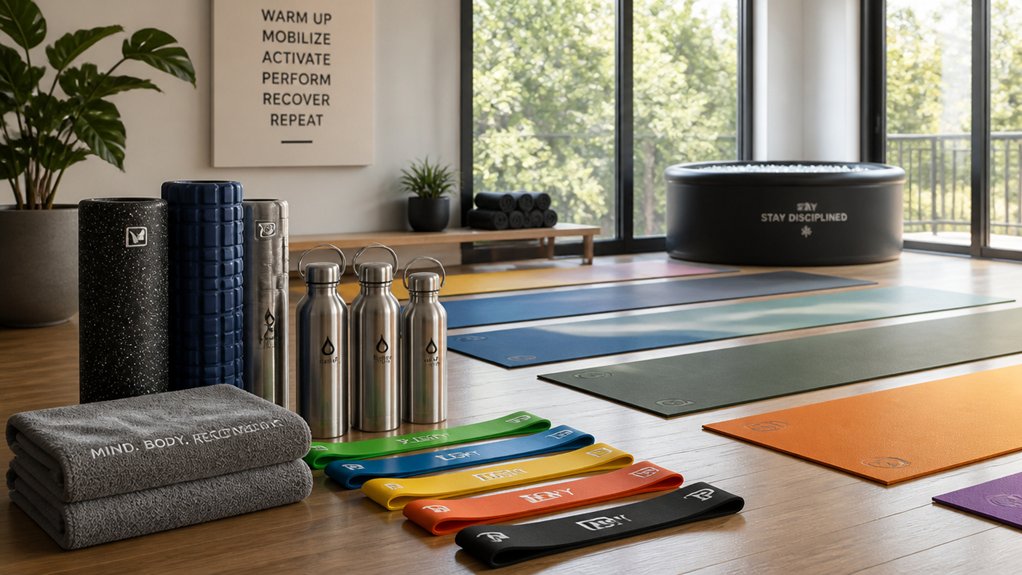
Creating a personalized warmup routine tailored to your needs can make your ice bath experience safer and more effective. To optimize your body’s core temperature and support the healing process, start with 5-10 minutes of light aerobic activity like jogging or brisk walking. This gentle movement helps activate circulation and warm your muscles without overexerting.
Incorporate dynamic stretches—arm circles, leg swings, and air squats—to improve joint mobility and muscle readiness. Add low-intensity calisthenics, such as pushups and torso twists, to increase blood flow and prepare multiple muscle groups.
Adjust the warmup intensity based on your fitness level, aiming to feel warm but not overheated, since overheating can heighten shock upon immersion in the cold tub.
Tips for a Comfortable and Safe Ice Bath Experience
Guaranteeing a comfortable and safe ice bath experience starts with paying attention to your body’s signals and preparing appropriately. The best time for using an ice bath varies, but avoid right after intense activity to prevent overstress.
Begin with gentle activities like slow walking, arm circles, or air squats to warm muscles and encourage circulation without causing sweating. Incorporate deep, slow breathing exercises to help regulate your nervous system and mentally prepare for cold water immersion (CWI).
Gradually increase exercise intensity with gentle yoga or low-intensity cycling to elevate your core temperature safely before entering the ice bath. Avoid vigorous warm-ups that cause sweating, as they can make maintaining body temperature during the ice bath more challenging. Proper preparation guarantees a safer, more comfortable experience.
Frequently Asked Questions
How to Prepare Your Body for an Ice Bath?
To prepare your body for an ice bath, warm up with light jogging or brisk walking, do dynamic stretches, practice deep breathing, and perform light bodyweight exercises. Avoid intense efforts to prevent fatigue and optimize cold tolerance.
Can Ice Baths Help With Lipedema?
Ice baths may help with lipedema by reducing inflammation, improving lymphatic drainage, and alleviating symptoms like pain and heaviness. However, use them cautiously, combine with other therapies, and consult your healthcare provider beforehand for personalized advice.
Can Ice Baths Lower Blood Pressure?
Ice baths can temporarily raise blood pressure due to vasoconstriction and norepinephrine spikes, but with repeated exposure and proper warming afterward, you might improve vascular tone, potentially aiding long-term blood pressure regulation. Always proceed cautiously.
Can You Cold Plunge if You Have Raynaud’s?
You should avoid cold plunges if you have Raynaud’s, as cold can worsen symptoms. Consult your healthcare provider first, start with very brief, mild water exposures, and always prioritize your safety and individual tolerance.