
Research shows that effective cold acclimation protocols involve daily or near-daily exposure at temperatures between 10–15°C for 1–2 hours over 10–14 days. Starting with mild cold and gradually lowering the temperature helps your body adapt more efficiently. Combining passive cooling methods with low-to-moderate exercise accelerates improvements. Consistent exposure and gradual progression are key, and more detailed strategies can help you optimize your adaptation process—keep exploring to find out how to get started safely and effectively.
What Is Cold Acclimation and How Does It Work?
Have you ever wondered how repeated cold exposure can help your body better withstand frigid temperatures? That’s the essence of cold acclimation. When you consistently expose yourself to cold environments, your body undergoes physiological adaptations to improve cold tolerance.
These include increased metabolic heat production through non-shivering thermogenesis and enhanced skin blood flow, which helps maintain your skin temperature. Repeated exposure to mildly cold temperatures, like 10–15°C for 1–2 hours daily, triggers these responses over days or weeks. Incorporating water treatment solutions into your routine can also support these adaptations by maintaining water quality and maximizing comfort during cold exposure.
As a result, your core and skin temperature thresholds for shivering decrease, and hormonal responses, such as norepinephrine release, adapt accordingly. These changes make you feel more comfortable and reduce the risk of cold-related injuries in harsh environments.
Which Cold Acclimation Protocols Are Supported by Scientific Research?
Scientific studies show that effective cold acclimation protocols typically involve consistent, repeated cold exposure over several days. These repeated exposures promote physiological adaptations, such as increased cold tolerance and improved thermoregulation.
Common protocols include daily or near-daily sessions lasting 1–2 hours at temperatures around 10–15°C for 10–14 days, which foster measurable responses. Both passive cold exposure—like cold air or immersion—and active methods are used, with gradual increases in stimulus intensity to optimize adaptation.
Research indicates that intermittent cold exposure several times weekly can be effective but usually requires longer periods to reach similar levels of acclimation. These practices help enhance peripheral blood flow, shivering, and non-shivering thermogenesis, improving your ability to tolerate cold environments. Insulation and durable materials play a crucial role in maintaining consistent temperatures during these protocols.
How Do Different Cold Acclimation Methods Compare in Effectiveness?
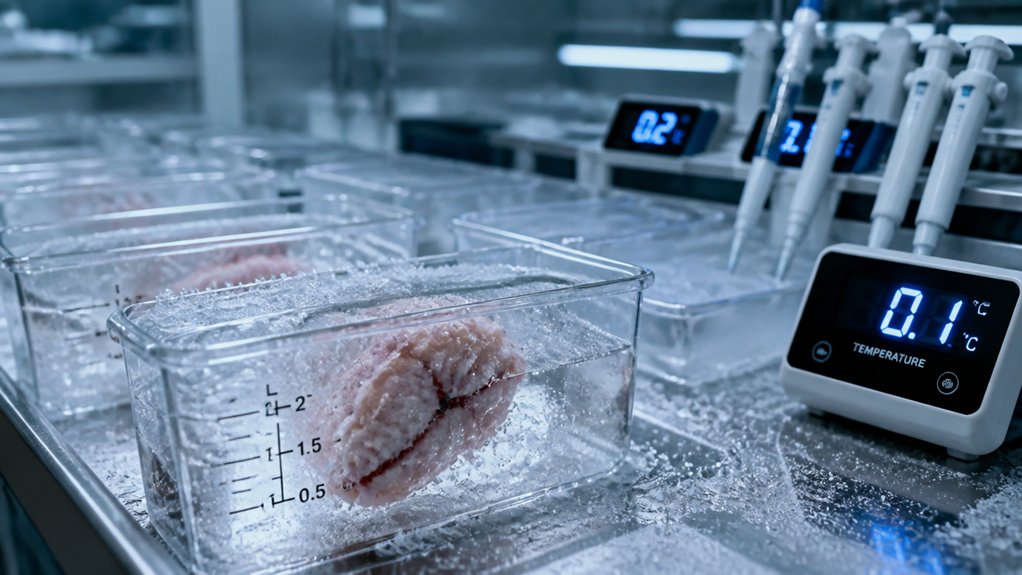
Different cold acclimation methods vary in their results, with some producing more substantial physiological changes than others. Protocol duration and intensity influence how effective each approach is, while methods like passive exposure or active exercise yield different adaptations. Incorporating suitable suit materials, such as neoprene or breathable nylon, can also impact the effectiveness of acclimation by enhancing insulation and comfort. Suit material choice plays a crucial role in optimizing heat retention during cold exposure. Understanding these differences helps optimize acclimation strategies for your goals.
Method Variability and Outcomes
When comparing cold acclimation methods, it’s clear that the approach taken greatly influences physiological outcomes. Different heat acclimation induction strategies produce varied adaptations. Controlled hyperthermia (HA) maintains core temperature at about 38.5°C, inducing significant physiological strain compared to fixed-intensity exercise, which declines over time. Exercise–heat exposure protocols, whether long-duration at 50% VO2max or shorter at 75%, offer similar benefits if performed daily during an adequate acclimation period. Spaced sessions over weeks are less effective than consistent daily exposure. Passive methods increase blood volume but don’t replicate exercise–heat adaptations. These differences illustrate how method variability impacts outcomes, and similarly, thermal insulation quality in cooling systems plays a crucial role in optimizing adaptation and efficiency.
Physiological Adaptations Differences
Cold acclimation methods vary in the extent of physiological adaptations they induce, with some approaches prompting broader systemic changes than others. Heat acclimation (HA) techniques like controlled hyperthermia (isothermic HA) target a constant core temperature, producing greater thermoregulatory adaptations by sustaining heat stress and cardiovascular strain. Incorporating synergistic adaptogens supporting stress response in training routines may further enhance these cardiovascular and hormonal adaptations. In contrast, protocols that manage controlled heart rate (HR) or involve passive heat exposure mainly increase plasma volume without eliciting the full range of cardiovascular and thermoregulatory responses. Longer daily heat exposures (60–100 minutes) optimize adaptation, whereas shorter or intermittent sessions lead to less significant changes. Consistent work-rate exercise can reduce physiological strain over time but may limit progressive adaptations, unlike controlled hyperthermia that maintains consistent heat stress for broader systemic changes.
Protocol Duration and Efficacy
The duration of cold acclimation protocols plays a critical role in determining their effectiveness, with longer exposures generally leading to more significant physiological adaptations. Extended protocol durations—ranging from 5 to 14 days—allow your body to develop better metabolic, cardiovascular, and thermoregulatory responses. Implementing precise temperature control during these protocols ensures consistent and optimal stimulus for adaptation. Intermittent cold exposure over several days can improve tolerance, but continuous daily acclimation often produces stronger adaptations. Combining passive cold exposure with mild exercise enhances responsiveness by stimulating greater metabolic heat production and cardiovascular adjustments.
The efficacy of your acclimation also depends on exposure intensity and progression; protocols that gradually increase cold exposure over at least a week tend to induce faster and more substantial physiological adaptations. Ultimately, longer, progressively challenging protocols optimize acclimation outcomes.
How Long Does Cold Acclimation Take to Show Results?
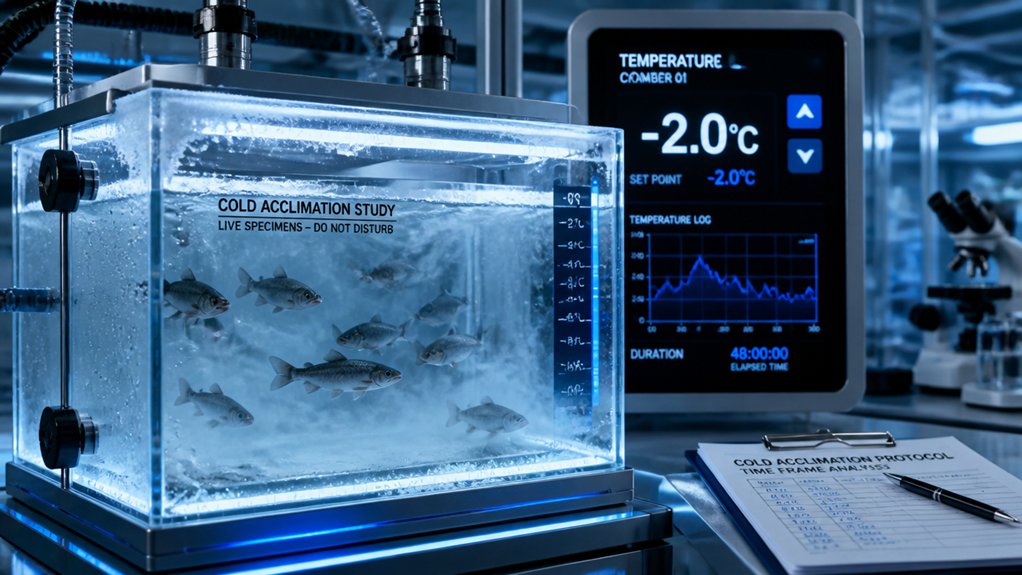
How long does it take for cold acclimation to produce noticeable results? Typically, you’ll notice early physiologic adaptations within the first week of repeated cold exposure, such as improved thermogenesis and increased cold tolerance.
Significant changes, like enhanced metabolic heat production and more efficient peripheral vasoconstriction, usually develop after 2 to 3 weeks of consistent exposure. The exact timeline depends on exposure duration, intensity, and individual factors like fitness and age.
During this period, your body gradually adjusts to colder temperatures by optimizing heat production and preserving core temperature. While some partial adaptations may linger for weeks after stopping cold exposure, full acclimation usually requires continuous, careful exposure over several weeks to achieve lasting effects. For optimal tracking and safety, using reliable cold plunge thermometers with timer features can help monitor progress and prevent overexposure.
What Are the Practical Steps to Implement Cold Acclimation Protocols?
To safely implement cold acclimation, you need to establish temperature ranges that are effective yet tolerable. Then, develop a progressive exposure schedule that gradually increases duration or cold intensity to promote adaptation without risking harm. Monitoring your physiological responses helps you adjust these parameters for safe, ideal results. Incorporating appropriate temperature control options such as thermostats or external chillers ensures consistent and precise cold exposure.
Establish Safe Temperature Ranges
Establishing safe temperature ranges for cold acclimation involves selecting environments that are cool enough to stimulate physiological adaptations without risking hypothermia or frostbite. You should target temperatures above freezing (≥0°C), typically between 10–15°C, to effectively trigger cold-induced thermogenesis while guaranteeing safety.
Control exposure duration, usually 1–2 hours daily over 1–2 weeks, to prevent excessive cold stress. Monitoring core body temperature and skin temperature helps you adjust the environment and exposure time, keeping participants within safe limits. Including subjective cold sensation assessments secures comfort and safety.
Implementing cold acclimation protocols with conservative steps in temperature reduction minimizes adverse effects, allowing for safe, effective adaptation without compromising health.
Develop Progressive Exposure Schedule
Implementing a progressive cold acclimation schedule involves carefully planning and gradually increasing exposure to cold environments over several days. During this period, you should start with mild cold, such as 15°C, for about 30 minutes, then progressively decrease the temperature to 5°C over 7–14 days.
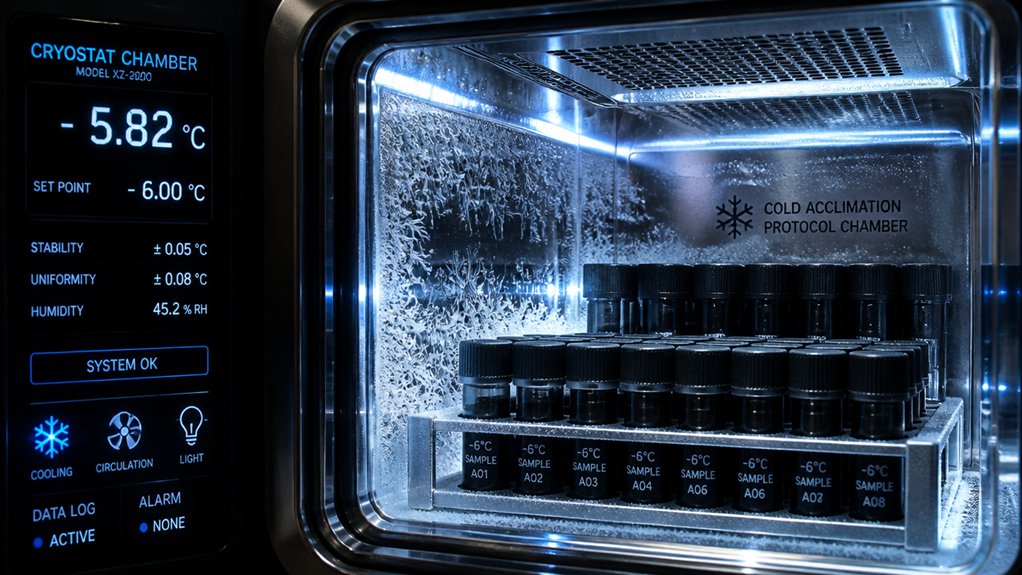
Using controlled environmental chambers helps you manage incremental temperature drops, which stimulate physiological adaptations. Monitor core body temperature, skin temperature, and subjective thermal comfort to guarantee safety and effectiveness, avoiding hypothermia.
Incorporate exercise with cold exposure, beginning with low-intensity activity and progressing to moderate intensity, to boost metabolic heat production. Consistent daily or near-daily sessions lasting 60–90 minutes over at least two weeks help improve cold tolerance and thermoregulatory efficiency.
How Does Environmental Exposure Influence Cold Acclimation Success?
Ever wondered how different types of environmental exposure shape your body’s ability to adapt to cold? The success of cold acclimation relies heavily on factors like temperature severity, exposure duration, and the type of cold stimulus. Consistent exposure to moderate cold over days promotes thermal adaptations such as better peripheral blood flow and increased metabolism. Whole-body immersion produces more robust adaptations than localized cooling, as it causes greater heat loss. Frequency also matters: daily or nearly daily exposures accelerate acclimation compared to intermittent sessions. The level of cold stress, like lower temperatures or wind chill, influences how quickly and effectively your body adapts. Properly managed environmental exposure can reveal your body’s potential to tolerate cold better over time.
| Cold Exposure Factors | Impact on Acclimation |
|---|---|
| Temperature severity | Accelerates thermal adaptations |
| Exposure duration | Enhances physiological changes |
| Cold stimulus type | Determines robustness of response |
What Are the Common Challenges and How Can They Be Overcome?
One of the main challenges in acclimation protocols is achieving consistent results despite individual variations and environmental factors. Heat adaptations vary widely, making it essential to minimize stress and stabilize physiological systems.
Heat acclimation protocols often encounter issues like rapid decay of adaptations, which can be addressed through heat re-acclimation sessions that are shorter, typically 8–12 times less than initial exposure. To guarantee reliability, strategies like multi-day habituation help reduce novelty-induced stress, promoting settled animal behavior.
Short intraday acclimations, around 30–45 minutes, balance calming animals without disrupting their sleep or adding stress during testing. Carefully timing acclimation periods—often 1–3 weeks before events—and employing controlled re-acclimation helps maintain heat adaptations effectively, despite these inherent challenges.
How Long Do Cold Acclimation Benefits Last Without Reinforcement?
Without reinforcement, the benefits gained from cold acclimation gradually diminish over time. Physiological adaptations, such as improved thermoregulation and sweat rate adjustments, decay progressively during detraining periods.
Heart rate and core temperature responses tend to fade faster, with about 2.5% loss daily after stopping cold exposure. However, some adaptations, like sweat rate improvements, remain more durable if the initial acclimation was longer. Major loss of these benefits usually occurs after roughly a month without reinforcement.
Fortunately, rapid re-acclimation can quickly restore physiological adaptations, often more efficiently than starting from scratch. Continuous reinforcement helps maintain these benefits longer, but once lost, they can mostly be regained through re-exposure, highlighting the importance of consistent cold acclimation practices.
When Should You Consider Re-Acclimation After Interruptions?
Deciding when to evaluate re-acclimation hinges on how long you’ve interrupted heat exposure. Heat acclimation decay can considerably reduce adaptations after about one week without heat exposure, with major losses typically by one month.
Heart rate adaptations tend to decay faster than core temperature (T_core) adjustments, often at about 2.5% per day after five days of no heat. This quick decline suggests you should consider heat re-acclimation if you’ve experienced prolonged interruptions.
Fortunately, re-acclimation occurs 8 to 12 times faster than decay, allowing rapid restoration of physiological benefits. If your heat exposure has been interrupted for more than a week, implementing re-acclimation protocols helps quickly regain heart rate and other heat adaptation benefits, ensuring you’re prepared for heat stress during competition or training.
Frequently Asked Questions
What Is the 20 Rule for Acclimatization?
The 20 rule for acclimatization recommends you undergo at least 20 days of daily heat exposure, each lasting around 60-100 minutes, to promote full physiological adaptations like improved sweating, cardiovascular stability, and heat tolerance.
What Are the Best Practices for Acclimatization?
You should conduct daily heat exposure sessions lasting 60–100 minutes over at least a week, combining moderate to low-intensity exercise, maintaining consistency, and re-acclimating quickly after breaks to maximize adaptation and maintain physiological benefits effectively.
What Are the Different Types of Acclimation?
You can pursue heat acclimation through active exercise, passive heat exposure, or a combination. Options include constant work rate, self-paced, controlled hyperthermia, or heart rate-based protocols, typically lasting 8+ days for ideal physiological adaptation.
What Are Some Examples of Acclimating?
You can acclimate by gradually increasing heat exposure over 8 or more days, performing daily sessions of 60-100 minutes in controlled environments, and allowing several days for species-specific adaptation before procedures or testing.