
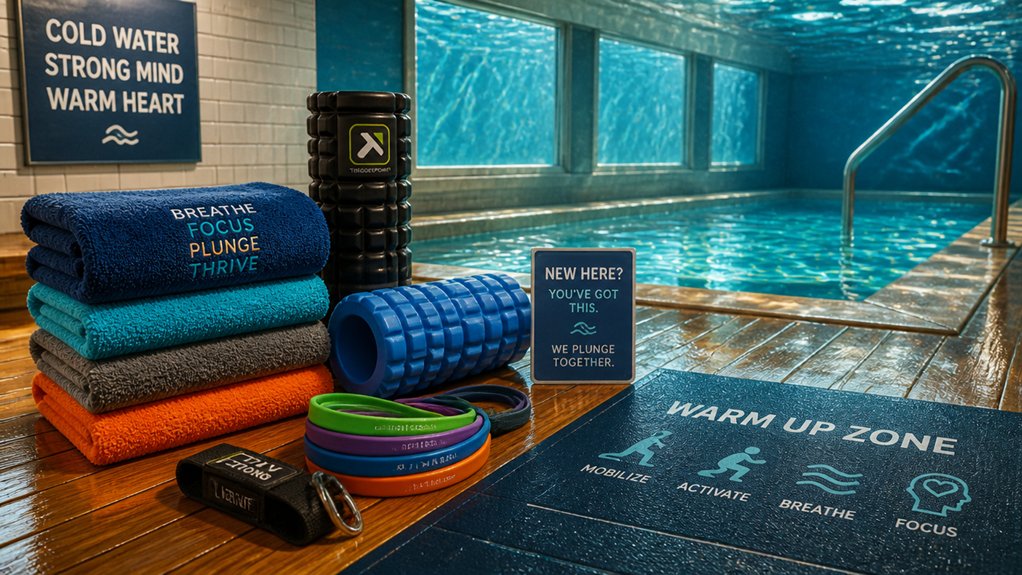
Before your first cold plunge, make sure to do a quick warm-up to prepare your body and reduce injury risk. Start with 2-3 minutes of light cardio like brisk walking or stair climbing, then add 3-5 minutes of dynamic stretches such as arm circles, leg swings, and hip rotations. Activate your muscles with bodyweight squats or lunges and avoid static stretching. Doing this properly boosts circulation, improves flexibility, and gets your nervous system ready. Keep going to discover more essential tips.
Why Warming Up Before a Cold Plunge Is Essential
Warming up before a cold plunge is essential because it prepares your body to handle the shock of sudden cold exposure. When you warm up properly, you raise your body temperature and boost blood flow, which helps reduce the risk of muscle strains and joint injuries.
A good warm-up activates your central nervous system and gets your muscles ready to maintain flexibility and function, even in freezing water. If you skip this step, your cold muscles act like stiff rubber bands, increasing injury risk.
Dynamic warm-up movements improve circulation and help your body adapt gradually to the cold, minimizing shaking and poor muscle performance. Incorporating resistance bands for warm-up can further enhance muscle activation and flexibility before a plunge. Overall, preparing muscles and joints through warming supports your long-term joint and muscle health during cold plunges.
The Science Behind Cold Exposure Preparation and Warm-Up
Warming up before cold exposure is key to reducing injury risk, as cold muscles become stiff and prone to strains.
Raising your body temperature with dynamic movements improves flexibility and prepares your nervous system for sudden cold stress. This preparation boosts your performance and helps you stay safe during your first plunge. Additionally, using a percussion massager can help loosen tight muscles and enhance blood flow before exposure to cold water.
Cold Muscles and Injury Risk
When muscles are cold, they behave like stiff rubber bands, making injuries more likely during sudden or intense activity. Cold exposure reduces flexibility, decreases tendon and joint fluidity, and increases tissue vulnerability. Without a proper warm-up, cold muscles generate less force, impair neuromuscular coordination, and cause poor movement patterns. Dynamic warm-ups raise muscle and tendon temperature, lower fluid viscosity, and prepare your nervous system, greatly reducing injury risk. Jumping into activity cold can lead to strains, tears, or joint injuries, especially after sitting or inactivity. To understand this better, see the table below:
| Effect of Cold Muscles | Benefits of Warm-Up |
|---|---|
| Stiff rubber band behavior | Increased flexibility |
| Reduced tendon and joint fluidity | Improved tissue readiness |
| Less force generation; injury risk | Enhanced neuromuscular coordination |
A warm routine prepares your body for safe plunging. Additionally, applying anti-chafe balms before water entry can help protect your skin from irritation caused by friction during cold-water therapy.
Temperature’s Role in Flexibility
Temperature plays a crucial role in flexibility, especially before cold exposure. Your body temperature directly influences how muscles and tendons respond.
When body temperature is low, tissues become stiff, like stiff rubber bands, increasing the risk of injury. Warming up raises your muscle and tendon temperatures, reducing fluid viscosity around tissues, which improves flexibility. This makes stretching safer and more effective during cold conditions.
Breathing exercise tools support gradual, controlled breathing that can enhance your body’s ability to warm up efficiently and safely, optimizing your preparation for cold exposure.
Dynamic warm-up movements increase blood flow, efficiently elevating your overall body temperature and preparing cold muscles for exertion. Without proper warming, cold exposure leads to stiffer muscles, decreasing force production and risking strains.
Proper warm-up primes your muscle-tendon units, enhances joint mobility, and minimizes injury during cold plunges. Maintaining an adequate body temperature is essential for safe, peak performance.
Pre-Exposure Effects on Performance
Preparing your body with a targeted warm-up before cold exposure is essential because it actively boosts blood flow and activates your muscles, aiding in better performance and safety. A proper body warm raises core and muscle temperature, helping maintain neuromuscular coordination despite cold water immersion. It also primes your energy systems, reducing the chance of fatigue during the plunge.
Dynamic movements increase cardiovascular stability and lessen the shock response, making the adjustment smoother. Without a proper body warm, your muscles are more prone to stiffness, cramps, or strains, as cold water can impair muscle force production and elasticity.
Just 5-10 minutes of a brisk warm-up prepares your body, improves performance, and minimizes injury risks by ensuring your muscles are ready for the cold challenge ahead.
How Proper Warm-Up Boosts Your Cold Plunge Performance
A proper warm-up greatly enhances your cold plunge performance by priming your body for the shock of cold water. It raises your muscle and joint temperature, lowering the risk of strains and injury.
A proper warm-up boosts cold plunge performance by raising temperature and reducing injury risk.
By activating your central nervous system, dynamic warm-up movements improve circulation and prepare your body for sudden cold exposure. A 5-10 minute warm-up increases your heart rate and blood flow, helping your muscles stay flexible and reducing stiffness.
Additionally, warming up primes your respiratory system, enabling controlled breathing and decreasing initial shock. This preparation allows you to handle the cold more safely, perform better, and recover faster. Incorporating recovery tracking apps can further optimize your post-plunge process and monitor your overall recovery.
Choosing the Best Warm-Up Exercises for Cold Plunges
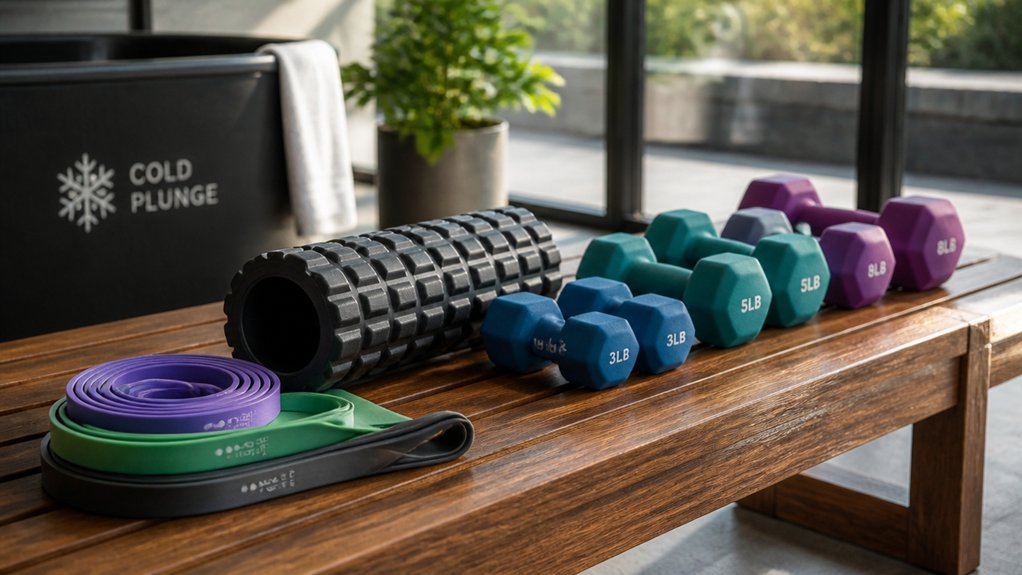
To prepare your body for a cold plunge, focus on warm-up exercises that activate muscles and increase circulation. Use dynamic movements like arm circles, brisk walking, or slow squats to prime your joints and improve flexibility. Avoid static stretching, as it offers little benefit and might hinder your body’s cold tolerance. Incorporating foam roller routines can help release muscle tension and prevent injury, ensuring your muscles are properly prepared for the cold plunge.
Warm-Up Muscle Activation Techniques
When it comes to cold plunges, activating your muscles through targeted warm-up exercises is essential for a safe and effective experience. Proper muscle activation warms muscles and joints while preparing your nervous system for cold exposure. Incorporate dynamic movements such as arm circles, leg swings, and bodyweight squats, which raise muscle temperature and stimulate blood flow. These exercises mimic plunge activities, helping your muscles and joints brace against cold shock. Aim for a 5-10 minute warm-up that elevates your heart rate and targets major muscle groups, reducing injury risk. Avoid static stretching before plunges, as it doesn’t improve muscle readiness for cold. Keep your warm-up lively, engaging muscles and joints to make your cold plunge safer and more enjoyable. Including proper insulation in your setup can also help maintain consistent water temperatures, enhancing your overall experience.
- Arm circles to activate shoulders and upper arms
- Leg swings to loosen hips and legs
- Bodyweight squats for lower body engagement
- Gentle jogging or cycling to boost overall circulation
Dynamic Movements for Cold
Choosing the right warm-up exercises for cold plunges involves selecting movements that activate your nervous system and elevate muscle and joint temperatures efficiently. Dynamic warm-up exercises are ideal because they boost circulation and prepare your muscles through a full range of motion.
Movements like bodyweight squats, arm circles, and leg swings are particularly effective, as they increase your heart rate and mimic the post-plunge activities you’re aiming to perform. Performing 5-10 minutes of these low-to-moderate intensity drills helps your body adapt to the cold, reducing stiffness and injury risk. Additionally, incorporating sensor accuracy considerations by gradually warming up can ensure more reliable physiological feedback during your session.
Avoid static stretching, as it doesn’t raise muscle temperature like dynamic movements do. Instead, focus on dynamic warm-up exercises that mimic your planned post-plunge activities to stay mobile and prepared.
Preparing Joints and Flexibility
Preparing your joints and enhancing flexibility before a cold plunge requires focused warm-up exercises that gently activate and increase blood flow to key areas. This helps reduce stiffness and prepares your body for the cold. Incorporate dynamic movements like hip circles, which improve hip mobility and lubricate joint tissues.
Focus on mobility drills that mimic full range of motion to decrease injury risk and boost flexibility. Light cardio for 5-10 minutes raises tissue temperature, preventing strains from cold muscles.
Avoid static stretching, as it doesn’t effectively prepare your joints and may hinder performance. Instead, incorporate progressive warm-up sets targeting major joints, ensuring proper lubrication.
A Step-by-Step Warm-Up Routine for Beginners
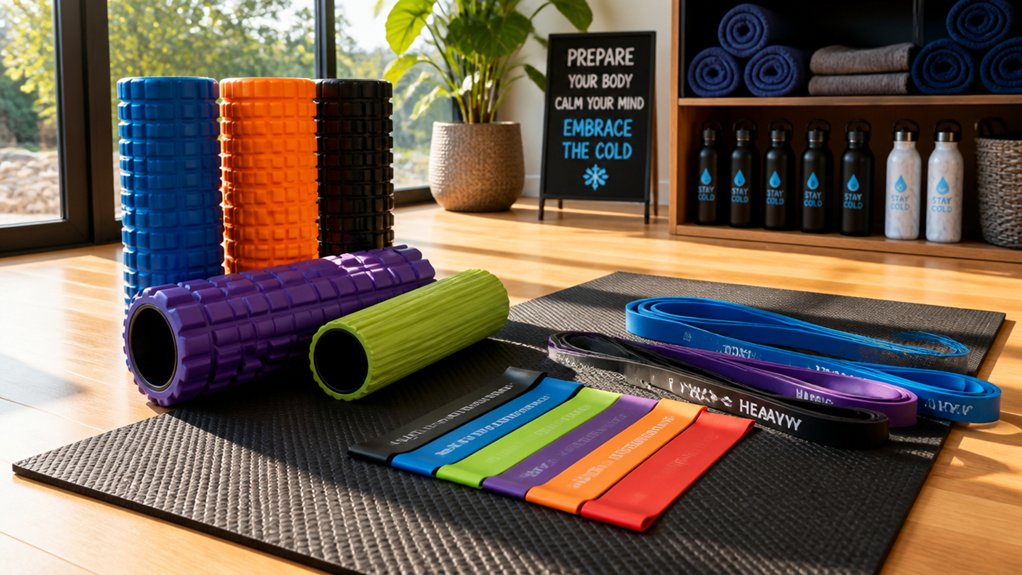
Ready to ease into your first ice plunge? Make sure you start with 2-3 minutes of light cardio like brisk walking or cycling to gently raise your heart rate and warm your muscles.
Then, perform dynamic mobility exercises such as arm circles, hip rotations, and leg swings for 3-5 minutes to improve flexibility and joint readiness. Incorporate bodyweight movements, like 10-20 squats and lunges, to activate your lower body muscles and simulate the demands of the plunge.
Avoid static stretching; instead, focus on continuous dynamic movements to boost muscle temperature and nervous system activation. Keep this routine within 5-10 minutes to guarantee your muscles are warm and prepared, without causing fatigue before stepping into the cold.
How Long Should a Warm-Up Be Before Cold Exposure?
How long should you spend on your warm-up before diving into cold exposure? Aim for about 5 to 10 minutes of warm-up sets. This duration is sufficient to increase muscle temperature and joint mobility without causing fatigue that could hinder your cold plunge experience.
The goal is to raise core and muscle temperatures to reduce injury risk and muscle stiffness during cold exposure. Focus on dynamic movements like light jogging or bodyweight squats that gently elevate your heart rate and prepare your body. Keep your warm-up sets moderate—overdoing it may lead to fatigue and diminish the benefits of cold exposure.
This preparation guarantees your muscles are limber and joints mobile, helping you stay in control and safe during your first cold plunge.
- Keep warm-up sets within 5-10 minutes.
- Use dynamic movements like jogging or squats.
- Avoid high-intensity warm-up sets that cause fatigue.
- Focus on raising core and muscle temperature efficiently.
Common Mistakes to Avoid When Warming Up for Cold Plunges
Many first-time plungers skip warming up altogether, increasing injury risk when muscles are unprepared for cold exposure. Relying solely on static stretching can worsen performance and flexibility issues after you plunge, as it doesn’t prepare your muscles for cold shock.
Additionally, overestimating your cold tolerance and jumping straight into the water can trigger shock responses and reduce muscle control, leading to injury.
Skipping Warm-Up Completely
Skipping the warm-up entirely is a risky mistake that can lead to serious injuries during your cold plunge. Without proper preparation, your muscles and joints remain cold, stiff, and less pliable, increasing the chance of strains or tears.
Jumping straight in also reduces neuromuscular coordination, making movement control difficult and raising the risk of accidents. Additionally, a lack of warm-up prevents your body and central nervous system from gradually adjusting to the cold, which can cause shock and discomfort.
To reduce the risk, always start with a brief warm-up to raise muscle temperature and activate your nervous system.
- Sudden cold exposure increases injury risk
- Cold, stiff muscles are more prone to strains
- Poor neuromuscular control leads to accidents
- Gradual warming helps avoid shock
Relying on Static Stretching
Relying solely on static stretching before a cold plunge can be a common mistake that increases injury risk. The most important thing is recognizing that static stretching doesn’t effectively prepare your muscles or joints for cold immersion. It lowers muscle strength and performance, making tissues more vulnerable to strain during initial movement.
Instead, dynamic, movement-based warm-ups are more suitable—they help increase blood flow, raise muscle temperature, and activate your nervous system. This activation is vital for safe, coordinated movement entering cold water.
Relying only on static stretching neglects these essential steps, increasing stiffness and joint discomfort afterward. The important thing is to avoid static holds and instead focus on active movements that prepare your body properly, reducing injury potential and ensuring a safer plunge.
Overestimating Cold Tolerance
A common mistake before a cold plunge is overestimating your body’s ability to handle the cold without proper preparation. Many first-timers rush in too quickly, believing their bodies will adapt on the spot.
But if you don’t spend enough time warming up, you risk muscle strains, joint injuries, and stiffness. Cold muscles act like stiff rubber bands, increasing injury risk. Jumping into cold water prematurely can also decrease flexibility and neuromuscular coordination.
To avoid this mistake, make sure you’ve spent enough time activating your nervous system and raising your body temperature gradually.
- Skipping or rushing warm-up routines
- Underestimating how cold exposure affects muscles
- Not increasing activity intensity beforehand
- Ignoring the importance of blood flow before immersion
Mobility and Activation Drills to Prepare Your Body
Before jumping into the water, it’s vital to get your body moving with dynamic mobility and activation drills. These working sets should last 30 seconds to a minute each, gradually raising your heart rate and activating key muscles.
Focus on movements that mimic the plunge, like arm circles, hip rotations, and leg swings, to increase joint range of motion and improve neuromuscular coordination.
Incorporate activation exercises such as bodyweight squats and hip extensions to warm and engage muscles critical for controlled entry and maintaining balance.
Prioritize dynamic drills over static stretching, as they better prepare your muscles for rapid cold immersion. This approach helps reduce injury risk and guarantees your body is primed for a successful and comfortable first plunge.
Sample Warm-Up Circuits for Cold Plunging at Different Fitness Levels
To maximize safety and comfort during your cold plunge, it’s important to tailor your warm-up routine to your fitness level.
For beginners, start with gentle cardio like 2-3 minutes of brisk walking or stair climbing, combined with dynamic stretches to gradually increasing circulation and prepare your muscles.
Intermediate and advanced levels should include more dynamic movements such as lunges, leg swings, spinal twists, and Spider-man steps, which activate muscles and improve neuromuscular readiness. Focus on warming areas prone to tightness like hips, shoulders, and spine to reduce injury risk.
Adapting Your Warm-Up for Weather and Environment Conditions
Adapting your warm-up to weather and environment conditions is essential for safe cold plunging, especially when temperatures drop or conditions become damp or windy. Extended warm-ups of 10 minutes or more help reduce injury risk by ensuring muscles and joints reach ideal temperature, avoiding stiffness.
Start with light cardio like jogging or cycling to gradually raise your core temperature, which is especially critical in low temperatures. Incorporate dynamic, full-body mobility exercises targeting the shoulders, hips, and legs to counteract tighter muscles caused by cold or damp conditions.
In wet or windy environments, focus on continuous low-intensity movements during your warm-up to help reduce rapid muscle cooling and maintain flexibility. Adjust intensity and volume carefully, as outdoor conditions demand more caution and gradual effort to help reduce strain and injury.
Why Skipping or Rushing Your Warm-Up Risks Injury and Performance
Skipping or rushing your warm-up can greatly increase your risk of injury and hinder your performance. Jumping into a plunge without properly preparing leaves muscles cold and stiff, making strains and joint injuries more likely.
Without taking at least two minutes, your nervous system and muscles remain underprepared, reducing strength output and risking premature fatigue. Cold tendons can’t generate maximal force, limiting your ability and increasing injury risk.
Rushing also compromises neuromuscular coordination, leading to poor form, less connection between mind and muscle, and joint discomfort. To avoid these hazards, invest sufficient time—at least two minutes—to gradually warm up your body. A slow start guarantees muscles are ready for the cold, boosting safety and maximizing your plunge performance.
- Prevents muscle strains and joint injuries
- Improves strength and force generation
- Enhances neuromuscular coordination
- Reduces fatigue during plunges
Tips to Build a Consistent Pre-Cold Plunge Routine
Establishing a consistent pre-cold plunge routine hinges on incorporating specific warm-up practices that prepare your body effectively every single day. Start with 5-10 minutes of dynamic exercises like bodyweight squats and leg swings to safely elevate muscle temperature and joint mobility.
Incorporate general cardio, such as brisk walking or 2-3 minutes on a stationary bike, to boost heart rate and systemic blood flow. Focus on warming key muscles and joints involved in the plunge to reduce stiffness and prevent shock injuries. Avoid static stretching; instead, use movement-based warm-ups that mimic plunge motions.
Performing this routine consistently every single day helps improve circulation, enhances muscle readiness, and creates a reliable habit, supporting safe and effective cold exposure adaptation over time.
Extra Resources for Perfecting Your Cold Exposure Warm-Up
Enhancing your warm-up routine for cold exposure can be achieved by utilizing various resources designed to optimize safety and performance. To refine your sets, consider tools like guided warm-up videos, apps with preset warm-up protocols, or timers to guarantee consistency. These resources help you track progress, improve your sets, and stay motivated.
Additionally, professional advice from cold exposure coaches or forums can provide personalized tips. You might also invest in accessories like jump ropes or resistance bands to vary your warm-up sets and target different muscle groups more effectively.
Incorporating these resources will help you perfect your warm-up sets, elevate your readiness, and reduce injury risks. Overall, using the right tools ensures your warm-up becomes thorough, efficient, and tailored to your needs.
Frequently Asked Questions
What Is the 3-3-3 Rule for Gym?
The 3-3-3 rule guides your warm-up: do 3 minutes of cardio, 3 minutes of dynamic mobility, and 3 minutes of activation drills. It prepares your body safely, boosts performance, and helps prevent injuries during workouts.
How to Warm-Up Before Doing Push-Ups?
To warm-up before push-ups, you should do light cardio for a few minutes, then dynamic arm circles and shoulder rotations, followed by scapular push-ups and half push-ups, finishing with chest openers to increase blood flow and flexibility.
What Is the 5 5 5 30 Rule?
The 5 5 5 30 rule involves doing five different warm-up exercises, each for 30 seconds, repeating five times. This method prepares your muscles, joints, and nervous system, reducing injury risk and enhancing your plunging readiness.
What Should Come First in a Warm-Up?
You should start with general cardiovascular movement, like light stair climbing or elliptical, to raise your heart rate and body temperature. This prepares your body for dynamic mobility drills and exercise-specific movements, reducing injury risk and improving performance.