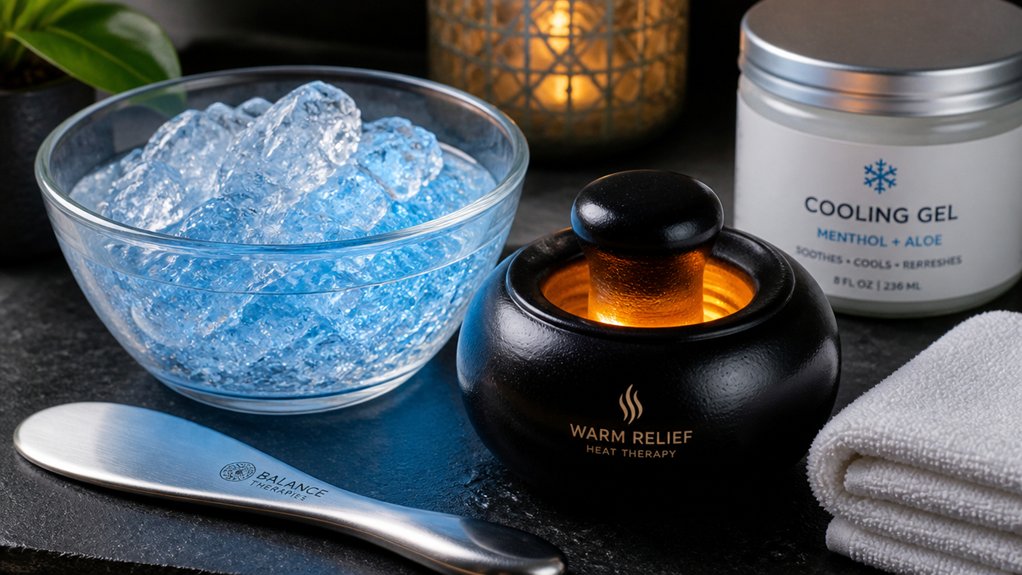
To reduce inflammation effectively, start with cold therapy immediately after an injury, applying an ice pack wrapped in a towel for 20 minutes every 4-6 hours during the first 48-72 hours. After swelling decreases, switch to heat therapy, using warm compresses for up to 30 minutes to relax muscles and improve blood flow. Alternating cold and heat in cycles can boost healing, but always follow safety guidelines—continue to explore more tips for ideal recovery.
How Heat and Cold Help Your Body During Injury
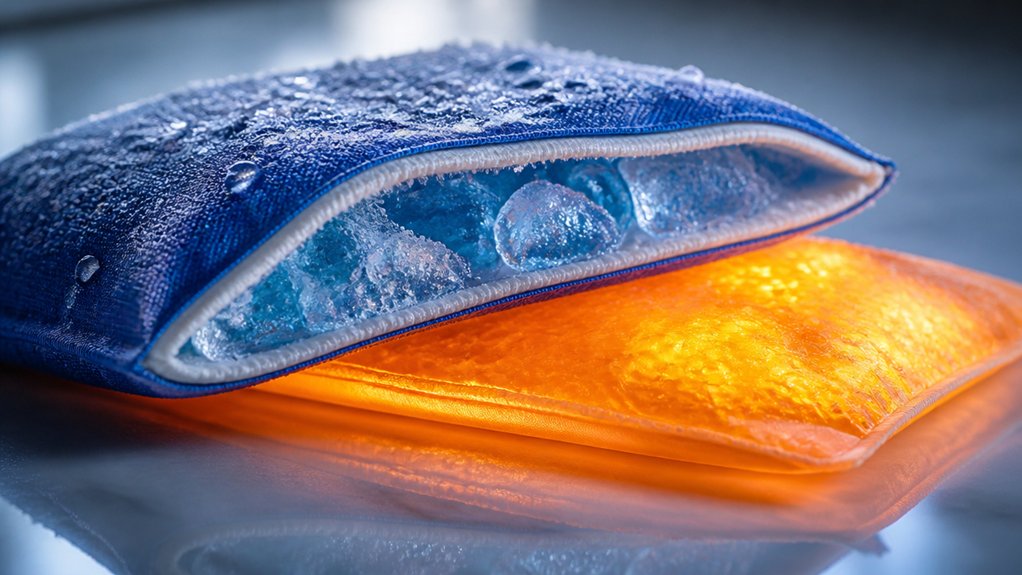
When you get injured, applying heat or cold can greatly help your body heal, but timing is essential. Ice causes blood vessels to constrict, reducing blood flow and helping control swelling and inflammation. This makes ice ideal immediately after injury to numb pain and prevent excessive swelling.
Heat, on the other hand, dilates blood vessels, increasing blood flow, which aids in removing chemical byproducts like lactic acid. This helps relieve muscle stiffness and spasms once initial swelling subsides. Alternating heat and cold therapies can stimulate blood vessel constriction and dilation, improving circulation and promoting healing.
However, applying heat too early or ice without protection can worsen inflammation or damage tissue. Correct timing guarantees these therapies support your body’s natural healing process effectively. Adjustable heat settings and proper application techniques can further enhance safety and effectiveness during treatment.
When to Use Cold Therapy Right After an Injury
Right after an injury, using cold therapy helps immediately reduce swelling and numb pain, so you can start feeling better sooner. Applying an ice pack for 20 minutes, with a towel between the skin and the ice, minimizes tissue damage and controls inflammation. Repeating this every few hours in the first 48 hours keeps swelling down and supports quicker recovery. Additionally, choosing high-quality, reusable gel packs ensures consistent cold therapy without leakage or discomfort.
Immediate Swelling Reduction
Immediately after an injury occurs, applying cold therapy is essential for reducing swelling and pain. Cold constricts blood vessels, limiting blood flow and minimizing swelling.
Use ice packs or cold compresses wrapped in a towel for about 20 minutes every 4-6 hours during the first 48 hours. Never place ice directly on the skin to prevent frostbite; always use a barrier.
This quick response helps decrease inflammation and bleeding in acute injuries like sprains, strains, and tendonitis. Remember, keeping each icing session to 20 minutes is vital to avoid skin irritation or tissue damage. Allow at least 30-40 minutes between applications before reapplying. Additionally, using anti-chafe balms in water therapy sessions can prevent skin irritation caused by prolonged exposure or friction, ensuring comfort during recovery.
Immediate cold therapy effectively manages swelling and pain right after injury, promoting a faster recovery.
Pain Numbing Effect
Applying cold therapy promptly after an injury numbs the affected area by constricting blood vessels, which reduces pain sensations and eases discomfort. Ice therapy slows nerve activity and dulls the pain, providing quick relief right after injury. The constriction of blood vessels limits swelling and inflammation, helping you feel less tender and more in control. When applying cold, remember to use a fabric barrier and limit sessions to 20 minutes to prevent skin damage. Here’s an emotional view of cold therapy’s benefits:
| Pain Relief | Reduced Swelling | Soothing Comfort |
|---|---|---|
| Immediate numbing | Limits inflammation | Eases muscle spasms |
| Less discomfort | Less tissue damage | Calms tender areas |
| Quick recovery | Protects nerves | Fosters relief |
Cold therapy works fast to lessen pain by constricting blood vessels and dulling nerve signals. For reliable use during ice baths or cold routines, consider how timer accuracy in extreme cold temperatures ensures precise sessions without risking device failure.
Minimize Tissue Damage
To effectively minimize tissue damage after an injury, cold therapy should be used within the first 48 hours. Applying an ice or cold compress for 20-30 minutes every 4-6 hours helps reduce swelling and inflammation by constricting blood vessels and limiting blood flow. Use a towel or fabric barrier between the ice and your skin to prevent frostbite or skin damage. Choosing a proper water filtration system can ensure safe and clean water to support recovery routines. Cold therapy temporarily numbs the injured area, easing pain and slowing metabolic activity, which limits secondary tissue damage. Avoid using heat immediately after injury, as it dilates blood vessels and can worsen inflammation. When you choose between heat or cold, always prioritize cold therapy during this acute phase to protect tissues and minimize damage effectively.
Best Types of Cold Packs for Injury Relief
Different types of cold packs can provide effective injury relief, but choosing the right one depends on your needs. Always follow safety tips, like wrapping packs in a damp towel, to prevent skin damage. Knowing how long and how often to apply cold therapy guarantees you get the best results without risking frostbite. Incorporating water treatment guidelines can help maintain water clarity and skin comfort during cold plunges.
Types of Cold Packs
What’re the best types of cold packs for injury relief? An ice pack, compress, or cold compress works well when wrapped in a damp towel to prevent direct skin contact.
You can also make a cold compress by dampening a towel with cold water, placing it in a plastic bag, and freezing it for about 15 minutes.
For targeted relief, an ice massage using a frozen water-filled paper cup in circular motions for five minutes is effective.
Commercial gel packs or frozen peas are convenient options, but always cover them with a protective layer before applying. Avoid direct skin contact to prevent frostbite or skin damage.
The key is ensuring only a fabric barrier touches your skin for safe cold therapy.
Additionally, utilizing large silicone ice cubes can provide longer-lasting cooling with slower melting, making them safer and more effective for extended cold therapy sessions.
Application Safety Tips
| Tip | Explanation |
|---|---|
| Never apply ice directly | Prevents frostbite |
| Use barrier | Protects skin |
| Limit application | Reduces injury risk |
| Wrap or cushion | Distributes cold evenly |
| Monitor skin | Watch for signs of damage |
| Check device measurements | Ensures accurate blood oxygen levels during and after sessions |
Duration and Frequency
Additionally, to maximize the benefits of cold therapy, it’s important to adhere to the recommended duration and frequency. Applying ice or cold packs for 20-30 minutes at a time helps reduce blood flow to the affected area, decreasing inflammation and swelling. You should do this every 4 to 6 hours during the first 48 to 72 hours after injury.
Never apply ice directly to your skin; always use a fabric barrier like a towel to prevent frostbite or skin damage. Cold towels or ice massage—performed in 5-minute intervals, 2-5 times daily—offer a gentle, effective way to cool inflamed areas. Consistent, controlled applications maximize relief while protecting your skin and tissues.
How Heat Therapy Relaxes Muscles and Boosts Blood Flow
Heat therapy relaxes muscles and boosts blood flow by triggering vasodilation, which widens blood vessels and increases circulation to the affected area. This increase delivers oxygen and nutrients essential for tissue repair. Applying heat raises local tissue temperature, reducing muscle stiffness and relaxing spasms, easing tightness and discomfort. Enhanced circulation also helps remove chemical byproducts like lactic acid, aiding faster recovery. Moist heat penetrates deeper into muscle tissue than dry heat, making it more effective for relaxation. The table below summarizes key effects:
| Effect | Benefit |
|---|---|
| Vasodilation | Increases blood flow |
| Muscle relaxation | Reduces spasms and tightness |
| Nutrient delivery | Supports tissue repair |
| Waste removal | Clears metabolic byproducts |
Using heat correctly can greatly improve muscle relaxation and blood flow.
When to Use Warm Compresses for Chronic Pain and Stiffness
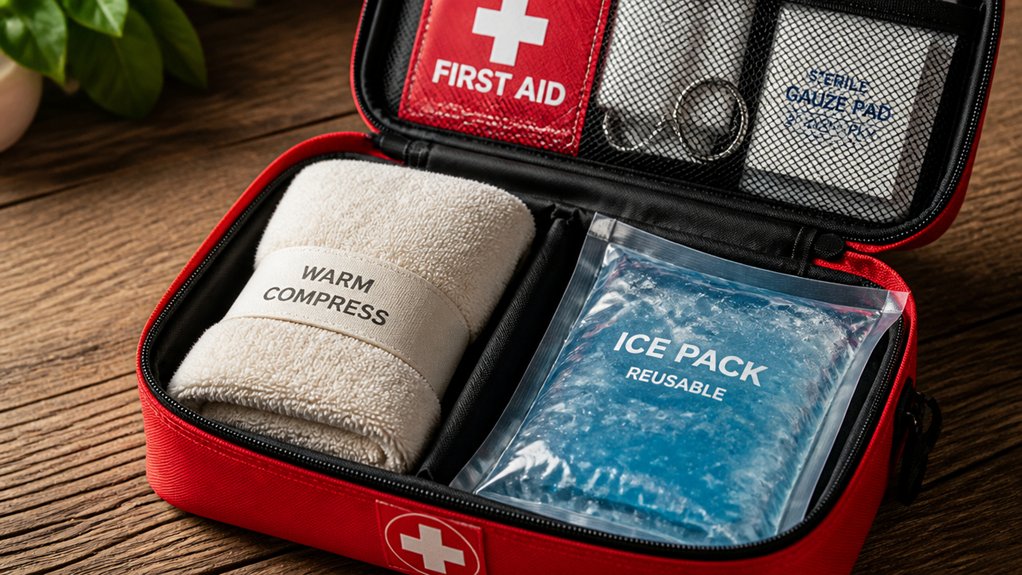
Wondering when it’s best to use warm compresses for chronic pain and stiffness? Use them when muscles are tight, and pain persists beyond the initial injury—usually after the first 48 to 72 hours.
Heat therapy increases blood flow, helping relax muscles and alleviate chronic pain caused by conditions like osteoarthritis or fibromyalgia. Moist heat packs are especially effective, as they penetrate tissue deeper and provide faster relief.
Apply the warm compress for up to 30 minutes, 2 to 3 times daily, ensuring you use a barrier like a towel to prevent burns. This approach helps reduce muscle stiffness, improve flexibility, and support healing by encouraging blood flow to the affected area.
Safe Ways to Switch Between Cold and Heat for Faster Healing
To heal faster, you need to switch between cold and heat carefully, paying attention to timing and safety. Always use a barrier like a towel to protect your skin and monitor for signs of injury or discomfort.
Timing of Application
Understanding the proper timing when switching between cold and heat therapy is essential for safe and effective healing. During the first 48 hours, ice therapy should be applied for 20 minutes every 4-6 hours to reduce inflammation and swelling. Once the initial swelling subsides, typically after 48 hours, you can introduce heat therapy for up to 30 minutes to boost blood flow and tissue repair. Alternating between ice and heat in cycles—such as 20 minutes of ice followed by 15 minutes of heat—helps improve circulation. Always end your sessions with ice to prevent inflammation from returning. Use a fabric barrier and wait 30-40 minutes between applications. Proper timing maximizes healing while protecting your tissues.
| When to Use | Duration | Purpose |
|---|---|---|
| First 48 hours | 20 minutes every 4-6 hours | Reduce inflammation and swelling |
| After 48 hours | Up to 30 minutes heat | Promote blood flow and healing |
| Between sessions | 30-40 minutes gap | Prevent tissue damage and limit inflammation |
Proper Protective Layers
Using proper protective layers is essential to guarantee safe and effective temperature therapy. When using heat packs or ice packs, always place protective layers—six to eight fabric layers for heat or a towel between ice packs and the skin—to prevent burns or frostbite.
During changeover, apply ice for 20 minutes, then wait 30-40 minutes before switching to heat for 15-20 minutes, keeping layers in place. This prevents direct contact and helps regulate skin temperature.
Always finish with an ice pack over a towel to reduce inflammation and keep protective layers intact. Monitor your skin throughout; if redness, irritation, or discomfort appear, remove the packs immediately.
Proper layers secure you maximize benefits while minimizing risks during your therapy sessions.
Recognizing Injury Signs
Monitoring your skin during therapy sessions helps prevent injury and guarantees safe switching between cold and heat treatments. Keep an eye on the injured area for signs of excessive swelling, increased pain, or skin redness, which indicate irritation or worsening inflammation.
If you notice swelling is worsening or the area becomes more tender, stop the treatment and seek medical advice.
Cold therapy reduces blood flow, helping control swelling and inflammation in the first 48 hours. Once swelling visibly decreases, you can safely introduce heat, which increases blood flow to promote healing.
Always protect the skin with a barrier, limit applications to about 20-30 minutes, and avoid heat if swelling persists. Recognizing these signs guarantees safe, effective treatment and supports faster recovery.
Signs It’s Time to Stop Using Heat or Cold Therapy
Knowing when to stop heat or cold therapy is essential to avoid further injury. If your skin shows signs of frostbite—such as persistent redness, numbness, or blistering—you should stop immediately to prevent tissue damage.
Similarly, discontinue heat therapy if you experience burns, increased redness, swelling, or a burning sensation, especially with direct contact.
Watch out for worsening symptoms like increased pain, swelling, or inflammation, which signal you should cease therapy and seek medical advice. Also, if you lose sensation or feel numbness in the area, avoid continuing, as this increases the risk of unnoticed tissue damage.
In summary, stop therapy if:
- Skin shows frostbite signs
- Pain or swelling worsens
- Sensation is lost
Essential Safety Tips for Using Hot and Cold Packs at Home
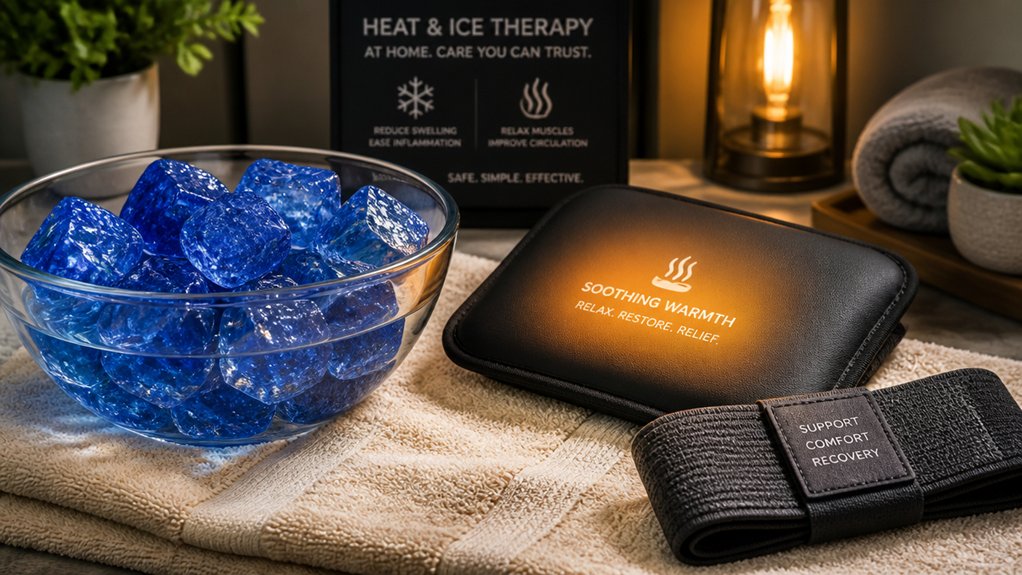
Have you ever wondered how to use heat or ice safely at home? Always place a protective barrier, like a towel or cloth, between the hot or cold pack and your skin to prevent burns or frostbite.
Always use a barrier, like a towel, between heat or ice packs and your skin to prevent injury.
Limit ice pack use to 20 minutes per session, then take at least 30 to 40 minutes off before reapplying, ensuring safe tissue cooling. Never apply heat directly; use six to eight layers of fabric to avoid burns, especially if you have reduced sensation.
Avoid using heat or ice on open wounds, sores, or areas with poor circulation to prevent infection and tissue damage. Always monitor your skin’s condition during therapy.
Stop immediately if you notice redness, blisters, numbness, or unusual discomfort.
The Role of Heat and Cold in Modern Injury Recovery
Understanding how heat and cold therapies function in modern injury recovery is essential for optimizing healing outcomes.
Cold therapy is most effective immediately after a soft tissue injury because it constricts blood vessels, reducing swelling, inflammation, and pain within the first 48 hours. After this period, heat therapy helps by dilating blood vessels, increasing blood flow to promote tissue repair and relax muscles.
Alternating ice and heat enhances recovery through repeated constriction and dilation of blood vessels, which clears inflammatory byproducts and alleviates stiffness.
To maximize benefits:
- Use cold to control acute inflammation.
- Apply heat to promote healing once swelling decreases.
- Combine both in controlled sessions for peak circulation and recovery.
Proper safety measures are vital for preventing tissue damage.
What Recent Research Says About Ice Baths and Inflammation
Recent studies reveal that ice baths mainly influence pain perception rather than markedly speeding up the body’s inflammation-based healing processes. When you take an ice bath, cold exposure triggers your body’s chemical pain relief mechanisms by signaling a threat. However, it doesn’t fundamentally alter the inflammatory process essential for tissue repair.
While many believe cold immersion reduces soreness, research shows that it can also limit natural inflammation, which is vital for proper tissue recovery. The anti-inflammatory effects of an ice bath tend to be local and temporary, with little evidence suggesting it accelerates long-term healing.
Emerging protocols now recommend delaying ice application after injury, allowing beneficial inflammation to occur without the suppressive effects of cold therapy.
Incorporating Heat and Cold Treatments Into Your Exercise Routine
Incorporating heat and cold treatments into your exercise routine can help manage soreness and promote recovery when used correctly.
After exercising, use ice therapy immediately to reduce pain and inflammation by constricting blood flow — apply for up to 20 minutes with a towel barrier. Once acute pain subsides, apply heat to relax tight muscles and increase blood flow, helping to clear lactic acid buildup; do this for up to 30 minutes with insulation.
Alternating ice and heat can further reduce soreness by constricting and dilating blood vessels; always finish with ice to prevent inflammation rebound. Remember, never apply directly to skin or on open wounds, and avoid pre-activity use for injury prevention.
When to See a Doctor for Your Injury : Signs and Symptoms
Ever wonder when your injury needs more than just home remedies? If pain persists beyond a few days or worsens despite heat and ice treatments, it’s time to see a doctor. Watch for increased swelling or changes in pain—these signs can indicate a more serious issue.
Restricted mobility is another red flag, especially if you can’t move the joint normally or notice loss of function. Immediate medical attention is essential for open wounds, injuries needing stitches, or if there’s a suspicion of fractures or deep tissue damage.
Avoid self-treatment, particularly if you have circulatory issues, nerve damage, or decreased sensation. Prompt evaluation can prevent complications and guarantee proper healing when home treatments aren’t enough.
Final Tips for Getting the Most From Cold and Heat Therapy
To get the most benefit from cold and heat therapy, you need to follow proper application techniques and timing. Use a fabric barrier between your skin and ice or heat to prevent burns or frostbite, and limit cold sessions to 20 minutes with 30-40 minutes off.
Use a fabric barrier and limit cold sessions to 20 minutes for safe, effective therapy.
Begin with ice within the first 48 hours to reduce swelling and inflammation. After swelling has gone, typically after three days, switch to heat therapy to promote circulation.
Remember these tips:
- Alternate cold and heat carefully—cold first, then heat—to maximize benefits.
- Avoid heat on fresh injuries or open wounds to prevent increased inflammation.
- Consistently follow recommended timing—ice for 20-30 minutes every 4-6 hours early on, and heat 15-20 minutes up to three times daily after swelling subsides.
Following these will optimize your recovery.
Frequently Asked Questions
Is It Better to Put Ice or Heat on Inflammation?
You should put ice on inflammation initially to constrict blood vessels and reduce swelling, especially within the first 48 hours. Avoid heat during this period, but switch to heat later to promote healing once swelling decreases.
What Is the 20 20 20 Rule for Ice?
The 20 20 20 rule for ice involves applying ice for 20 minutes, then removing it for 20 minutes, and repeating this cycle. You should use a towel as a barrier to prevent skin burns during each application.
Why Is Ice No Longer Recommended?
Ice isn’t recommended because it can slow down your body’s natural healing by limiting inflammation necessary for tissue repair. Instead, modern protocols suggest protecting the injury and managing pain without routinely using ice, supporting quicker, more effective recovery.
How Long Do You Alternate Heat and Ice?
You should alternate heat and ice for about 1 to 1.5 hours per session, applying ice for 20 minutes, then heat for 15-20 minutes, repeating up to three cycles, and ending with ice to reduce inflammation effectively.