
A safe plunge temperature range, typically between 50-59°F, helps you enjoy the benefits of cold water immersion without risking cold shock, hypothermia, or heart stress. Temperatures below 50°F can trigger rapid breathing, increased heart rate, and cold shock, raising safety concerns. Temperatures above 60°F may lessen therapeutic effects. To stay safe and maximize benefits, keeping water temperature controlled and gradual is essential—continuing further reveals how to optimize your cold plunge practice safely.
Why Safe Temperatures Are Key for Effective Cold Plunges

Maintaining safe temperatures during a cold plunge is essential because it guarantees you receive the therapeutic benefits without risking injury or illness. A safe cold plunge falls within a specific temperature range—between 50-59°F (10-15°C)—to activate cold stress benefits while minimizing harm.
Water colder than 39°F (4°C) greatly raises the risk of cold shock and hypothermia. To avoid overwhelming your body, you should gradually lower the water temperature from a comfortable starting point, such as 60-65°F, into this safe zone. This approach helps your body adapt, prevents rapid core temperature drops, and allows longer immersion times, up to 10-15 minutes at around 50°F.
Staying within these safe parameters guarantees the effectiveness of cold water immersion without adverse effects.
What Risks Do Temperatures Below 50°F Pose?
Temperatures below 50°F pose significant health risks that can quickly escalate if you’re not cautious. Cold shock can cause rapid, uncontrollable breathing, heart rate spikes, and loss of breath control within 60-90 seconds, increasing the risk of drowning or injury.
Prolonged exposure to water below 50°F heightens the chances of hypothermia, especially with safe immersion times limited to about 5-7 minutes at 45°F and just 5 minutes at 40°F. Vasoconstriction from the cold impairs muscle function and motor control, raising injury risks during entry and exit.
For those with cardiovascular issues, risks include arrhythmias, hypertension spikes, or even cardiac events. These dangers emphasize why understanding safe immersion times and the risks of extreme cold are essential for safe, effective cold plunges. Additionally, energy efficiency features in modern chillers can influence temperature stability and overall safety during use.
How Water Temperatures Above 60°F Can Diminish Benefits
When water temperatures go above 60°F, you won’t activate the cold stress response as effectively, which limits the benefits you’re after.
Vasoconstriction becomes milder, and your body may not release enough endorphins to boost your mood or alertness. As a result, the physiological and mental gains from cold exposure are greatly reduced.
Reduced Cold Stress Response
Water temperatures above 60°F generally weaken the body’s cold stress response, making it harder to activate key thermoregulatory mechanisms like norepinephrine release. When the water is warmer, vasoconstriction and metabolic stress responses are reduced, lessening anti-inflammatory effects and slowing recovery. Without a strong cold temperature stimulus, your sympathetic nervous system isn’t fully engaged, limiting benefits like improved circulation and mental alertness. This blunted response also reduces endorphin release, affecting mood enhancement. Additionally, the temperature control options in high-quality tubs help maintain these optimal cold ranges for maximum benefit.
Limited Vasoconstriction Benefits
If the water is warmer than 60°F, your body’s primary mechanism for boosting circulation—vasoconstriction—becomes less effective. At higher cold plunge temperatures, the narrowing of blood vessels is limited, reducing your ability to deliver oxygen and nutrients efficiently.
This diminishes the cold shock response that triggers therapeutic norepinephrine release and helps in reducing inflammation. Studies show that the ideal range for maximizing vasoconstriction and anti-inflammatory effects is between 50-60°F.
Temperatures above 60°F mainly promote relaxation and nervous system calming rather than strong vasoconstriction. Consequently, the protective and recovery benefits linked to reducing inflammation and enhancing circulation are markedly weaker at warmer cold plunge temperatures, limiting the overall physiological impact of your cold therapy.
Weaker Endorphin Release
Temperatures above 60°F (15.5°C) often fail to trigger the strong physiological responses necessary for significant endorphin release. A higher water temperature reduces the cold plunge temperature’s ability to activate the sympathetic nervous system, diminishing the cold shock and related metabolic stress. Additionally, the cooling system’s efficiency can be compromised if the water is not kept cold enough, further reducing the therapeutic effects Cooling system efficiency. This results in a weaker physiological response, including less vasoconstriction and norepinephrine surge, which are essential for stimulating endorphin and dopamine production. When water is warmer than 60°F, you may notice fewer mood-elevating effects, less alertness, and diminished mental clarity post-plunge. The therapeutic benefits rely heavily on the body’s response to cold shock, so the water temperature needs to be cold enough—ideally between 50-60°F—to maximize endorphin release and achieve the desired mood and health benefits.
How Your Body Responds to Different Cold Temperatures

When you expose your body to cold water, your blood vessels constrict to preserve heat, triggering a release of hormones like norepinephrine that boost circulation and alertness. As the temperature drops further, your nervous system reacts swiftly, causing gasping and increased heart rate, especially below 50°F. These responses vary based on your body’s fat levels and cold acclimation, influencing how well you tolerate different temperatures. Using advanced thermal insulation and high-quality chillers helps maintain consistent water temperatures, reducing sudden shock responses.
Blood Vessel Reactions
Your blood vessels react quickly to cold water immersion, narrowing through vasoconstriction to protect essential organs and reduce inflammation. As the plunge temperature drops between 50-60°F, blood vessels constrict, redirecting blood flow to crucial areas. Below 50°F, vasoconstriction intensifies rapidly, increasing cardiovascular stress and limiting safe immersion time. When you exit the cold, vasodilation occurs, and blood vessels re-expand, improving circulation and flushing out metabolic waste. This process helps your body adapt over time, enhancing circulation efficiency and reducing inflammation. Here’s a visual guide: filtering systems
Hormonal and Neural Responses
Exposure to cold water triggers a cascade of hormonal and neural responses designed to protect and invigorate your body. According to the cold plunge temperature guide, temperatures between 50-59°F activate your sympathetic nervous system, causing a surge in norepinephrine up to 350%. This boosts alertness, focus, and mood, while temperatures around 50-55°F promote dopamine and endorphin release for mental clarity and reduced anxiety.
Cold shock, which occurs below 50°F, can induce rapid heart rate and hyperventilation within 30-90 seconds, making breath control essential. Controlled cold exposure also stimulates the vagus nerve, fostering parasympathetic rebound, relaxation, and cortisol reduction.
Additionally, moderate cold activates brown fat, aiding thermogenesis, but plunges below 39°F risk overwhelming your nervous system and causing hypothermia.
The Science Behind Cold Plunge Safety and Effectiveness
Have you ever wondered how cold plunge temperatures influence safety and effectiveness? A safe cold plunge temperature range of 50-59°F (10-15°C) activates your body’s thermoregulatory systems without triggering excessive cold shock or risking hypothermia.
Temperatures below 50°F increase cold shock responses, raising heart rate and breathing rapidly, which requires shorter durations and careful monitoring. Immersing in water below 39°F can be dangerous, risking hypothermia and frostbite unless supervised by experts.
Controlled water temperature—maintaining consistency within ±1°F—and circulation help your body adapt safely, reducing discomfort and dropout rates. Insulation and temperature control systems are crucial to maintaining these optimal ranges and ensuring safe recovery sessions.
Starting with a gradual progression from around 60-65°F to 50-55°F over weeks guarantees safety while enhancing immune function, circulation, and mental wellness efficiently and sustainably.
How Cold Temperatures Affect Your Circulatory System
When you enter cold water, your blood vessels constrict to conserve heat and protect your essential organs. After you finish, your vessels re-expand, boosting circulation and helping flush out muscle waste. This cycle improves your cardiovascular response, but temperatures below 45°F can put extra strain on your heart. Using a properly regulated ultra-low temperature setting can optimize safety and effectiveness in cold plunges.
Vasoconstriction and Blood Flow
Cold plunge temperatures between 50-60°F trigger vasoconstriction, causing blood vessels to narrow and redirect blood flow to essential organs to conserve core heat. This vasoconstriction reduces circulation to the skin and extremities, lowering inflammation and muscle soreness. As blood vessels constrict, your body prioritizes maintaining your core temperature, protecting crucial functions. However, if water drops below 45°F, excessive vasoconstriction can increase cardiovascular stress. To better understand this process:
| Cold Temperature | Effect on Blood Vessels | Resulting Action |
|---|---|---|
| 50-60°F | Narrowing of blood vessels | Minimized inflammation, preserved core heat |
| Below 45°F | Extreme vasoconstriction | Increased cardiovascular risk |
| During immersion | Circulatory redirection | Focused on vital organs |
| Post-immersion | Vasodilation begins | Circulation rapidly increases |
Post-Plunge Vasodilation Response
As you exit a cold plunge, your body’s circulatory system quickly responds with vasodilation, causing blood vessels to widen rapidly. This post-plunge vasodilation increases blood flow, helping flush out metabolic waste like lactic acid and reduce inflammation.
The cycle of vasoconstriction during immersion and vasodilation afterward enhances circulation, supporting muscle recovery and overall tissue health. By momentarily narrowing vessels initially, your body protects essential organs, but the rebound vasodilation guarantees nutrients are delivered efficiently to tired muscles and waste is cleared.
Maintaining a safe plunge temperature prevents excessive vasoconstriction, which could impair circulation or stress your cardiovascular system during this vasodilation phase. This balanced response optimizes recovery, reduces soreness, and promotes your circulatory health.
Signs Your Cold Plunge Is Too Cold or Too Warm
Have you ever wondered if your cold plunge temperature hits the mark? Signs that it’s too cold include uncontrollable shivering, gasping, or hyperventilation within the first 60 seconds, which indicates unsafe immersion. If you can speak in full sentences after a minute, the temperature is likely appropriate.
Persistent numbness, dizziness, or sharp pain suggest the water is too cold or the session too long—time to exit immediately. Conversely, if you feel only mild coolness and no invigorating sensation, the water might be too warm to stimulate your cold tolerance and therapeutic benefits.
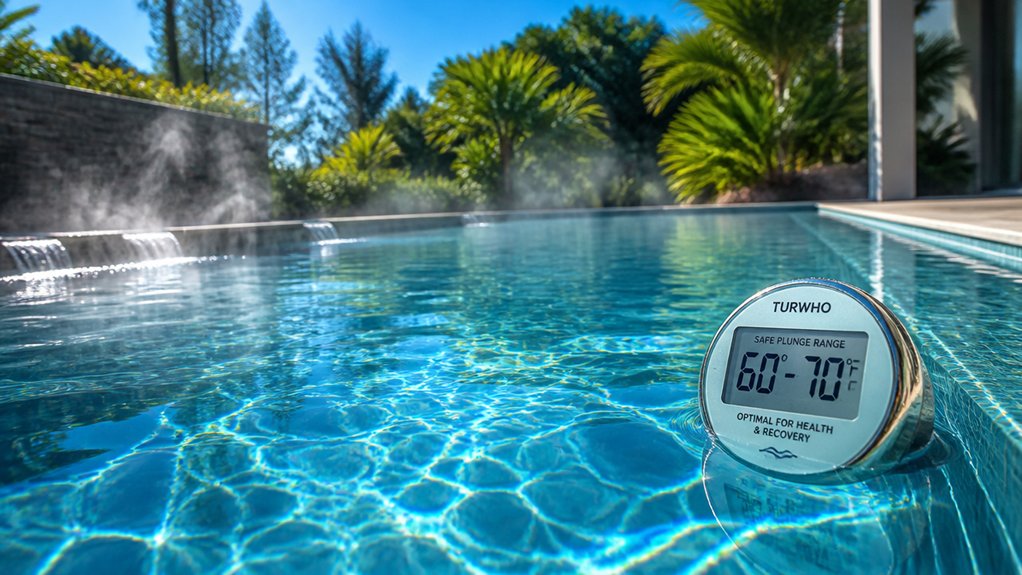
A well-suited temperature often results in a sustained feeling of energy within 30 minutes post-plunge, while exhaustion could signal the water’s too cold or the session too long. Additionally, using a waterproof thermometer can help ensure your target temperature remains consistent and safe throughout the session.
How Temperature Safety Prevents Hypothermia and Frostbite
Maintaining a safe plunge temperature range of 50-59°F (10-15°C) is essential for preventing hypothermia and frostbite.
When water stays within this range, you reduce the risk of hypothermia by avoiding rapid temperature drops that lower your core temperature too quickly. Cold shock, which can cause uncontrollable shivering, numbness, dizziness, and motor control loss, is minimized through consistent, safe temperatures.
Considering these factors:
- Prevents dangerous drops in core temperature, avoiding hypothermia.
- Limits frostbite risk, especially on extremities, by avoiding water below 39°F (4°C).
- Promotes safe and effective immersion, reducing needless discomfort and injury.
- Allows a gradual temperature progression, helping your body adapt to colder water without shock or trauma.
This careful control is crucial to enjoy cold plunges safely.
How Duration and Temperature Work Together for Safety
Balancing shock and comfort is essential when managing cold water exposure, so you need to pay attention to how your body reacts.
Starting with gradual temperature reductions and shorter durations helps build tolerance safely. Always monitor signs like shivering or numbness to adjust your time in the water and stay safe.
Balancing Shock and Comfort
Finding the right balance between shock and comfort during cold plunges depends on how temperature and duration interact. Staying within the safe plunge temperature range (50-59°F) helps you balance shock with manageable cold stress, reducing risk.
- Immerse at warmer temps (60-65°F) for 2-3 minutes, allowing your nervous system to adapt gradually.
- As you build tolerance, venture into the moderate range (50-55°F), increasing durations up to 5 minutes with mindful body signals.
- Pay attention to your body signals—dizziness, shivering, or rapid breathing signal you’re pushing too hard.
- Controlled breathwork and monitoring help turn initial shock into a meditative state, avoiding excessive strain and promoting safer, more comfortable cold exposure.
Gradual Temperature Reduction
Gradually reducing cold plunge temperatures over several weeks allows your body to adapt safely without overwhelming your nervous or circulatory systems.
By slowly lowering the water to the ideal cold plunge temperature of 50-55°F, you give your body time to build tolerance to cold shock. This process involves adjusting both temperature and duration: starting with longer exposures at milder temps and shortening them as the water gets colder.
Controlled, incremental changes maximize physiological benefits while preventing hypothermia and excessive cold shock responses like rapid breathing. Monitoring your body’s signals—such as shivering and numbness—helps fine-tune these adjustments.
Consistent, gradual reductions support long-term cold tolerance and guarantee you experience the benefits without risking safety or comfort.
Monitoring Physiological Responses
Monitoring how your body responds during cold plunges is essential to guarantee safety as water temperatures and immersion times change.
You must stay alert to physiological cues such as uncontrolled shivering, numbness, dizziness, or sharp pain—these signals tell you when to exit. Cold shock responses can impair motor control and strain your cardiovascular system, making awareness imperative.
To stay safe, watch for:
- Uncontrolled shivering, indicating your body struggles to maintain warmth
- Numbness, which suggests your body temperature is dropping dangerously
- Dizziness, signaling your body’s response to cold shock
- Sharp pain, a clear sign to stop immediately
Listening to these cues helps you balance safety and benefits, preventing hypothermia and adverse reactions.
Choosing the Right Cold Plunge Temperature for Your Goals
Choosing the right cold plunge temperature depends on what you want to achieve. For muscle recovery and inflammation reduction, cold plunges around 50-60°F are most effective, with an ideal duration of 2-10 minutes.
If relaxation, stress management, or improved sleep are your goals, slightly warmer temps of 55-65°F work better. Beginners should start between 60-65°F to build tolerance comfortably, gradually lowering the temperature as their body adapts.
Athletes often plunge at 50-57°F for peak recovery. To maximize benefits and guarantee safety, precise temperature control is essential.
Cold Plunge Safety Tips to Minimize Injury Risks
To minimize injury risks during a cold plunge, it’s essential to follow safety guidelines that protect your body from shock and overstress.
First, guarantee the water temperature stays between 50-59°F (10-15°C) for a safe experience, especially if you have health conditions. Beginners should start with warmer water, around 60-65°F, and limit their plunge to 30 seconds to 2 minutes.
Remember, always enter and exit slowly using steps or handrails to prevent slipping or muscle control loss caused by cold shock.
- Never plunge alone to get immediate help if needed
- Avoid alcohol before cold immersion to prevent impaired judgment
- Stay alert for dizziness, numbness, or intense shivering
- Consult a doctor if you have cardiovascular issues or chronic health conditions
Practical Guide for Beginners to Safe Cold Exposure
Starting with proper preparation can make your cold exposure experience safer and more effective. As a beginner, aim for a safe water temperature between 60-65°F (15-18°C), staying in for 2-3 minutes to build tolerance without overwhelming your body.
Begin with 2-3 minutes in 60-65°F water to safely build cold tolerance.
Begin with short plunges—30 seconds to 2 minutes—and gradually increase the duration as you become more comfortable. Use slow, controlled breathing techniques before and during your cold exposure to manage the cold shock reflex and stay calm.
Always pay attention to warning signs like dizziness, pain, or numbness, and exit immediately if needed. Never plunge alone, avoid alcohol beforehand, and consult your doctor if you have health concerns.
Consistent, gradual increases help you adapt safely to cold exposure.
Why Accurate Temperature Monitoring Matters
Accurate temperature monitoring is essential because it guarantees your cold plunge stays within the therapeutic safe range of 50-59°F (10-15°C), reducing the risk of hypothermia and cold shock. Using precise digital thermometers with ±0.5°F accuracy guarantees you avoid unsafe conditions caused by household thermometers, which can be off by 3-5°F.
By maintaining consistent temperature tracking:
- You prevent risks associated with sudden drops below safe thresholds.
- You guarantee water stays within the ideal therapeutic safe range.
- You avoid misleading surface temperature readings that can be 5-7°F warmer.
- You optimize safe water exposure, reducing injury and enhancing benefits.
Accurate temperature monitoring is crucial for safe, effective cold plunge experiences.
Personalizing Safe Cold Plunge Ranges for Your Health
How you personalize your cold plunge temperature can greatly impact your safety and comfort. The safe cold plunge temperature varies based on your personal tolerance, which depends on factors like body composition, cold adaptation, and health conditions.
Beginners should start at the warmer end, around 55°F to 59°F, to safely ease into cold immersion. As you build tolerance, you may lower the temperature gradually, aiming for 50°F to 55°F for deeper benefits. Using a digital thermometer helps you maintain precise water temperatures, guaranteeing consistent and safe exposure.
Be mindful of your body’s signals, like shivering or dizziness, and avoid exceeding recommended durations—especially at colder temperatures—to prevent cold shock response and hypothermia risks. Personalizing your cold plunge guarantees effective, safe therapy tailored to your needs.
Maintaining Water Quality for Safe and Effective Cold Therapy
Maintaining water quality is essential for safe and effective cold therapy, whether you’re using a home setup or a public facility. You need to guarantee your water stays clean and free from contamination by performing proper filtration and sanitation.
Here are key steps to keep water safe:
- Regularly test and balance chemical levels to guarantee clarity and hygiene.
- Use dedicated filtration systems to filter out debris and bacteria.
- Avoid stagnant or murky water—pause use until water is clear and properly sanitized.
- Maintain proper temperature to support consistent cold exposure without risking skin irritations.
When your water is clean, your cold plunge is safer and more effective. Consistent water quality guarantees peak temperature distribution—maximizing the physical and mental benefits of your cold therapy sessions.
Frequently Asked Questions
What Temperature Is Unsafe for a Cold Plunge?
You find temperatures below 39°F (4°C) unsafe for a cold plunge because they pose risks of hypothermia and cold shock. Staying above 50°F (10°C) generally reduces danger, but exposure still requires caution, especially for sensitive individuals.
Is 42 Degrees Too Cold for a Cold Plunge?
Yes, 42°F is very cold and can be dangerous, especially for beginners. You should limit exposure to 3-5 minutes if you’re experienced, and always listen to your body, monitoring for signs of cold shock or discomfort.
What Temperature Is Joe Rogan’s Cold Plunge?
Joe Rogan’s cold plunge typically sits around 39°F to 40°F (about 4°C). You should note, his deep experience allows him to handle colder temperatures safely, but beginners should start higher and gradually acclimate under professional guidance.
Is 72 Degree Pool Water Too Cold?
A 72-degree pool water isn’t too cold; it’s actually quite comfortable for most people and safe to swim in for extended periods. However, it doesn’t provide the intense cold shock or therapeutic benefits of refrigerator temperatures.