
Gradual immersion helps you fall asleep faster and enjoy deeper rest because it prevents sudden shocks to your nervous system. When you slowly lower your body temperature, it activates your parasympathetic nervous system, promoting relaxation. This steady shift avoids the adrenaline spikes that can occur with abrupt cold exposure. By easing your nervous system into relaxation, you support better sleep quality over time. If you want to understand how this process works, keep exploring these insights.
Understanding How Body Temperature Affects Your Sleep Quality
Your body’s temperature plays a crucial role in determining sleep quality because it naturally dips in the evening to signal that it’s time to rest. This drop in core body temperature by about 2-3°F helps shift you into sleep, especially into deeper stages. A cold plunge can effectively support this process by temporarily lowering body temperature and promoting relaxation. As your temperature decreases, it triggers your parasympathetic nervous system, which promotes relaxation and calmness. Cold water immersion, like an ice bath, can enhance this cooling process, aiding your body’s thermoregulation. When timed properly—about 1 to 2 hours before bed—it supports the natural decline in core temperature, making it easier to fall asleep and stay asleep. This effective temperature regulation boosts sleep quality by encouraging slow-wave sleep, essential for physical repair and immune health overnight.
How Cold Water Immersion Impacts Your Nervous System
Cold water immersion initially triggers a spike in your sympathetic nervous system, increasing alertness, heart rate, and adrenaline levels. This immediate response prepares your body for stress, but with gradual immersion, your nervous system shifts toward parasympathetic activation, promoting relaxation. Stimulating the vagus nerve through cold exposure reduces stress responses, making sleep onset easier. Over time, cold immersion lowers cortisol levels, enhancing your body’s ability to rest. Here’s how this process influences your nervous system:
| Phase | Effect |
|---|---|
| Initial immersion | Sympathetic activation, alertness spike |
| Gradual exposure | Parasympathetic activation, relaxation |
Why Gradual Cold Exposure Helps You Fall Deeper and Faster Into Sleep
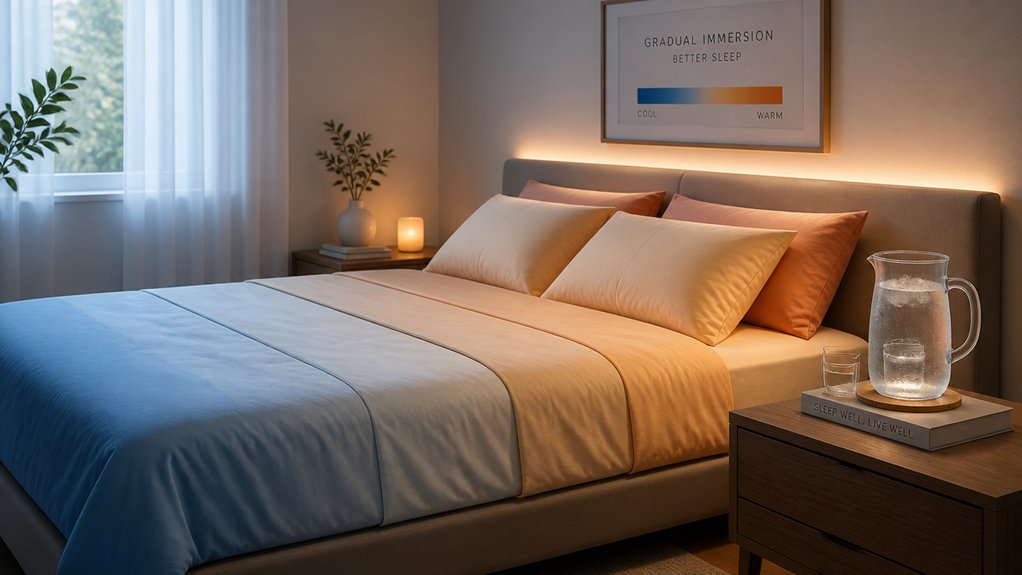
Gradually exposing yourself to cold water enhances your ability to fall asleep faster and more deeply by activating the vagus nerve, which boosts parasympathetic activity and calms the nervous system.
With gradual cold exposure, your body adjusts more smoothly, avoiding a sudden adrenaline rush that can delay sleep. This controlled adjustment causes a natural drop in core body temperature, aligning with circadian rhythms that promote deeper, restorative slow-wave sleep.
Over time, incremental cold immersion reduces nighttime awakenings and supports hormonal balance. By gradually adapting to cold exposure, you maximize parasympathetic activity, helping your nervous system relax more effectively.
This process ultimately improves sleep quality, allowing you to fall into restful sleep quicker and enjoy more continuous, restorative rest through the night.
How Cold Plunges Support Stress Reduction and Hormonal Balance
Engaging in gradual cold plunges activates the parasympathetic nervous system by stimulating the vagus nerve, which fosters relaxation and reduces stress. Cold immersion lowers cortisol levels quickly and sustains this reduction for up to 30 minutes, helping you calm down before sleep. A well-maintained water quality, supported by proper water treatment, can also enhance comfort and prevent disruptions caused by odors or contaminants. Brief cold exposure also triggers norepinephrine release, which improves mood and decreases anxiety, creating a hormonal environment that supports relaxation. As you adapt gradually, your body learns to balance sympathetic and parasympathetic responses, preventing adrenaline spikes that could interfere with sleep.
When to Take Your Cold Plunge for Better Nighttime Recovery
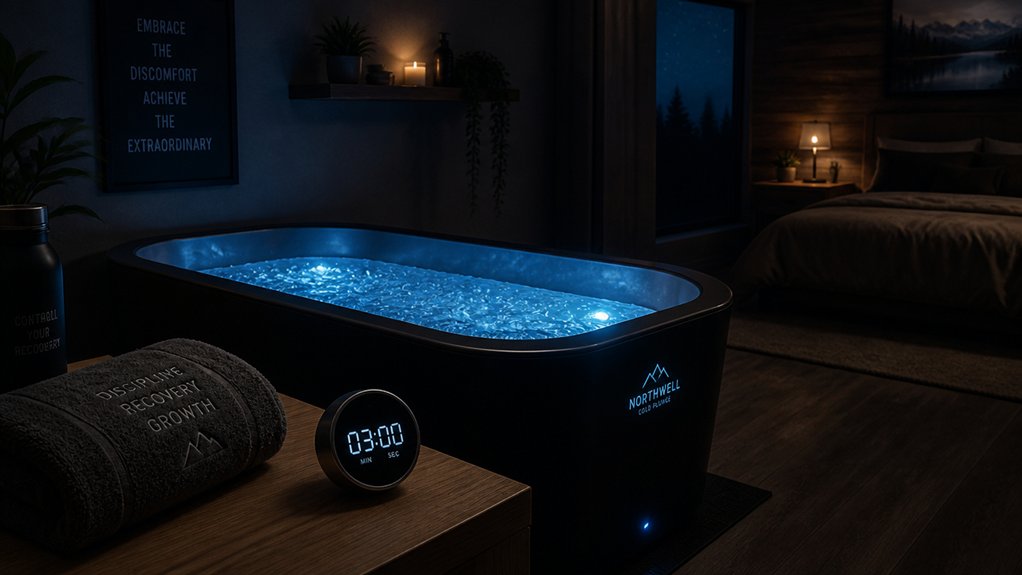
Thinking about timing can make all the difference when incorporating cold plunges into your evening routine. To maximize better sleep quality, aim to take your cold immersion 1 to 2 hours before bed. This gives your body time to recover from initial alertness and sympathetic activation, promoting relaxation. Using a high-quality cold plunge tub with precise temperature control can enhance your experience and safety. Start with a brief 1 to 2-minute plunge in water kept around 10-15°C (50-59°F), then gradually increase to 3-5 minutes for peak benefits. Avoid taking your cold plunge too close to bedtime, as it may stimulate adrenaline and delay sleep onset. Consistent timing helps regulate your circadian rhythm, lowers cortisol, and encourages parasympathetic activity. When timed correctly, cold immersion becomes a powerful addition to your evening routine for better sleep.
How Cold Water Temperatures Influence Sleep Stages and Deep Sleep
Cold water temperatures between 10–15°C (50–59°F) directly influence your sleep stages by promoting a drop in core body temperature, which is key to entering deep slow-wave sleep. Cold immersion triggers the parasympathetic nervous system via vagus nerve activation, encouraging relaxation. This deep sleep stage is essential for physical and mental restoration, supporting growth hormone release, tissue repair, and immune function. Proper timing and gradual adaptation optimize these benefits by reinforcing your circadian rhythm’s cooling rhythm. To illustrate, consider this table:
| Effect of Cold Water | Sleep Benefit |
|---|---|
| Stimulates vagus nerve | Enhances relaxation and deep sleep |
| Lowers core temperature | Facilitates shift to deep sleep |
| Supports circadian rhythm | An maintaining cycle for restorative sleep |
| Gradual immersion | Reduces awakenings and promotes continuity |
| Boosts early deep sleep | Promotes tissue repair and growth hormone release |
Additionally, understanding the durability features of your cold plunge setup can ensure consistent performance and safety, further supporting quality sleep.
A Step-by-Step Guide to Safely Incorporate Cold Exposure Before Bed
To safely incorporate cold exposure before bed, start by preparing your cold plunge with water between 10-15°C (50-59°F) for about 90 seconds, about 1-2 hours before sleep. Gradually increase your immersion time to 2-3 minutes as your tolerance builds, but don’t exceed 5 minutes to avoid overstimulation. Afterward, dry off gently and engage in calming activities like stretching or meditation to promote relaxation and support your body’s natural temperature regulation. Incorporating proper water treatment solutions ensures water safety and skin comfort during your cold plunge routine.
Prepare Your Cold Plunge
Preparing your cold plunge safely is essential for reaping its sleep-enhancing benefits. Begin by gradually lowering the water temperature to 10–15°C (50–59°F) over several sessions to prevent shock and allow your body to adapt to cold immersion.
Limit initial immersion to around 90 seconds, then slowly increase to 2–3 minutes as your tolerance builds, optimizing parasympathetic activation and promoting better sleep. Schedule your plunge 1 to 2 hours before bedtime, giving your body time to experience core temperature drops that facilitate restful sleep.
Always choose a safe environment, ideally with supervision or companionship, and avoid hot showers immediately afterward to maintain the natural cooling process. After exiting, engage in calming activities like stretching or meditation to support relaxation. Using a blood oxygen monitor can help ensure your body’s levels remain stable during recovery.
Gradually Increase Exposure
Building a safe and effective cold exposure routine requires a gradual approach that allows your body to adapt smoothly. Start with short sessions of about 90 seconds at 10-15°C (50-59°F), then gradually increase the duration to 2-5 minutes over several weeks. This slow progression helps reduce the initial sympathetic nervous system spike and adrenaline rush, preventing sleep disruptions when cold exposure occurs near bedtime. Incorporating a high-powered chiller can facilitate precise temperature control, making the process safer and more effective. As you gradually increase exposure, you’ll activate your parasympathetic nervous system and stimulate your vagus nerve, promoting relaxation and supporting better sleep quality. Progressive adaptation also minimizes discomfort and adverse reactions.
Consistently practicing this gradual approach 1-2 hours before sleep helps align your circadian rhythm and enhances overall sleep-wake cycle regularity.
Post-Immersion Relaxation Techniques
After completing your cold immersion, it’s important to allow your body to warm naturally without rushing into hot showers or saunas, as these can disrupt the calming parasympathetic state you’re aiming to cultivate for better sleep.
Focus on post-immersion relaxation by engaging in calming activities that promote nervous system relaxation and support parasympathetic activation.
You can:
- Gently dry off with a towel to prevent shock and ease into relaxation
- Practice light stretching or meditation to calm your mind and body
- Read a quiet book to reduce stimulation
- Maintain a low-stimulation environment to enhance vagus nerve activity
Scheduling this routine 1-2 hours before bed, and listening to your body’s signals for a safe, effective shift into restful sleep, can be complemented by using guided meditation devices designed to support calmness and recovery breathing modes.
Post-Plunge Routine: How to Relax and Prepare for Sleep
After your ice bath, gently dry your skin to avoid shocking your body with sudden temperature changes.
Engage in calming activities like light stretching or reading to help your body shift smoothly to sleep.
Allow your body to warm naturally without hot showers or saunas to maintain the relaxing effects of the plunge.
Gently Dry Skin
Gently drying your skin after a cold plunge plays a crucial role in supporting a relaxed shift to sleep. By avoiding vigorous rubbing or hot air, you help prevent unnecessary skin irritation and chills that could disrupt your body’s natural warming process.
Instead, focus on gentle patting to maintain consistent body temperature, which encourages parasympathetic activation and a smooth progression to relaxation. Keep in mind these key points:
- Use a soft towel or cloth to gently dry your skin
- Avoid hot showers or saunas immediately afterward
- Monitor for dizziness or discomfort during drying
- Engage in calming activities before continuing your routine
This approach sustains the calming effects of the plunge and promotes restful sleep by supporting your body’s natural relaxation response.
Engage in Calm Activities
Engaging in calm activities such as light stretching, reading, or meditation helps your body shift smoothly from the alertness triggered by cold immersion to a state of relaxation conducive to sleep. These calming activities promote parasympathetic activation, which encourages rest and recovery.
By avoiding stimulating interactions or screens, you support the adjustment to relaxation and prevent disrupting your body’s natural warming process. This routine reduces residual adrenaline and nervous system arousal caused by cold exposure, making it easier to wind down.
As your body relaxes, your heart rate slows and breathing steadies, setting the foundation for restorative sleep. Incorporating these calm activities into your post-plunge routine enhances the overall quality of your sleep by fostering a peaceful, relaxed state.
Allow Body to Warm
Allowing your body to warm naturally following a cold plunge is essential for maintaining the parasympathetic calming effect needed for restful sleep. This gradual rewarming helps prevent sudden sympathetic activation that can disrupt your shift into deep sleep stages.
To encourage nervous system relaxation, engage in gentle activities such as:
- Drying off carefully to stabilize core temperature
- Allowing your body to gently rewarm without hot showers or saunas
- Practicing light stretching or mindful breathing
- Avoiding abrupt movements or discomfort
These steps support thermoregulation, promoting a peaceful nervous system state. By consciously allowing your body to warm at its own pace, you enable deep relaxation and set the stage for high-quality sleep. This natural process reduces stress signals and nurtures restful sleep onset.
Troubleshooting Cold Plunges: Common Challenges and How to Adjust
When facing challenges with cold plunges, it’s important to identify and adjust your approach to guarantee safety and effectiveness.
First, prioritize gradual immersion to help your body adapt gradually, preventing overstimulation of your sympathetic nervous system that can interfere with sleep. Begin with shorter durations, around 90 seconds, and warmer temperatures near 15°C (59°F), then increase gradually as your tolerance builds.
Avoid immersing for more than 5 minutes or taking cold plunges too close to bedtime, as this can trigger adrenaline spikes and heighten alertness. Pay attention to signs like dizziness or numbness, and stop if discomfort occurs.
Consistent, controlled immersion helps activate your parasympathetic system, promoting relaxation, cortisol reduction, and ultimately, restorative sleep.
Long-Term Benefits of Regular Cold Exposure for Sleep and Well-Being
Regular cold exposure can greatly boost your sleep quality and overall well-being by strengthening your parasympathetic nervous system, which promotes relaxation and deep, restorative sleep.
Regular cold exposure enhances sleep quality and overall health by activating the body’s relaxation response and promoting deep rest.
Over time, cold immersion helps reduce nighttime awakenings and lowers heart rate variability, leading to better sleep continuity and more refreshed mornings. It also enhances cortisol regulation, decreasing stress levels that can interfere with sleep quality.
Consistent practice supports circadian rhythm stability by encouraging natural core body temperature drops that signal your body to sleep. Additionally, repeated cold immersion stimulates vagus nerve activity, improving emotional regulation and reducing anxiety.
This combination of benefits fosters improved sleep and overall well-being, making cold exposure a powerful long-term tool for those seeking sustained health gains.
Setting Up Your Ideal Cold Plunge Environment at Home
To create an effective cold plunge spot at home, start by choosing a setup with precise temperature control, like the iCoolsport IceOne, and keep the water between 10°C to 15°C for safe, effective exposure.
Select a calm, accessible location that makes regular use easy and consider features like WiFi control to simplify maintenance.
Finally, prioritize safety by keeping the area clean, staying hydrated, and avoiding immersion immediately before bed.
Optimal Temperature Settings
Creating the ideal cold plunge environment at home starts with setting the right water temperature. For effective cold immersion that helps improve sleep quality, aim for an ideal temperature between 10°C and 15°C (50°F to 59°F).
As a beginner, start at the warmer end (around 15°C) and gradually lower it as your tolerance builds. Use devices like the iCool Compact Chill to maintain a consistent temperature, guaranteeing a stable environment for safe cold exposure.
Keep these tips in mind:
- Begin with 90 seconds and increase duration gradually
- Cold immersion sessions should last 2 to 5 minutes
- Timing sessions 1–2 hours before bed optimizes sleep benefits
- Stick to the same temperature to build tolerance and maximize relaxation
This approach guarantees safe adaptation and better sleep outcomes.
Safe Placement Options
Setting up your cold plunge environment in an ideal location is essential for safety and convenience. Choose a well-ventilated, easy-to-clean space like a bathroom, garage, or dedicated cold plunge room. This minimizes moisture buildup and keeps your body healthy. Position your plunge near a water source and drainage system for easy filling and draining, making routine maintenance hassle-free. Use a sturdy, waterproof, and insulated base to support the unit and efficiently preserve water temperature. Guarantee electrical outlets are GFCI protected to prevent shocks during cold immersion. Create a calming post-immersion space with seating, towels, and ambient lighting to enhance recovery. This setup maximizes health benefits and comfort:
| Location | Water Access | Safety Features |
|---|---|---|
| Bathroom | Nearby faucet | Ground GFCI |
| Garage | Drainage system | Insulated base |
| Cold plunge room | Easily cleaned | Safe electricals |
| Outdoors | Weather protection | Well-ventilated |
| Basement | Moisture control | Comfortable ambiance |
Maintenance and Cleaning
Maintaining your cold plunge involves regular cleaning and water management to keep it safe and ready for use.
To guarantee peak health, focus on cleaning your tub with gentle, non-abrasive cleaners to prevent bacteria buildup. Use a water filtration or circulation system, like the iCool Compact Chill unit, to keep water clear and maintain consistent water temperatures between 2°C and 15°C.
Drain and refill the tub at least once a week or more often if you use it frequently, guaranteeing fresh water and reducing contamination risks.
After each session, dry the tub thoroughly and cover it to protect against debris and evaporation, helping the water stay clean longer.
Regularly monitor and balance pH and sanitizer levels to promote health and extend your cold plunge’s lifespan.
Frequently Asked Questions
What Is the 3 3 3 Rule for Sleep?
The 3 3 3 Rule for sleep involves immersing yourself in cold water for 3 minutes at three different times before bed. This helps lower your core temperature, promotes relaxation, and improves sleep quality naturally.
Why Do I Sleep Better After a Hot Tub?
You sleep better after a hot tub because the warmth helps you relax, reduces muscle tension, and activates your parasympathetic nervous system. The cooling afterward signals your body to prepare for restful sleep, improving sleep quality overall.
Which Strategy Helps Improve the Quality of Sleep?
Gradual cold water immersion before bed helps improve your sleep by activating relaxation responses, lowering stress hormones, and aligning your body temperature with circadian rhythms, which promotes deeper sleep, fewer awakenings, and overall better sleep quality.
Does Sleep Affect A1C Levels?
Yes, sleep affects A1C levels because poor sleep disrupts insulin sensitivity, impairs glucose metabolism, and damages pancreatic function. Improving sleep, especially increasing deep sleep, helps lower A1C and enhances blood sugar control for better health.