Ice baths help athletes recover by reducing lactic acid buildup that causes muscle fatigue. Immersing in cold water between 50–59°F for 10–15 minutes constricts blood vessels, slowing inflammation and swelling, then boosts circulation afterward to flush out waste. Timing is key—best soon after intense exercise, but not within 48 hours of competition. Combining ice baths with active recovery and proper nutrition accelerates healing. Keep exploring to discover how to optimize your recovery strategy.
What Is Lactic Acid, and Why Does It Cause Muscle Fatigue?
Have you ever wondered why your muscles burn during intense exercise? It’s because of lactic acid, a byproduct of anaerobic metabolism when your muscles produce energy without enough oxygen.
As lactic acid builds up, it increases hydrogen ion concentration, lowering muscle pH and creating that familiar burning sensation. This buildup also causes muscle fatigue by disrupting enzyme activity and hindering muscle contractions, which temporarily impairs your performance.
You might experience muscle soreness afterward, but rest assured, lactic acid isn’t the enemy. It’s rapidly cleared within 30 to 60 minutes after exercise, where it’s converted back into energy by your liver and muscles. This process signals metabolic stress, helping your muscles adapt and improve endurance for future high-intensity efforts and faster recovery. Incorporating muscle recovery creams into your routine can further support this process by alleviating soreness and promoting healing.
How Do Ice Baths Help Remove Lactic Acid From Muscles?
When you soak in an ice bath, your blood vessels constrict, temporarily reducing blood flow, which helps minimize swelling and inflammation. Once you warm up, blood flow increases again, flushing out metabolic waste like lactic acid from your muscles. This improved circulation accelerates the removal of lactic acid, speeding up recovery. Using a high-quality chiller system ensures consistent plunge temperatures, optimizing the benefits of ice baths.
Blood Vessel Constriction
Ice baths cause blood vessels in your muscles to constrict, which temporarily reduces blood flow and limits swelling after intense exercise. This vasoconstriction traps metabolic waste like lactic acid inside your muscles, preventing it from circulating immediately. The cold water triggers vasoconstriction, slowing enzymatic activity and decreasing lactic acid production, aiding your recovery strategies. When you exit the bath, rewarming causes vasodilation, increasing circulation and flushing out lactic acid more efficiently. This cycle helps optimize the vascular environment for faster muscle recovery and decreased tissue breakdown. Additionally, measurement accuracy of blood oxygen levels during cold exposure ensures monitoring remains reliable, supporting better recovery decisions.
Enhanced Circulatory Flow
As your body exits the cold bath, blood vessels rapidly dilate—this process, known as vasodilation, greatly boosts circulation throughout your muscles. This increased blood flow helps flush out metabolic waste products like lactic acid, which builds up during intense exercise.
When you perform cold water immersion, vasoconstriction occurs during immersion, reducing blood flow temporarily, but once you leave the cold water, vasodilation kicks in, dramatically improving circulation. This enhanced circulatory flow delivers oxygen and nutrients essential for muscle recovery and helps reduce delayed onset muscle soreness (DOMS).
To maximize this effect, aim for whole-body immersion in water between 50–59°F (10–15°C) for 10-15 minutes. Benefits include:
- Faster removal of lactic acid
- Reduced muscle stiffness
- Better overall muscle recovery
- Less swelling and inflammation
Metabolic Waste Removal
How do ice baths facilitate the removal of lactic acid from muscles?
Cold water immersion triggers vasoconstriction, reducing blood flow and swelling, which helps limit tissue damage often linked to lactic acid buildup. When you exit the ice bath, vasodilation occurs, boosting circulation and flushing out metabolic waste like lactic acid and creatine kinase.
Cold water immersion at 10–15°C for 8–15 minutes accelerates waste removal by promoting efficient circulation and nutrient delivery. The lower muscle temperature also slows metabolic activity, decreasing further lactic acid production after intense exercise.
Incorporating recovery strategies such as contrast water therapy, which alternates cold and warm immersion, enhances lactic acid clearance even more by repeatedly constricting and dilating blood vessels, optimizing muscle perfusion. Additionally, energy efficiency features in some modern chillers allow for quicker and more consistent cooling, supporting more effective recovery sessions.
The Science Behind Cold Water Immersion and Muscle Recovery
Cold water immersion (CWI) triggers physiological responses that enhance muscle recovery after intense exercise. When you submerge in cold water, it causes vasoconstriction, which limits swelling and helps clear lactic acid, reducing muscle soreness. Additionally, using a cold plunge tub with proper material quality and insulation can help maintain optimal water temperatures, ensuring effective therapy.
As your body warms, vasodilation occurs, flushing out metabolic waste and supporting tissue repair. The cold shock response boosts adrenaline and endorphin levels, improving mood and lessening fatigue.
CWI aligns with effective recovery strategies by decreasing perceived soreness and lowering creatine kinase levels, indicating less muscle damage. To maximize benefits, immersing in 50–59°F (10–15°C) water for 10–15 minutes within two hours post-exercise is ideal.
Basic benefits include:
- Reducing lactic acid buildup
- Decreasing muscle inflammation
- Improving mood and fatigue
- Enhancing overall muscle recovery
When Is the Best Time to Take an Ice Bath After Exercise?
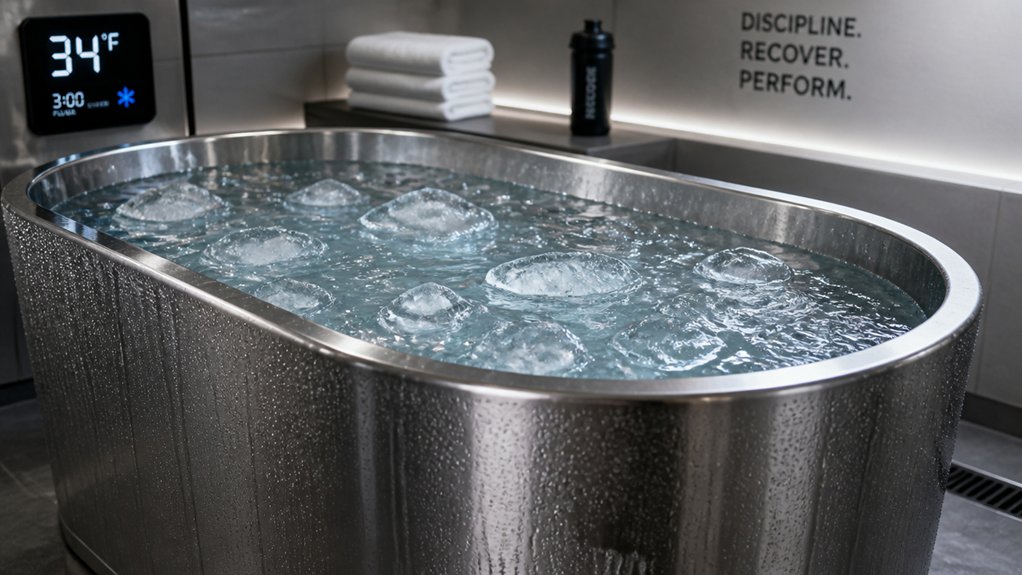
Timing matters when it comes to ice baths and recovery; taking one within two hours after exercise maximizes benefits for reducing soreness and inflammation.
The intensity of your workout also influences when you should use cold water immersion, especially for high- or low-intensity sessions. Knowing the ideal window can help you recover faster without hindering your progress.
Optimal Recovery Window
The best time to take an ice bath after exercise is within two hours, as this window maximizes the benefits of reducing muscle inflammation and clearing lactic acid buildup. During this prime recovery window, you’ll find ice baths are good for decreasing muscle soreness and speeding up recovery. Properly timed ice immersion can also support water treatment processes to keep your bath water clean and safe. Keep your ice baths between 10 to 15 minutes in water temperatures of 50–59°F (10–15°C) to avoid numbness or frostbite. Proper timing guarantees you get the most out of each session without impairing muscle adaptation.
- Enhances recovery without hindering muscle growth
- Effectively reduces delayed onset muscle soreness (DOMS)
- Speeds lactic acid removal for quicker readiness
- Ideal within two hours post-exercise for maximum benefit
Post-Workout Timing
Knowing when to take an ice bath after exercise can greatly influence your recovery and performance. The ideal post-workout timing is within two hours, allowing you to maximize benefits like reducing muscle soreness and inflammation.
A 10 to 15-minute ice bath in water between 50–59°F (10–15°C) effectively lowers lactic acid buildup and diminishes swelling. For recovery after intense sessions or when muscle growth is a goal, waiting 24 to 48 hours is advisable, as early cold exposure could hinder hypertrophic processes.
Avoid ice baths within 48 hours of competition, since cold exposure might decrease joint stiffness and muscle elasticity, increasing injury risk. Proper post-workout timing guarantees you optimize recovery time without compromising your training or muscle health. Incorporating temperature therapy features in percussion massagers can further enhance recovery strategies.
Influence of Training Intensity
Your training intensity greatly influences when you should take an ice bath. For high-intensity or endurance workouts that cause significant lactic acid buildup, immersing in ice baths within 2 hours helps reduce lactic acid and muscle inflammation.
To optimize recovery, aim for the following:
- Use ice baths at 50–59°F (10–15°C) for 10–15 minutes after intense training
- Schedule sessions 24–48 hours post-exercise to help with delayed muscle soreness (DOMS)
- Avoid frequent ice baths immediately after all training to prevent blunting muscle adaptation
- Consider longer or intermittent immersions if you have higher body mass or fat percentage for enhanced cooling
- Employ thermal insulation techniques to maintain low temperatures efficiently during immersion
Timing chilled water immersion based on training intensity guarantees effective recovery and minimizes muscle soreness.
How Long Should You Stay in an Ice Bath for Optimal Recovery?
How long should you stay in an ice bath to maximize recovery benefits without risking adverse effects? Typically, 10 to 15 minutes of immersion at 50–59°F (10–15°C) strikes the right balance. Staying longer than 15 minutes isn’t recommended, as it can increase the risk of hypothermia and nerve damage.
Shorter sessions of 5 to 10 minutes may help with recovery but mightn’t markedly reduce muscle inflammation or lactic acid buildup. Intermittent immersion—two 10-minute sessions with breaks—can enhance cooling and recovery.
To enjoy the full benefits of ice baths in reducing delayed onset muscle soreness (DOMS) and clearing lactic acid, aim to use them within two hours after exercise. Proper timing and duration are key for effective recovery.
What Is the Ideal Temperature Range for Ice Baths to Clear Lactic Acid?
To effectively clear lactic acid, keep your ice bath temperature between 50–59°F (10–15°C).
Staying within this range for 10–15 minutes maximizes blood vessel constriction and circulation, enhancing waste removal.
Temperatures below 50°F can numb muscles and increase health risks, so sticking to the ideal range is key for safe, efficient recovery.
Optimal Temperature Range
The ideal temperature range for ice baths to effectively reduce lactic acid buildup is between 50 and 59°F (10-15°C). Staying within this range guarantees peak vasoconstriction, which helps reduce swelling and promotes the removal of metabolic waste products like lactic acid.
To maximize recovery, your immersion duration should be around 10 to 15 minutes. Key benefits include:
- Enhanced vasoconstriction for better waste removal
- Reduced muscle soreness post-exercise
- Minimized risk of numbness and hypothermia
- Consistent temperature helps maintain effectiveness
Exceeding this range may lessen vasoconstriction, while lower temperatures risk adverse effects. Properly maintaining this temperature guarantees your ice baths support efficient lactic acid clearance and quicker muscle recovery.
Cooling Duration Effect
Maintaining an appropriate immersion duration is essential for effectively clearing lactic acid without risking adverse effects. To maximize benefits, stick to 10 to 15 minutes in ice baths with cold water between 50–59°F (10–15°C). This duration promotes vasoconstriction, which helps reduce lactic acid buildup and muscle inflammation.
Immersing longer than 15–20 minutes can cause numbness and may diminish recovery benefits, so avoid extending beyond this window. Cold exposure during the immersion promotes post-immersion vasodilation, flushing lactic acid and waste from muscle tissue.
Whole-body immersion offers more uniform cooling and better lactic acid clearance than cold showers, though cold showers are still a practical alternative. Proper immersion durations optimize recovery without risking discomfort or negative effects.
Comparing Ice Baths to Active Recovery and Massage Techniques
Are ice baths truly more effective for recovery than active techniques or massage methods? While ice baths reduce lactic acid buildup and muscle inflammation through vasoconstriction, active recovery promotes lactic acid clearance by increasing blood flow with low-intensity activities like cycling or walking.
Massage techniques, including foam rolling, enhance circulation and help remove lactic acid mechanically, reducing muscle soreness. Consider these points:
- Ice baths lower delayed muscle soreness and perceived fatigue quickly.
- Active recovery accelerates lactic acid removal and neuromuscular readiness.
- Foam rolling improves circulation, easing muscle tightness.
- Combining methods optimizes muscle relaxation and waste removal.
Using ice baths alongside active recovery or massage techniques maximizes the benefits, reducing soreness and promoting faster recovery.
How Often Should You Use Ice Baths During Your Training Cycle?
How often should you incorporate ice baths into your training routine? Typically, using ice baths 2–3 times per week during intense training helps manage muscle soreness and improves lactic acid clearance without hindering muscle adaptation.
The ideal timing is within two hours after exercise, with sessions lasting 10–15 minutes in 50–59°F (10–15°C) water to maximize recovery. Daily ice baths aren’t recommended, as excessive use can blunt muscle hypertrophy and slow strength gains.
Adjust frequency based on your training load—reducing sessions during taper or competition phases when joint stiffness and reactivity matter. Incorporating ice baths 24–48 hours post-workout supports recovery goals and keeps you fresh for upcoming sessions without interfering with muscle repair processes.
Do Ice Baths Improve Muscle Performance and Reduce Soreness?
Ice baths are often used to enhance muscle recovery, but their impact on muscle performance and soreness varies.
Cold water immersion can reduce swelling, inflammation, and delayed onset muscle soreness (DOMS), especially if used 24–48 hours after intense exercise.
When you immerse yourself in cold water (10–15ºC) for 8–15 minutes, it helps lower muscle temperature and constricts blood vessels, which may decrease perceived muscle soreness and fatigue.
Some benefits include:
- Less muscle soreness and fatigue
- Maintained jump performance
- Reduced cortisol levels
- Faster recovery
However, frequent or immediate use post-resistance training can blunt inflammation-driven muscle adaptations.
While ice baths are effective for recovery, they may not directly improve muscle performance during subsequent efforts.
What Are the Risks and Side Effects of Cold Water Immersion?
Understanding the risks and side effects of cold water immersion is essential, especially when considering frequent or prolonged use. Ice baths expose you to cold water, which can cause hypothermia if you stay in too long or if the water temperature drops below 50°F (10°C).
Prolonged immersion risks nerve damage and excessive pain, increasing injury risk. People with cardiovascular disease, diabetes, or neuropathies should exercise caution or avoid ice baths altogether, as cold water can stress the circulatory and nervous systems.
Overuse of cold water immersion might blunt muscle hypertrophy signals and delay long-term recovery adaptations. Additionally, poorly controlled immersion or sudden exposure can trigger vasoconstriction-related cardiovascular stress or cold shock responses, especially for vulnerable athletes.
Practical Tips for Setting Up and Using Safe Ice Bath Sessions
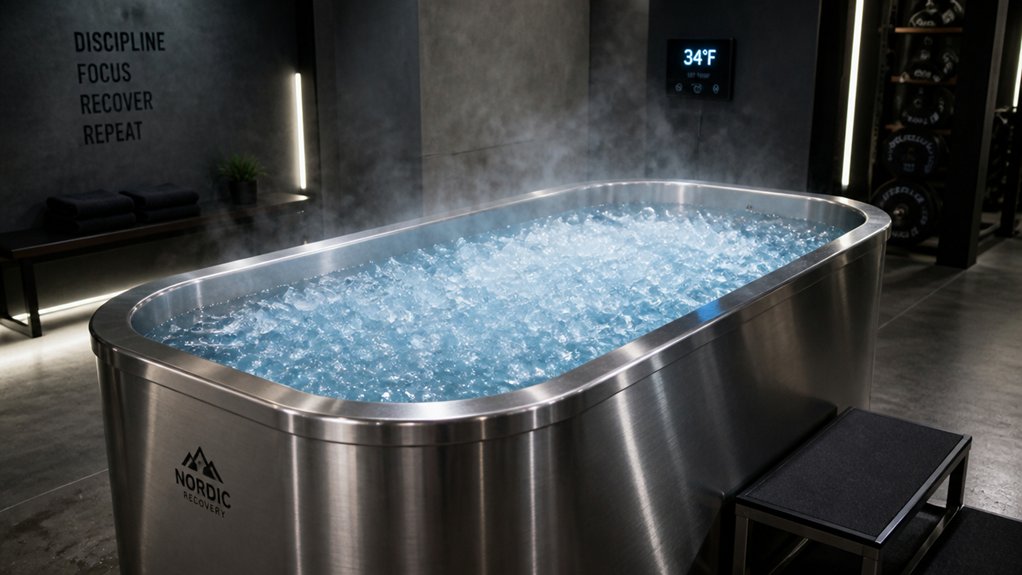
Setting up an ice bath safely begins with carefully preparing the water and ice to achieve the best temperature for recovery. Fill the tub with water first, then add ice, aiming for 50-59°F (10-15°C). Use a thermometer to check water temperature regularly during the session.
Limit immersion to 10-15 minutes to prevent hypothermia and nerve damage, especially if you have cardiovascular issues. For peak benefits, immerse your whole body when possible, ensuring even cooling.
Always have a safe rewarming plan, such as gentle stretching or warm clothing, ready afterward. For safety, perform ice baths with a training partner or someone nearby who can assist if needed.
Proper setup and cautious practice help athletes maximize benefits and reduce risks of cold water immersion.
Combining Ice Baths With Active Recovery for Faster Lactic Acid Elimination
Combining ice baths with active recovery activities can greatly accelerate the removal of lactic acid from muscles. Ice baths induce vasoconstriction, reducing inflammation and lactic acid buildup immediately after exercise.
Once you leave the ice bath, gentle active recovery like light cycling or walking helps promote vasodilation, flushing metabolic waste more efficiently. Engaging in these activities at 50–60% of your maximum heart rate maintains blood flow without stressing muscles.
For even quicker results, contrast therapy—alternating cold immersion with warm exposure—can further speed up lactic acid removal by stimulating circulation. This combined approach leverages both the immediate effects of vasoconstriction from ice baths and the enhanced circulation from active recovery, facilitating faster recovery and reduced muscle soreness.
How to Incorporate Ice Baths Into Your Overall Recovery Routine
To get the most benefit from ice baths, schedule them 24-48 hours after intense workouts and limit sessions to 2-3 times a week.
Be sure to combine them with warm-up activities, stretching, or mobility work to improve circulation and muscle relaxation.
Pair ice baths with other recovery methods like foam rolling, proper nutrition, hydration, and rest for a well-rounded approach.
Optimal Timing and Frequency
Incorporating ice baths into your recovery routine requires careful timing and frequency to maximize benefits while avoiding potential drawbacks.
To reduce muscle soreness and aid recovery effectively, aim to take ice baths within 2 hours post-exercise for 10–15 minutes in 50–59°F water. Generally, using ice baths 2 to 3 times per week or after intense training strikes the right balance.
For peak benefits, target the 24 to 48-hour window when inflammation peaks, helping lessen delayed onset muscle soreness. However, excessive use can hinder muscle hypertrophy and strength gains. Consider periodizing your routine based on your training load and recovery needs.
Pair ice baths with active recovery and warm-up strategies to enhance circulation and waste removal, optimizing overall recovery.
Combining With Other Techniques
Integrating ice baths into your overall recovery routine enhances their effectiveness and helps prevent muscle stiffness. After an ice bath, pairing it with active recovery like light cycling or mobility drills (50–60% max heart rate for 20–30 minutes) boosts lactic acid clearance and reduces muscle soreness.
Using foam rolling or self-myofascial release post-ice bath targets tight muscles and fascia, further aiding in muscle relaxation. To improve circulation and remove metabolic waste, incorporate contrast water therapy or warm baths after ice baths.
Alongside these techniques, prioritize sleep, nutrition (protein and carbs within 30–60 minutes), and hydration for thorough recovery. Combining ice baths with these methods optimizes recovery, minimizes soreness, and helps you get back to peak performance faster.
Can Ice Baths Support Weight Loss and Fat Burning?
Ever wondered if ice baths can actually boost your weight loss efforts? Cold immersion with ice baths can activate brown fat cells, which burn calories to generate heat, supporting fat metabolism and weight loss.
During cold exposure, your body can convert white fat into brown fat, making fat burning more efficient. Additionally, the body expends extra calories during and after an ice bath to maintain core temperature, increasing overall calorie burn.
Regular cold immersion may also improve blood sugar regulation and insulin sensitivity through brown fat activation. However, ice baths aren’t a standalone solution; for best results, combine them with a balanced diet and exercise.
If you’re looking to enhance fat-burning, incorporating ice baths into your routine might help, but consistency is key.
Frequently Asked Questions
Are There Certain Sports or Activities That Benefit More From Ice Baths?
You benefit most from ice baths if you participate in high-intensity sports like running, cycling, or soccer, which cause significant muscle stress and inflammation. Ice baths help reduce soreness and speed recovery, enhancing your performance.
How Does Hydration Influence the Effectiveness of Ice Baths?
Hydration boosts ice bath effectiveness by improving circulation, reducing muscle soreness, and accelerating recovery. When you’re well-hydrated, your body can better eliminate waste products, making the cold therapy more beneficial and helping you recover faster.
Can Ice Baths Be Combined With Other Recovery Methods Simultaneously?
Yes, you can combine ice baths with other recovery methods like stretching, foam rolling, or compression garments simultaneously. Doing so may enhance overall recovery, reduce soreness, and improve your athletic performance by targeting different recovery aspects together.
Are There Age or Health Considerations Before Using Ice Baths?
Before using ice baths, you should consider your age and health. If you’re young, healthy, and have no circulation issues or cardiovascular concerns, you can typically try ice baths; otherwise, consult a healthcare professional first.
What Are Common Misconceptions About Ice Baths and Lactic Acid?
Many believe ice baths remove lactic acid instantly, but they primarily reduce inflammation and muscle soreness. You shouldn’t see them as a quick fix; they’re part of a broader recovery plan. Rest and proper nutrition matter too.