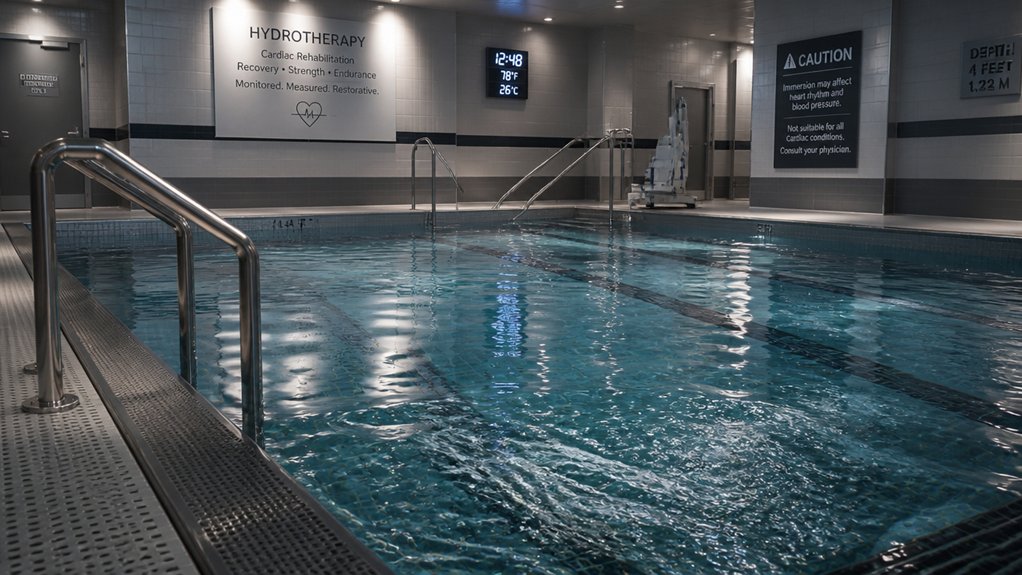
Immersion therapies in cold water can be risky for your heart because they cause sudden shifts in blood pressure and increase heart rate, which puts extra strain on your cardiovascular system. Cold shock triggers vasoconstriction, raising blood pressure and risking arrhythmias or heart attacks, especially if you have pre-existing conditions. Rapid rewarming can lead to dangerous blood pressure drops. To understand how to stay safe, keep exploring the importance of careful preparation and monitoring during cold therapy.
How Does Cold Water Immersion Affect Heart Function?
Have you ever wondered how plunging into cold water impacts your heart? During cold water immersion, your body reacts with the cold shock response, causing an immediate gasp and rapid hyperventilation. This raises your heart rate and blood pressure suddenly.
Vasoconstriction narrows your blood vessels, making your heart work harder to circulate blood, increasing cardiovascular strain. The surge of adrenaline can disrupt your heart’s normal rhythm, raising the risk of arrhythmias. For those with coronary artery disease, this extra stress raises myocardial oxygen demand, which might lead to angina or a heart attack.
After you exit the water, rapid blood vessel dilation can cause blood pressure to drop suddenly, sometimes leading to dizziness or fainting. This combination of increased strain and sudden changes can be particularly risky for heart health. Additionally, acrylic materials used in some plunge tubs are durable and resistant to cracking, but rapid temperature changes can still cause structural stress if not properly managed.
Why Does Cold Water Cause Blood Vessels to Constrict?
When you immerse yourself in cold water, your blood vessels constrict quickly to reduce heat loss and protect your core temperature. This vasoconstriction makes your heart work harder to push blood through narrowed vessels, increasing your blood pressure. Measurement accuracy may decrease during cold exposure, making it harder to get reliable readings of your vital signs. As a result, your cardiovascular system faces added strain, which can be risky for those with heart conditions.
Mechanism of Vasoconstriction
Exposure to cold water activates the body’s thermoreceptors, which then send signals to trigger vasoconstriction—a process that narrows blood vessels to conserve heat. This narrowing increases vascular resistance, forcing your heart to pump harder to maintain circulation, thereby elevating blood pressure and cardiac workload. In individuals with arterial disease or hypertension, this response can pose significant risks. The following table highlights key aspects:
| Aspect | Effect | Impact on Heart |
|---|---|---|
| Vasoconstriction | Narrows blood vessels | Raises blood pressure |
| Blood flow reduction | Decreases blood flow to skin | Redirects to essential organs |
| Vascular resistance | Increases during cold exposure | Strains cardiovascular system |
| Cardiac workload | Goes up to sustain circulation | May lead to complications |
| Arterial disease | Exacerbates symptoms | Risk of cardiovascular events |
Understanding this mechanism shows why cold immersion can be risky, especially for heart health.
Heat Loss Regulation
Cold water causes blood vessels to constrict because the body actively responds to preserve core temperature. During cold water exposure, vasoconstriction narrows blood vessels—especially in the extremities—to reduce heat loss.
By limiting blood flow to the skin and limbs, the body minimizes heat transfer from warm blood to the cold environment, helping to keep crucial organs warm. However, this narrowing increases resistance in blood vessels, causing blood pressure to rise.
For individuals with heart conditions or compromised cardiovascular health, this response can be risky, as their hearts must work harder to maintain circulation. The constriction fundamentally redirects blood flow inward, but it also elevates the workload on the heart, increasing potential risks during cold water immersion.
Impact on Heart Workload
The body reacts to cold water by narrowing blood vessels, especially in the extremities, to conserve heat and maintain core temperature. This vasoconstriction causes blood vessels to constrict, increasing resistance within the circulatory system. As a result, your heart has to work harder, leading to an increased cardiac workload.
The narrowing blood vessels raise blood pressure rapidly, as the heart pushes against more resistance. This heightened workload stresses the cardiovascular system, especially in those with existing conditions like hypertension or arterial plaque. Vasoconstriction can also disrupt heart rhythm, increasing the risk of arrhythmias during cold immersion.
Can Cold Water Trigger Heart Rhythm Problems?
Can jumping into icy water suddenly upset your heart’s rhythm? Cold water immersion triggers the cold shock response, causing rapid increases in heart rate and blood pressure that can disrupt normal heart rhythms. The cold-induced vasoconstriction narrows blood vessels, raising the cardiac workload and elevating the risk of arrhythmias. As your body responds with adrenaline release and hyperventilation, electrical conduction in the heart gets altered, increasing the chance of abnormal rhythms. Research indicates that adaptogenic herbs may support stress resilience, which could help mitigate some of these acute cardiovascular responses during cold exposure adaptogen synergy. If you have underlying heart conditions, cold stress can cause a mismatch between oxygen demand and supply, making arrhythmias more likely. Additionally, rapid blood pressure fluctuations after cold plunges can provoke heart rhythm disturbances, raising the risk of fainting or more serious cardiac events.
How Cold Stress Strains Your Heart Muscles
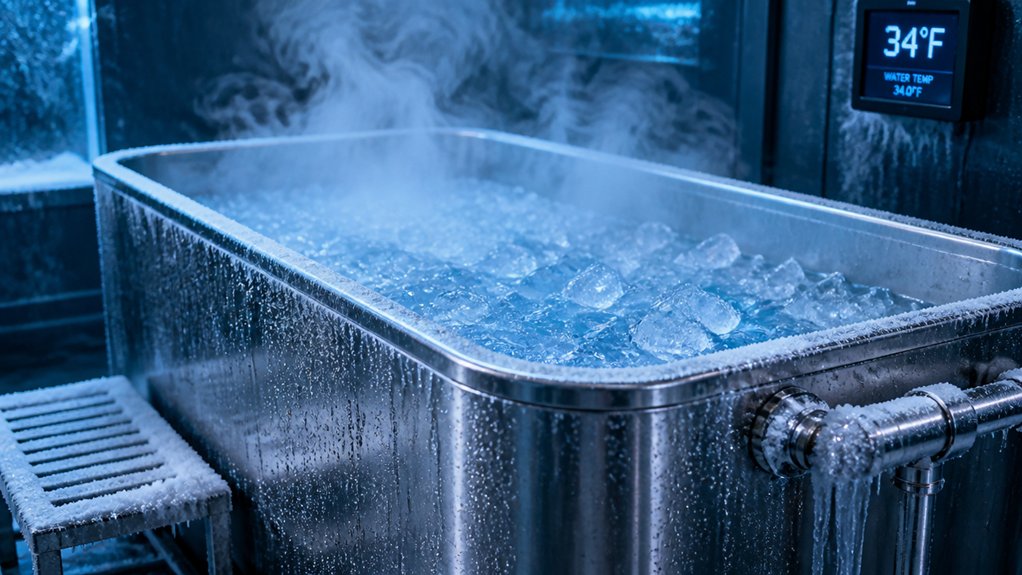
When you suddenly expose your body to cold water, your blood vessels constrict, forcing your heart to work harder to pump blood through tighter arteries. This reflex increases your heart rate and ramps up oxygen demand, putting extra stress on your heart muscle. Using a cold-weather-optimized battery can help maintain device reliability during these stress-inducing conditions. Over time, this strain can elevate your risk of heart problems, especially if your cardiovascular health is already compromised.
Blood Vessel Constriction Response
Exposure to cold water prompts your blood vessels, especially in your extremities, to constrict—a process known as vasoconstriction. This narrowing of blood vessels increases resistance to blood flow, forcing your heart to work harder.
As a result, your blood pressure rises suddenly and markedly, putting extra strain on your heart muscle.
- Vasoconstriction redirects blood toward your core to maintain heat.
- Elevated blood pressure stresses the heart, risking rupture of arterial plaque.
- Strained heart muscles require more oxygen, risking ischemia.
- The combination of vasoconstriction and high blood pressure disrupts normal rhythms, increasing the risk of arrhythmias and heart attack during cold immersion.
- Using cold plunge thermometers with safety features can help monitor water temperature and prevent dangerous overexposure.
Heart Rate Increase
Sudden cold stress causes your heart to race rapidly as part of the body’s cold shock response, immediately increasing its workload. This rapid heart rate elevates the stress on your cardiovascular system, demanding more oxygen from your heart muscle.
A sudden rise in heart rate can also disrupt normal electrical signals, creating a risk of abnormal heart rhythms. If you have coronary artery disease, this elevated heart rate and oxygen demand may trigger angina or a heart attack.
The strain from cold-induced tachycardia is especially dangerous because the coronary arteries mightn’t supply enough oxygen during the sudden rise, putting you at heightened risk of heart disease. For individuals with existing conditions, cold stress can greatly escalate their cardiac risk. Additionally, the body’s respiratory response to cold stress can further increase cardiovascular strain, amplifying these risks.
Oxygen Demand Surge
Cold water immersion triggers a rapid surge in your heart’s workload by increasing both heart rate and blood pressure, which spikes oxygen demand in your heart muscles. Vasoconstriction narrows blood vessels, forcing your heart to work harder and elevate myocardial oxygen consumption. A high-powered chiller, designed to rapidly cool plunge pools, can intensify these effects by achieving lower temperatures more quickly, putting additional stress on the heart. During cold shock, an adrenaline surge triggers hyperventilation, further increasing heart muscle workload. For those with coronary artery disease, limited oxygen supply combined with heightened demand can cause angina or a heart attack.
Additionally, this strain raises the risk of arrhythmias, as electrical conduction in the heart becomes disrupted. Understand that these responses put your heart at risk during immersion, especially if you have existing heart conditions.
The combined effects of blood pressure, heart rate, and oxygen demand make cold stress particularly dangerous for vulnerable hearts.
What Are the Risks of Blood Pressure Drops After Cold Plunges?
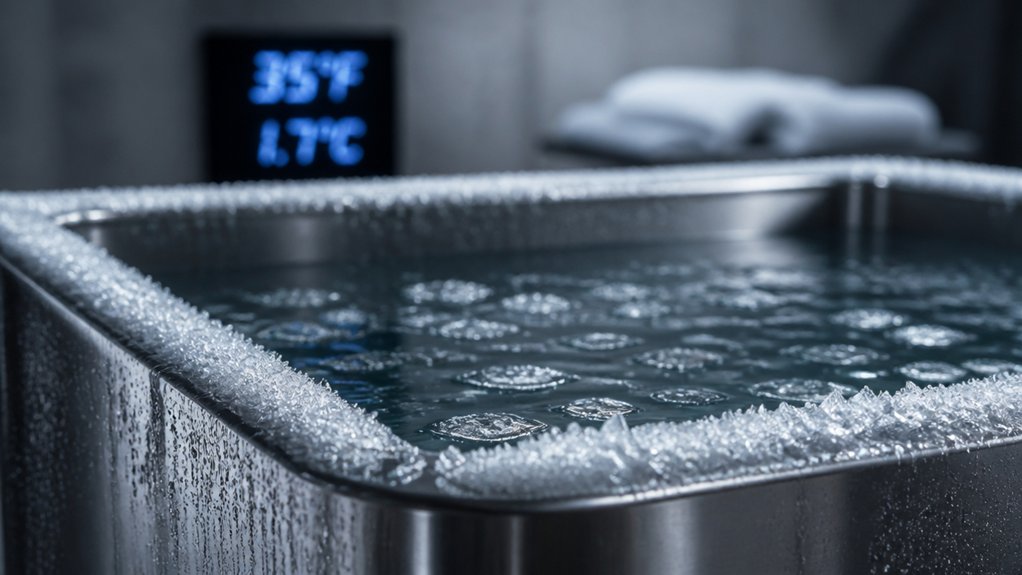
Have you ever wondered what happens to your blood pressure after a cold plunge? When you immerse yourself, your blood vessels initially vasoconstrict to conserve heat.
During cold immersion, blood vessels constrict to preserve heat.
As you rewarm, blood vessels suddenly dilate, causing a rapid change in blood pressure known as “afterdrop.” This abrupt drop, or hypotension, can make you feel dizzy, lightheaded, or faint.
If you have cardiovascular conditions, these fluctuations can worsen symptoms or lead to dangerous complications. The quick rebound dilation destabilizes blood pressure control, increasing your risk of falls and injuries.
Understanding how smart cooling features in advanced tubs regulate temperatures more precisely can help mitigate these sudden changes and enhance safety during recovery. Managing your recovery carefully and avoiding rapid posture changes are essential to prevent these dangerous blood pressure drops. Understanding these risks helps keep you safer during cold immersion.
Who Should Avoid Cold Water Immersion Due to Heart Risks?
Wondering if cold water immersion is safe for everyone? If you have heart conditions, it’s best to avoid it. People with coronary artery disease or arrhythmias are at higher risk because cold shock response triggers adrenaline spikes, increasing heart rate and blood pressure suddenly.
Here’s who should steer clear:
- Individuals with hypertension or arterial plaque, as vasoconstriction during cold plunges raises blood pressure dangerously.
- Those with undiagnosed or known cardiovascular issues, given the risk of arrhythmias from heart electrical disruptions.
- Anyone prone to disorientation or hyperventilation during cold shock, which strains the heart further.
- People sensitive to post-cold plunge effects like “afterdrop,” risking fainting or dizziness. Avoid cold water immersion if these factors apply to you.
How to Safely Use Cold Therapy If You Have Heart Conditions
If you have heart conditions, approaching cold therapy with caution is essential to minimize cardiovascular risks. Cold water immersion triggers a cold shock response, causing rapid increases in blood pressure, heart rate, and hyperventilation. This spikes cardiovascular stress and raises the risk of arrhythmias or heart attacks. To stay safe:
| Step | Focus | Caution |
|---|---|---|
| Gradual exposure | Build tolerance | Avoid sudden immersion to reduce shock response |
| Monitoring | Watch for symptoms | Dizziness, chest pain, irregular heartbeat |
| Expert guidance | Consult cardiologist | Tailor cold therapy to your heart health |
| Limited duration | Short intervals | Minimize cold shock and afterdrop effects |
Stay vigilant, start slow, and always seek professional advice before trying cold water immersion.
What Precautions Should You Take Before Cold Water Therapy?
Before starting cold water therapy, taking proper precautions can help reduce risks, especially for those with underlying cardiovascular conditions.
Cold water therapy can cause rapid increases in heart rate and blood pressure, heightening the risk of arrhythmias and placing additional strain on your heart.
To stay safe, keep these precautions in mind:
- Consult your healthcare professional before beginning, particularly if you have coronary artery disease or uncontrolled hypertension.
- Practice gradual exposure to cold water to minimize shock and disorientation.
- Never immerse alone, so help is nearby if symptoms like chest pain, dizziness, or palpitations occur.
- Avoid cold plunges if you have underlying cardiovascular conditions, as vasoconstriction can worsen oxygen supply-demand mismatches.
Frequently Asked Questions
What Are the Cardiovascular Effects of Aquatic Therapy?
Aquatic therapy enhances cardiovascular function by increasing stroke volume, reducing heart rate, and lowering blood pressure. You experience improved myocardial efficiency and reduced cardiac workload, which benefits those with heart conditions but requires careful monitoring to guarantee safety.
Why Are Saunas Bad for People With Heart Problems?
Saunas are risky for your heart because heat causes your blood vessels to dilate, raising your heart rate and stress on your cardiovascular system, which can trigger arrhythmias, chest pain, or even a heart attack, especially if you have existing heart issues.
Does Cold Water Immersion Affect Heart Rate?
Cold water immersion causes your heart rate to spike rapidly due to the cold shock response, adrenaline surge, and nervous system activation. This sudden increase puts strain on your heart, especially if you already have heart issues, raising health risks.
What Exercises Should You Avoid With Heart Disease?
You should avoid high-intensity exercises, sudden bursts of exertion, heavy weight lifting, and extreme temperature exposures. These activities can overload your heart, trigger arrhythmias, or cause blood pressure spikes, posing serious risks if you have heart disease.