Pre-workout cold water immersion at 55-60°F for 3-5 minutes helps reduce inflammation and heat stress effectively. It triggers vasoconstriction, lowers core temperature, and boosts norepinephrine levels, which improves alertness and minimizes systemic inflammation. Just be sure not to exceed 10 minutes or immerse in water colder than 50°F, as this can impair muscle function. Want to discover more about optimizing your cold plunge routine? Keep exploring for detailed tips.
How Pre-Workout Cold Water Immersion Reduces Inflammation and Heat Stress
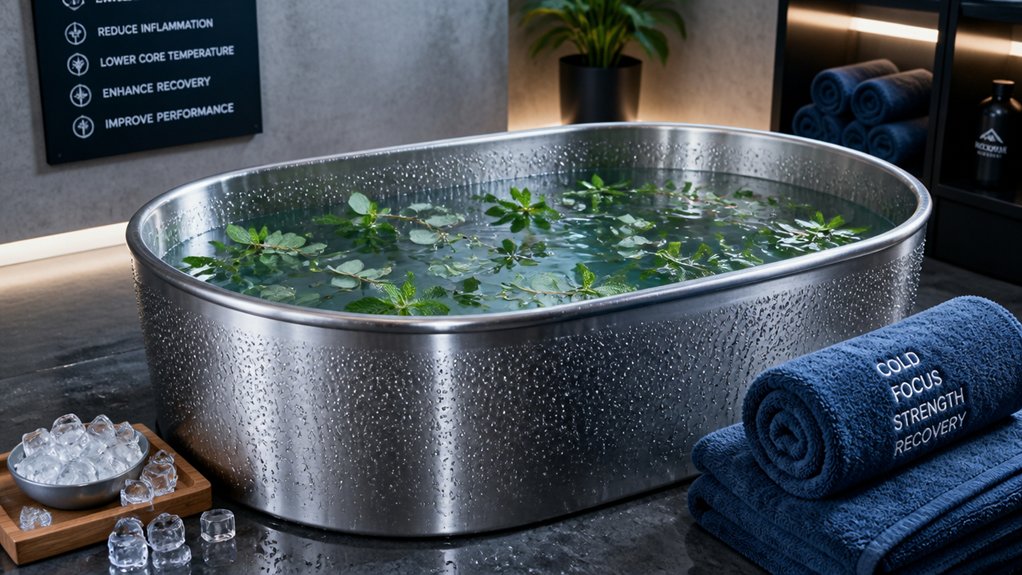
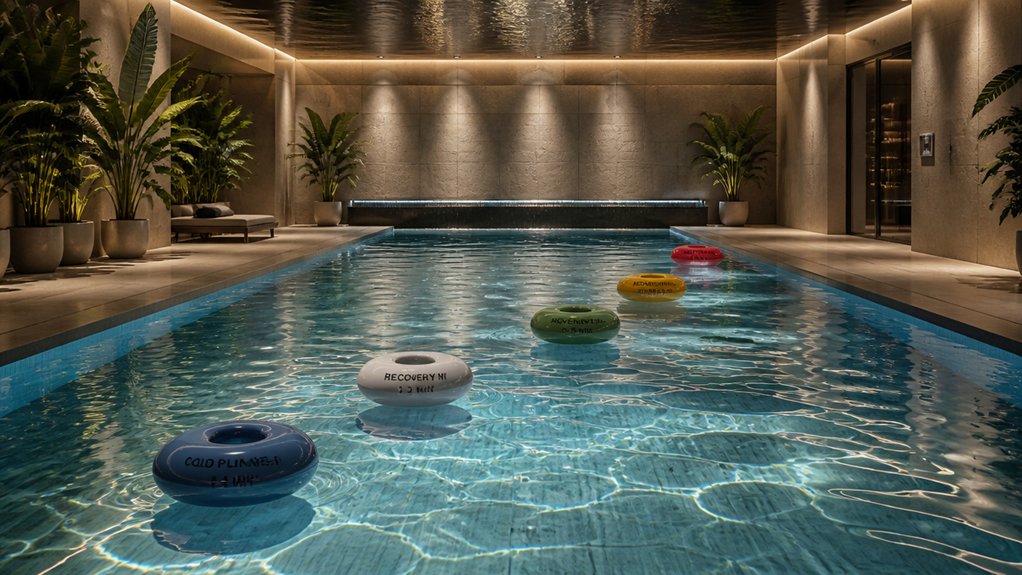
Pre-workout cold water immersion at 55-60°F for 3-5 minutes effectively reduces inflammation and heat stress, priming your body for exercise. A cold plunge triggers vasoconstriction, temporarily narrowing blood vessels, which helps lower your core temperature and manage heat stress during endurance training.
Cold water immersion also boosts norepinephrine levels two to three times, enhancing alertness and reducing systemic inflammation. By dampening pro-inflammatory cytokine release, it minimizes heat-related inflammation that can impair performance.
This process guarantees better heat dissipation and supports vascular function, reducing muscle fatigue. Keeping the immersion within recommended time and temperature limits prevents blood flow suppression, allowing inflammatory signaling to aid recovery and adaptation. Proper water treatment solutions ensure the water remains clean and safe, maximizing the benefits of your cold plunge.
What Are the Best Temperature and Duration for Pre-Workout Cold Plunges?
To maximize the benefits of cold water immersion before exercise, sticking to a prime temperature and duration is key. For a effective pre-workout cold plunge, aim for a temperature between 55-60°F (13-15.5°C). This range promotes increased norepinephrine, mental focus, and circulation without impairing muscle function. Keep your immersion brief—3 to 5 minutes—so you boost norepinephrine levels 2-3 times while preventing excessive muscle cooling. Avoid plunges colder than 50°F or exceeding 10 minutes, as this can reduce muscle contractility and weaken strength. Additionally, selecting a high-powered chiller with features like rapid cooling and precise temperature controls can help achieve these optimal conditions efficiently.
When Is the Ideal Time to Cold Plunge Before Exercise?
The best time to cold plunge before your workout is 10-20 minutes prior, ensuring you get the mental and physiological benefits without harming muscle performance. A properly timed plunge can also help you achieve optimal water temperature for alertness and activation. By timing it right, you can enjoy enhanced mental clarity and preparedness for your exercise session.
Optimal Timing Window
Timing your cold plunge correctly can maximize its benefits while minimizing any negative effects on performance. For ideal inflammation control and mental focus, aim for a 3-5 minute immersion at 55-60°F, completed 10-20 minutes before exercise.
Here’s why:
- A brief cold plunge boosts norepinephrine 2-3 times, reducing inflammation and enhancing pain tolerance during your workout.
- Water temperature matters — staying above 50°F prevents decreased muscle contractility and performance dips.
- Incorporate a thorough warm-up after the immersion to balance inflammation reduction with muscle readiness.
- Using a percussion massager after cold therapy can further accelerate recovery and loosen muscles, provided it’s done with appropriate heat and cold timing.
Avoid plunging immediately before exercise or extending immersion beyond 10 minutes, as these can impair muscle function. Keep your timing window precise to enjoy the benefits without performance setbacks.
Impact on Muscle Activation
While cold plunges can boost alertness and focus, doing so too close to your workout can hinder muscle activation. Pre-workout cold plunges of 3-5 minutes at moderate cold (55-60°F) can enhance blood flow, preparing your nervous system for peak muscle recruitment.
These cold water therapy sessions increase norepinephrine levels 2-3 times, which boosts alertness without impairing muscle contractility or force production. However, extending immersion beyond 10 minutes or plunging below 50°F risks restricting blood flow and reducing muscle activation.
The ideal timing is 10-20 minutes before exercise, balancing the anti-inflammatory effects with maintained muscle function. This guarantees your muscles are primed and ready, avoiding negative impacts on muscle activation signaling during your training. Energy-efficient water chillers ensure consistent and controlled cooling to optimize your pre-workout routine.
Benefits for Mental Focus
To maximize mental focus and alertness, it’s best to cold plunge 10-20 minutes before starting your workout. A short water immersion at 55-60°F can greatly boost norepinephrine levels, which enhances mental alertness, focus, and pain tolerance. Cold immersion triggers physiological responses that increase vagal tone and calmness, supporting mental resilience during high-intensity or endurance sessions. Additionally, ensuring proper sensor accuracy during cold exposure can help monitor your physiological state effectively. Here’s what you can expect:
- Improved mental clarity and sharpness during your pre-workout phase.
- Increased focus, helping you stay engaged throughout your exercise.
- Better pain tolerance, enabling you to push through discomfort.
Stick to a 3-5 minute cold plunge to optimize benefits without impairing muscle contractility or performance.
How Does Pre-Workout Cold Water Affect Performance and Muscle Recovery?
Have you ever wondered how pre-workout cold water immersion influences your performance and muscle recovery? When you immerse in cold water for 3-5 minutes at 55-60°F, it greatly increases norepinephrine levels, boosting mental focus, alertness, and pain tolerance without impairing muscle contractile force.
Cold immersion helps reduce muscle fatigue and perceived exertion, supporting better performance in endurance athletes and high-intensity workouts. The cold triggers vasoconstriction, followed by vasodilation, which enhances circulation and prepares muscles for activity.
While it doesn’t directly reduce post-exercise inflammation, pre-workout cold plunges prime your nervous system and cardiovascular responses, potentially improving overall recovery. Just avoid immersion under 50°F or longer than 10 minutes to prevent negative effects on strength and muscle output.
Practical Tips for Incorporating Cold Water Immersion Into Your Workout Schedule
Incorporating cold water immersion into your workout routine can enhance recovery and performance if done correctly. To maximize benefits, schedule your pre-workout cold immersion 3-5 minutes at 55-60°F, which boosts norepinephrine levels, improves mental focus, and pain tolerance.
Here are practical tips:
- Time it right: Perform the icy water cold plunge at least four hours before resistance training to effectively reduce inflammation.
- Start gradual: Beginners should begin with 2-3 minute immersions at 60-65°F, then gradually lower the temperature to improve tolerance.
- Prepare: Follow cold plunges with a warm-up to boost circulation and practice controlled breathing during cold to stay physically and mentally focused.
- Consider tub materials: Opt for durable and insulated cold plunge tubs to maintain temperature and ensure a safe, effective immersion experience.
Limit immersion to under 10 minutes to protect muscle force and support recovery.
Safety Tips and When to Avoid Pre-Workout Cold Water Immersion
You should be cautious with cold water immersion before workouts, especially to prevent cold shock and protect your heart if you have risk factors.
Avoid plunging for more than 10 minutes or at temperatures below 50°F, as it can weaken your muscles and reduce strength. Be sure to time your immersion away from strength training to avoid impairing muscle gains and always prioritize safety in a controlled environment.
Risks of Cold Shock
Cold water immersion before a workout can boost alertness and reduce inflammation, but it also carries risks if not done carefully.
Sudden cold plunge into water below 60°F can trigger cold shock, increasing heart rate and causing blood vessels to constrict rapidly. This may lead to cardiovascular risks, especially if you have heart conditions or aren’t accustomed to cold exposure.
Be cautious with 3 steps:
- Avoid cold plunges if you have known cardiovascular issues or are prone to arrhythmias.
- Limit cold-water immersion to 3–5 minutes at 55–60°F to prevent severe cold shock.
- Use controlled breathing techniques to manage hyperventilation and stay safe during cold shock symptoms like dizziness or muscle stiffness.
Always perform cold immersion in a safe environment with warm clothing nearby, especially when using commercial plunge tubs that provide ergonomic comfort and controlled temperatures.
Avoid Cold Before Strength
While cold water immersion can help reduce soreness and support recovery, it’s essential to avoid exposing your muscles to cold before strength training.
A cold plunge lasting more than 5 minutes at temperatures below 50°F can impair muscle contractility and blunt force output, negatively impacting your workout.
Pre-workout cold immersion should be brief—around 3-5 minutes at moderate temperatures of 55-60°F—to boost mental focus without compromising resistance training performance.
Cold exposure immediately before exercise may also blunt anabolic signaling if done within 4 hours post-training.
If you’re starting out, gradually lower the temperature and keep sessions brief to prevent cold stress.
People with cardiovascular risks or on certain medications should consult a doctor before incorporating cold water immersion into their routine.
Suitable Timing for Immersion
Timing is essential when incorporating cold water immersion into your routine to maximize benefits and avoid risks. For pre-workout cold plunging, aim for 3-5 minutes in icy waters at 55-60°F, as this safely reduces inflammation and boosts mental clarity without impairing muscle function.
Consider these points:
- Don’t stay longer than 10 minutes or lower than 50°F, as it can reduce muscle contractility and strength performance.
- If you have cardiovascular risks, consult a specialist beforehand; icy waters may trigger shock.
- Avoid combining pre-workout cold immersion with post-workout plunges on the same day to prevent conflicting effects on body temperature and circulation.
Gradually warming post-immersion helps maintain safety and optimize recovery.
Frequently Asked Questions
Are Cold Plunges Good for Inflammation?
Cold plunges are great for reducing inflammation because they constrict blood vessels, decrease muscle swelling, and lower soreness. When done properly after workouts, they promote faster recovery and help manage systemic inflammation effectively.
What Flushes Inflammation Out of Your Body?
Cold-water immersion flushes inflammation out of your body by constricting blood vessels, then dilating them to boost circulation. This process helps remove metabolic waste and inflammatory compounds from muscles, speeding up recovery and reducing soreness effectively.
What to Take to Reduce Inflammation From Working Out?
You can take omega-3 fatty acids, turmeric supplements, or tart cherry extract to reduce workout inflammation. Eating antioxidant-rich foods like berries and leafy greens, staying hydrated, and using post-exercise cold plunges also help diminish inflammation effects.
What Is the Best Anti-Inflammatory Exercise?
The best anti-inflammatory exercise combines moderate aerobic activities like brisk walking, cycling, or swimming with resistance training. This mix improves immune regulation, reduces cytokines, and enhances metabolic health, effectively lowering chronic inflammation and promoting overall well-being.