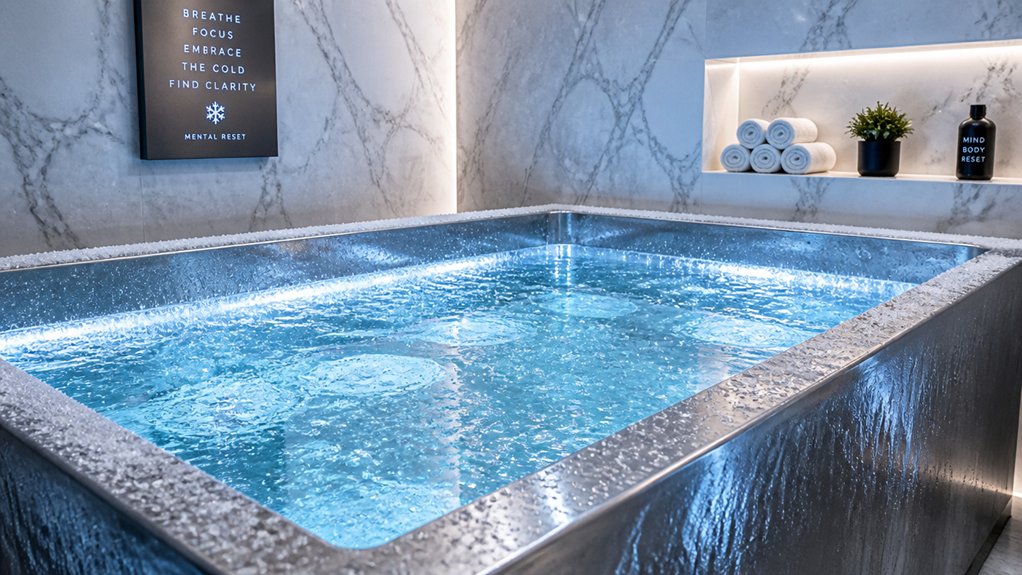
To boost your mental health, aim for ice baths lasting between 10 and 15 minutes at temperatures of 50-59°F. Starting with shorter sessions of around 30 seconds to 1 minute helps your body adapt safely. As you build tolerance, gradually extend immersion time to maximize mood-enhancing chemicals like endorphins and norepinephrine, and promote stress resilience. If you’d like to learn more about safe practices and ideal strategies, keep exploring these insights.
How Cold Exposure Improves Your Mental Health

Cold exposure can greatly boost your mental health by triggering the release of mood-enhancing chemicals like endorphins and norepinephrine. When you engage in cold water immersion or ice baths, even brief facial immersions can provide mental health benefits.
Cold exposure increases endorphins, which improve mood, and norepinephrine, aiding focus and reducing anxiety. It also lowers cortisol levels, helping your body better manage stress and easing symptoms of depression.
Regular cold exposure stimulates the vagus nerve, promoting emotional regulation and activating the parasympathetic nervous system, which fosters calmness. Over time, consistent ice baths can support cognitive function and neuroprotection by triggering cold-shock proteins that assist nerve cell repair, contributing to overall mental resilience and well-being. Additionally, understanding the sensor accuracy of fitness trackers during cold plunges ensures you’re monitoring your physiological responses effectively.
What’s the Right Duration for Ice Baths to Support Mood and Stress?
How long should you stay in an ice bath to effectively support your mood and manage stress? Starting with 30 seconds to 1 minute allows safe activation of mood-enhancing endorphins and norepinephrine. Gradually increasing immersion time to 5-10 minutes helps sustain cortisol reduction, boosting stress resilience and emotional regulation. Sessions lasting up to 10-15 minutes at 10-15°C (50-59°F) maximize mental health benefits without hypothermia risk. Short face immersions can trigger immediate mood shifts, while full-body cold water immersion supports long-term mood and stress management. Remember, consistent, progressive cold water therapy with regulated breathing heightens cognitive focus, reduces anxiety, and builds mental toughness over time. Proper immersion duration optimizes the mental health benefits of ice baths, especially when incorporating adaptogen support to further enhance stress response regulation.
Do Short or Longer Cold Plunges Have Different Effects on Mood and Stress?

Have you ever wondered whether short or longer cold plunges produce different effects on your mood and stress levels? Cold plunges and ice baths trigger distinct responses.
Short cold plunges of around 30 seconds to 1 minute deliver quick mood boosts and stress relief by releasing endorphins and norepinephrine. They activate the parasympathetic nervous system, promoting relaxation and calming anxiety.
Short cold plunges (30 seconds to 1 minute) boost mood and relaxation by releasing endorphins and calming anxiety.
In contrast, longer immersions of up to 10-15 minutes lead to cortisol reduction and help build long-term stress resilience through sustained hormonal regulation. Extended ice baths can boost alertness and energy by activating the sympathetic nervous system, but they require careful acclimatization. Temperature control features in modern setups allow for safer longer exposures.
Repeated, longer cold exposures strengthen neurophysiological adaptations, providing ongoing mental health benefits like improved mood and reduced stress.
Why 10–15 Minutes Is a Safe and Effective Cold Exposure Time
Spending 10–15 minutes in an ice bath is considered safe and effective because it activates your body’s stress responses without overdoing it. Staying within this limit helps you avoid risks like hypothermia and frostbite while still gaining mental health benefits. Gradually increasing your exposure time allows your body to adapt safely and maximize the positive effects. Incorporating proper water treatment solutions ensures water hygiene and safety during your cold therapy sessions, supporting overall well-being.
Optimal Duration for Benefits
Choosing the right duration for an ice bath is essential to gaining mental health benefits safely. Cold water exposure for 10–15 minutes at 50–59°F activates your sympathetic nervous system (SNS) effectively, triggering the release of endorphins and norepinephrine that boost mood. This timeframe guarantees you experience the cold shock response without overwhelming your body or risking hypothermia. Proper insulation in cold plunge tubs helps maintain consistent temperatures, enhancing safety during these sessions. Staying immersed for more than 15 minutes increases danger and diminishes mental health gains. Studies show that this duration helps lower cortisol levels and improves stress resilience, supporting emotional regulation and mental clarity. Gradually acclimating to this routine allows your body to adapt safely, making 10–15 minutes an ideal window to maximize mental health benefits while minimizing risks.
Risks of Excessive Exposure
Exceeding the recommended 10–15 minutes of ice bath immersion considerably raises your risk of adverse effects. Too much cold exposure can trigger a cold shock response, causing involuntary gasp, hyperventilation, and rapid increases in heart rate and blood pressure. These physiological stresses can elevate cardiovascular risks, especially for those with preexisting heart conditions.
Prolonged immersion below 15°C (59°F) increases the danger of hypothermia and frostbite, which can cause serious health complications. Extended exposure offers no additional mental health benefits and instead may negate positive effects by stressing your body unnecessarily. Staying within the safe time limit helps protect your heart and keeps your response manageable, reducing the risk of cardiac events, stroke, or other harmful reactions during cold water therapy. Proper insulation and controlled cooling can optimize benefits while minimizing health risks efficient cooling.
Gradual Acclimatization Importance
To safely reap the mental health benefits of ice baths, it’s essential to gradually acclimate your body to cold exposure. Gradual acclimatization allows your body to adapt through short exposures—starting from 30 seconds to 1 minute—before reaching the recommended 10–15 minutes in cold water immersion. This approach helps manage the cold shock response and promotes safety. Incorporating insulation layers can further enhance temperature retention and comfort during longer sessions. During each session, controlled breathing and slow entry into the ice bath support physiological changes and reduce adverse reactions. As your nervous system adjusts, you can progressively increase immersion time across multiple sessions. Staying within this time frame balances effective cold exposure benefits with minimizing risks like hypothermia, making 10–15 minutes both a safe and effective duration for mental health gains.
How to Gradually Build Your Cold Exposure Tolerance Safely
Building your cold exposure tolerance safely begins with starting slow and listening to your body. Begin with brief sessions—30 seconds to 1 minute—in cold, but not freezing water around 50-59°F (10-15°C). Cold therapy benefits mental health, but rushing can be risky. Gradually increase immersion duration over multiple sessions, aiming to extend from initial dips to 5-10 minutes as your tolerance builds. Start with partial immersion, such as cold showers or foot baths, before progressing to full-body ice baths to prevent cold shock. During each session, regulate your breathing consciously to control the gasp reflex. Never do ice baths alone—use a buddy system and have emergency plans ready. Incorporating insulation and temperature retention features from collapsible tubs can help maintain water warmth and improve comfort during longer sessions.
Signs You Should Shorten or End Your Cold Plunge

While gradually increasing your cold exposure can boost your resilience and mental health benefits, paying attention to your body’s signals during each session is essential. Recognize signs to shorten or end your ice bath carefully.
- Uncontrollable shivering, numbness, or tingling indicate excessive cooling or frostbite risk.
- Dizziness, chest pain, or ongoing hyperventilation point to cold shock response overload.
- Feeling overwhelmed with anxiety or confusion shows neurophysiological stress.
If your core body temperature drops below safe limits or you experience these signs, stop your cold plunge immediately. Overstaying in an ice bath can impair your mental health progress and increase health risks. Listening to your body helps you harness the benefits safely.
Combining Cold Plunges With Other Mental Wellness Strategies
You can boost your mental health by combining cold plunges with techniques like deep breathing or meditation, which enhance emotional regulation.
Synchronizing cold water immersion with physical activity or timing sessions for maximum effect can further improve resilience and mood.
Additionally, pairing cold therapy with practices like heat exposure or therapy treatments offers a thorough approach to managing stress and anxiety.
Incorporating Meditation Techniques
Incorporating meditation techniques into cold plunge routines can greatly enhance their mental health benefits. When you combine cold water immersion with mindfulness, you strengthen vagus nerve stimulation, which promotes relaxation and emotional regulation.
To maximize effects, focus on:
- Deep, slow breathing and breath retention to manage the cold shock response.
- Mindfulness practices during cold plunges, helping reduce anxiety and build tolerance to stress.
- Regular meditation to modulate cortisol levels, boosting mood stabilization and resilience.
These techniques also trigger endorphin release, improving overall mental clarity. By consciously incorporating controlled breathwork and body awareness, you create a powerful synergy that supports cognitive function and emotional balance during cold exposure.
This integrated approach helps you harness both physiological and psychological benefits of cold water immersion.
Synchronizing With Physical Activity
Synchronizing cold plunges with physical activity can amplify mental wellness benefits by enhancing recovery and mood regulation. Using cold water immersion or ice baths for 5-10 minutes after exercise reduces muscle soreness and boosts endorphin release, uplifting your mental health.
Short cold water immersions (30 seconds to 1 minute) during warm-up or cool-down routines improve alertness and cognitive performance. Alternating cold plunges with heat therapy, like infrared saunas, further supports recovery and stress reduction by balancing the nervous system.
Incorporating breathing exercises and mindfulness during post-exercise cold water immersion maximizes emotional regulation. Regularly combining ice baths with consistent physical activity helps modulate cortisol levels and stimulates vagus nerve function, building long-term mental resilience.
Timing for Optimal Benefits
Timing your cold plunges to align with other mental wellness practices can greatly enhance their mood-boosting and stress-reducing effects.
To optimize benefits, consider these strategies:
- Match the duration of your ice baths with your acclimatization stage—start with 30 seconds to 1 minute and extend to 5-10 minutes as your body adapts, ensuring safe cold water immersion.
- Combine cold face immersions daily with full-body plunges to promote immediate mood boosts and long-term stress resilience via vagus nerve activation.
- Sync ice baths with mindfulness activities like deep breathing or meditation to amplify calming effects, manage stress, and support mental health.
Timing these practices effectively maximizes the stress regulation benefits of cold exposure and enhances overall emotional well-being.
Frequently Asked Questions
How Long Should You Take an Ice Bath for Anxiety?
You should aim for 10-15 minutes in an ice bath for anxiety relief. Start with shorter sessions, like 30 seconds to a minute, gradually increasing as your tolerance improves, and always listen to your body’s signals.
Is 20 Minutes in an Ice Bath Too Long?
Yes, 20 minutes in an ice bath is too long and can be risky. It increases the chances of hypothermia, frostbite, and cardiovascular stress, especially if you’re not acclimated. Stick to 10-15 minutes for safety and benefits.
Do Ice Baths Work for Mental Health?
Yes, ice baths can improve your mental health by releasing mood-boosting chemicals, lowering stress hormones, and activating relaxation responses. Regular, short durations like 30 seconds to a few minutes help you gain mental benefits safely and effectively.
How Long Can a Person Stay in an Ice Bath?
You can stay in an ice bath for about 30 seconds to 10-15 minutes, depending on your tolerance and water temperature. Beginners should start with shorter times, gradually increasing as you get more comfortable and alert to risks.