
For endurance training, keep cold plunges between 1 to 5 minutes at around 50°F to 60°F to boost recovery and delay fatigue without overtaxing your system. Post-workout, longer sessions of 10 to 20 minutes at 50°F to 59°F can reduce inflammation and muscle soreness. Short cold exposure before workouts can help lower core temperature and heart rate. To optimize results and safety, understanding how to tailor these durations will help you get the most from cold therapy.
Why Cold Plunges Are Helpful for Endurance Athletes
Cold plunges are a powerful tool for endurance athletes because they support faster recovery and reduce muscle soreness without hindering key training adaptations.
Cold water immersion after exercise helps decrease inflammation and muscle soreness by promoting vasoconstriction and rebound blood flow, restoring physical performance. Pre-endurance cold exposure lowers core temperature, delays fatigue, and enhances aerobic performance by activating your parasympathetic nervous system, which promotes relaxation and recovery.
Short, strategic cold plunges also improve mental alertness and physiological readiness without impairing training adaptations. For optimal results, selecting the right cold plunge setup with effective insulation and temperature control can amplify these benefits. For endurance athletes, incorporating post-exercise cold water immersion can optimize recovery, improve mood, and promote better sleep.
These benefits make cold plunges an essential component of balanced training, helping you perform at your best.
How Cold Temperatures Affect Your Muscles and Heart
When you expose your muscles and heart to low temperatures, several immediate physiological responses occur that can enhance endurance performance.
Low-temperature exposure triggers vital physiological responses that boost endurance and support recovery.
Cold water immersion around 40°F for about 20 seconds causes a significant rise in epinephrine, boosting alertness and cardiovascular performance. It also lowers your core body temperature, which can improve muscle efficiency and delay fatigue during prolonged endurance training.
Cold exposure triggers vasoconstriction, reducing blood flow initially but leading to a rebound increase afterward, supporting recovery and muscle perfusion. Cooling your muscles and heart helps reduce heart rate elevation during exercise, improving cardiovascular endurance and efficiency.
Unlike resistance training, cold exposure doesn’t impair endurance adaptations and may even promote mitochondrial biogenesis, essential for sustained aerobic performance. Adaptogen blends can also support recovery and stress resilience following cold exposure.
What Are the Best Cold Plunge Durations for Recovery and Performance?
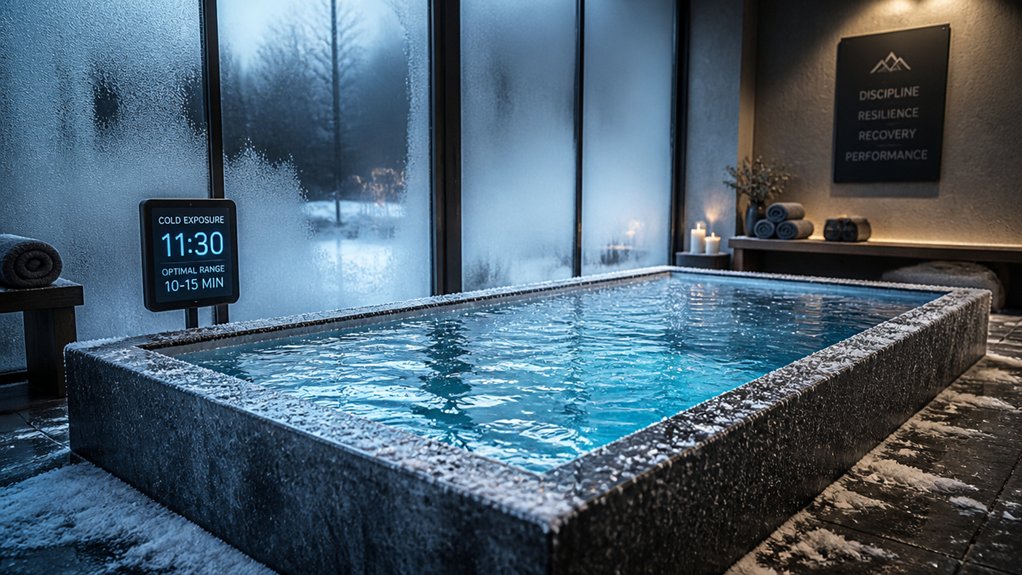
Finding the right cold plunge duration depends on your recovery goals and training schedule. Typically, 10 to 20 minutes in water between 10–15°C maximizes muscle recovery without overtaxing your system. Shorter immersions, around 1 to 5 minutes, can still boost recovery when used consistently around your workouts. For optimal results, consider the temperature control options of your cold plunge tub to maintain precise and comfortable immersion conditions.
Ideal Plunge Duration
Achieving peak recovery and performance through cold plunging depends heavily on timing. The ideal cold water immersion duration for endurance recovery typically lasts between 5 to 20 minutes in water temperatures of 50°F to 59°F (10°C to 15°C).
Immersing for about 10 to 15 minutes effectively reduces muscle soreness, inflammation, and perceived fatigue after intense endurance workouts or long aerobic sessions. Shorter dips, such as 20 seconds at around 40°F, may boost alertness but aren’t as effective for recovery.
Instead, dividing total weekly cold exposure into multiple sessions of 1 to 5 minutes—totaling around 11 minutes—supports adaptation and endurance without overstress. Proper cold plunge duration optimizes recovery, enhances parasympathetic activity, and promotes cardiovascular benefits without hindering aerobic improvements. Selecting a suitable waterproof timer with accurate temperature monitoring can enhance your session control and safety.
Timing for Optimal Benefits
What’s the best timing for cold plunges to maximize recovery and performance? For endurance training, strategic cold-water immersion can enhance recovery benefits without hindering adaptations.
Post-training cold plunges should be done immediately or within a short window to reduce inflammation and muscle soreness effectively. Keeping immersion times between 1 to 5 minutes at roughly 50°F to 60°F offers ideal recovery without risking hypothermia.
Brief pre-endurance cold exposure under 1 minute can lower core temperature and heart rate, helping delay fatigue and enhance performance.
It’s best to split total weekly cold exposure into 2-4 short sessions totaling around 11 minutes. Avoid extending cold plunges beyond 10 minutes, as longer durations won’t improve gains and may harm your endurance training progress.
Incorporating temperature regulation features such as rapid heat/cold adjustment can optimize these sessions for maximum benefit.
How Cold Exposure Changes Endurance Training Adaptations
Cold exposure can reduce your inflammation response, which helps with recovery but may slow muscle growth over time.
This dampening effect influences how your body adapts to endurance training. Understanding this balance helps you optimize cold timing to support both recovery and performance gains.
Cold Dampens Inflammation Response
When you expose your body to cold after endurance training, it actively reduces inflammation and swelling, which are common responses to prolonged aerobic activity. Cold water immersion helps achieve this by dampening the inflammatory response, allowing you to recover faster without blocking essential adaptive signals.
It’s beneficial because it reduces muscle inflammation, lowers systemic inflammation, and minimizes perceived fatigue. Imagine:
- Cooling the affected muscles swiftly with cold plunges
- Lowering swelling and soreness after long sessions
- Supporting quicker regeneration and less overall fatigue
This process aligns with endurance training goals by minimizing muscle damage, promoting recovery, and not disrupting aerobic adaptations. Cold dampens inflammatory response effectively, making it a valuable recovery tool for endurance athletes.
Impact on Muscle Growth
Despite common concerns, cold exposure after endurance training doesn’t hinder muscle growth or the muscle signaling pathways essential for aerobic adaptations. Cold exposure helps reduce inflammation and accelerates recovery without impairing mitochondrial biogenesis or cardiovascular improvements. Using a wearable fitness tracker with advanced sensors can provide real-time data on heart rate and temperature, ensuring safe cold immersion practices. Unlike resistance training, endurance-specific cold immersions support recovery and decrease fatigue, enabling you to train more effectively. Cold exposure also promotes parasympathetic nervous system recovery, improving sleep quality and stress management, which indirectly benefits endurance performance. Timing your cold plunges immediately after sessions is generally safe and can expedite recovery for upcoming workouts or competitions. Rest assured, cold exposure during recovery doesn’t compromise the adaptive processes behind endurance training, ensuring you can prioritize both peak recovery and continued endurance progress.
What Factors Influence Your Ideal Cold Plunge Time?
Your ideal cold plunge time depends on several factors, including water temperature, your physical goals, and your individual tolerance. If you’re focused on endurance training, shorter exposures—typically 1 to 5 minutes—help improve recovery without over-stressing your body. Colder water, around 40°F, requires briefer durations, often just 20 seconds to a few minutes, to avoid excessive stress and still gain dopamine and epinephrine benefits. Keep in mind these considerations: – Water temperature influences how long you can safely stay submerged – Your recovery needs dictate shorter vs. longer exposure times – Gradual progression helps build tolerance without risking injury or performance decline. Monitoring insulation and temperature retention can help you maintain consistent water temperatures and optimize your sessions. Adjust your cold plunge duration to maximize both performance gains and safety during endurance training.
How to Gradually Build Cold Tolerance for Longer Plunges
Start with brief cold exposures, like 30 seconds to a minute, and gradually add 15-30 seconds each session as your tolerance improves. Spread your sessions throughout the week, aiming for about 11 minutes total, and monitor how your body responds to prevent overwhelming yourself. Use mental milestones like “Counting Walls” to track progress and focus on natural rewarming to maximize adaptation. Incorporate recovery tracking apps to optimize your cold plunge routines and ensure safe progression.
Incremental Exposure Strategies
To build your cold tolerance safely, it’s best to begin with shorter immersions and gradually increase the duration over time. Start with 30 seconds to 1 minute in water at around 50–60°F, easing your muscle response to the cold.
As your training progresses, extend sessions by 15–30 seconds every few workouts, aiming for 2–5 minutes. Distribute weekly cold exposure into multiple short sessions—2 to 4 times—to prevent overstressing your body while enhancing endurance.
Use slightly warmer water initially to reduce cold shock and lower the temperature gradually with longer immersions. Incorporate mental techniques like “Counting Walls” to manage discomfort during each session, which helps strengthen your mind and body’s resilience to cold water challenges.
Monitoring Physical Responses
As you increase cold exposure durations, it’s important to attentively monitor how your body responds to each session. Watch your heart rate closely, as cold plunging can cause it to rise. Pay attention to subjective discomfort, balancing tolerable sensations with safety to prevent hypothermia. Allow natural shivering to develop, which helps your body adapt metabolically. Avoid immediately warming yourself after immersion to enhance cold water immersion attenuates, promoting longer endurance. Track your progress and discomfort levels regularly. Focus on increasing session frequency before duration to improve mental and physical adaptation safely.
| Response Indicator | Action |
|---|---|
| Heart rate changes | Monitor for excessive increases |
| Subjective discomfort | Balance discomfort with safe limits |
| Shivering response | Allow natural shivering to develop |
| Symptom warnings | Stop if signs of hypothermia appear |
What Are the Risks of Overdoing Cold Exposure?
While cold exposure offers benefits, overdoing it can pose serious health risks. Excessive cold exposure increases the chance of hypothermia and frostbite, especially in icy environments or with prolonged immersion beyond recommended times.
Overdoing cold plunges can impair recovery by excessively blunting the inflammatory response necessary for muscle repair. It can also cause cardiovascular stress, particularly for those with preexisting heart conditions.
You might experience:
- Hypothermia or frostbite from prolonged exposure or extreme environments
- Suppressed inflammatory response, hindering muscle recovery
- Elevated cardiovascular stress, risking heart complications
Ignoring safety guidelines and rapid adaptation can trigger cold shock responses such as hyperventilation or loss of motor control. These dangerous reactions highlight the importance of moderation and proper protocols when incorporating cold exposure into endurance training.
When Is the Best Time to Cold Plunge During Your Workout Routine?
When is the ideal time to incorporate cold plunges into your workout routine? Cold plunging is most effective when timed strategically around your endurance workouts. Doing it before endurance sessions can help lower your core temperature, reduce heart rate elevation, and delay fatigue, ultimately boosting performance.
Keep cold plunges brief—around 1 to 5 minutes—at temperatures near 50°F or colder to maximize endurance benefits without causing discomfort.
Post-endurance cold plunges are excellent for supporting recovery by reducing inflammation and muscle soreness, without interfering with muscle signaling pathways. To optimize recovery, schedule cold plunges on non-resistance training days, allowing endurance gains while preserving strength adaptations.
Proper timing guarantees you gain endurance benefits from cold plunging without compromising other training goals.
Cold Plunge Protocols to Use During Endurance Seasons
Implementing cold plunges during your endurance season can greatly boost recovery without hindering performance.
Use cold immersion after endurance sessions like zone 2 runs to promote recovery benefits and support your autonomic nervous system.
Keep sessions brief and effective:
- Duration of 1–5 minutes at water temps of 50–60°F to optimize recovery and safety.
- Schedule cold plunges on endurance days, avoiding immediate post-resistance training to prevent interference.
- Pre-endurance cold exposure should be targeted, aiming to lower core temperature and delay fatigue while keeping heart rate rise minimal.
Cold immersion helps the autonomic nervous system recover faster, which is key for maintaining performance during consecutive high-volume training.
Properly timed cold plunge protocols help you enhance endurance gains without compromising training quality or safety.
How Using the ‘Counting Walls’ Method Can Increase Tolerance
Have you ever wondered how to push through the mental barrier during cold exposure? The ‘Counting Walls’ method helps you do just that by turning each wall into a mental milestone.
This technique breaks up cold immersion into manageable segments, easing initial discomfort and making longer sessions psychologically easier. As you face and conquer each wall, your mental resistance weakens, and your adaptation improves—much like progressive overload in endurance training.
By distributing about 11 minutes of weekly cold exposure across multiple sessions, you gradually build cold tolerance and confidence. This method also trains your prefrontal cortex for resilience and grit, essential qualities for endurance athletes.
Using ‘Counting Walls,’ you develop mental control, enhancing your ability to endure cold exposure and accelerate physiological adaptation.
How to Combine Cold Plunges With Other Recovery Strategies
Combining cold plunges with other recovery strategies can greatly enhance your muscle repair and reduce inflammation, especially on endurance training days.
Enhance muscle repair and reduce inflammation by combining cold plunges with complementary recovery strategies on endurance days.
To maximize recovery, pair cold plunges with active recovery, optimized nutrition, and balanced sleep to support metabolic adaptations and minimize swelling. Timing matters: do cold plunges several hours after endurance workouts to reduce perceived fatigue without hindering gains.
Avoid immediate immersion after resistance training, as it may impair hypertrophy, and instead, reserve cold plunges for endurance days. Complement cold exposure with heat sessions like sauna use on resistance days to boost anabolic signaling.
Keep a balanced routine with 2–4 cold plunge sessions weekly, totaling around 11 minutes, and prioritize sleep and proper nutrition to optimize endurance recovery and manage inflammation effectively.
How to Customize Cold Exposure Times Based on Your Goals
To tailor cold exposure to your specific goals, it’s important to take into account your training focus, individual tolerance, and timing.
For endurance training, aim for sessions lasting 1 to 5 minutes, with a weekly total of around 11 minutes across 2-4 sessions. Pre-endurance cold exposure should be brief, involving cool water (~60°F) to lower core temperature and delay fatigue without impairing performance.
Post-endurance cold plunges can last longer—up to 10-20 minutes at 10–15°C—to aid recovery by reducing muscle soreness and inflammation.
Frequently Asked Questions
What Is the 1 10 1 Rule in Cold Water?
The 1 10 1 rule guides you to start with 1 minute in moderately cold water, then immerse for 10 minutes in colder water, and finish with 1 minute of natural reheating. This optimizes recovery safely and effectively.
Is 20 Minutes in an Ice Bath Too Long?
Yes, 20 minutes in an ice bath can be too long, especially if you’re new or sensitive. It risks hypothermia and discomfort, so sticking around 10-15 minutes is usually safer and still provides effective recovery benefits.
Is Running in the Cold Good for Endurance?
Yes, running in the cold benefits your endurance by lowering core temperature and heart rate, delaying fatigue. It also boosts mental alertness and cardiovascular efficiency, helping you train longer and recover faster when you pre-arrange warm-up routines properly.
What Temperature Is Joe Rogan’s Cold Plunge?
Joe Rogan’s cold plunge is typically around 39°F (4°C), a temperature that quickly triggers alertness and recovery responses. You should start gradually, stay between 1 to 5 minutes, and adapt safely to build tolerance over time.